


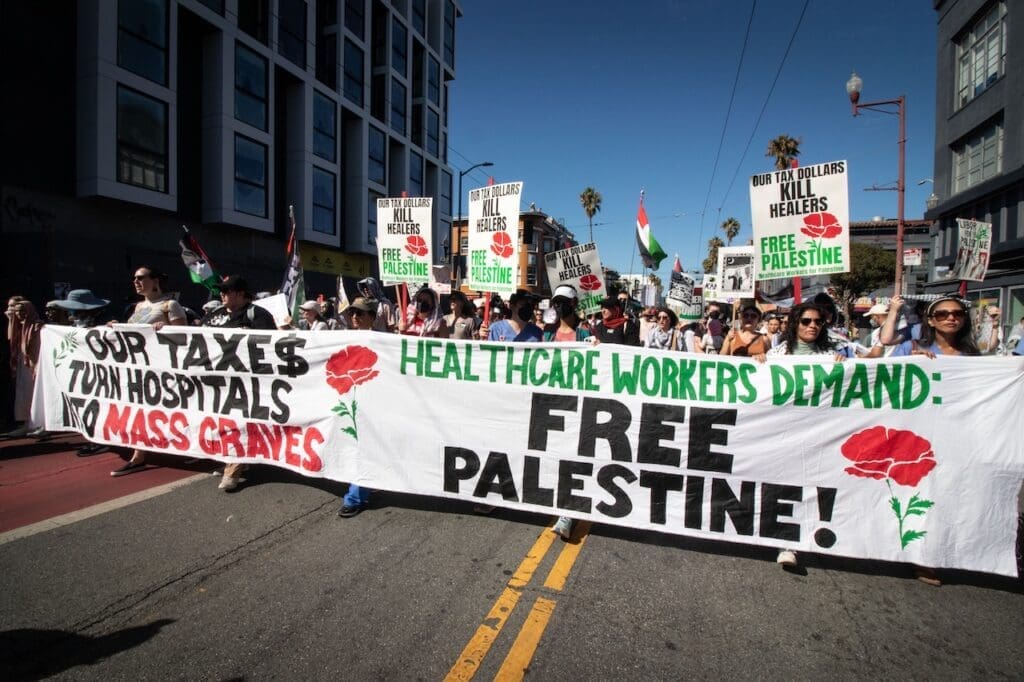



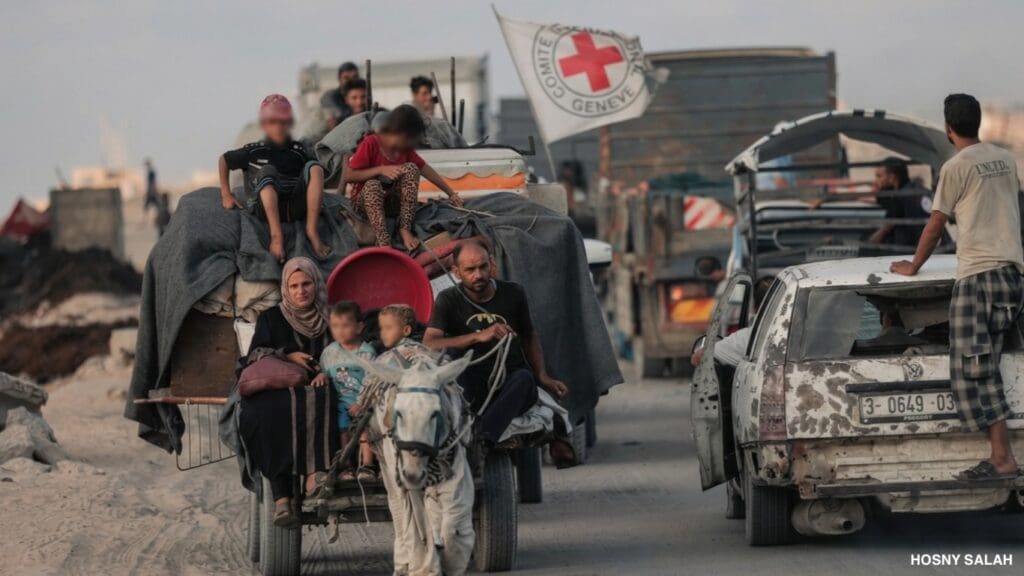
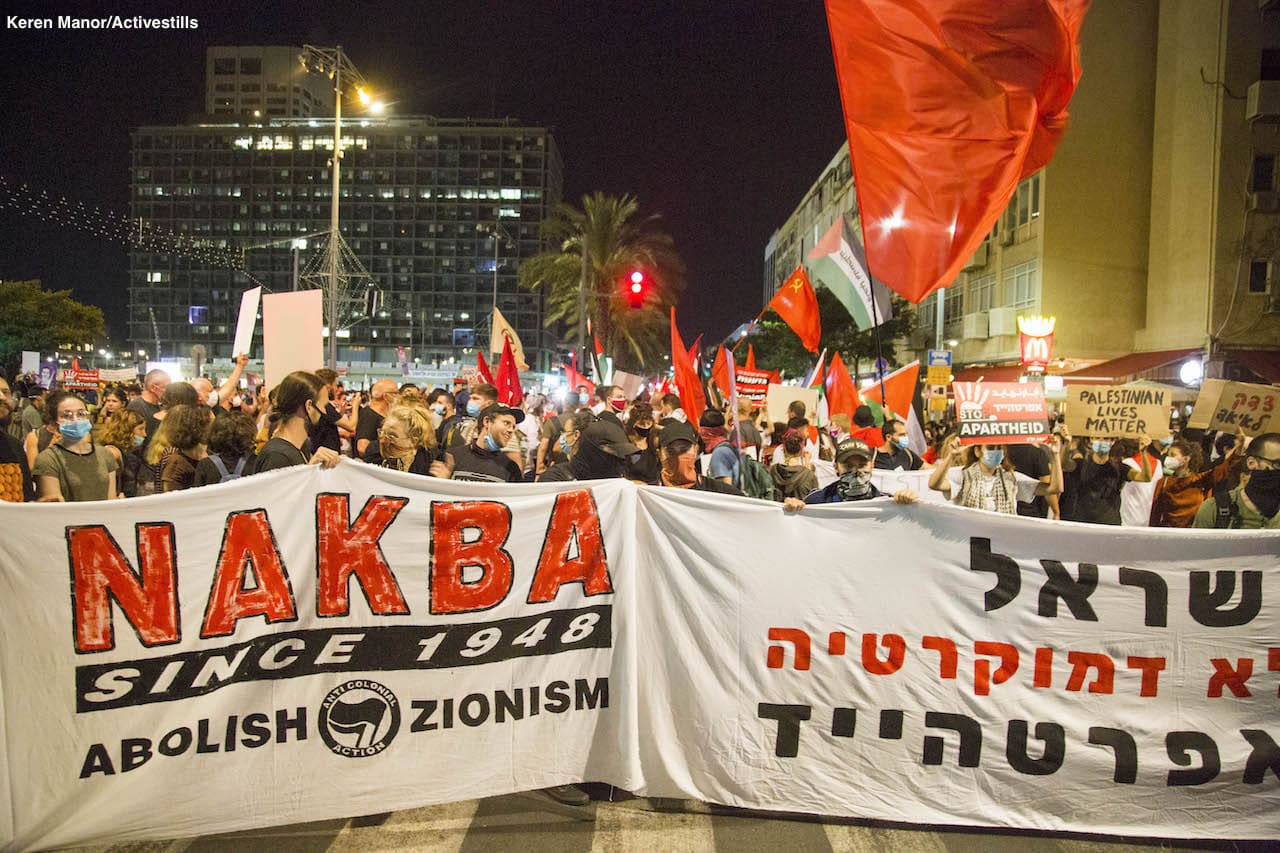
The Unity Intifada of May 2021 emphasized the centrality of Palestinian popular mobilization in the struggle against Israel’s settler-colonial apartheid regime. It is imperative that discussions of an anti-apartheid movement in Palestine remain true to the Unity Intifada’s decolonial praxis: to confront Zionism’s “racist settler colonialism in all of Palestine” and to challenge Israel’s fragmentation of the Palestinian people as a tool of domination.1
This policy memo examines decolonization in the context of international law and increasing recognition of Israeli apartheid. It offers recommendations for how Palestinians and allies should strategize an effective anti-apartheid movement through legal avenues and posits that an anti-apartheid movement across colonized Palestine and in exile can help Palestinians regain their political agency and reassert their unity.
Strategizing Anti-Apartheid through International Law
Any effective anti-apartheid movement in Palestine must be premised on the long-standing Palestinian rejection of Zionism as a racist and settler-colonial project. For decades, Palestinians have been centering decolonization in their struggle for liberation. Indeed, without a vision for decolonization, scholars have warned that an anti-apartheid struggle can, at best, achieve a “restructuring” of the regime rather than its dismantlement.
Without a vision for decolonization … an anti-apartheid struggle can, at best, achieve a “restructuring” of the regime rather than its dismantlement Share on X
However, recent human rights reports by international and Israeli groups largely disregard the legacy of Palestinians’ decolonial struggle. As a result, they advance liberal conceptions of equality at the expense of strategizing decolonization through legal avenues. And while international law prohibits apartheid as racial discrimination, a crime against humanity, and a serious breach giving rise to third-state responsibility, it does not criminalize colonialism per se.
While international law is limited in its confrontation of colonialism, it remains a valuable tool that should not be overlooked. Namely, international law prohibits key elements of the Zionist settler-colonial project, including population transfer, apartheid, annexation, and the acquisition of territory by force; it further enshrines the right of the Palestinian people to self-determination and Palestinian refugees’ right of return. A Palestinian anti-apartheid movement must strategically deploy these legal norms to confront Israel’s state criminality and its violations of international law.
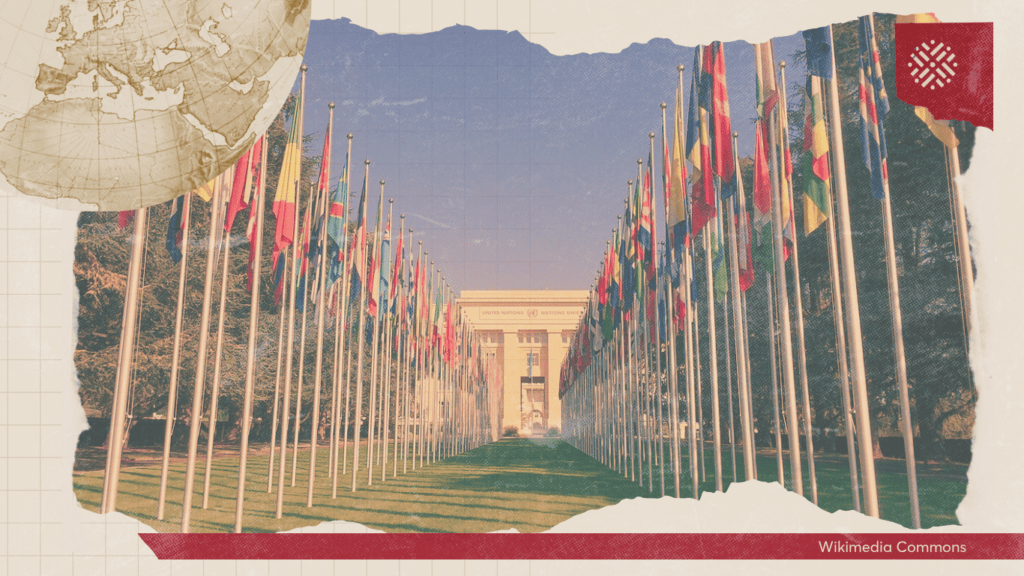
Palestinian civil society campaigns have achieved a growing recognition of Israeli apartheid within the UN human rights system, including by member states of the Human Rights Council. Additionally, the Committee on the Elimination of Racial Discrimination has found that Israeli policies targeting Palestinians across colonized Palestine violate the prohibition on racial segregation and apartheid, as submitted by a Palestinian-led civil society coalition.
On May 27, 2021, against the backdrop of the Unity Intifada, the Human Rights Council established its first ever Commission of Inquiry into “all underlying root causes” of Palestinian oppression, including “systematic discrimination and repression based on national, ethnic, racial or religious identity.” This investigatory body is unprecedented in its mandate and scope; it covers all of colonized Palestine and constitutes one of the most important avenues for campaigning and advocacy against Israel’s settler-colonial apartheid regime. The Commission of Inquiry is expected to submit its first report to the Human Rights Council in June 2022, and at present, welcomes submissions on the root causes of systematic discrimination across historic Palestine.
Furthermore, the International Criminal Court (ICC) has jurisdiction over the crime of apartheid as part of its ongoing investigation into the situation in Palestine. The crime of apartheid has never been prosecuted internationally or at the domestic level. And although the ICC’s jurisdiction in Palestine is limited geographically and temporally, there is strategic value in pursuing accountability for Israel’s crime of apartheid at the ICC.
While popular mobilization by Palestinians across colonized Palestine and in exile will ultimately be key to Palestinian liberation, international law can help to advance this effort by building external pressure and generating tangible consequences for Israel’s ongoing crimes. The apartheid framework offers an avenue for accountability and enables Palestinians to challenge Israel’s fragmentation and build a united struggle.
Recommendations
To strategize a Palestinian anti-apartheid movement and hold Israeli perpetrators accountable for the crime of apartheid against the Palestinian people, Palestinians and allies should:
- Support and expand civil society campaigns calling for effective measures to counter Israel’s settler-colonial apartheid regime, including through divestment and sanctions.
- Urge the UN General Assembly to restore anti-apartheid mechanisms, particularly the Special Committee against Apartheid, to address Israel’s crime of apartheid.
- Expand the mandate of the UN Special Rapporteur on Palestine to include the Palestinian people as a whole, comprising human rights violations on both sides of the Green Line and against Palestinians in exile.
- Pursue Israeli perpetrators for war crimes and crimes against humanity at the ICC, including for the crimes of apartheid and population transfer.
- Call on third states to activate universal jurisdiction mechanisms to prosecute perpetrators of the crime of apartheid in their courts.
- Demand that the latest UN Commission of Inquiry recognize Israeli apartheid and Zionist settler-colonialism as the root causes of Palestinian oppression.
- To read this piece in French, please click here. Al-Shabaka is grateful for the efforts by human rights advocates to translate its pieces, but is not responsible for any change in meaning.

Rania Muhareb is a postdoctoral research fellow in the School of Law and Criminology at Maynooth University, and a visiting postdoctoral fellow at the Irish Centre for Human Rights in the School of Law at the University of Galway, where she completed her PhD in December 2024. Her doctoral research examined the mobilization of the apartheid framework by grassroots organizers and human rights organizations to pursue international justice and accountability in Palestine. Rania was the 2025 Palestine Postdoctoral Fellow at the FXB Center for Health and Human Rights at Harvard University, where her research focused on Palestinians’ right to health, drawing on the Apartheid Convention, the Genocide Convention, and the settler-colonialism framework.