




About This Episode
Episode Transcript
The transcript below has been lightly edited for brevity and clarity.
Yumna Patel 0:00
Palestine was never meant to be this way. It was never meant to be these tiny Bantustans, these tiny outdoor prisons. We are very much people that love each other and that love community, and being separated from one another in this way is the ultimate punishment.
We need to figure out how to symbolically deconstruct the settler that is bent on erasing us, for there’s no recognition of our own humanity in their eyes. And that is only historically in anti-colonial struggles done by existence in all shape and form.
This is the final episode in a three-part series between Al-Shabaka and Mondoweiss. In this episode, myself, Yara Hawari, scholar Abdaljawad Omar, and Mondoweiss editor-in-chief Yumna Patel discuss the latest developments on Trump, Gaza, and the future of Palestine.
Yumna Patel 1:01
Yara and Abdaljawad, thank you so much for joining me. We are entering four weeks into the ceasefire agreement in Gaza, and while I’d say that people have definitely been holding their breath since day one, I’m kind of unsure of whether or not the ceasefire is going to hold. It seems like it is at its most fragile right now.
Hamas just recently said that it was not going to release the remaining Israeli captives because of Israeli violations of the ceasefire agreement, particularly the stipulations around the amount of trucks of fuel and the entry of tents and other reconstruction materials that are supposed to be let into Gaza on a daily basis.
So the timing of this, Israel’s violation of the protocols of the ceasefire, just as negotiations around phase two were supposed to take place or are taking place, this all happened just a week out of Netanyahu’s visit to DC. So none of this feels like a coincidence. It’s kind of all unfolding. The dominoes seem to be falling all on the heels of Netanyahu’s visit to the US.
So I wanted to pose this first question to both of you and kind of ask you what you make of these most recent developments. Yara, let’s start with you.
Yara Hawari 2:22
We know that when the ceasefire deal was announced, Israeli Prime Minister Netanyahu was promising his ministers in the Israeli government that the deal wouldn’t reach phase two, either that the agreement would stay perpetually in phase one or that he would return to war.
So it’s not particularly surprising that he has stalled at this point. And I think it’s deliberate that the Israelis have violated the terms of the ceasefire. And in terms of violations, you know, we’re talking about less than half of the stipulated amount of aid trucks that have entered Gaza, the same with fuel trucks, which are basic for services like hospitals, bakeries, et cetera. And dozens of Palestinians have been killed by Israeli forces since the ceasefire agreement.
So the reality on the ground is that whilst the carpet bombing has halted, the genocide is still very much underway. And, you know, I have to reiterate this again—Netanyahu promised his ministers this at the start of the ceasefire. He said that he would stall towards the end of phase one. So there is absolutely zero good faith on the Israeli side to see the ceasefire through.
And now President Trump has given the Israelis the green light to resume its war by Saturday if not all the hostages are returned. So not only is Trump derailing the timeline of the ceasefire, he’s also completely ignoring the fact that Israel has violated it, broken the ceasefire agreement. And of course, this is a talking point that’s being parroted in the Western mainstream media. In fact, I haven’t seen anyone in the Western mainstream media do a breakdown of how the Israelis have violated the ceasefire in multiple ways.
Yumna Patel 4:03
You made an interesting point that I want to ask Abdaljawad to maybe expand on. From the beginning, you know, Netanyahu has been reassuring or telling his government that phase two of the ceasefire isn’t going to happen. So in a sense, you know, this was predictable. But would you also say that this meeting with Trump and the kind of the statements that Trump and Netanyahu were making at the press conference in Washington, do you think that that had an influence, you know, in emboldening Netanyahu to kind of carry out this sabotage of the ceasefire?
Abdaljawad Omar 4:39
Well, yeah, of course. I mean, Netanyahu having somebody like Trump in presidency in the United States who would speak obscene ideas like ethnically cleansing Gaza or would give the right-wing base something to be energetic about is something that of course incentivizes Israel to even be more reticent, to try to empty the ceasefire from its content, to move towards re-engagement in war once again.
But I think here we should just remind ourselves that this is not really new. Israel, historically speaking, has, you know, not really obeyed any agreement it signed with the Palestinians, whether it’s the Oslo Agreement or Camp David. It has always found ways to make these agreements only symbolic and in the daily, day-to-day, everyday implementation of these agreements to empty them from any real content or not being faithful to them.
So this is a long tendency within Israeli settler colonialism that you only agree temporarily, you get what you want, which is generally, for instance in this case, that you want the Israeli prisoners back, and then you start to work on your own objective, political or otherwise, that you want to achieve in Gaza, which includes, for instance in this instance, the possibility of ethnic cleansing or removing as much of the population of Gaza. So this is where Israel operates. It’s not new.
Yumna Patel 5:52
It’s so interesting and striking that you talk about, like, you know, this is part of the classic Israeli playbook when it comes to the agreements and the deals that it’s made with the Palestinians over the years. And yet, as Yara mentioned, I mean, now we’re seeing a total failure of the mainstream media, particularly Western media, to frame this story properly.
All the headlines that we’re seeing, the entire kind of narrative that’s being painted, is out of nowhere Hamas is breaking this deal and now Israel has no choice but to go back to its war, to its genocide. And that also isn’t new, right? I mean, this has been the narrative throughout history, is that the Palestinians just can’t accept a deal and the Palestinians just can’t see a deal through, and Israel has to do what it has to do.
It’s extremely frustrating to see this play out yet again in such extreme circumstances when we’re talking about the population of Gaza who just survived 16 months of genocide and is now under threat of going back to that reality. I just can’t believe that this is kind of the same scenario playing out over and over again.
Abdaljawad Omar 7:04
On your point on mainstream media, what we’ve seen is that they’ve adopted even the language of sanitizing crimes like ethnic cleansing or genocide. So it goes further and deeper than that. And one thing that we should also keep in mind is that Biden also proposed a humanitarian corridor where Palestinians would be driven out of Gaza. I mean, there was just a different framing of the same policy or objective.
With the Democrats, you have this kind of humanitarian discourse, although Trump also speaks of that—Gaza is destroyed, people in Gaza have suffered a lot, so maybe they should leave Gaza. And at the same time, you know, in the case of Trump, he’s looking at Gaza as a commodity to be sold and to be turned into a Riviera of the Middle East, as he wants to.
And I don’t know if you guys agree, but there was a sleight of hand against Netanyahu by proposing that America would take over Gaza and not Israel itself. So he wasn’t backing Israel to take Gaza as much as the Americans doing it. So there’s that tension between Netanyahu and Trump that still operates on some level. It’s that we’ll take over the ethnic cleansing, we’ll turn Gaza, and Gaza will be an American territory in the Middle East.
Yara Hawari 8:08
You notice that in the press conference when Trump comes out with his plan for US ownership over Gaza. Netanyahu looks and tries to hide it, but if you look very closely, you can see that Netanyahu looks surprised. And then when he’s asked about it, his response is that it’s an interesting proposal.
So I think in reality it’s not going to happen. It’s not something that the Israelis want to happen. The Israelis want it for themselves. But interestingly, since that press conference, it has evolved from a US takeover to Trump’s personal own takeover. He said that he personally will own Gaza, and his administration, or at least some members in his administration, are trying to backtrack on that because they certainly don’t want boots on the ground in Gaza. That’s something that Trump promised throughout his campaign trail was that the US would no longer be involved in these kinds of conflicts.
So it will be interesting to see how this plays out. But I think in all of this, what has been absent is Palestinian agency. Gaza is being talked about as if this is inevitable, that this will happen, as if the people there have not survived 15 months of carpet bombing and have not been absolutely determined and resolute to stay on their land. So I think that’s something that Trump underestimates.
Yumna Patel 9:26
That’s something that has been underestimated this entire past, like, year and a half, right? Is that there was just this expectation that after all these months of bombardment and genocide, that the Palestinians in Gaza in particular would just give up or throw their hands up and submit. And clearly we’ve seen that that is not the case.
And I think what we’re seeing in the aftermath of those very first days of the ceasefire and the images that we saw, whether it was of fighters from the Al-Qassam Brigades showing out in huge numbers and force in the middle of Gaza City, or those images of tens and tens of thousands of Palestinians marching and returning back to the north, it was very clear that, you know, Israel’s objective of just obviously erasing but just causing Palestinians to submit to Israel’s will once again didn’t work.
And I want to talk about that more. We’re going to get more into that later. But I think a question that is on everyone’s mind just assessing the situation that we’re in now, right, it seems like the ceasefire is on thin ice. Israel wants to use whatever pretext it can to go back to its war and to bombarding Gaza.
So it feels like there are these two scenarios. One in which the ceasefire crumbles, Israel does that, right? It goes back to the ongoing genocide. Or the ceasefire holds and it doesn’t just hold temporarily, but let’s say for argument’s sake, right, phases 1, 2, 3, all of these initial plans come to fruition. But in both of these scenarios, right, the question on everyone’s mind, I think, is like, what then does that yield for Palestinians in Gaza? What does the future look like in Gaza?
And so before we kind of dig deeper into the details, I wanted to pose that question to both of you. Like, given the present conditions, what can a future in Gaza look like or what does the near future look like?
Abdaljawad Omar 11:36
I think that one of the fundamental issues at stake for, for instance, Hamas now—and this is why it announced already on Sunday that it will not release prisoners on Saturday—it’s allowing for room for negotiations. It’s allowing for some sort of entry of vital elements that would sustain people’s ability to live, like caravans and fuel and other items that Israel has been reticent in terms of allowing them into Gaza, despite the fact that they’re part of the agreement.
But at the same time, from the perspective of the Palestinian resistance, they have one card, which is the Israeli prisoners that they hold captive. And they’re not going to easily give in and release these prisoners, therefore freeing the Israeli policymakers from the pressure that comes with maintaining or sustaining this kind of captive situation.
So in many instances, what we’re seeing now, just to make it a nutshell, is this kind of negotiations on expanding the negotiations. So this is the strategy that the Palestinian resistance is trying to force on the agenda of those who are brokering the agreement, those who are guaranteeing the agreement—the Americans, the Israelis, the Qataris, the Egyptians. They’re trying to force their hand. They’re trying to or attempting to make sure that negotiations don’t stop at 42 days.
And you should think about it: if Israel is going back to war, why should I release more prisoners? If it already is going back to war, no. So I should keep maybe the cards close to me. So this is the strategy. The strategy is to push Israel and the negotiators and the mediators into a second phase and a third phase, ensuring that you have a prisoners exchange agreement.
It could, you know, risk this fragility. Israel has also ways to respond towards this reticence on the part of the Palestinian resistance. But it also kind of reveals to what extent Israel is willing to risk a return to the war. So that’s also what is at stake here or what is being tested.
Yara Hawari 13:34
Well, so if we consider this scenario that the ceasefire crumbles, presumably we’ll see a return to Israeli bombardments. And this will be catastrophic for Palestinians in Gaza who’ve already been through so much. They will literally be bombing the already destroyed. They’ll be bombing rubble. And I don’t think we can take for granted what kind of effect that will have on Palestinians in Gaza.
I also think it’s important to look at the Israeli public and how they would respond in this scenario. Netanyahu’s popularity is plummeting. It’s gone through ebbs and flows throughout the genocide, but the ceasefire deal really has had a large impact on how he is viewed in Israeli society.
So for the far right, and I don’t particularly like that term to describe Israeli society because it’s mostly fascist, but for the far right, he’s seen as someone who has capitulated and not come through on what was promised, which is the destruction of the military capabilities of Hamas.
For others, and I think in particular the families of the hostages, they’re really angry because they think the ceasefire could have been achieved at the very beginning. And they’re not wrong.
But I think another important element is the fatigue of the Israeli army and Israeli soldiers. And of course, we’ve all seen these really nasty videos of soldiers boasting and bragging about committing war crimes. But we don’t see the other side of things, you know. We don’t see that within the army ranks, this information that they’ve had to heavily censor, that within the army’s ranks there is low morale, there are a lot of injuries, and there is general fatigue.
And so I think how all of this plays into the scenario of returning to the war, returning to the genocide, is a really important factor that we can’t overlook.
Now, the other scenario is that the ceasefire holds and goes through all of its phases and will eventually lead to a reconstruction process. And over the last year, we’ve seen a lot of nefarious plans and projects for reconstruction, nearly all of them without Palestinian input. And the ones with Palestinian input have been a few Palestinian capitalists, not from Gaza, might I add.
So these two scenarios are not looking good for Palestinians in Gaza. But I think there are other scenarios also worth considering.
Abdaljawad Omar 16:07
I think there’s still a struggle over allowing this temporary ceasefire to become more permanent. This is what the strategy of the Palestinian resistance is at this moment. Not because—I mean, Israel could return to war but not invade, for instance, not losing much of the army. So it could just bomb or use air power. So it has like leverage when it comes to what form of reconstruction happens in Gaza, what it will allow in and not in.
So there’s a lot of elements that from the perspective of Palestinians and the current Palestinian leadership or resistance—looking at the cards that they have, looking at the future—is what they want to achieve is, first, make sure that they have a longer-term ceasefire, that there is reconstruction, and that the destruction of Gaza does not lead to the emptying of Gaza, which is, I think, also a political objective in itself.
Not because the Palestinians will not survive or will not insist on being in the land, but you also have to provision—Israel has destroyed Gaza, and this is the basis on which it would claim that possibly it could actually ethnically cleanse Gaza is by not allowing Gaza to be rebuilt.
So this kind of, if you want, duality at play is that Gaza is destroyed, but the political objective is to reconstruct it, or at least make it as the best possible outcome in the near term is for ensuring as much items, infrastructure, whatever is needed for people to remain steadfast and to start rebuilding life after seeing their homes destroyed and seeing entire infrastructure—allowing universities to come back into operation, hospitals.
So there’s a lot of work on that front. And that’s why it’s this critical phase, is that the Palestinian resistance is choosing this critical phase after it has already succeeded in removing the Netzarim corridor, allowing people from the south into the north, to enter, to start pushing the Israeli mediators into an implementation of the second phase and third phase, into a wider prisoner exchange agreement, and ensuring that Israel also is backed in the corner that if it wants its prisoners, it will have to abide by the agreement as it was stipulated in January.
Yumna Patel 18:20
If you’re enjoying this podcast, please visit our website, al-shabaka.org, where you will find more Palestinian policy analysis and where you can join our mailing list and donate to support our work.
What we’re talking about in this other scenario, right, the hopeful scenario, is that this ceasefire continues to hold and that reconstruction can begin, acknowledging that reconstruction in this situation in Gaza is such a monumental task—years long, some estimates have said it would take more than a decade just to, you know, just to clear the rubble. And as you mentioned, you know, you’re talking about rebuilding hospitals and universities and the entire infrastructure of a society.
So that’s just one element of it, right? And so let’s say for argument’s sake again, hopefully, that that is what happens, right? The ceasefire holds, this phase of the Israeli genocide ends, and Gaza is allowed to rebuild. As that happens, though, it’s inevitable that there will be, or even preceding that, there’s going to be a power struggle there, right?
And I mean, in reality, that’s already happening. We have, as you guys have said, Trump saying he wants to own Gaza, turn it into a Riviera, whatever that means. Netanyahu and the Israelis have made their position clear, right? They say they want Hamas gone. The reality is they want all Palestinians gone from Gaza, and they want to expand their settler colony and take over more land.
What’s I think less apparent, or what people kind of don’t have as much information on in the general public, is where the different Palestinian political powers stand. To start this conversation, and there’s many different sides to this conversation around, yeah, Palestinian politics and how it is playing out in Gaza, but right now I want to start by asking about Hamas and their vision and addressing kind of the elephant in the room in the global conversation and narrative about Gaza, which is, as you guys have said, there’s all these conversations about what Israel is going to do, what the US is going to do, no conversations around what Palestinians are going to do.
As we’ve seen, Hamas is very much not eliminated. It very much has not been wiped out as was Israel’s stated aim for all of this. So kind of given that reality, that Hamas still exists, I’m curious how you guys would describe, you know, the level of control or power it holds now after 16 months of genocide. Kind of given that reality, how do you see Hamas’s quote-unquote post-war vision for Gaza, just kind of based on the statements that have been made, based on, you know, news that has come out and the information that you all have? What’s kind of Hamas’s best-case scenario, let’s say, in this situation?
Abdaljawad Omar 21:15
Well, the best-case scenario is that Hamas will be able to enforce what Israel hasn’t been able to achieve through war, which is that you weren’t able to defeat us in war and end us in war. So in politics and in setting up a scenario post-war, Hamas will remain a resistance movement within the Gaza Strip.
Now, there’s two options here. It would still retain governance, or it will allow for another form of governance to actually implant itself in Gaza but still hold some level of power over peace and war within the Gaza Strip. So these are the two options that Hamas would probably be thinking about at this particular moment, is that they’re willing to give up this synchronization between governance and resistance and decoupling them from each other by having resistance still remain relevant, accumulating power in the Gaza Strip, et cetera, et cetera, but at the same time allowing for another technocratic or political formation to come and handle issues of governance in the Gaza Strip. That’s one favorable scenario from Hamas’s perspective.
The second favorable scenario from Hamas’s perspective is remaining both the governance and the resistance movement and forcing it through its negotiation tactics, forcing it through reality on the ground and sustaining that for the long term and making sure that Israel and the US cannot do anything about that as well.
Yumna Patel 22:30
You kind of described what would the favorable outcomes be for Hamas in this situation, based on the reality. Are those outcomes possible, do you think?
Abdaljawad Omar 22:43
Well, I think so, because I think you have two things. Is that Israel couldn’t really achieve the destruction of Hamas through war, so why would it be able to do that through peace? So here, there’s one element that weakens the resistance movement, is that if reconstruction is held as the inroads or the way through which Israel will actually embezzle Hamas politically to give up or surrender or, you know, do something like that, so that in general there would be this contradiction between the social base on which the resistance movements in the Gaza Strip base themselves and people’s needs and desires and, you know, economic well-being and building their homes and so on.
If that contradiction Israel can play with and stretch in time, that will be problematic. But the one thing is that the discourse coming from the US, the discourse coming from Israel, is talking about ethnic cleansing. And that type of strategy is not really the strategy that is being placed front and center. It’s not a smart strategy to speak to people about this desire to see them outside of Gaza.
A lot of people who even wanted to leave Gaza before now don’t want to leave Gaza, you know, like because you’re politicizing the question of sometimes of people even leaving for study or for getting some job outside. You’re politicizing these everyday decisions and you’re placing Palestinians in front of this decision that, oh, so America and Israel wants me to leave? I don’t want to leave.
There’s an element to that, and that’s why thus far the discourse coming from the Israeli government and the American government is not helping actually achieve this contradiction between reconstruction, which is a popular demand among Palestinians in Gaza and one that they want as fast as possible, and the resistance movement and their ability to sustain themselves and their relationship with the social base.
Yumna Patel 24:38
In that vein, let’s talk about the other side of this, right? Abdaljawad, you mentioned that Hamas was floating around the idea of some sort of like shared governance model, right? So on the other side of that, we have the Palestinian Authority. And in the first episode of this series that I did with Yara, we spoke about the Palestinian Authority, its crackdown on Jenin, on resistance in Jenin in the West Bank, and how that was kind of part of its effort to assert its power in the context of Gaza and the genocide.
There were these initial reports leading up to the ceasefire that Hamas and Fatah, the ruling party of the PA, might seek some sort of national reconciliation, national unity model, or some sort of power-sharing agreement, though that also seems to have fallen through, at least based on some of the reports that we’ve seen kind of come out of the PA side.
So Yara, where do things stand now with the PA? Where, what does the PA kind of want in relation to Gaza? Is it open to some sort of unified government with Hamas?
Yara Hawari 25:43
I think it’s really important to remember that the PA is not a unified body. There’s lots of different factions and political streams of thought and infighting. But I think the overall sentiment is that it will take over Gaza. And we’ve seen leaked reports of officials sort of making that assumption, and I think crucially because it thinks it proved itself in Jenin.
And just to remind folks what it did in Jenin, it laid the ground for the Israeli invasion in the camp by laying siege to the camp for over a month, by clearing out a lot of the arms. So they think that because of this, that they proved themselves and that they will eventually be rewarded with the governance of Gaza.
But if you note, the PA hasn’t been mentioned by Trump or by Netanyahu recently. So it’s not really on the minds of any of the big players, except perhaps the Arab regimes, which have nearly all said that they would need the PA to go through political reform before taking over Gaza. That’s code for a change in leadership.
And Netanyahu and the Israeli government have explicitly said that they would not allow for the PA to take over Gaza. So I really think the PA is in la-la land, you know. It holds no political weight in any of this, and its relevance and legitimacy is dwindling.
Yumna Patel 27:20
I want to kind of ask you, though, about—like you said, the PA kind of thinks that it proved itself in Jenin and it’s going to be rewarded. But I don’t know, that just strikes me as kind of a pipe dream on part of the PA and sort of out of touch with reality, even in the considerations of what it quote-unquote achieved in Jenin.
All it, what really did happen on the ground was it caused—and this is, you know, we discussed this when we spoke about this in the first episode—but it caused more internal public frustrations and animosity towards the PA by stoking these kind of tensions and positioning itself against the resistance in the West Bank, which is more popular than the PA itself.
So I don’t know. It does feel hard to imagine a scenario in which the PA could actually come out of this situation with some sort of governing authority in Gaza. I don’t know if that’s an ignorant take to kind of assume that that couldn’t happen, but I don’t know. I kind of wanted to ask you guys, like, really, like, how realistic is that and just kind of given the history in Gaza, how realistic is that that it actually happens?
And that the PA—for example, there were these leaked reports, right, that the PA, some PA officials said that they’d be willing to take power in Gaza by force. Like, how feasible—and I hate to even ask that question, like to jump into the logistics rather than actually talking about the fact that Palestinians haven’t had elections, haven’t had the opportunity or the ability to even choose their leadership or the future that they want. But I don’t know, how realistic are the kind of PA’s plans or what it’s trying to achieve?
Yara Hawari 29:13
I’ll just jump in quickly to say that I think with Netanyahu’s coalition government, I think it’s very unlikely. I think it’s a very unrealistic scenario. But things change very quickly. We know that Trump is also someone that follows whims and is unreliable. And, you know, the word on the street is that actually Trump likes Abbas, the PA president, and actually isn’t a huge fan of Netanyahu, although that’s difficult to believe with the recent press conference. But I can see a world in which that is true.
And I think the Netanyahu government has been very, very clear that they will not allow a PA takeover of Gaza. But I can imagine a world in which if Netanyahu was no longer prime minister, that maybe that could happen. But I think also just to reiterate, Palestinian agency in this—you know, Palestinians in Gaza also have a say in this, you know, whether there are elections or not, whether they will actually accept the PA coming in as a sort of comprador leadership to take over. I don’t think that they will.
So I think we have to—it’s very difficult to think about all of these things because things can change in a moment. But I do believe that there’s a lot of delusion going on, and a lot of things would have to change for that to be a reality.
Abdaljawad Omar 30:38
The PA has three fundamental things that it’s trying its best to maintain. First, no unity. Because the PA, if it achieves unity with, you know, other parties and political formations in Palestine, it will have to change its entire political paradigm from one that adopts cooperation with Israel to one that at least goes down the road of defiance, some sort of political confrontation with Israeli settler colonialism, which is the current elites of the PA do not want.
So that’s one element that they are seeking all the time to not actually have or move forward. Even when they speak to Hamas or Islamic Jihad or PFLP, they always find an excuse for why unity cannot be retained or achieved. Elections cannot be implemented, for instance. They would speak about Jerusalem and the elections being held in Jerusalem as an excuse. So the PA lives and survives on the disunity that we’re seeing in Palestinian society. That’s one element.
The second element is they see the danger arising from Israeli settler fascist Messianic groups led by people like Smotrich and Ben-Gvir, who see the PA, even through its cooperation, security and otherwise, as an obstacle towards cleansing the land and complacency on the part of the Israeli state that, you know, you have this PA that serves our security needs and economic and political needs when it comes to leading the Palestinian population in the West Bank. And they want to shake this ground.
Remember that the revisionist powers that want to actually really change the paradigm are not necessarily always Palestinians who want or seek liberation and freedom, but are also powers like, you know, the Israeli right-wing settler movement that is, you know, the spearhead of the Zionist movement more broadly today.
So the element is that they have a danger emanating from there, and they’re also unwilling—or they also have a new challenge in the release of a lot of prisoners who are from the era of the Second Intifada today. And some of them are prisoners who have a different set, different set of political beliefs, who today are returning to their homes. Some have leadership roles. We can see figures like Marwan Barghouti also being released.
So there’s another challenge to this elite emanating from the return of voices from the past, even the past that is closely knitted to Fatah, that they also need to manage pretty well. And one of the decisions they took recently is to, actually as a gift to Trump and his ambassador, Steven Witkoff, I think his name is, is to change the policy on the payment of prisoners and martyrs in Palestine, which will cause a big uproar also, at least locally in the West Bank and other places.
So this is the situation. They’re presenting themselves as the ones that can be an alternative. They’re incapable really of being an alternative because they’re too weak. The more they go down the road of serving Israel and the US, the less legitimacy they have. At the same time, I think they’re trying their best to maintain this equation. The only thing going for the PA right now is the fear that people have when it comes to Israel’s violence and its ability to systematically kill and massacre people, like we’ve seen for the past 15 months.
Yumna Patel 33:31
We’ve painted a picture of kind of all of these different powers that are at play, right, and these different quote-unquote visions for the immediate and maybe extended future of Gaza. We’ve talked about America’s vision, we’ve talked about Israel, about Hamas, about the Palestinian Authority. But as you guys have mentioned throughout this conversation is that, you know, when we speak about visions for Gaza, unfortunately we’re living in a reality where the last people to be asked about the vision for their homes, for their homeland, are Palestinians themselves.
So I want to ask—and Yara, you just recently talked about, you know, Palestinian agency—so I want to ask you guys, as we’re having these conversations, as people are thinking about what’s happening in Gaza right now, how do we recenter Palestinian agency in this conversation? What are the questions that people need to be asking? What are the conversations that need to be had in order to, yeah, to promote Palestinian agency over their own lives and over the decisions of what happens to their future?
Yara Hawari 34:48
Yeah, I think that’s a really important question, Yumna. And there is this trap that we fall into where we talk about Palestinian futures within frameworks that have been set and prescribed by non-Palestinians. And I think even for Palestinians, we fall into this trap because it’s designed to be that way, that the future is this mythical, ethereal place that we can’t talk about because the present reality is just so horrific.
But in that absence of talking about the future, you know, we have so much noise from other people talking about the future. And in most cases, you know, it’s actually not about a Palestinian future at all. It’s about making sure that there is no Palestinian future.
For Palestinians, it feels like this very privileged thing and luxurious thing to do this kind of imagination work of what a radically different future could look like. And it’s a really difficult one, you know. How can we even begin to imagine what our future looks like free of colonial domination and subjugation? And we’re now as a people, we barely have any living conduits of that memory of what life was like before the, you know, the so-called Nakba generation. There’s very few of them left.
And so I do think it is really important as Palestinians that we do that work of imagining. It’s almost like exercising a muscle that hasn’t been used for a while. And I think this is where we can turn to our history as well. Gaza today is not what Gaza was or what it can be. Gaza used to be this thriving region of Palestine. It wasn’t separated from Palestine. It was a very vital and crucial part of Palestine. And more than that, it was actually an important city in the whole region. It was connected to the whole region, whether through train lines or shipping lines.
So I think imagining the future, it doesn’t mean this sort of romanticizing and return to the past, but I think the past can really help us imagine what a future could look like. And Gaza in particular—Gaza that in the last few decades has really become the beating heart of Palestine—it is Palestine and Palestine is it. And I don’t mean that in a romantic way, although I think it sounds very romantic. But I think Gaza really does hold every aspect of the Palestinian struggle. It holds refugeehood, resistance, resilience. All of that can be found in Gaza.
And, you know, while saying all of this, it reminds me of what Alaa Abd El-Fattah, the Egyptian writer, political prisoner, wrote during the Egyptian revolution. He wrote that he had visited Gaza twice, but he never said that he visited Gaza. He always said that he visited Palestine because he described Gaza as that beating heart of Palestine. And that really, you know, resonates with me.
Gaza is a place that I have never been to, despite growing up only a few hours away. And so for me, when I think of a Palestinian future, I think of one where we are no longer separated from one another, where partition is a thing of the past. Because Palestine was never meant to be this way. It was never meant to be these tiny Bantustans, these tiny outdoor prisons. We are very much people that love each other and that love community, and being separated from one another in this way is the ultimate punishment.
And so for me, imagining a future, even if it does contain a lot of romanticization, I think it’s a really important endeavor.
Yumna Patel 38:42
Yeah, thank you. And I want to hear from Abdaljawad as well, but I just wanted to kind of sit with your words for a moment and just kind of appreciate everything you said. And I know that you really want to emphasize that this isn’t or shouldn’t have to be kind of a romanticized vision, but your words are just really striking, and I want people to really be able to sit with that and understand what you just said.
And it just, everything that you said really resonates and it cuts so deep. And it is just, unfortunately the unfortunate reality feels like it is this kind of romantic vision for the future, but it’s just, it’s such a simple one at the same time. So I mean, thank you for sharing that.
And I just wanted to also kind of hold up something that you said earlier when kind of you first started to answer that question around Palestinian agency and a future envisioned for Palestine by Palestinians, free of the whims of the colonial powers and prison guards. But you mentioned this kind of trap, right, that we fall into when it comes to even just the frameworks of these conversations.
And for the people listening, I want to acknowledge that throughout this conversation, you know, I fell into that trap as many journalists easily do, right, by framing my questions and framing this narrative within the confines of this—it’s a limited framework to constantly, to only be thinking right within the binary of war and ceasefire and just only imagining Gaza kind of, or Palestine, existing in this reality. Because all that does is it cages in our conversations and our imagination.
So I want to recognize that, and it’s so important for, yeah, it’s just really important for people to recognize that when we’re thinking about Palestine, when we’re thinking about Gaza and the future, obviously we don’t want to limit our thinking and our visions and our imaginations. But the way to not do that is to also not, you know, trap ourselves into this limited framework of thinking as well. So thank you for really for sharing everything that you did.
And I wanted to ask you, Abdaljawad, that same question. How do we center Palestinian agency in this conversation? How can we envision a future free from these colonial shackles where Palestinians, you know, have the right to life and freedom? What does that look like to you personally?
Abdaljawad Omar 41:14
I think like Yara spoke to this kind of everyday reconfiguration of life, seeing each other and not being divided through checkpoints and walls and being able to see Gaza, for instance, as somebody who lives in Ramallah, or somebody who lives in, you know, the north in the Galilee, or, you know, whatever it is that other people do in other places, you know.
Palestinians have normalized a lot of, I would say, things that shouldn’t be normalized, and we take them as if they’re part of life when they’re not part of life in any other place in the world. People don’t have the same struggles of waking up in the morning to see one friend being arrested, or for instance, this week, only a friend of mine lost his father in Jerusalem and he couldn’t, you know, bid farewell next to him out of sheer Israeli sadistic policy, bureaucratic laziness that doesn’t allow people to go with their parents to hospitals in Jerusalem.
Another friend who’s now in Israeli prisons lost her father, and she doesn’t even still know that she lost her father because the news of his passing has not arrived, you know. So these are things that are small compared to, you know, the massacres that we’ve seen in the past 15 months, the destruction, the wholesale destruction, the intensity of the violence. And of course, that vision for us is important on a human level, on an everyday level, you know.
But when you ask me how, I go back—I mean, resistance, defiance, sabr (patience) and sumud (steadfastness) are the only ways for the Palestinians to achieve that. Because we need to figure out how to symbolically deconstruct the settler that is bent on, you know, erasing us, to make this settler a human being once again. Because they’re not, you know, on a level of our relationship with these people, there’s no recognition of our own humanity in their eyes.
And that is only historically in anti-colonial struggles done by resistance in all shape and form, through acts of sumud. And this is why resistance is heavily tied to imagination. It opens up imagination.
Now some people will look at this question and start asking, so what is the Palestinian vision? One state, two states, three states? Or, you know, they’ll speak to political level. But I think whether me or Yara, we share this kind of like idea of liberation of at least not suffering, not normalizing these everyday things that shouldn’t be happening nowhere in the world and specifically here in Palestine as well.
Yumna Patel 43:21
Yara and Abdaljawad, really, really impactful and powerful words. Thank you both so much for joining me. It’s been a privilege and an honor to speak with you both and to hear what you have to say. Really look forward to people listening to this final episode in the series with Mondoweiss and Al-Shabaka. And I want to encourage everyone to also listen to the first two episodes of this series as well. Thank you both so much.
Yara Hawari 43:49
Thank you, Yumna.
Abdaljawad Omar 43:51
Thank you, Yumna.
Yara Hawari 43:54
Rethinking Palestine is brought to you by Al-Shabaka, the Palestinian Policy Network. Al-Shabaka is the only global, independent Palestinian think tank whose mission is to produce critical policy analysis and collectively imagine a new policymaking paradigm for Palestine and Palestinians worldwide. For more information or to donate to support our work, visit al-shabaka.org. And importantly, don’t forget to subscribe to Rethinking Palestine wherever you listen to podcasts.
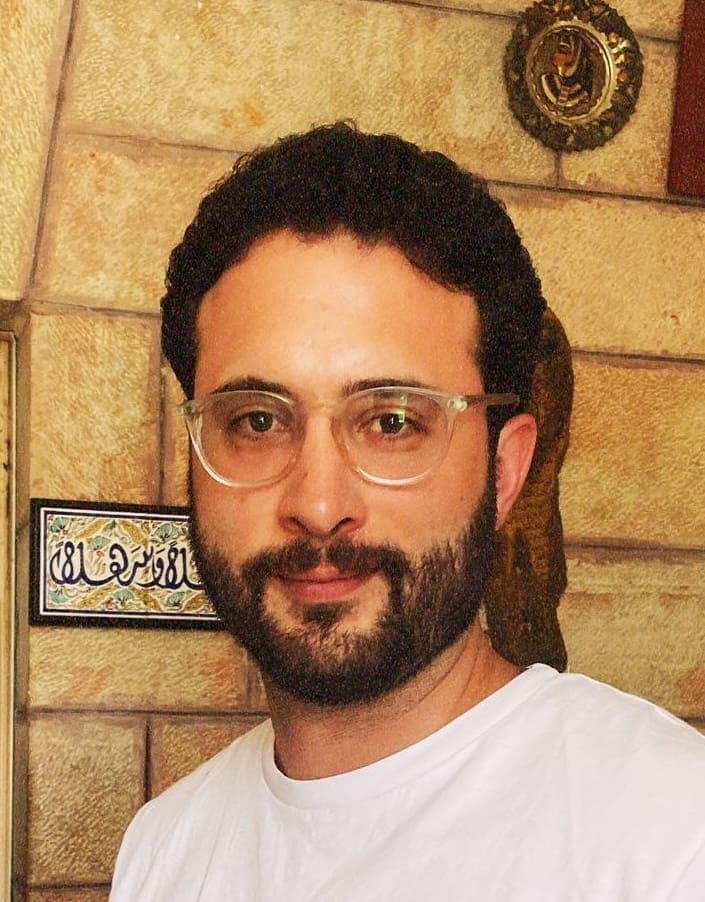
Abdaljawad Omar is a Palestinian writer based in Ramallah, Palestine. He is an assistant professor in the Department of Philosophy and Cultural Studies at Birzeit University, where his teaching and research focus on political theory, decolonial thought, and the intellectual history of Palestine. Omar holds a PhD in interdisciplinary social sciences, with scholarly work centered on Palestinian resistance, settler-colonialism, and revolutionary politics.
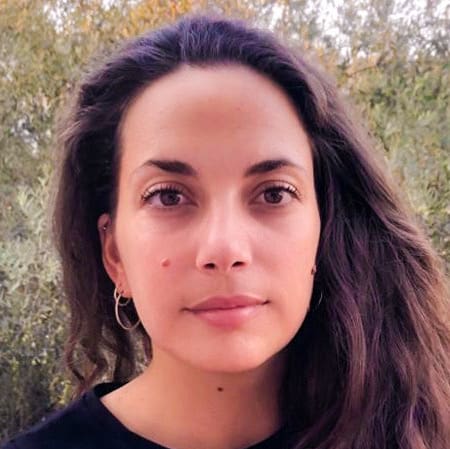
Yara Hawari is Al-Shabaka’s co-director. She previously served as the Palestine policy fellow and senior analyst. Yara completed her PhD in Middle East Politics at the University of Exeter, where she taught various undergraduate courses and continues to be an honorary research fellow. In addition to her academic work, which focused on indigenous studies and oral history, she is a frequent political commentator writing for various media outlets including The Guardian, Foreign Policy, and Al Jazeera English.

Al-Shabaka: The Palestinian Policy Network is an independent, non-partisan, and non-profit organization whose mission is to convene a multidisciplinary, global network of Palestinian analysts to produce critical policy analysis and collectively imagine a new policymaking paradigm for Palestine and Palestinians worldwide.