


Collapse of the PA: Society

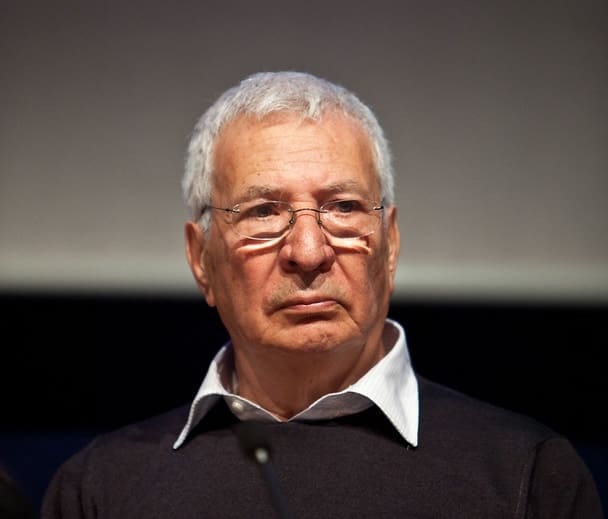
Jamil Hilal is an independent Palestinian sociologist and writer, and has published many books and numerous articles on Palestinian society, the Arab-Israeli Conflict, and Middle East issues.  Hilal has held, and holds, associate senior research fellowship at a number of Palestinian research institutions.  His recent publications include works on poverty, Palestinian political parties, and the political system after Oslo.  He edited Where Now for Palestine: The Demise of the Two-State Solution (Z Books, 2007), and with Ilan Pappe edited Across the Wall (I.B. Tauris, 2010).

Any new uprising must reflect the range of Palestinian experiences and needs in the formulation of resistance strategies, so long as they uphold the values of freedom, equality, social justice, and human rights. It would also need to be open to interacting with the national, regional, and international spheres. Further analysis on this intersection is not available at this time.
Latest Analysis

 Civil Society
After Hamas’s recent announcement that it will hand over governing authority in Gaza to the National Committee for the Administration of Gaza (NCAG), urgent questions about who will shape Gaza's future and on whose terms have reemerged. These questions are particularly salient given that the NCAG’s framework reflects the same technocratic and externally imposed logic that has come to characterize the dominant international proposal for Gaza's reconstruction: one that treats it as a technical exercise in disaster management, sidelining Palestinian sovereignty, return, and self-determination. In contrast, this roundtable asks what it means to understand Gaza as an Indigenous region rather than simply a besieged strip or humanitarian space. Nour Joudah and Dena Qaddumi explore how Indigenous frameworks reshape prevailing understandings of urbanism, reconstruction, and governance; why reconstruction must begin with Palestinian agency and reclamation rather than externally designed colonial master plans; and how rebuilding is already taking place through everyday forms of Indigenous endurance, social organization, and spatial resistance under conditions of ongoing genocide.
Nour Joudah,Dena Qaddumi· Jul 23, 2026
 Politics
The advisory opinions issued by the International Court of Justice on Palestine reveal both the possibilities and the limits of international law, which has come under intense scrutiny amid the Israeli regime’s ongoing genocide in Gaza and broader settler-colonial project across Palestine. Acknowledging the persistent gap between legal principle and political enforcement, this policy brief examines how these opinions can be leveraged to strengthen legal and diplomatic accountability at both the international and domestic levels. It argues that the opinions provide an opportunity to move legal discourse on Palestine beyond the dominant UN framework of statehood within the 1967 borders and to reassert the Palestinian people’s right to self-determination within a broader liberation-oriented framework aimed at ending settler colonialism and advancing justice for Palestinians as a whole.
Al-Shabaka Dana Farraj
Dana Farraj· Jul 1, 2026
 Politics
The US-Israeli war on Iran and Lebanon, as well as the ongoing genocide in Palestine, are reshaping the political landscape of the region. Alliances are being recalibrated, and old assumptions about US power are being tested. The war has also underscored how deeply the global economy remains tied to fossil fuels and to the strategic importance of the Gulf within international energy and trade networks. In this roundtable, Palestinian analysts Diana Buttu and Adam Hanieh examine what this moment reveals about the changing architecture of US imperial power, the regional order now taking shape, and the implications for the struggle for Palestinian liberation.
Diana Buttu,Adam Hanieh· Jun 10, 2026