


Layth Malhis is a graduate student at Georgetown University’s Center for Contemporary Arab Studies, where his work focuses on settler colonialism and Palestinian health. His research advances the concept of “de-healthification” as an analytical framework for understanding the systematic dismantling and weaponization of healthcare in Palestine under successive regimes of colonial control. He is also a researcher at the Institute for Palestine Studies, where he contributes to the Healthcare Destruction Database and scholarship on medical violence and colonial governance. Previously, he managed North American operations for the House of Jerusalem (Bayt al-Maqdis), a Palestinian food import initiative, examining how Palestinian businesses navigate occupation, global supply chains, and the political economy of dispossession.

From this author
Layth Malhis discusses the concept of "de-healthification" as the governing logic of health under settler colonialism: the systematic degradation, obstruction, and weaponization of the very conditions that make health of the Indigenous population possible.

Layth Malhis· Jan 29, 2026
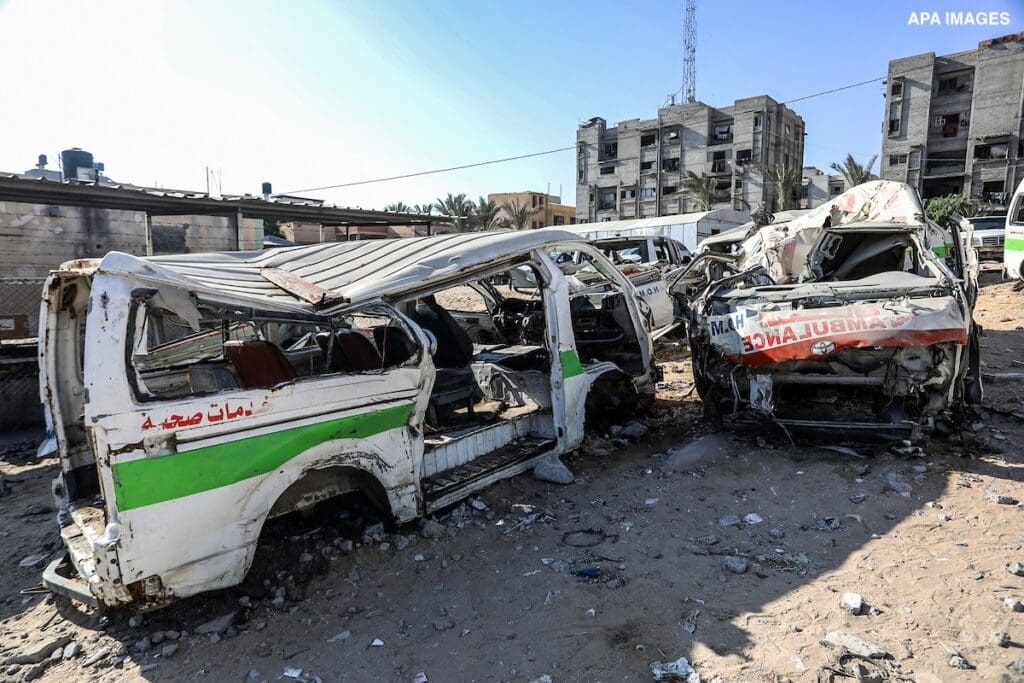
This policy brief introduces de-healthification as a framework for understanding Israel’s systematic destruction of Palestinian healthcare infrastructure, particularly in Gaza. Rather than viewing the collapse of Gaza’s health system as a secondary outcome of the genocide, the brief argues that it is the product of long-standing policies of blockade, occupation, and structural neglect intended to render Palestinian life unhealable and perishable.
By tracing the historical evolution of de-healthification, this brief argues that naming the process is essential for accountability. Because intent is revealed through patterns of destruction rather than explicit declarations, the framework of de-healthification equips policymakers, legal bodies, and advocates to identify healthcare destruction and denial as a core mechanism of settler-colonial control.

Layth Malhis· Jan 11, 2026