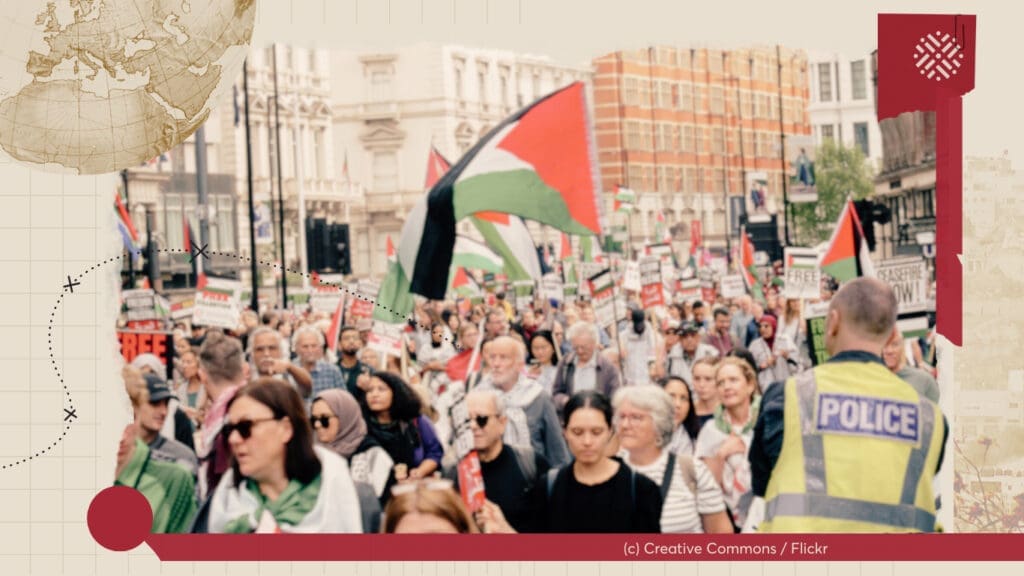
On November 4, 2025, the UK government tabled an amendment to the Crime and Policing Bill to curtail protest rights under the pretext of “cumulative disruption.” The revised Bill is now in the House of Lords Committee, where it is scrutinized before advancing toward final approval. The amendment signals a profound shift in how the state regulates public protest. While the government presents the Bill as a neutral public order measure, it emerges directly from sustained national demonstrations for Palestinian rights and introduces new legal concepts that threaten long-established democratic freedoms.
This roundtable examines the Bill’s political drivers, legal architecture, and wider implications for social movements and civil liberties in the UK. It shows that the amendment is not simply a public order measure; it is a coordinated political and legal project to narrow the space for dissent in the UK. While Palestinian solidarity is the immediate target of the crackdown on freedom of assembly, the roundtable argues that the consequences will reverberate across labor organizing, racial justice, climate activism, and broader democratic participation.