- Topics
-
Topics
See our analysis on civil society and how it shapes culture, politics, and policies
Read our insights on the shifting political landscape and what it means for Palestine
Learn more about the policies and practices shaping the Palestinian economy
Strengthen your understanding of the unique conditions for Palestinian refugees across the Middle East
-
- Analysis
-
Analysis
In-depth analysis on existing or potential policies that impact possibilities for Palestinian liberation.
Insights and perspectives on social, political, and economic questions related to Palestine and Palestinians globally.
Concise analysis into a specific policy, its background and implications.
Commentary that brings together insights from multiple analysts.
Compilations of past Al-Shabaka works surrounding a specific theme.
Longer-form, ad hoc projects that seek to confront research questions outside the scope of our regular analysis.
A policy-driven research initiative by Al-Shabaka: The Palestinian Policy Network.
Our monthly webinar series that brings together Palestinian experts.
Featured
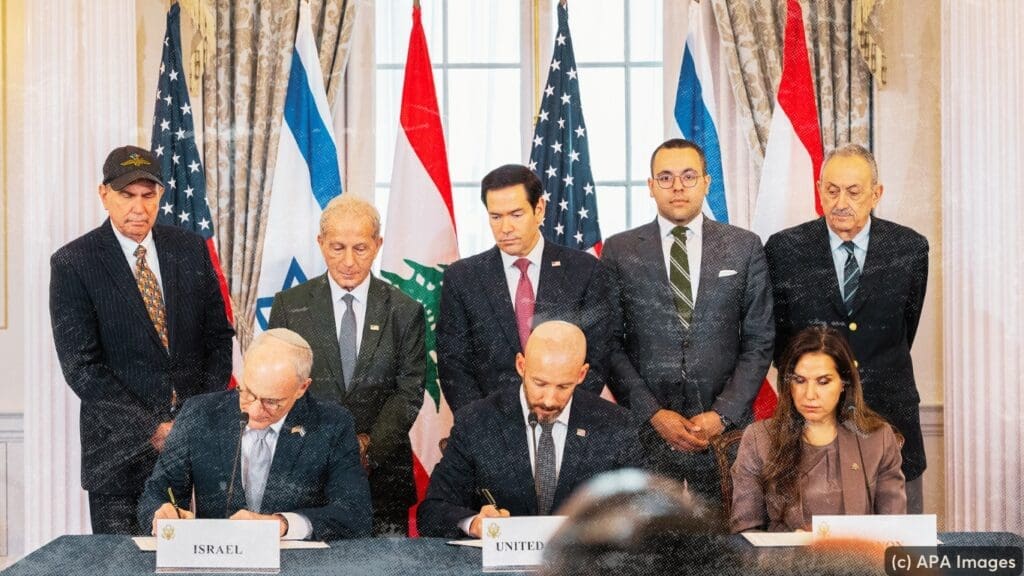
On June 26, 2026, Lebanon, the US, and the Israeli regime signed a Trilateral Framework against the backdrop of fierce military attacks on Lebanon and the invasion of its south. This aggression was part of the broader US-Israeli regional assault that also devastated Iran, Syria, and Palestine, upending the geopolitical order. In this commentary, we speak with Al-Shabaka policy analyst Jaber Suleiman, who examines pivotal questions about this framework agreement and its implications for Palestinian refugees in Lebanon and the liberation struggle more broadly. He emphasizes the grave implications of this agreement, as it makes Israeli withdrawal from Lebanese territory conditional on the disarmament of Hezbollah, thereby holding the resistance factions and the Lebanese state responsible for ending the war and the occupation, while absolving Israel of accountability. Jaber Suleiman· Oct 14, 2026
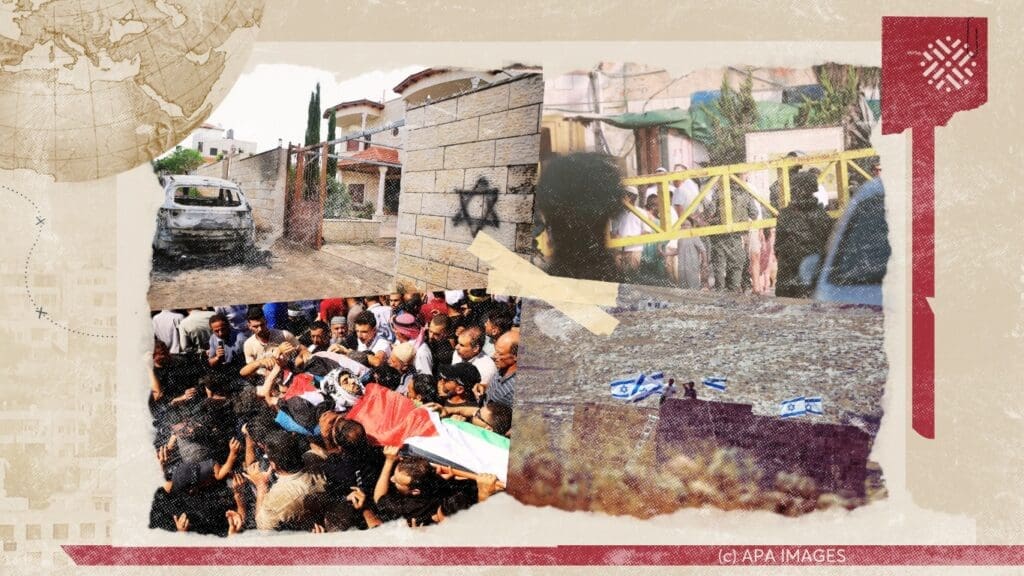
 This Focus On engages with some of the most pressing aspects of this escalation in the West Bank since October 7, 2023. It features analyses by Al-Shabaka members and contributors that show how collective punishment of Palestinians has led to a collapse in access to food, healthcare, work, and education. The compilation also examines the Palestinian people’s resistance to the expansionist Israeli scorched-earth policy, and the political leadership’s complicity and failures.
 Al-Shabaka: The Palestinian Policy Network· Sep 23, 2026
 In this Policy Lab, Al-Shabaka analyst Amjad Iraqi joins host Tariq Kenney-Shawa to examine Israel’s electoral landscape, the limits of its so-called opposition camp, and what the election means for the future of the Palestinian struggle.
 Amjad Iraqi· Sep 22, 2026
-
- Resources
- Media & Outreach
- The Network
Democratizing the PLO: Five Questions
After the disaster of the Oslo accords, concocted in secrecy and without any democratic oversight, it should come as no surprise that Palestinians want to have a greater say in their national institutions and leadership. Nor is it a surprise that it is the Palestinians in the diaspora that increasingly raise the issue of the PLO’s democratization given that their role in Palestinian affairs has been all but ignored for almost two decades. The deadlocked political struggle between Hamas and Fatah in Gaza and the West Bank has added to the sense that pressure from the Palestinian diaspora for democratization is needed to break out of the vested interests of these two parties.
There is no question that any effort to democratize an institution, party, or national movement is always good, and is indeed a sine qua non of any representative or progressive political activity. For how long can the leadership of any movement claim to represent its constituents without actually referring back to them and taking their opinions into account? Democratization of the PLO is a long overdue, essential political reform and the sooner it happens, the better.
That said, it is equally important not to have any illusions that democratization per se is the panacea of contemporary Palestinian political and organizational malaise. There are five factors, and possibly more, that need to be critically addressed even as we recognize the importance of democratizing the PLO.
First, the nature of the contemporary conflict places great limitations on efforts at democratization. I am not referring to the technical difficulty of trying to organize a voter registration drive; such technical obstacles can be resolved as long as the political will exists. The real problem is that Palestinians are engaged in a grueling struggle for national self-determination that challenges Zionist settler colonial control over Palestine, with our side being the much weaker party. Recognizing the nature of the conflict means that there are inherent limitations to the practice of democracy. Simply put, such a battle entails tactics, strategy, planning, and secrecy – elements that cannot be conducted in the open. This is not an excuse for the undemocratic practices of the movement at large. But some balance needs to be struck between assertive leadership, unity in action, secrecy, and representative incorporation of popular demands and ideas.
A second problem emanates from the reality that, because we are engaged in such a struggle, the Zionist movement, and its American and European backers, do not recognize Palestinian democratic agency. We saw this quite clearly in the 2006 elections when Hamas was prevented from exercising power because “Palestinian democracy” did not conform to the standards of this hypocritical constituency – recognition of Israel, acceptance of the “peace process,” and renouncing “terrorism.”
Of course, just because the most powerful forces in the world repudiate Palestinian democracy does not mean that we have to accept their rejection. It does, however, mean that if we do insist on democratization, then we must be prepared to deal with even greater political marginalization than is now the case. Proponents of democratization might argue that this task would be the responsibility of the elected Palestinian leadership. But the issue would seem to re-enforce the argument for a more secretive and somewhat less democratic leadership, especially if it seeks new avenues of political, economic and potentially military support.
A third problem relates to the question of how democracy would be implemented within the Palestinian movement itself. The 2006 election results were not only rejected by the Zionist movement and Western governments; they were also rejected by segments of the Palestinian leadership itself, particularly within the Fatah movement. The 2006 Hamas victory, which presaged a sea change in the way the Palestinian movement had been acting for the previous 40 years, was clearly threatening to the Fatah leadership and parts of its constituency. This, in its extreme manifestation, went to the extent of allying itself with the U.S. Central Intelligence Agency to try and foment an armed coup against Hamas. It was only too apparent that vested interests within Fatah and its backers in Jordan, Egypt, and Saudi Arabia would not tolerate such a revolutionary transformation of the status quo.
Thus, democratic forces also need to answer the question of how we, as a movement, would be able to ensure that the results of democratic elections would be respected by the movement itself? In other words, while democracy sounds good in theory, it can only become reality if it is backed by organized social and institutional forces on the ground. These forces would need to be powerful enough to resist and push back against the vested interests that have dominated the movement for so long and which to some degree profit from the status quo. Are the Palestinian forces currently demanding democratization of our movement sufficiently strong and organized to take up this challenge? An indication of the true balance of forces will soon be made clear in the results of the PNC registration campaign.
This takes us to a fourth question that is also related to the 2006 elections, the issue of how Palestinian society at large, and particularly its so-called “civil society” reacted. The struggle for Palestinian democracy could not have been posed more starkly in the 2006 elections: a Hamas parliamentary majority was prevented from taking power by the Israeli occupation, the Western donor governments, and reactionary elements of Fatah. Genuinely democratic forces of all political leanings should have demanded that the election results be respected. But we did not see mass rallies in Palestine or in the Diaspora demanding that the results be respected, which gives an indication of the weakness of genuine democratic forces in the Palestinian political arena. We cannot simply ignore the 2006 elections. Otherwise we will reproduce the same cycle of ineffectiveness that has plagued the Palestinian opposition for generations. Indeed, the question arises as to what the forces seeking democracy will do if the elections reproduce the same results as 2006. Do they have an answer for what to do if this is the case?
The fifth question raised by the current demands for democratization is the limited manner in which democracy is defined. Representative elections are only one aspect of democracy. Others include a fair distribution of resources and wealth, equality of opportunity and legal rights before the law. Would it make more sense in the Palestinian context to start, for example, by demanding an end to corporate monopolies of public services instead of a campaign for representative elections? Or an end to the undemocratic neoliberal economic policies being implemented throughout the OPT?
This question can also be posed to many established democracies around the world, where democracy has meant periodic elections, a functioning legal system, and so on, but where a fairer distribution of wealth never comes about, and social mobility is minimal. Moreover the forces of neoliberalism are so powerful and alienating, that it is no wonder that so many groups have retreated to the comfort of religious and ethnic affinities, as the only way to survive.
The Palestinian issue is infinitely complex and challenging for any political actor. I have raised these questions in the spirit of democratic debate – a debate that must be had not just for the debate itself, but also to clarify understanding and contribute to political trajectories with real power in terms of ideas, resources, and institutions. The problem with much of the contemporary debate around democratization is that it appears to want the end result of democracy without undertaking the real work of what democracy entails: winning the battle of ideas, translating these ideas into political streams and institutions, mobilizing resources for these organizations, learning how to work with other forces, and building tactics and strategies that can produce results.
Only by both demanding democracy and practicing democratic organizing can any real results be achieved. As the towering African American intellectual and former slave Fredrick Douglass noted, “If there is no struggle, there is no progress. Those who profess to favor freedom, and deprecate agitation, are men who want crops without plowing up the ground, they want rain without thunder and lightning.”
Without combining the implementation of formal democracy with action in lived theatres – for jobs, social mobility, wealth distribution, social services, social protections – the demand for democratization risks reproducing the status quo. It is the obligation of genuine democrats to find ways to combine the two so as to address the demoralization and malaise that holds back our movement and people as a whole.
Toufic Haddad
Toufic Haddad is a Palestinian-American academic and author. He holds a PhD in Development Studies from the School of Oriental and African Studies and is the author of Palestine Ltd: Neoliberalism and Nationalism in the Occupied Territory (I.B. Tauris, 2016). He has worked across the occupied Palestinian territories as a journalist, researcher, consultant, editor, and publisher, and most recently directed the Kenyon Institute — the Council for British Research in the Levant’s Jerusalem branch — from 2020 to 2024. He is currently a research fellow at the Institute for Advanced Studies in the Humanities at the University of Edinburgh.
Latest Analysis
Disarming Resistance: The Trilateral Framework Agreement
Under Siege: The West Bank After October 7
Genocide and the Limits of Israeli Elections
We’re building a network for liberation.
As the only global Palestinian think tank, we’re working hard to respond to rapid developments affecting Palestinians, while remaining committed to shedding light on issues that may otherwise be overlooked.