- Topics
-
Topics
See our analysis on civil society and how it shapes culture, politics, and policies
Read our insights on the shifting political landscape and what it means for Palestine
Learn more about the policies and practices shaping the Palestinian economy
Strengthen your understanding of the unique conditions for Palestinian refugees across the Middle East
-
- Analysis
-
Analysis
In-depth analysis on existing or potential policies that impact possibilities for Palestinian liberation.
Insights and perspectives on social, political, and economic questions related to Palestine and Palestinians globally.
Concise analysis into a specific policy, its background and implications.
Commentary that brings together insights from multiple analysts.
Compilations of past Al-Shabaka works surrounding a specific theme.
Longer-form, ad hoc projects that seek to confront research questions outside the scope of our regular analysis.
A policy-driven research initiative by Al-Shabaka: The Palestinian Policy Network.
Our monthly webinar series that brings together Palestinian experts.
Featured
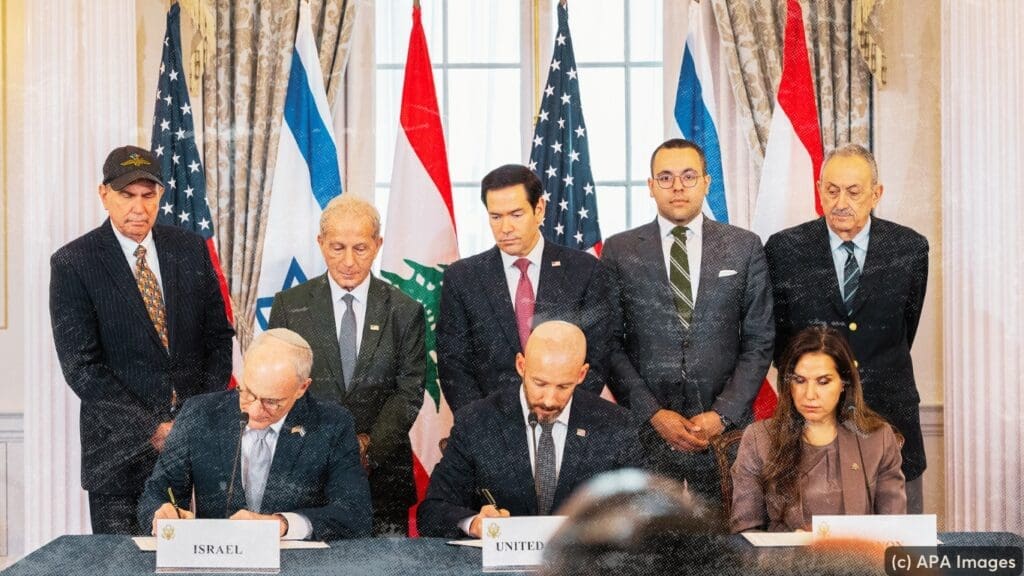
On June 26, 2026, Lebanon, the US, and the Israeli regime signed a Trilateral Framework against the backdrop of fierce military attacks on Lebanon and the invasion of its south. This aggression was part of the broader US-Israeli regional assault that also devastated Iran, Syria, and Palestine, upending the geopolitical order. In this commentary, we speak with Al-Shabaka policy analyst Jaber Suleiman, who examines pivotal questions about this framework agreement and its implications for Palestinian refugees in Lebanon and the liberation struggle more broadly. He emphasizes the grave implications of this agreement, as it makes Israeli withdrawal from Lebanese territory conditional on the disarmament of Hezbollah, thereby holding the resistance factions and the Lebanese state responsible for ending the war and the occupation, while absolving Israel of accountability. Jaber Suleiman· Oct 14, 2026
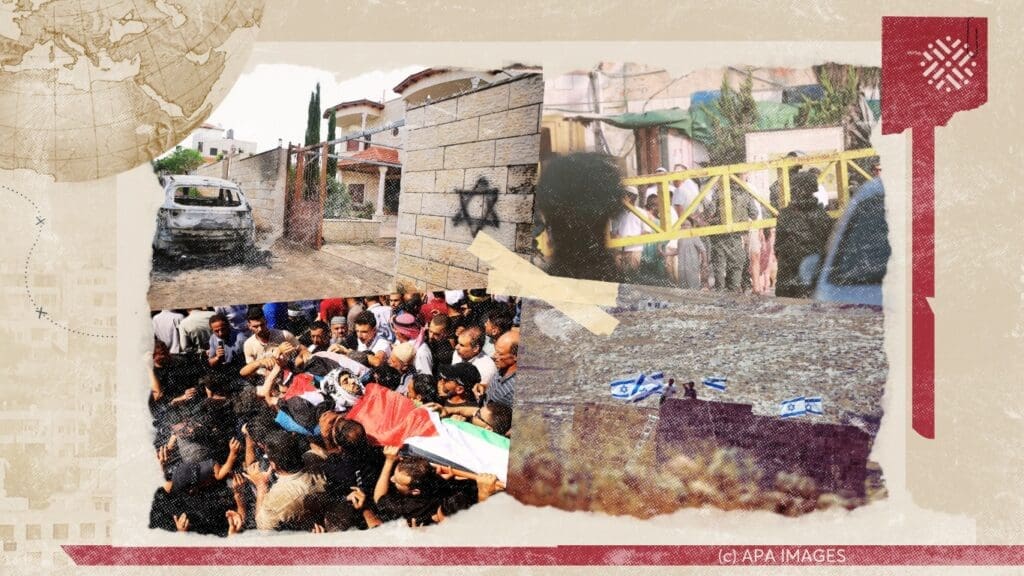
 This Focus On engages with some of the most pressing aspects of this escalation in the West Bank since October 7, 2023. It features analyses by Al-Shabaka members and contributors that show how collective punishment of Palestinians has led to a collapse in access to food, healthcare, work, and education. The compilation also examines the Palestinian people’s resistance to the expansionist Israeli scorched-earth policy, and the political leadership’s complicity and failures.
 Al-Shabaka: The Palestinian Policy Network· Sep 23, 2026
 In this Policy Lab, Al-Shabaka analyst Amjad Iraqi joins host Tariq Kenney-Shawa to examine Israel’s electoral landscape, the limits of its so-called opposition camp, and what the election means for the future of the Palestinian struggle.
 Amjad Iraqi· Sep 22, 2026
-
- Resources
- Media & Outreach
- The Network
Transforming Our Vision of Palestine Into Reality
Can we envision a Palestine free from Israeli apartheid, military occupation, economic domination, house demolitions, arbitrary detentions – and from the threat of being denied entry or harassed when trying to go home? I can and, perhaps more importantly, my daughters’ generation can. The challenge is how to get from present-day reality to realizing that vision.
Here’s a snapshot of just some of the ills of the Palestinian condition, viewed from Ramallah but with a Palestinian-wide lens:
An economy forced to be structurally dependent on and contained by the Israeli economy and aid money and unable to develop resources ranging from natural gas in the sea off the Gaza Strip to the electromagnetic spectrum to quarries.
Donor agency staff locked into the mega-beneficiary Palestinian market unable to build health care systems that work, upgrade the education system so schools don’t have to open two shifts a day, or plan for competitive economic sectors that can compete in global markets.
Local and international non-governmental organizations born into requests for proposals, log frames, progress reports, audit reports, and monitoring and evaluation reports. Most know no other world and their staff has mortgages to pay to say nothing of car loans, school loans, mobile phones, and home appliances.
After 65 years of forced dispossession, 46 years of military occupation and 20 years of the failed Oslo Peace Accords the list of problems is long indeed.
Throughout, one US administration after another has since 1948 given Israel almost unqualified support in economic and military aid and political assistance despite some dissent within the halls of power.
For example, on March 19, 1948, United States Representative in the Security Council Warren Austin spoke against partition and called for a “temporary trusteeship for Palestine … to maintain the peace and to afford the Jews and Arabs of Palestine, who must live together, further opportunity to reach an agreement regarding the future government of that country.” Indeed, the entire U.S. delegation was ready to resign after the White House, which had effectively sold out to the Zionist movement, de facto recognized Israel on May 14 1948 minutes after it had declared its independence.
Sadly, history is not often made by the dissenters and, ever since, that dark day in 1948, the United States has been on the wrong side of history. But it is important to remember that those who dissent can and do build the power to change the course history imposed by the powerful.
The first step towards the vision of the future must confront the present-day myths regarding peace, justice, and development in Palestine.
Myth #1 is thinking that the world can ignore the majority of the Palestinian people who happen to not live under military occupation and pretend that progress is being made. Whether they are in Jerusalem, the Galilee, Lebanon, or the U.S., the Palestinian people will never disappear or accept their predicament as refugees and exiles, second class citizens in Israel, internally displaced persons within Israel and the occupied territories, being warehoused under military rule, or involuntarily forced into a Diaspora.
Myth #2 is thinking that throwing money at a political problem – in fact the political problem par excellence – can solve it. It cannot. In the early days it was some hundred thousands of dollars, then, it became a few million dollars, and then tens of millions of dollars. By now the millions have turned into billions after decades of Israel’s human rights violations have structurally damaged Palestinian society as even the World Bank recently recognized.
The reality is that if Israel were held accountable to international law and norms the Palestinians could make their own living including in the prison that is Gaza, which has to live through enforced humanitarian disaster. And yet more aid is poured down this destructive bottomless pit.
Myth #3 is to think the failed paradigm of two states can succeed when Israel refuses to accept it and is creating facts on the ground every day to make sure it will never happen. On the contrary: Palestinians will and are not standing idly by to watch their rights wither away on the slow burner of ethnic cleansing.
Myth #4 is to think that Palestinians are defined solely by their struggle. Not at all. The Palestinian people have experienced forced fragmentation but remain as one, with a thriving culture, academic accomplishments, and business innovation, wherever they are.
Countering these myths means working on several fronts. Many Palestinians are working on the political front. Within Palestine and worldwide Palestinian communities are actively questioning the popular legitimacy of their leadership whose terms have long since expired and whose political platforms collapsed long ago. They are seeking ways to organize differently as well as to challenge their leadership.
In the meantime, Palestinians and their supporters continue to resist the occupation and discrimination, developing and evolving more effective tools to challenge these at their core and not only to focus on discrete violations. The grassroots Boycott, Divestment and Sanctions (BDS) movement has carved out an effective way to do so but there is still much more to do.
There is a need to broaden the challenge to these rights violations in the U.S. and European Union, e.g. moving from university and church divestment to getting Israel State Bonds out of the portfolios of U.S. municipalities and state treasuries and fast-tracking cautious European steps of labeling settlement products to suspend the E.U.’s trade agreement with Israel.
There is also a need, equally importantly, to stop viewing politics and the economy through separate lenses. There is no shortage of others who are planning the Palestinian future. Everybody has a plan for the Palestinians: Israel, the World Bank, Tony Blair and the Quartet, and the RAND Institute to name just a few. And of course there’s U.S. Secretary of State John Kerry shepherding negotiations backed by his $4 billion plan, insisting on that ill-fated partition plan despite the fact that Israel’s actions on the ground have made the two-state solution well nigh impossible.
It is past time that Palestinians around the world and those in solidarity with their struggle put on their economic caps. Economic investment of the right kind is a form of non-violent resistance – not the “positive investment” that Israel and its supporters are peddling to muddy the waters and counter the BDS movement, but the kind of investment that enables Palestinians to stay on their land and work towards freedom, justice, and equality.
Every job created in Palestine today should not be for “growth” but for steadfast survival; it must keep a family on the land and engaged constructively. The crux of this conflict is land and people. The land has been annexed, occupied, settled, dried up, walled in, and fragmented – a story that has and is being told. But it is more difficult to capture the loss of hope, unemployment, poverty, malnutrition, and so many other hardships of a people being dispossessed.
That is why Palestinian activists and the international solidarity movement must engage in Palestine’s economy by investing, linking, and supporting Palestine’s businesses, small and large, with others around the globe. The same must be done with the health care system and the education system.
When the younger generation look back on the decades of Palestinian struggle for freedom and justice they see only a few broad strokes: armed struggle, which failed to wrest Palestinian rights from a globally armed military power; international law that consists of rattling off UN resolutions; the civil unrest of the First Intifada that was dissipated by the Palestinian leadership and world powers; and the bilateral negotiations that started with 100,000 settlers and ended with close to 600,000 and a physical fragmentation of what remained of Palestine.
Many Palestinian youth are looking reality in the eye and saying: Maybe we are too weak to create a state; what we really need are our rights. They may very soon look Israel straight in the eye and say: You win. You get it all: the West Bank, Jerusalem, the Jordan Valley, the settlements, the water, the electromagnetic spectrum, the airspace. And you get us, and what we want is equality or nothing, like the late Edward Said so eloquently put it.
Regardless of the ultimate political arrangement, if anyone thinks that the Palestinians, all Palestinians, will accept anything less than being free and equal human beings in their homeland, then they should re-read world history.
Sam Bahour
Sam Bahour leads Applied Information Management (AIM), a business development consulting firm. Bahour was instrumental in establishing two publicly traded firms: the Palestine Telecommunications Company (PALTEL) and the Arab Palestinian Shopping Centers (APSC). He currently serves as a board member at Just Vision and The Palestine Economic Policy Research Institute (MAS), and served as an independent director at the Arab Islamic Bank PLC from 2004 to 2025. He speaks and writes frequently on Palestinian affairs, blogs at epalestine.ps, and has been widely published in leading outlets. He is co-editor of Homeland: Oral History of Palestine and Palestinians (Olive Branch Press, 1993).
Latest Analysis
Disarming Resistance: The Trilateral Framework Agreement
Under Siege: The West Bank After October 7
Genocide and the Limits of Israeli Elections
We’re building a network for liberation.
As the only global Palestinian think tank, we’re working hard to respond to rapid developments affecting Palestinians, while remaining committed to shedding light on issues that may otherwise be overlooked.