



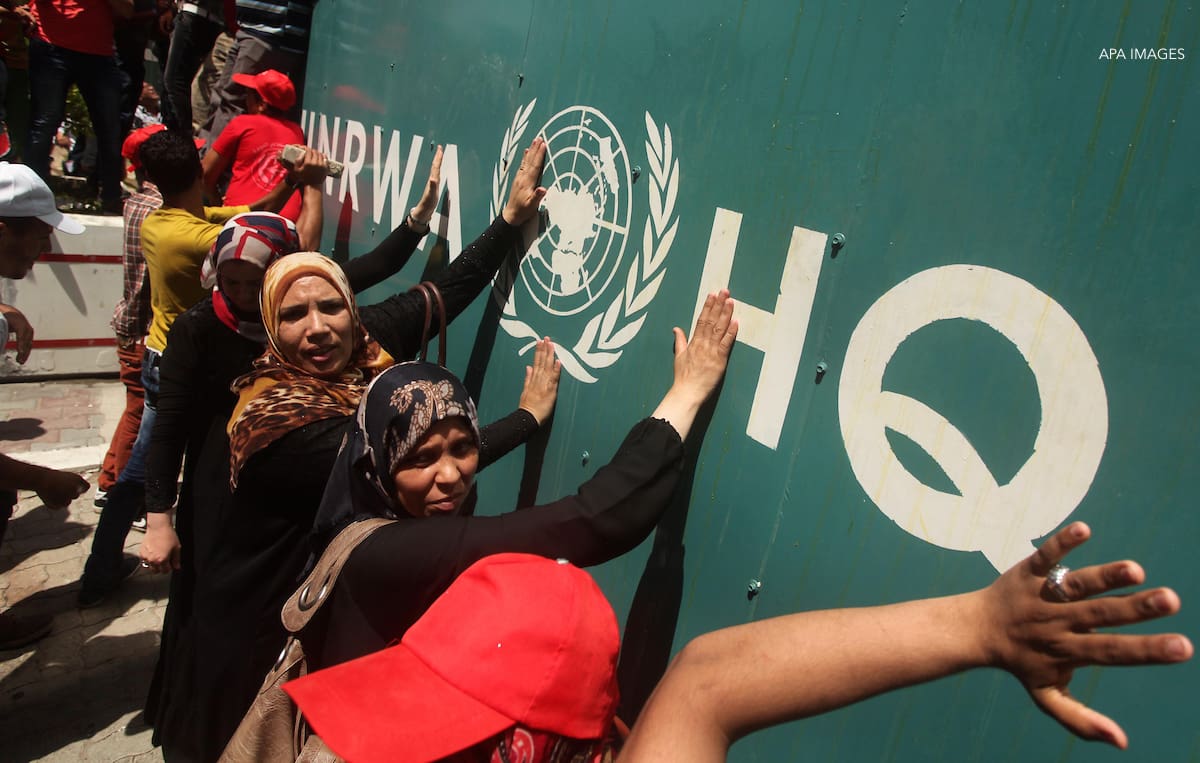
In the wake of President Donald Trump’s decision to freeze a significant portion of the US’s contribution to the United Nations Relief and Works Agency for Palestine Refugees in the Near East (UNRWA), many leaders and public figures opposed to the move have not decried it for the humanitarian devastation it will cause, but rather for its supposed provocation of Palestinian extremism. For instance, in a letter to Trump, US Democrats quoted former Israeli Army Spokesperson Peter Lerner, who stated that by “weakening UNWRA…Palestinians will be even more susceptible to more extremism and violence.” They also warned Trump that the reduction in funds “will harm American interests.”
While it’s unsurprising that Israeli officials and US politicians would describe a colonized people as violent and stress that UNRWA constrains Palestinian “extremism,” it’s disquieting that Palestinian Authority (PA) President Mahmoud Abbas expressed a similar opinion in his recent Security Council speech. Abbas warned that the US cuts would cause Palestinian refugees to become “terrorists” and/or flood Western countries – rhetoric that feeds into European xenophobism. Not once did Abbas reaffirm the right of return, replacing it instead with a reference to a “just resolution” – a euphemism for concession.
UNRWA neither constrains nor incites Palestinian resistance. This is evidenced by the fact that the agency began operating in the 1950s, and the PLO only launched armed struggle in the mid-1960s. Palestinians resist whether they are registered with the agency or not – and much of Palestinian resistance is peaceful.
Abbas’s comment on the cuts demonstrates the PA’s use of Palestinian refugees as a rhetorical and political tool Share on XToday, Abbas and the PA plead at the feet of an empire that encroaches on Palestinian national rights. The recent US recognition of Jerusalem as Israel’s capital and its decision to move its embassy there on Nakba (catastrophe) day is a prime example. Yet the PA clings to a non-existent two-state solution that Israel never intended to implement and that the US has all but wiped off the negotiations table. Abbas’s comment on the UNRWA cuts demonstrates the PA’s craven use of Palestinian refugees as a rhetorical and political tool to secure funding and continue this charade. Since it is clear that the PA will not advocate for Palestinian rights, Palestinians across the globe must work for a just solution themselves.
A Call for Palestinian Action
While the relationship between UNRWA and the refugees has often been uneasy, it is necessary until refugee rights are secured. Thus, employees and beneficiaries need to work with UNRWA to withstand the attacks on the agency and the refugee status.
In their advocacy to national governments, international bodies, and legal experts Palestinians and their allies should reaffirm that the UN has a responsibility to Palestinian refugees and UNRWA due to the fact that it was complicit in creating the refugee crisis by 1) passing the partition plan of 1947, which violated the principle of self-determination in the League of Nations Covenant of 1922, and 2) accepting Israel as a UN member in 1949, conditional on Israel’s implementation of the charter and UNGA resolutions, especially 181 (II) – the partition plan – and 194 (III) – the right of return. Israel failed to comply with any of these resolutions.
In addition, Palestinian civil society and representatives must advocate for repatriation as part of the struggle for self-determination, as well as for the protection of refugee camps. The camps signal international responsibility and are symbols of the national predicament and struggle to return.
Palestinians around the world should prepare to protest any future agreement between the Palestine Liberation Organization (PLO) and Israel that retracts the full rights of refugees and the right of return. They must make clear that self-determination cannot be fulfilled when the “self” is not fully represented in determining the future. Until the PLO is fully representative of the Palestinian people, including refugees, it lacks the legitimacy to negotiate.
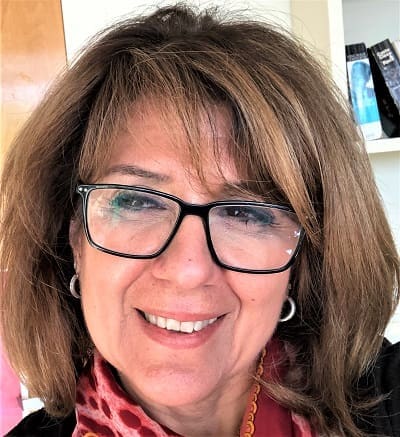
Randa Farah is Associate Professor in the Anthropology Department at the University of Western Ontario, where she has taught since 2001, and Adjunct Faculty at the Centre for Global Studies at Huron University College. She holds a PhD from the University of Toronto, where her doctoral research focused on memory and identity among Palestinian refugees in camps in Jordan in the context of the Oslo Accords. She has also conducted field research in camps for Western Saharan refugees in Algeria, and her comparative work on the two cases has been published in the Journal of Palestine Studies. She previously held positions as Visiting Fellow and Associate Researcher at the Refugee Studies Centre at the University of Oxford, and worked at CERMOC in Amman on a research project on Palestinian refugees and UNRWA.