
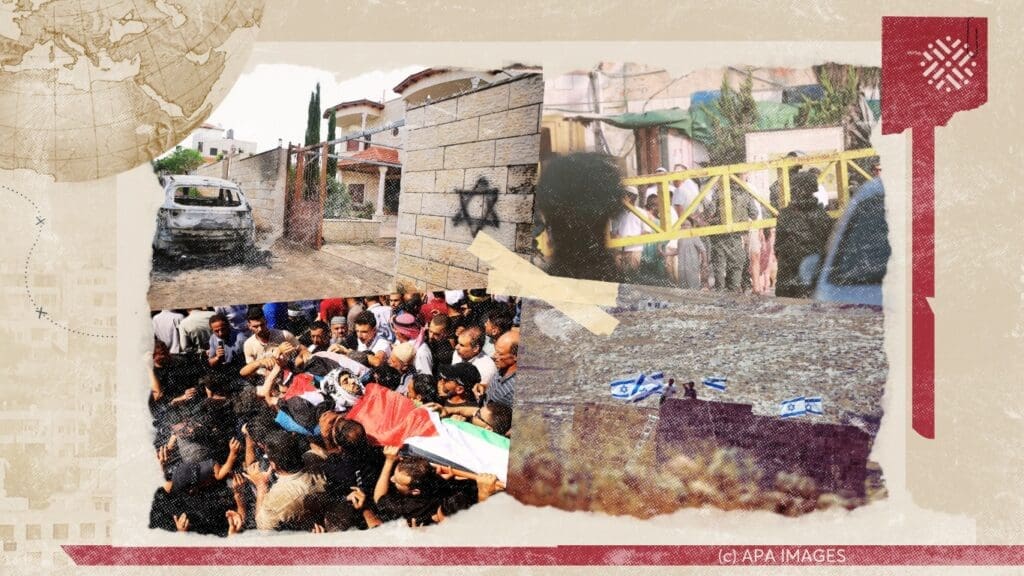



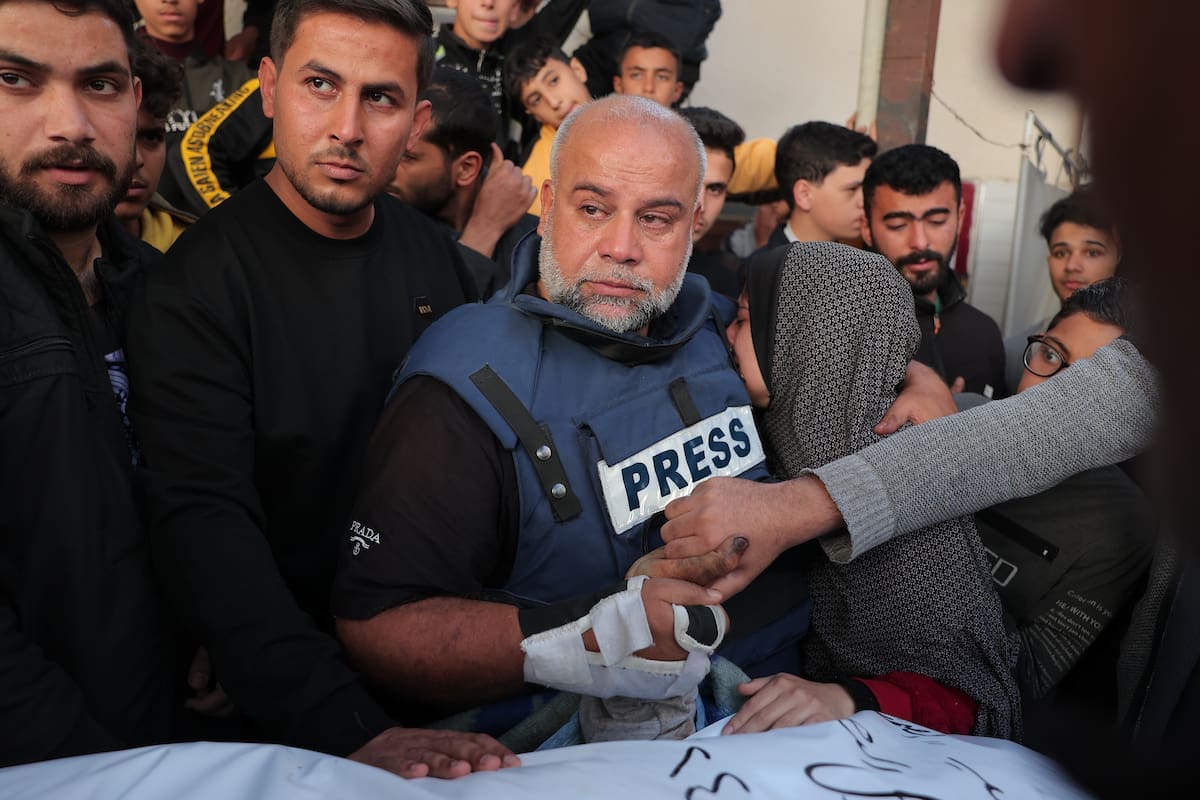
Palestinians attend in the funeral of Hamza Wael Dahdouh, a journalist with the Al Jazeera television network, who was killed in a reported Israeli air strike

Over the last 18 months, Israeli forces have killed more than 230 journalists, primarily in Gaza but also in Lebanon and Syria. To put this in perspective, more journalists have been killed during Israel’s ongoing genocide than in both world wars, the US invasions of Vietnam and Afghanistan, and the war in Ukraine combined.

All of this is by design. These journalists are not being killed in crossfire—they are being deliberately targeted in a mass assassination campaign intended to prevent news of Israel’s war crimes from reaching an international audience. Despite the scale of this assault, Western journalists and media outlets have remained silent, allowing Israel’s unprecedented attacks on press freedom—and on the Palestinian people—to continue unchecked.

In this policy lab, Mariam Barghouti and Sharif Abdel Kouddous join host Tariq Kenney-Shawa to discuss Israel’s targeted assassination campaign against Palestinian journalists, the complicity of Western media in normalizing these crimes, and how this silence allows Israel to get away with genocide.
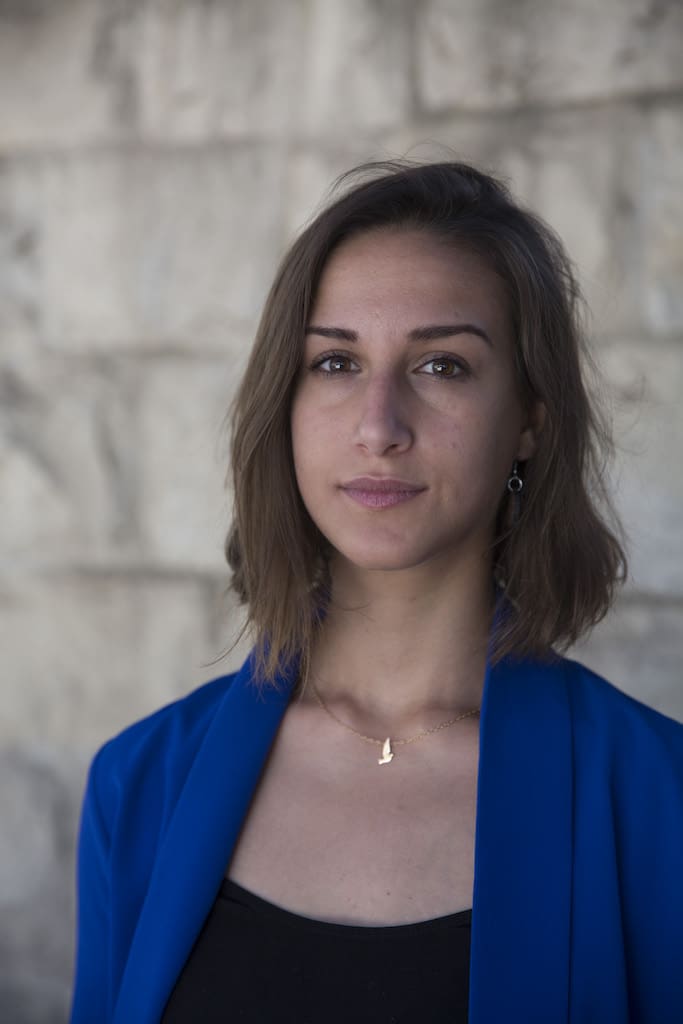
Mariam Barghouti is a Palestinian writer and researcher based in Ramallah. She earned a BA in English Language and Literature from Birzeit University, and an MSc in Sociology and Global Change from the University of Edinburgh. She worked as a journalist and reporter with a focus on the Levant, and published various sociopolitical commentaries from Palestine. She has undertaken monitoring and evaluation missions of humanitarian and development aid in Jordan, Palestine, and Lebanon for various governmental and non-governmental organizations. Her reporting and analysis have been featured in Al-Jazeera English, the New York Times, the Guardian, BBC, and Middle East Eye, amongst others.
With: Sharif Abdel Kouddous
In this article

Latest Analysis

 Civil Society
We cannot understand Gaza’s endurance through a binary that casts Palestinians, individually or collectively, as either heroic in their resistance or passive victims. Rather, we must approach it through a decolonial conception of sumud (steadfastness): a historically situated, relational, and materially conditioned practice of collective endurance that emerges, shifts, and persists within ongoing colonial violence.
Abdalrahman Kittana· May 12, 2026
 Politics
This policy brief argues that, by maintaining the classification of such zones as provisional security arrangements rather than permanent borders, the Israeli regime exercises territorial control while limiting the immediate legal and political costs associated with declared annexation.
Ahmad Ibsais· Apr 21, 2026
 Civil Society
In February 2021, Defense for Children International–Palestine (DCIP) reported that Israeli interrogators had raped a 15-year-old Palestinian boy in detention. Rather than investigate the allegation, Israeli forces raided DCIP’s offices and later designated it—along with five other Palestinian human rights groups—as a “terrorist organization.” While such abuses and crackdowns are not new, this moment marked a decisive escalation: the shift from harassment of Palestinian civil society to its outright criminalization with the full support and participation of the US. In 2025, the Trump administration designated six Palestinian organizations under counterterrorism frameworks before advancing even further, sanctioning leading human rights groups for engaging with the International Criminal Court. These measures move beyond targeting individual actors to undermining the very infrastructure of international accountability. This policy brief argues that the campaign by the US and the Israeli regime against Palestinian civil society and international law carries global consequences, threatening mechanisms designed to hold state violence in check. It concludes with recommendations for how Palestinian organizations and their allies can adapt, defend themselves, and pursue justice in an increasingly hostile environment.
Al-Shabaka Tariq Kenney-Shawa
Tariq Kenney-Shawa· Mar 31, 2026