


Abrupt leadership change: economy
Al-Shabaka Policy Member Tareq Sadeq is a Palestinian refugee from the village of Majdal Sadeq near Jaffa and currently lives in Ramallah. Tareq holds a...
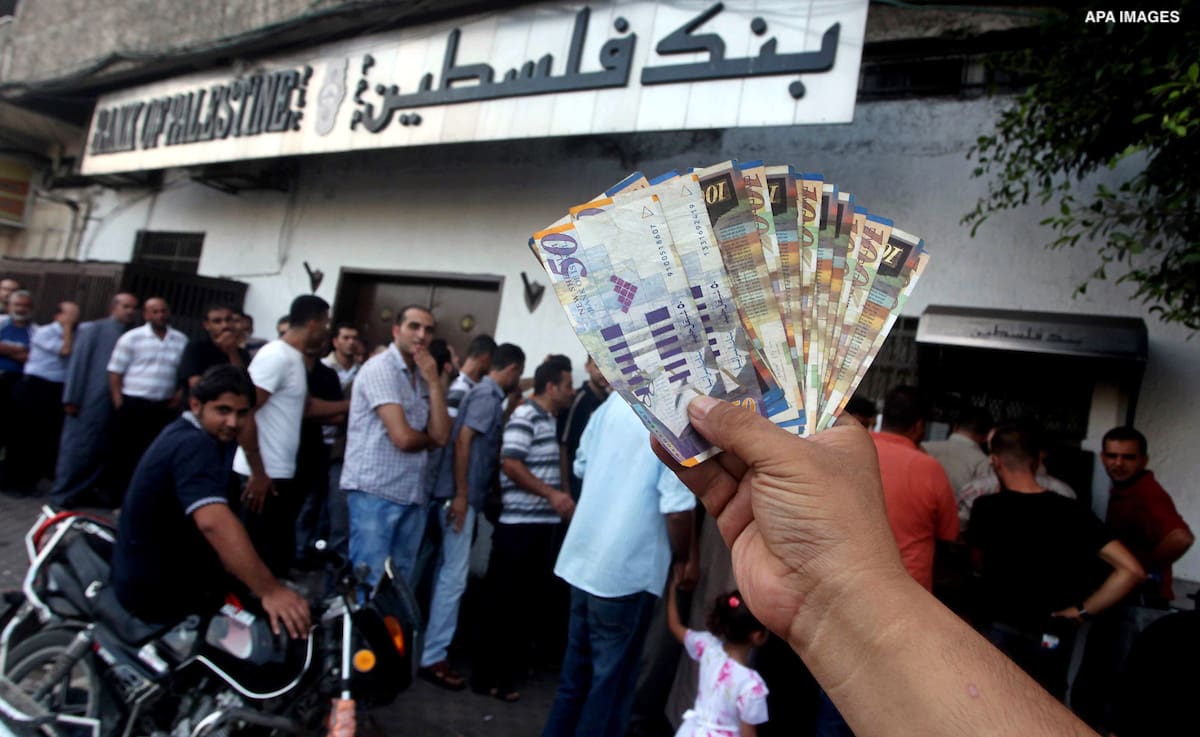
A new and democratic legislative council would require freeing the Palestinian economy from that of Israel’s. It would require adopting a participatory and transparent approach in the preparation of the annual general budget, and it would necessitate distribution of financial resources in accordance with the needs and aspirations of the Palestinian people. Further analysis on this intersection is not available at this time.
Latest Analysis

 Civil Society
The global reckoning that followed October 7, 2023, marked a profound rupture in how Palestine is understood worldwide. The Gaza genocide exposed how Israeli mass violence is not exceptional or reactive, but foundational to the Zionist project. What was once framed as a “conflict” to be managed is now widely recognized as a system of domination to be dismantled. It ushered in a shift away from the technocratic language of peace processes and toward an honest confrontation with the structural realities Palestinians have long named: settler colonialism, apartheid, and the ongoing Nakba. The commentary argues that the Israeli genocidal campaign in Gaza has radicalized the world. When crowds march through global capitals demanding a free Palestine, they simultaneously articulate demands for the abolition of racial capitalism, extractive regimes, climate injustice, and all forms of contemporary fascism. In this moment of radical clarity, Palestine becomes a lens through which the underlying architecture of global domination is laid bare—and through which new horizons of collective freedom emerge.
Tareq Baconi· Dec 21, 2025
 Politics
Inès Abdel Razek and Munir Nuseibah joined Al-Shabaka for a conversation on the politics behind the UNSC resolution, the implementability of the US-Israeli plan, and the scenarios now being advanced for Gaza and for Palestine more broadly.
 Politics
European empires used Christian missions to legitimize conquest in Africa and advance imperial interests, laying the groundwork for a political form of Christian Zionism. British evangelicals were central in transforming Christian Zionism from a theological belief into an imperial strategy by promoting Jewish resettlement in Palestine as a means of extending British influence. This fusion of religious ideology and imperial ambition endures in contemporary Christian Zionist movements, which frame modern Israel as the fulfillment of biblical prophecy and recast Palestinian presence as an impediment to a divinely ordained order. This policy brief shows how these narratives and their policy effects have taken root in the Global South, including in South Africa. In this context, Israeli efforts increasingly rely on Christian Zionist networks to weaken longstanding solidarity with Palestinians and cultivate support for Israeli occupation.
Al-Shabaka Fathi Nimer
Fathi Nimer· Dec 7, 2025