


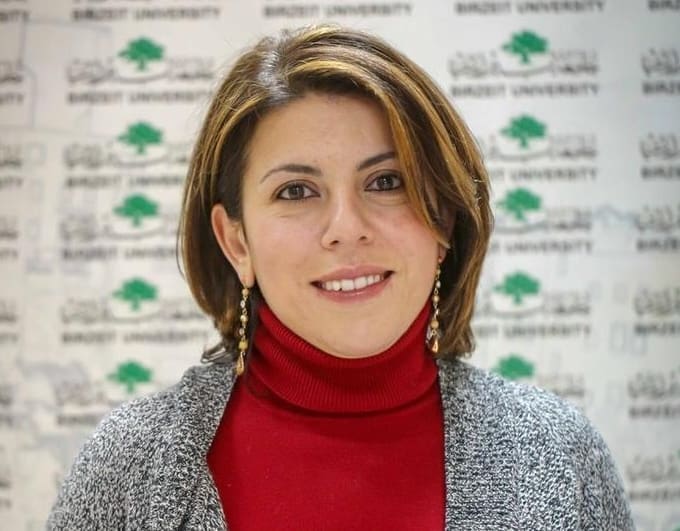
Rana Barakat is Associate Professor of History and Director of Birzeit University Museum in Palestine, and Belknap Visiting Associate Professor in the Humanities Council and Department of Anthropology at Princeton University. She holds a PhD in history from the University of Chicago. Her research focuses on the history and historiography of colonialism, nationalism, and cultures of resistance in Palestine. Her book Ongoing Return: Storytelling as a Map of Return to Lifta and Palestine (UNC Press) advances an Indigenous understanding of time, space, and memory in Palestine. She has published in the Journal of Palestine Studies, Jerusalem Quarterly, Settler Colonial Studies, and Native American and Indigenous Studies.
From this author
Punctuated by the outbreak of the Unity Intifada in May 2021, the trajectory of Palestinian resistance is experiencing a watershed phase marked by new actors and themes. With the effective neutralization of the Palestinian Liberation Organization (PLO) since the 1993 Oslo Accords, the deepening geopolitical fragmentation of Palestinians across colonized Palestine and the world, and the global shift to cyberspace, new opportunities — and threats — to Palestinian resistance have emerged.


+
Sam Bahour,Rana Barakat,Mary Nazzal-Batayneh, + MoreOroub el-Abed,Nadia Hijab,Victor Kashkoush,Anis Kassim,Osamah Khalil,Mouin Rabbani,Jamil Hilal,Loubna Qutami,Haidar Eid,Yara Hawari,Nadim Nashif,Raya Naamneh,Omar Barghouti,Marwa Fatafta,Tariq Dana,Hatem Bazian,Noura Erakat,Alaa Tartir,Issam Younis,Nada Awad,Diana Buttu,Ingrid Jaradat Gassner· Aug 26, 2021
A Palestinian leadership vacuum looms due to the ill health of the secretary general of the Palestine Liberation Organization (PLO), Saeb Erekat, and the frailty of the Palestinian Authority (PA) President Mahmoud Abbas, who also heads the PLO and its main constituent party Fatah.
Is it better to try to revive the Palestine Liberation Organization (PLO) and its institutions or should Palestinians build a new national movement? The participants in this roundtable debate the pros and cons of starting from square one, as Osamah Khalil suggested in a recent policy brief. Additional roundtable insights: a different articulation of the PLO’s value, and a question mark regarding the usefulness of elections to a national liberation movement.
In this Al-Shabaka roundtable, a cross-section of policy advisors reflects on Jamil Hilal’s policy brief, “Palestinian Answers in the Arab Spring.” They discuss the state of Palestinian politics and society, the future of the Palestinian national movement, and how to achieve a Palestinian Spring.
The latest Al-Shabaka roundtable examines the effectiveness of different forms of resistance in achieving Palestinian rights. The participants discussed a range of issues from the implications of armed struggle to the potential and limitations of the boycott, divestment, and sanctions movement.