





In 2013, the UNDP warned of the increasing occurrence of dangerous heatwaves in Palestine over the coming years as a result of climate change. Indeed, at the end of August 2020, the Palestine Meteorological Office issued a warning about an impending heatwave, where the temperature ranged between five to nine degrees above its yearly average.1 2
As climate change continues to destroy the planet, Palestinians are struggling to manage its dramatic effects in great part due to the Israeli occupation. In August 2020, Israel blocked fuel entry to Gaza, which shut down its only power plant, and since then, the shortage has been ongoing. Today, with roughly four hours of electricity per day in Gaza, and with the Israeli assault, sewage treatment plants are not functioning properly, which leads to dumping waste in the Mediterranean Sea. While blockades on essential resources are not new to Palestinians in Gaza, the ongoing fuel shortage will continue to impact hospitals, sewage treatment plants, and water distribution facilities.3
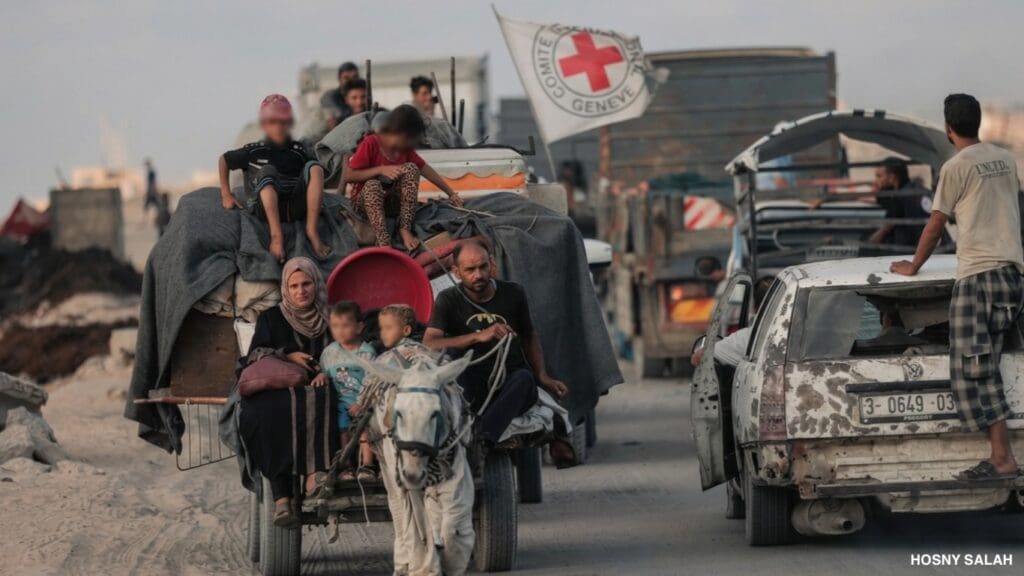
The besieged enclave also must deal with the ongoing COVID-19 pandemic, which has been spreading at an alarming rate, especially during the recent Israeli aggression which displaced tens of thousands of people to crowded spaces, including in relatives’ homes and in schools, thus increasing the risk of spreading and contracting the virus. With another hot summer marked by COVID-19 and the widespread destruction wrought by Israel’s recent assault fast approaching, Palestinians in Gaza are concerned for their safety.
A Dangerous Summer Ahead
Palestinians in Gaza historically escaped heatwaves by going to the beach and other open spaces away from their cramped houses. This is no longer an option with the COVID-19 lockdowns, and with the latest Israeli assault, which has left countless buildings, homes, and neighborhoods in rubble.
This summer, with limited electricity, Palestinians in Gaza whose homes survived Israel’s attacks will be unable to use mitigation measures such as fans, cold water, and maintaining food in the fridge. The latter will leave families with higher food spoilage, necessitating that they buy food supplies in crowded markets on a daily basis, increasing both their risk of spreading and contracting the coronavirus, as well as their financial burden.
With nearly one-third of the population of Gaza facing deep poverty, a soaring unemployment rate, continuous salary cuts, and scarce access to safe water, Palestinians in Gaza are left with minimal resources to respond to the harsh realities of climate change.
Beyond financial hardships, Palestinians in Gaza face concerns over their health as temperatures rise. Among the most vulnerable are the elderly, who are highly susceptible to heat-related illnesses. In the months ahead, the elderly in Gaza will fight for survival from the dual threats of COVID-19 and the summer’s heat. Added to this is the increased fragility of the healthcare sector in Gaza which is already unable to withstand the rise in COVID-19 infection rates. Indeed, last month, Israel demolished Gaza’s only COVID-19 testing center.
In the months ahead, the elderly in Gaza will fight for survival from the dual threats of COVID-19 and the summer’s heat Share on X
Women – and especially pregnant women – are also particularly vulnerable. As those who often shoulder unpaid care and domestic work, Palestinian women have reported an increase in these responsibilities since the start of the pandemic, which skyrocketed during the heatwave of August 2020.4 As a result, and with limited water and electricity, women in Gaza reported an increase in household tensions and psychological stresses associated with caregiving and housework, including bathing and cleaning their children, trying to keep their children hydrated, and caring for those with heat-related illnesses. Following the latest attacks on Gaza, it is certain that women will continue to bear the brunt of the psychological stresses of their households.
What Palestinians in Gaza Need
Lasting change necessitates an intersectional approach to support Palestinian families in withstanding climate change, including through connecting with other oppressed groups throughout the world to exchange tools and tactics for resistance and survival.
Climate change analysis must be mainstreamed at the government, non-governmental, and donor levels. Access to climate-related information should be accompanied by guidelines on mitigating the effects of extreme weather conditions, and it should be communicated to households.
The Palestinian Ministry of Health should issue guidelines to families on how to deal with heat-related illnesses within their homes. There must be proper documentation of heat-related illnesses by the Ministry of Health in order to clarify, with evidence and facts, the health consequences of climate change on Palestinians.
Climate mitigation measures and efforts to redistribute care responsibilities from the individual to the state must be mainstreamed in the plans, strategies, and projects funded and implemented by donors and developmental agencies in Gaza. This consideration is crucial in marginalized areas where weak infrastructure exacerbates extreme weather impacts on people’s health, and places more caregiving responsibilities on women.
The international community must increase its pressure on Israel to end its assaults on Gaza, and to lift its siege so that life-saving equipment and assistance can enter Gaza.
- This policy memo was produced with the support of the Heinrich-Böll-Stiftung. The views expressed herein are those of the author and therefore do not necessarily reflect the opinion of the Heinrich-Böll-Stiftung.
- This information is based on an announcement issued by Yousef Abu As’ad, the general director of the Palestine Meteorological Office (within the Ministry of Transport) in Ramallah, on August 27, 2020.
- To read this piece in French, please click here. Al-Shabaka is grateful for the efforts by human rights advocates to translate its pieces, but is not responsible for any change in meaning.
- Information is based on interviews conducted virtually with 40 women in Gaza regarding their coping mechanisms and their struggles during the heatwave and current conditions.
Asmaa Abu Mezied is an economic development and social inclusion specialist working to address issues of gender, development, and climate change in the agriculture sector. Her research interests focus on the care economy, women’s collectives organizing in economic sectors, the private sector’s social accountability, and the intersection of Palestinian political, agricultural, and environmental identities. She served as Al-Shabaka’s 2022 Visiting Gaza Fellow and was previously an Atlas Corps Fellow in partnership with President Obama Emerging Global Leaders, a Gaza Hub-Global Shaper (an initiative of World Economic Forum), and a 2021 Mozilla Foundation Wrangler at “Tech for Social Activism” space.