- Topics
-
Topics
See our analysis on civil society and how it shapes culture, politics, and policies
Read our insights on the shifting political landscape and what it means for Palestine
Learn more about the policies and practices shaping the Palestinian economy
Strengthen your understanding of the unique conditions for Palestinian refugees across the Middle East
-
- Analysis
-
Analysis
In-depth analysis on existing or potential policies that impact possibilities for Palestinian liberation.
Insights and perspectives on social, political, and economic questions related to Palestine and Palestinians globally.
Concise analysis into a specific policy, its background and implications.
Commentary that brings together insights from multiple analysts.
Compilations of past Al-Shabaka works surrounding a specific theme.
Longer-form, ad hoc projects that seek to confront research questions outside the scope of our regular analysis.
A policy-driven research initiative by Al-Shabaka: The Palestinian Policy Network.
Our monthly webinar series that brings together Palestinian experts.
Featured
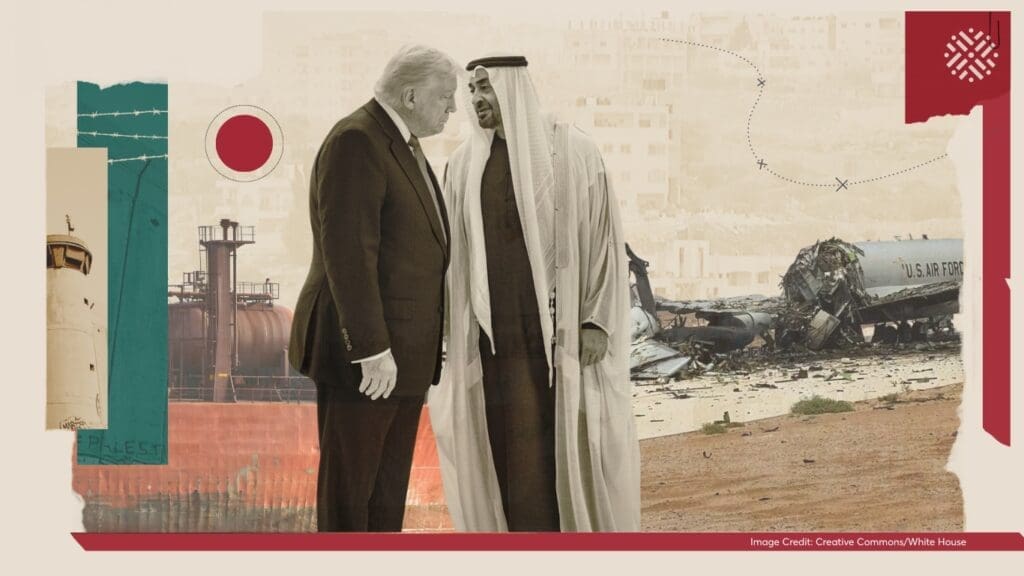
The US-Israeli war on Iran and Lebanon, as well as the ongoing genocide in Palestine, are reshaping the political landscape of the region. Alliances are being recalibrated, and old assumptions about US power are being tested. The war has also underscored how deeply the global economy remains tied to fossil fuels and to the strategic importance of the Gulf within international energy and trade networks. In this roundtable, Palestinian analysts Diana Buttu and Adam Hanieh examine what this moment reveals about the changing architecture of US imperial power, the regional order now taking shape, and the implications for the struggle for Palestinian liberation.

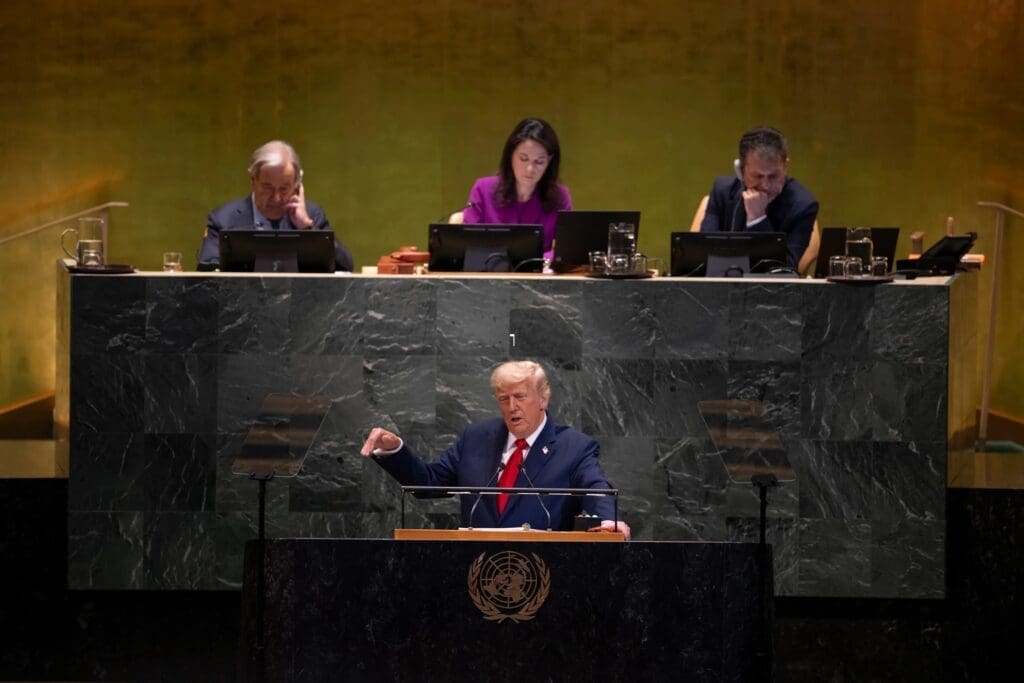
 People across the world are living through a moment of profound crisis. The ongoing genocide in Gaza, the US-Israeli war on Iran and Lebanon, the resulting energy and economic shocks, and the erosion of the international legal order are unfolding alongside the fragmentation of the Western-led global system. Together, these converging tremors are exposing the limits of US hegemony, reshaping the strategic positions of Arab Gulf states and China, and intensifying debates over multipolarity, regional realignment, and South-South solidarity. In this roundtable, Yara Hawari and Tareq Baconi reflect on this impasse, highlighting the centrality of Palestine to understanding the historic transformations the world is witnessing today. They discuss the bankruptcy of the liberal international order, the changing dynamics of the US-Israeli imperial power in West Asia, and the ways Palestine has emerged as a converging point through which a different global order may be forced into being.

 In this policy lab, Josh Ruebner and Ahmed Moor join host Tariq Kenney-Shawa to examine the fight over the Block the Bombs Act, wider efforts in Congress to restrict US military support for Israel, and what these battles reveal about the future of Palestine advocacy in US politics.
 Tariq Kenney-Shawa· May 21, 2026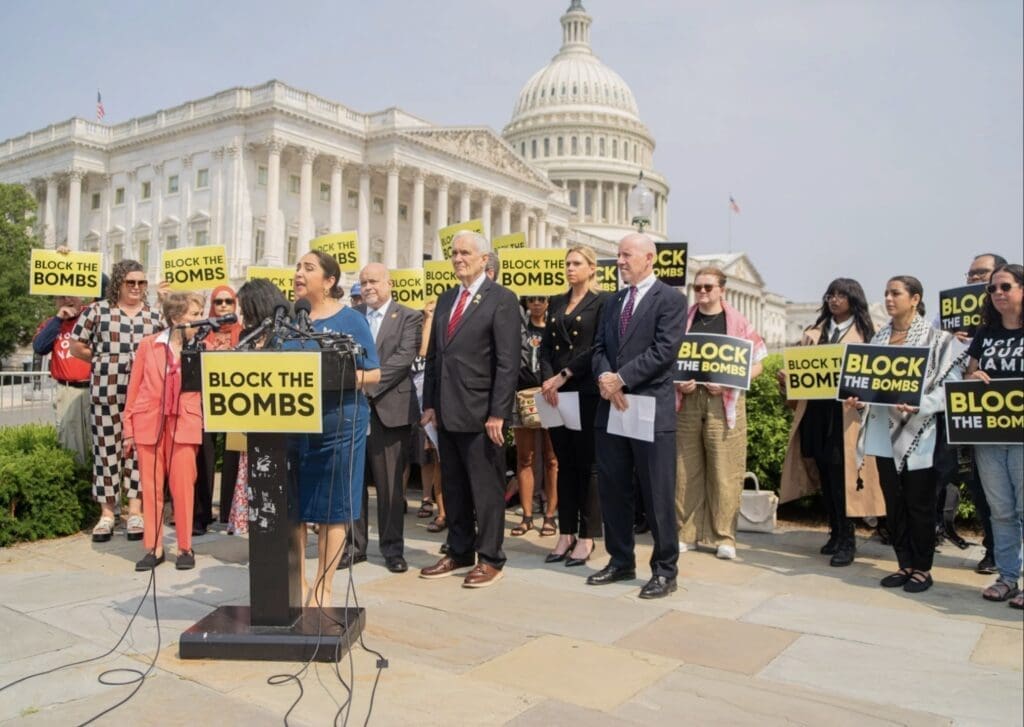
-
- Resources
- Media & Outreach
- The Network
Declaring an Independent Bantustan
The “induced euphoria” that characterizes discussions within the mainstream media around the upcoming declaration of an independent Palestinian state in September, ignores the stark realities on the ground and the warnings of critical commentators. Depicting such a declaration as a “breakthrough,” and a “challenge” to the defunct “peace process” and the right-wing government of Israel, serves to obscure Israel’s continued denial of Palestinian rights while reinforcing the international community’s implicit endorsement of an apartheid state in the Middle East.
The drive for recognition is led by Salam Fayyad, the appointed Prime Minister of the Ramallah-based Palestinian Authority (PA). It is based on the decision made during the 1970s by the Palestine Liberation Organization (PLO) to adopt the more flexible program of a “two-state solution.” This program maintains that the Palestinian question, the essence of the Arab-Israeli conflict, can be resolved with the establishment of an “independent state” in the West Bank and the Gaza Strip, with East Jerusalem as its capital. In this program Palestinian refugees would return to the state of “Palestine” but not to their homes in Israel, which defines itself as “the state of Jews.” Yet “independence” does not deal with this issue, neither does it heed calls made by the 1.2 million Palestinian citizens of Israel to transform the struggle into an anti-apartheid movement since they are treated as third-class citizens.
All this is supposed to be implemented after the withdrawal of Israeli forces from the West Bank and Gaza. Or will it merely be a redeployment of forces as witnessed during the Oslo period? Yet proponents of this strategy claim that independence guarantees that Israel will deal with the Palestinians of Gaza and the West Bank as one people, and that the Palestinian question can be resolved according to international law, thus satisfying the minimum political and national rights of the Palestinian people. Forget about the fact that Israel has as many as 573 permanent barriers and checkpoints around the occupied West Bank, as well as an additional 69 “flying” checkpoints; and you might also want to ignore the fact that the existing “Jewish-only” colonies control more than 54 percent of the West Bank.
At the 1991 Madrid Conference, then Israeli Prime Minister Yitzhak Shamir’s “hawkish” government did not even accept the Palestinian “right” to administrative autonomy. However, with the coming of the “dovish” Meretz/Labor government, led by Yitzhak Rabin and Shimon Peres, the PLO leadership conducted behind-the-curtains negotiations in Norway. By signing the Oslo Accords, Israel was released of the heavy burden of administering Gaza and the seven crowded cities of the West Bank. The first intifada was ended by an official – and secret — PLO decision without achieving its interim national goals, namely “freedom and independence,” and without the consent of the people the organization purported to represent.
This same idea of “independence” was once rejected by the PLO, because it did not address the “minimum legitimate rights” of Palestinians and because it is the anti-thesis of the Palestinian struggle for liberation. What is proposed in place of these rights is a state in name only. In other words, the Palestinians must accept full autonomy on a fraction of their land, and never think of sovereignty or control of borders, water reserves, and most importantly, the return of the refugees. That was the Oslo agreement and it is also the intended “Declaration of Independence.” No wonder, then, that Israeli Prime Minister Benjamin Netanyahu makes it clear that he might agree to a Palestinian state through negotiations.
Nor does this declaration promise to be in accordance with the 1947 UN partition plan, which granted the Palestinians only 47 percent of historic Palestine even though they comprised over two-thirds of the population. Once declared, the future “independent” Palestinian state will occupy less than 20 percent of historic Palestine. By creating a Bantustan and calling it a “viable state,” Israel will get rid of the burden of 3.5 million Palestinians. The PA will rule over the maximum number of Palestinians on the minimum number of fragments of land — fragments that we can call “The State of Palestine.” This “state” will be recognized by tens of countries — South Africa’s infamous bantusan tribal chiefs must be very envious!
One can only assume that the much-talked about and celebrated “independence” will simply reinforce the same role that the PA played under Oslo. Namely providing policing and security measures designed to disarm the Palestinian resistance groups. These were the first demands made of the Palestinians at Oslo in 1993, Camp David in 2000, Annapolis in 2007 and Washington last year. Meanwhile, within this framework of negotiations and demands, no commitments or obligations are imposed on Israel.
Just as the Oslo Accords signified the end of popular, non-violent resistance of the first intifada, this declaration of independence has a similar goal, namely ending the growing international support for the Palestinian cause since Israel’s 2008-2009 winter onslaught on Gaza and its attack on the Freedom Flotilla last May. Yet it falls short of providing Palestinians with the minimal protection and security from any future Israeli attacks and atrocities. The invasion and siege of Gaza was a product of Oslo. Before the Oslo Accords were signed Israel never used its full arsenal of F-16s, phosphorous bombs, and DIME weapons to attack refugee camps in the Gaza and the West Bank. Over 1,200 Palestinians were killed from 1987-1993 during the first intifada. Israel eclipsed that number during its three-week invasion in 2009; it managed to brutally kill more than 1,400 in Gaza alone. This does not include the victims of Israel’s siege in place since 2006 which has been marked by closures and repeated Israeli attacks before the invasion of Gaza and since.
Ultimately, what this intended “declaration of independence” offers the Palestinian people is a mirage, an “independent homeland” that is a bantustan-in-disguise. Although it is recognized by so many friendly countries, it stops short of providing Palestinians freedom and liberation. Critical debate — as opposed to one that is biased, demagogic — requires scrutiny of the distortions of history through ideological misrepresentations. What needs to be addressed is an historical human vision of the Palestinian and Jewish questions, a vision that never denies the rights of a people, which guarantees complete equality, and abolishes apartheid– instead of recognizing a new Bantustan 17 years after the fall of apartheid in South Africa.
Haidar Eid
Haidar Eid is a literary scholar and Associate Professor at Al-Aqsa University in Gaza, currently based in Johannesburg as a research associate at the Centre for Asian Studies in Africa at the University of Pretoria. He holds a PhD from Rand Afrikaans University and has published widely in postcolonial literature and cultural studies. His most recent book, Decolonizing the Palestinian Mind (2023), draws on Edward Said, Frantz Fanon, and Ghassan Kanafani to examine liberation and Palestinian cultural identity. He is also the author of Worlding Postmodernism and Countering the Palestinian Nakba: One State for All.
Latest Analysis
The Gulf and Israel: War, Normalization, and the Global Economy
Palestine, Iran, and the Unraveling of Western Hegemony
Blocking the Bombs: How Far Will Democrats Go on Israel?
We’re building a network for liberation.
As the only global Palestinian think tank, we’re working hard to respond to rapid developments affecting Palestinians, while remaining committed to shedding light on issues that may otherwise be overlooked.