




Introduction
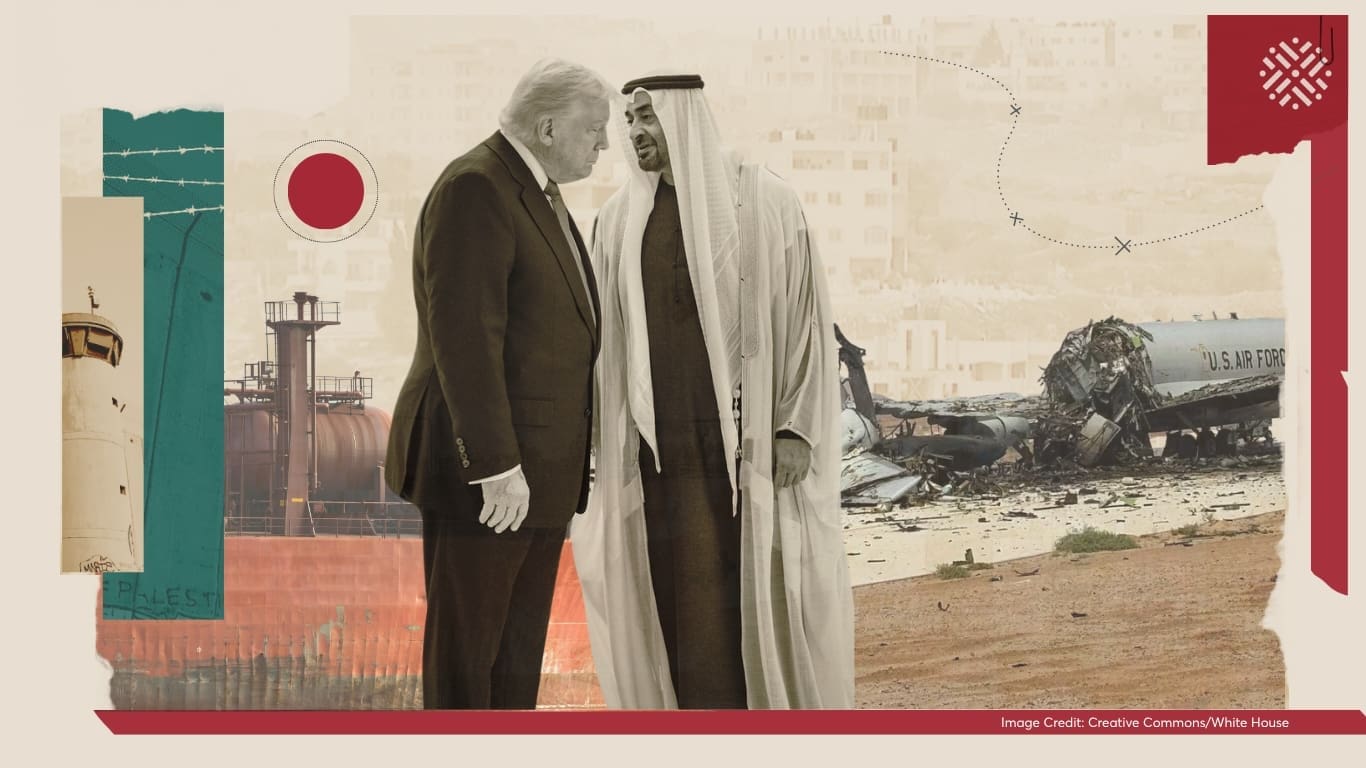
The US-Israeli war on Iran and Lebanon, as well as the ongoing genocide in Palestine, are reshaping the political landscape of the region. Alliances are being recalibrated, and old assumptions about US power are being tested. The war has also underscored how deeply the global economy remains tied to fossil fuels and to the strategic importance of the Gulf within international energy and trade networks.
These crises are also revealing that what happens in Palestine does not stay in Palestine. Rather, imperialism and exploitation have spilled over across the region, and their reverberations are being felt acutely across the Global South through rising energy prices, food insecurity, supply chain disruptions, and deepening economic precarity. Hence, to understand Palestine is to understand the system producing these crises.
In this roundtable, Palestinian analysts Diana Buttu and Adam Hanieh examine what this moment reveals about the changing architecture of US imperial power, the regional order now taking shape, and the implications for the struggle for Palestinian liberation.
This roundtable is adapted from a conversation recorded on May 19, 2026, for a podcast episode of Rethinking Palestine. It has been edited for publication.
How is the current regional war reshaping the relationship between the US, Israel, and the Arab Gulf states?
Adam Hanieh
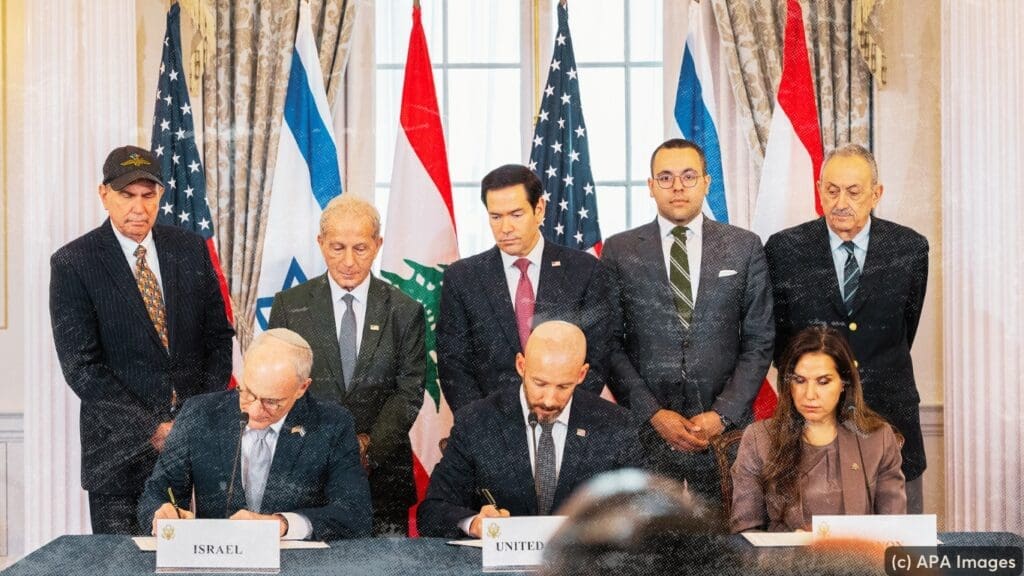
What we have seen over the last two decades is an attempt by the US to normalize relations between Arab Gulf states and the Israeli regime, which are, in effect, the two pillars of its imperial project in the Middle East. This clearly predates the genocide in Gaza and the current US-Israeli war on Iran and Lebanon.
Understanding this trajectory requires situating it within the broader geopolitical moment. In response to the relative decline of US power globally, Washington has sought to reassert its primacy in regions such as the Middle East. One way it has attempted to do this is by bringing these two pillars together under a broader US umbrella.
The Gulf remains strategically central to this fossil-fuel-dominated world order, not only for the US but also for China and the wider global economy Share on X
Central to this strategy are China’s rise and the Gulf’s role in the global energy economy. China depends on the Middle East for roughly 60% of its oil imports and a large proportion of its liquefied natural gas (LNG), while the Gulf has also become a key logistical hub for Beijing’s global trade ambitions. At the same time, despite growing investment in renewable energy, we are not witnessing a genuine transition away from fossil fuels. In fact, global production of oil, coal, and gas reached record levels last year. What we are seeing instead is an additive process in which renewable energy is layered onto an expanding fossil-fuel base.
The Gulf monarchies exemplify this dynamic, leading the expansion of renewable energy across the region while simultaneously increasing oil and gas production, largely to reduce domestic fossil fuel consumption for electricity generation and to export more oil and gas abroad. For these reasons, the Gulf remains strategically central to this fossil-fuel-dominated world order, not only for the US but also for China and the wider global economy.
A broader component of US strategy is therefore to push back against China’s growing influence in the region through the normalization project, while simultaneously securing continued control over the energy and trade networks that underpin the global economy.
Diana Buttu
In the aftermath of October 2023, the Israeli public quite simply stopped caring about normalization. It was no longer at the top of the agenda, and it still is not. Instead, Israeli Prime Minister Benjamin Netanyahu turned his attention toward weakening Arab states and diminishing their political and economic influence. That is why, over the course of the past several months of war—a war pushed forward by Israel—one of the Israeli regime’s goals has been to create a rift between these Arab states. To some extent, that rift has already emerged.
At the same time, the Israeli regime has sought to weaken Arab states economically, with the broader aim of establishing itself as the dominant regional power. The issue is no longer normalization, but creating a regional order that compels these countries to deal with the Zionist state because the only way to reach the US is through it.
What Netanyahu, his government, and much of Israeli public opinion now seem to prioritize is regional dominance—not only military and political dominance, which Israel has long exercised through its relationship with the US, but a broader form of supremacy in which no competing power is allowed to emerge in the region. That includes weakening the Gulf states’ economic influence.
The issue is no longer normalization, but creating a regional order that compels (Arab) countries to deal with the Zionist state because the only way to reach the US is through it Share on X
From this perspective, actions such as Israel’s strike on Qatar in September 2025 and the continued push for confrontation with Iran reflect a broader strategic logic. Even retaliatory attacks on Israel are viewed as acceptable costs if they advance larger goals: territorial expansion in places like Lebanon, Syria, and Gaza, and the weakening of alternative centers of Arab economic and political power.
Still, within the Gulf, different camps are beginning to emerge. Some actors are questioning why they invested so heavily in the US—and, in the case of the UAE, in agreements with Israel—if neither has proved able to offer meaningful protection or assistance.
Others, however, are doubling down and arguing that deeper alignment remains the only viable path forward. What is significant is that there no longer appears to be a single, unified regional approach, as there seemed to be in the past.
Does the UAE’s decision to leave OPEC signal a deeper consolidation of its alliance with the Israeli regime?
Adam Hanieh
Part of the UAE’s decision to withdraw from OPEC relates to the current state of the global oil market. OPEC’s primary role has traditionally been to moderate the supply of oil onto the world market, but in a context where oil prices are high—and likely to remain so for the foreseeable future—the UAE appears to be seeking greater freedom to increase production and exports without these constraints. This move also reflects broader tensions between the UAE and Saudi Arabia, which remains the dominant force within OPEC.
The UAE economy has also become more diversified in recent years. Oil remains central, but sectors such as logistics, finance, petrochemicals, AI, data centers, and renewable energy have all grown significantly, meaning oil now plays a somewhat less dominant role than it once did.
That said, it is clear that the UAE, in particular, has recently been deepening its relationship with both Israel and the US—part of a broader strategic desire to strengthen ties with Israel through the normalization project that emerged out of the Abraham Accords.
We can see this in reports about Israel supplying weapons systems to the UAE during the current war, as well as speculation in the Israeli press surrounding Netanyahu’s visit to the UAE a few months ago. So, at least in the case of the UAE, normalization does appear to be deepening. Even so, I would not be surprised if there were debates within the UAE political elite about whether this is the right strategy to pursue.
In the case of Saudi Arabia, meanwhile, the situation remains more complicated and partly reflects the rift between it and the UAE. Whether Saudi Arabia will ultimately follow the same path remains to be seen.
What does the Israeli regime’s approach to normalization with Arab states reveal about how it sees its place in the region?
Diana Buttu
Before October 2023, there was a major push within Israel to advance the normalization project with Arab states. That project was, in large part, about sidelining Palestinians and sending a message to the Israeli public that the regime never really needed to address the Palestinian issue. Instead, it could have peace and economic ties with the Arab world without ending the occupation, without dismantling the colonial project, and, of course, without addressing Palestinian fundamental rights and, crucially, the right of return.
The Israeli regime has long claimed that it wants “peace with its neighbors,” yet it has never had what could genuinely be described as a warm peace with Egypt, despite having a peace agreement since 1979. The same is true of Jordan, despite the 1994 agreement. And while the Israeli regime was never at war with the UAE, the relationship there has also been highly asymmetrical. You certainly see Israelis traveling to the UAE, but you do not see the same movement in the other direction.
Since October 2023, however, even the discussion of normalization has largely disappeared from Israeli public discourse. In fact, I would be surprised if most Israelis could name five Arab countries beyond the four we have just mentioned. Part of this stems from the way Israel sees itself as separate from the region. Israelis generally do not learn Arabic, and Israel has historically imagined itself as aligned with Europe rather than embedded within the Middle East.
For that reason, normalization was never really about integration into the region. And since October 2023, Israeli political discourse has become even more polarized. As a result, normalization no longer appears to be the central objective.
Broadly speaking, Israelis are not primarily concerned with normalization these days. Arguably, they never were. The rhetoric has always been about “peace,” but the political trajectory has increasingly been about dominance rather than coexistence.
What role is China playing amid the relative weakening of US dominance in the region?
Adam Hanieh
While the US remains militarily and financially dominant, I think we are witnessing a relative weakening of its power globally. Its position is no longer as unchallenged as it once was. At the same time, I think there is an ongoing debate within China about how active a role it should play in the Middle East—or whether it is better served by allowing the US to continue struggling amid its weakening regional dominance.
Wars involving Iran or Lebanon reverberate far beyond the Middle East, especially across vulnerable countries elsewhere in the Global South Share on X
Building on my earlier intervention, that debate is shaped by China’s recognition of the region’s significance, given its dependence on Middle Eastern energy imports, particularly from the Gulf states. There is also the broader link between the oil trade and US dollar dominance globally, which matters because it underpins Washington’s ability to impose sanctions on states and companies in China and elsewhere.
In recent years, China has made a determined effort both to build up its oil stockpiles and to diversify its energy imports away from the Middle East toward partners such as Russia. As we speak, China and Russia are engaged in intensive discussions over new gas pipeline projects linking the two countries.
But beyond energy, the region has become increasingly central to China’s broader global strategy. The Belt and Road Initiative, for example, relies heavily on the Gulf as a key logistical hub—around 60% of China’s trade with Europe and Africa passes through Dubai. The region thus holds enormous strategic importance for China’s global trade ambitions.
For all of these reasons, I think Chinese policymakers are very cognizant of what is happening in the Middle East and of the broader question surrounding the future of US power in the region.
It is difficult, however, to imagine China taking on the same kind of security role that the US has historically played in the region. China does not possess the same network of military bases or the same capacity for military projection.
Diana Buttu
When it comes to Palestine more specifically, China has historically taken a fairly consistent position: it opposes the occupation and supports a two-state solution, much like many other countries. But beyond that, it has generally avoided becoming deeply involved in the Palestinian struggle.
There is perhaps one notable exception, which was China’s hosting of reconciliation talks between the Palestinian political factions during the genocide. The declared aim was to encourage some form of Palestinian unity so that there could at least be a unified political strategy for confronting the Israeli regime.
Palestinians have once again been abandoned as international attention has shifted elsewhere Share on X
But beyond that, China’s role appears fairly limited. In my conversations with people from China, the view has consistently been that, while Beijing is supportive of Palestine, its foreign policy is fundamentally not about direct intervention or deeper political involvement.
That said, this is still distinct from the position of the US, which has never really taken the position that any part of Palestine should be free.
How is the current global economic shock produced by the war affecting vulnerable communities, particularly in the Global South?
Adam Hanieh
We need to move beyond viewing the region simply as a giant oil spigot. The Gulf is deeply embedded in global supply chains, and that means wars involving Iran or Lebanon reverberate far beyond the Middle East, especially across vulnerable countries elsewhere in the Global South.
One of the key developments in recent years is that the Gulf economies have diversified beyond simply exporting crude oil and gas. They are now major exporters of chemicals, fertilizers, and other petrochemical products. Around a third of the world’s fertilizer shipments pass through the Strait of Hormuz, alongside exports such as sulfur and helium.
The impact of rising prices for these products, as well as the possibility of supply disruptions, means that countries in the Global South face the risk of much broader shocks to their food systems. Rising gas prices increase the cost of machinery, irrigation, and shipping. Fertilizer prices are also rising. Even plastics used to package food depend heavily on Gulf petrochemical exports.
Many countries dependent on Gulf imports were already dealing with severe crises before the war began. Sudan is a clear example. The country has been devastated by civil war for years and already faced acute food insecurity while relying heavily on Gulf fertilizer imports. Yemen and Lebanon face similar vulnerabilities.
So the shocks emanating from the Gulf are amplified by these preexisting crises. In that sense, countries in the Global South will likely be affected far more deeply than countries such as the UK or other European states.
How is all of this affecting the struggle for Palestinian liberation?
Diana Buttu
It does not take much for the world to stop paying attention to Palestine. The first two years of the genocide forced people to look at Gaza because of the sheer scale of destruction—entire cities wiped out, tens of thousands of children killed, and close to 100,000 people dead by some estimates.
But even then, much of what the Israeli regime was doing elsewhere remained ignored: in the West Bank, in Jerusalem, inside the land occupied in 1948, and in Lebanon. And now, with the regional war expanding and the genocide persisting, it has become very easy for the world to return to what people call “business as usual,” which, in practice, means ignoring Palestine again.
To truly focus on Palestine would require confronting the Israeli regime—and the US, Canada, and Western European states simply do not want to do that. So attention has shifted away from Gaza and toward Iran, which is precisely what Netanyahu wanted.
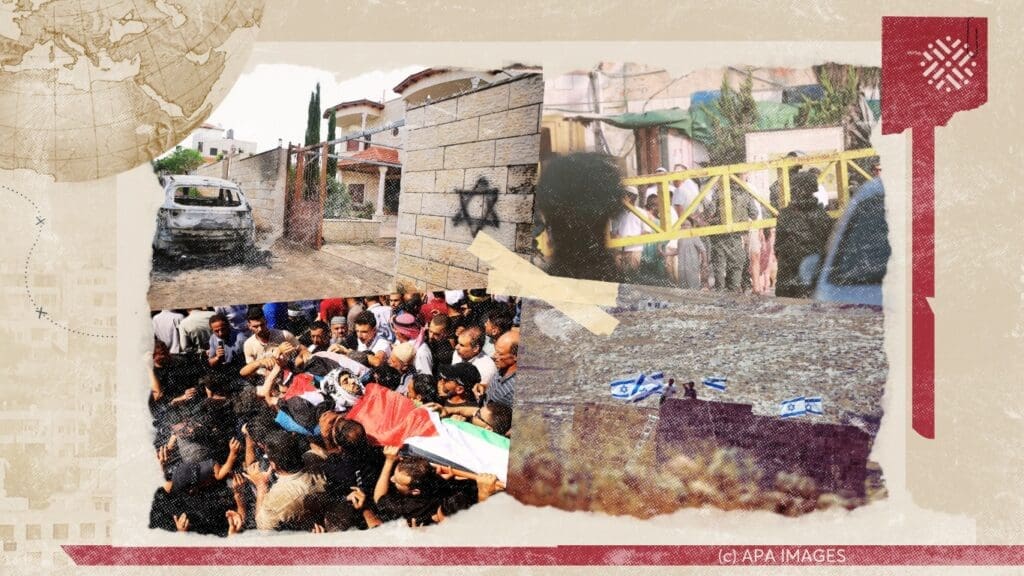
Meanwhile, since the October 2025 ceasefire, the Israeli occupation forces have continued bombing Gaza daily. Hundreds of Palestinians have been killed and thousands injured since then, yet very few international actors are speaking about it.
There has been no meaningful reconstruction, no significant entry of food or rebuilding equipment, and Israel has continued expanding its control over Gaza. Netanyahu himself recently boasted that Israeli forces now control 60% of the territory and intend to take more.
Palestinians have once again been abandoned as international attention has shifted elsewhere. And sadly, this outcome was entirely predictable.

Adam Hanieh is a Palestinian political economist and professor at the University of London’s School of Oriental and African Studies. His research focuses on global capitalism and the political economy of oil. His latest book is titled Crude Capitalism: Oil, Corporate Power, and the Making of the World Market (2024).

Diana Buttu is a lawyer who previously served as a legal advisor to the Palestinian negotiating team and was part of the team that assisted in the successful litigation of the Wall before the International Court of Justice. She frequently comments on Palestine for international news media outlets such as CNN and BBC; is a political analyst for Al Jazeera International and is a regular contributor to The Middle East magazine. She maintains a law practice in Palestine, focusing on international human rights law.