





Executive Summary
This policy brief argues that the advisory opinions issued by the International Court of Justice on Palestine reveal both the possibilities and the limits of international law, and examines how they can be leveraged to advance legal and diplomatic accountability at the international and domestic levels. Affirming the Court’s view that responsibility for addressing the unlawful situation in Palestine extends beyond Palestinians to states and international organizations, the brief argues that the effectiveness of its advisory opinions depends on their deployment within a broader political and emancipatory strategy to advance Palestinian rights and self-determination.
Recommendations
To Third States
- Operationalize the positive duty of cooperation among states to bring an end to the unlawful situation identified by the Court.
- Establish national mechanisms or specialized legal committees to review the compliance of domestic policies and bilateral relations with the obligations identified by the Court.
- Review and terminate military, security, economic, and trade agreements and arms transfers directly or indirectly connected to the Israeli occupation and settler-colonial regime.
- Use the “Uniting for Peace” mechanism at the UN General Assembly to confront the colonial and apartheid regimes.
- Apply the UN's credentials review process as a procedural mechanism to strengthen political accountability.
- Ensure the sustainability of UNRWA in line with the Court’s findings regarding Israel’s obligations toward the UN and its agencies.
- Implement the Court’s findings regarding Palestinian prisoners and detainees.
To Human Rights and Legal Advocacy Organizations
- Utilize the Court’s advisory opinions to advance accountability through international and domestic legal mechanisms and to challenge policies and practices that contribute to the occupation and settlement activity.
- Call upon the EU and the African Union to review and terminate agreements with Israel that contribute to or sustain the unlawful situation identified by the Court, or that otherwise violate peremptory norms of international law.
- Strengthen advocacy and coalition-building efforts aimed at securing compliance with the legal obligations identified by the Court and defending individuals and institutions working to advance international legal accountability.
Introduction
Writing about the effectiveness of international law in Palestine is particularly fraught in the midst of Israel’s genocidal war on Gaza and the ongoing settler-colonial project. Growing skepticism about international law has led some legal analysts to question its relevance or even declare its demise. Yet while international law emerged within modern imperial structures, it cannot be reduced to simply an instrument of great-power domination. It has also been shaped by anti-colonial struggles and the transformations they produced, particularly during the 1960s liberation movements.1
In this context, the advisory opinions issued by the International Court of Justice (ICJ) on Palestine reveal both the possibilities and the limits of international law. They have contributed to the development of legal discourse on Palestine, reaffirmed the centrality of the Palestinian people’s right to self-determination, and expanded the responsibilities of states and international organizations in relation to the continued and unlawful Israeli occupation. At the same time, they have exposed the constraints that political power relations continue to impose on international institutions’ ability to translate legal principles into effective action.
This policy brief examines how these advisory opinions can be leveraged to strengthen legal and diplomatic accountability at both the international and domestic levels. It argues that the opinions provide an opportunity to move legal discourse on Palestine beyond the dominant UN framework of statehood within the 1967 borders and to reassert the Palestinian people’s right to self-determination within a broader liberation-oriented framework linked to ending settler colonialism and achieving justice for all Palestinians.
From the Wall to the Illegality of the Occupation
Legal questions concerning Palestine cannot be understood in isolation from the historical trajectory of the Palestinian struggle or from the role of the international system in shaping and perpetuating the denial of the right to self-determination. While the Court has taken this context into account in its advisory opinions, the extent of its engagement with the struggle’s settler-colonial dimensions has varied.
Rather than treating Israeli violations as unlawful practices occurring within the framework of occupation, the Court examined the legality of the occupation itself Share on X
In its 2004 advisory opinion, Legal Consequences of the Construction of a Wall in the Occupied Palestinian Territory (OPT), the ICJ considered the legal consequences of Israel’s construction of the separation wall. The Court examined the historical background of the Palestinian question and relevant rules of international law, including the UN Charter, General Assembly Resolution 2625 (XXV), international humanitarian law, and human rights law. It concluded that the construction of the wall and its associated regime violated international law, including the Palestinian people’s right to self-determination.
Accordingly, the Court held that Israel must cease construction of the wall, dismantle the sections built within the OPT, including East Jerusalem, repeal or render ineffective the measures associated with it, and make reparation for the damage caused. However, the Court’s analysis remained confined to the legal consequences of the wall’s construction and its associated regime, without addressing the legality of the occupation itself.
By contrast, in its 2024 advisory opinion, Legal Consequences Arising from the Policies and Practices of Israel in the Occupied Palestinian Territories, including East Jerusalem (the Illegality of the Occupation opinion), the ICJ noted that Israel’s admission to the UN followed assurances regarding the implementation of General Assembly Resolutions 181 (II) of 1947 and 194 (III) of 1948, including the right of return. However, the Court did not interpret the legal significance of these assurances or consider the consequences of non-compliance, as it regarded such questions as falling outside the scope of the request before it.
The core of the opinion lies in the Court’s finding that Israel’s continued presence in the OPT is unlawful; that it has adopted discriminatory legislation and measures there since 1967; and that its occupation violates international humanitarian law and human rights law. In reaching this conclusion, the Court held that the occupation breaches two peremptory norms of international law: the prohibition on the acquisition of territory by force and the Palestinian people’s right to self-determination. The opinion arguably marked a significant shift in international legal discourse on Palestine. Rather than treating Israeli violations as unlawful practices occurring within the framework of occupation, the Court examined the legality of the occupation itself. It concluded that Israel’s continued presence in the OPT is unlawful.
Several civil society organizations welcomed the opinion, viewing it, despite its temporal and territorial limitations, as an important step toward realizing the inalienable collective rights of the Palestinian people. Others argued that it did not go far enough in addressing Israel as a settler-colonial regime, particularly with respect to the crime of apartheid. More broadly, they contended that the limits of international law continue to constrain its ability to address colonial structures in their full historical and political depth. This limitation becomes clearer in the 2025 advisory opinion on Israel’s obligations toward the UN, where the question before the Court offered greater scope for engaging with some of the historical dimensions of the Palestine question than in its previous opinions.
2025 Advisory Opinion: Israel’s Obligations toward the UN
In December 2024, the UN General Assembly adopted Resolution 79/232, requesting an advisory opinion on Israel’s obligations—as the occupying Power and a member state—toward the UN, other international organizations, and third states. The request arose in the context of Israel’s campaign against the United Nations Relief and Works Agency for Palestine Refugees in the Near East (UNRWA) and two Israeli laws enacted in October 2024: one prohibiting UNRWA’s activities in Israel and the OPT, and the other barring communication and cooperation between Israeli authorities and UNRWA personnel.
The Court was not asked to revisit issues addressed in its previous advisory opinions, particularly the unlawfulness of Israel’s continued presence in the OPT and its obligations as an occupying power. Rather, it was asked to clarify the implications of those obligations for the UN, other international organizations, and third states operating in the OPT. In this respect, the request arguably invited the Court to examine a broader set of legal relationships than its previous advisory opinions.
The limits of international law continue to constrain its ability to address colonial structures in their full historical and political depth Share on X
Unlike the 2004 Wall opinion, which focused on the legal consequences of the wall’s construction, the 2025 request concerned Israel’s obligations toward the UN, other international organizations, and third states operating in support of the Palestinian people’s right to self-determination. This formulation is particularly significant because it explicitly links the presence and activities of these actors to the realization of the right to self-determination. It therefore offered the Court greater scope to examine the relationship between UNRWA’s work and the rights of Palestinians, including refugees and their descendants, within a historical and legal framework extending beyond 1967. It also opened space to consider the relationship between the right to self-determination and the right of return, as well as the legal consequences of the continued denial of Palestinian refugees’ right of return.
Despite the broader scope arguably afforded by the request, the Court’s 2025 advisory opinion adopted a restrained approach, limiting its engagement with the wider historical and colonial dimensions of the Palestine question. This restraint was reflected in its focus on Israel’s obligations toward the organizations and third states, without examining more fully the relationship between the establishment of UNRWA, the right of return, and Israel’s continued denial of that right. Nor did it situate Israel’s campaign against the agency within the broader pattern of measures targeting the work of the UN and Palestinian and international institutions in the OPT.
Nevertheless, the opinion was not entirely devoid of elements supporting a broader framing of the Palestine question. Although the Court did not ground its interpretation of Israel’s obligations in the Palestinian people’s right to self-determination and referred to that right only briefly near the end of the opinion—a point criticized by Judge Brant—it stated in relatively clear terms that UNRWA’s unique mandate reflects the UN’s commitment to supporting both the Palestinian people’s right to self-determination and the rights of Palestinian refugees. In addition, Judge Xue’s separate opinion similarly emphasized the centrality of the Palestinian people’s right to self-determination. The Court’s recognition of UNRWA’s mandate in these terms is particularly important because it establishes, albeit in a limited way, a connection between UNRWA’s work and the collective rights of Palestinians, including refugee rights. This linkage could arguably have been developed further in light of the wording of the question before the Court.
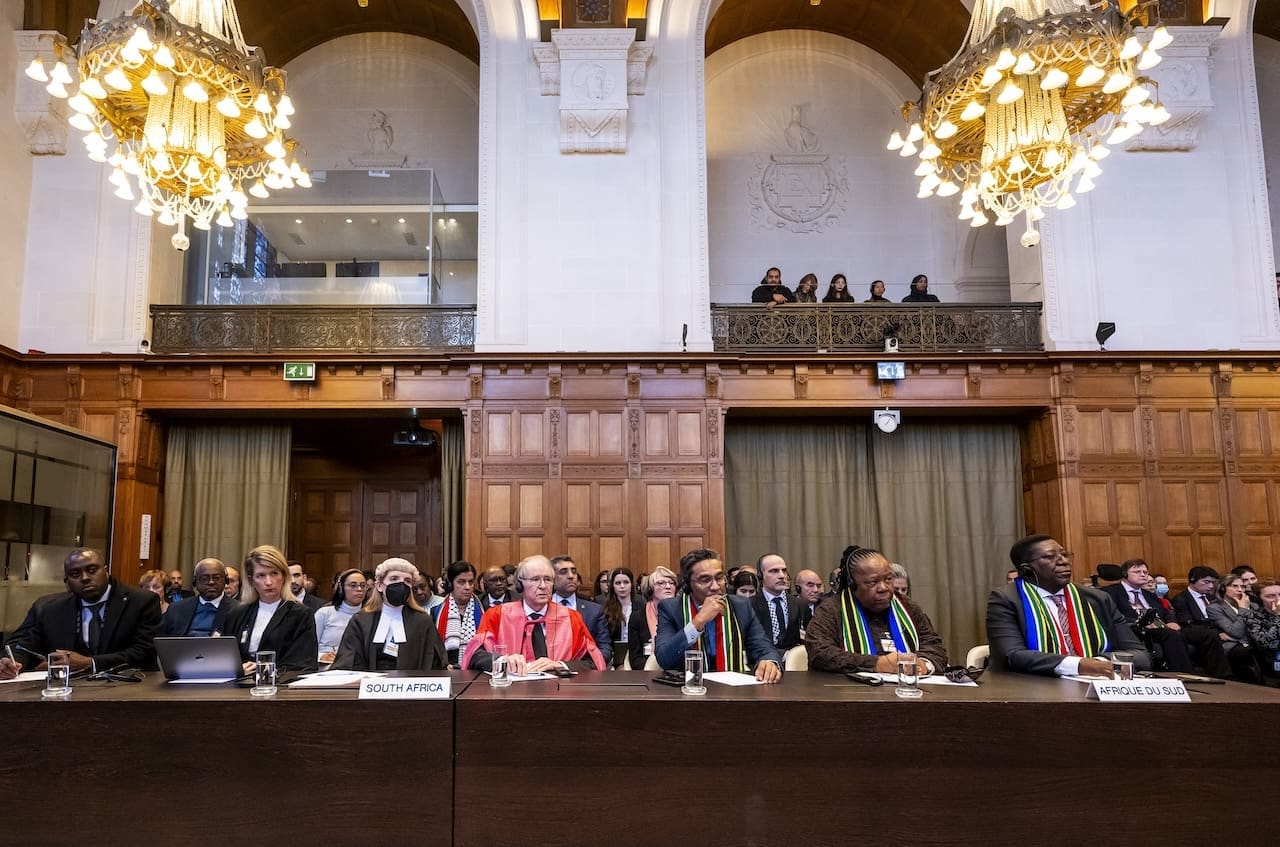
The opinion also contained important findings regarding UNRWA, particularly in Gaza. It affirmed the agency’s importance and currently irreplaceable role, rejected allegations directed against it, and emphasized its neutrality. The Court further acknowledged the use of starvation as a method of warfare in Gaza, having previously referred to the spread of starvation and famine in its March 2024 provisional measures order in South Africa v. Israel. It also affirmed that the presence of the UN and other international organizations in the OPT is not subject to Israeli discretion and stressed the need to protect UN personnel and humanitarian workers.
Accordingly, the opinion may have significant implications for current and future international litigation. It also provides a strong legal foundation for developing more effective political strategies and practical measures to advance international accountability. Furthermore, it reinforces legal arguments concerning Israel’s responsibility for violations of peremptory norms of international law, including the prohibition of genocide and the corresponding obligations to prevent and punish it, at a time of growing international skepticism toward Israel’s willingness and ability to comply with its legal obligations.
The Two-State Solution: Narrowing Palestinian Self-Determination
Although the Court was not asked to determine a final political solution to the Palestinian question, both the General Assembly’s requests and its reasoning in the three advisory opinions discussed ultimately reflect the framework of a two-state solution. This highlights the problem of confining Palestinian geography to the 1967 borders and narrowing the Palestinian people’s right to self-determination accordingly.
At the same time, the legal and historical foundations invoked by the Court point beyond the two-state framework. In the Wall opinion (2004), the Court affirmed that the UN bears a “permanent responsibility” toward the question of Palestine and linked that responsibility to both the Mandate and the Partition Resolution. It also drew upon its earlier jurisprudence concerning the Mandate system, particularly its advisory opinions on South West Africa (1950) and Namibia (1971), in which it explained that developments in international law had made self-determination the governing principle for the termination of Mandate regimes and territories subject to colonial administration. These references reveal legal foundations that extend beyond the political framework of the two-state solution and situate the Palestinian question within the broader context of decolonization and the realization of the right to self-determination.
Ultimately, however, the Court remained within the political framework reflected in Security Council resolutions and the framework of the two-state solution. In the Wall opinion (2004), it called for the implementation of relevant Security Council resolutions and the achievement, through negotiations, of “a Palestinian State, existing side by side with Israel.” In the Illegality of the Occupation opinion (2024), it reaffirmed that the realization of the Palestinian people’s right to self-determination includes “their right to an independent and sovereign State, living side by side in peace with the State of Israel within secure and recognized borders for both States,” as envisaged in Security Council and General Assembly resolutions (paras. 282–83). The Court reiterated this position in its 2025 opinion on Israel’s obligations toward the UN, adopting the language of the 2024 opinion.
The effective use of (the ICJ’s) advisory opinions depends on their deployment within a broader political and emancipatory strategy Share on X
This approach reveals a tension between certain legal foundations on which the Court relied—particularly those concerning the Mandate, the territorial unity of Palestine, and the right to self-determination—and its continued adherence to the two-state framework as the dominant political paradigm within the UN system. In this regard, it is worth noting that Judge Al-Khasawneh, in his separate opinion appended to the Wall opinion (2004), observed that the Green Line is a double-edged sword and is merely an armistice line, not Israel’s international border. This observation points to unresolved legal questions concerning the territorial scope of Israeli sovereignty and the territorial expansion that exceeded what had originally been envisaged under the 1947 Partition Plan.
This tension may also reflect the broader political context in which the Court operates, including its reluctance to depart from prevailing political consensuses, as well as the diplomatic pressures surrounding its work from Israel and its allies. These pressures are often expressed through recurring arguments that judicial intervention could undermine negotiations and existing political processes.
Third-State Obligations and Peremptory Norms
The most significant practical importance of the ICJ’s advisory opinions on Palestine lies in their implications for third states and international organizations. In the Wall opinion (2004), the Court held that the erga omnes obligations—that is, obligations owed to the international community as a whole—that Israel breached include respect for the Palestinian people’s right to self-determination and certain duties arising under international humanitarian law. On that basis, it found that all states must neither recognize as lawful the situation created by the construction of the wall in the OPT, including in and around East Jerusalem, nor render aid or assistance in maintaining it. The Court further affirmed that all states, while acting in accordance with the UN Charter and international law, must ensure the removal of any impediment created by the wall that obstructs the Palestinian people’s exercise of their right to self-determination.
The Court went further in the Illegality of the Occupation opinion (2024), holding that the Palestinian people’s right to self-determination constitutes a peremptory norm (jus cogens) of international law (para. 233). Respect for this right is therefore not merely a matter between Israel and the Palestinian people. As a peremptory norm, it is binding on all states and international organizations and cannot be derogated from by agreement. These conclusions are particularly significant because they provide a legal basis for holding accountable states and international actors that contribute, directly or indirectly, to maintaining conditions that prevent the realization of the Palestinian people’s right to self-determination.
Their significance is further amplified by the broader legal consequences that follow. Obligations owed to the international community as a whole are not confined to a particular party; rather, they concern the international community as a whole. Consequently, any state—even one not directly affected—may invoke responsibility for its violation and demand compliance. Violations of such obligations are therefore not merely matters concerning the parties to a conflict; they engage international responsibility and provide states and international organizations with a legal basis for political or legal measures aimed at protecting fundamental rights, including the right to self-determination.
Peremptory norms occupy a superior position within the international legal order and cannot be derogated from by agreement. Recognizing the right to self-determination as a peremptory norm therefore reinforces its legal status. It confirms that its observance is not merely a political or negotiable matter, but a legal obligation incumbent on all states and international organizations. It also opens space for reassessing the obligations of states and international organizations toward the unlawful situation in the OPT, including duties of non-recognition and non-assistance and their implications for political, economic, and military relations with Israel.
At the same time, legal interpretations have differed regarding the scope of these obligations. While some scholars argue that the Court expanded the responsibility of third states to encompass refraining from contributing to Israel’s war economy as a whole, others contend that it remained within a more cautious framework, focusing primarily on the negative obligations arising from violations of peremptory norms without developing a corresponding positive duty to cooperate in bringing those violations to an end. Nevertheless, the Court provided important guidance on some of these obligations, including the duty to refrain from entering into contractual relations with Israel when it acts on behalf of the OPT and the obligation to avoid economic or commercial dealings connected to the OPT.
Concerning the role of the UN, the Court affirmed in the Illegality of the Occupation opinion (2024) that the General Assembly, and the Security Council in particular, bear responsibility for determining the measures necessary to bring Israel’s unlawful presence in the OPT to an end (para. 281). However, the effectiveness of these conclusions cannot be separated from global political dynamics and the relationships of power and alliance among major states.
The Security Council has been repeatedly stagnant, particularly as a result of the US’s use of the veto, which has prevented the adoption of binding resolutions concerning Israel. Consequently, there is little basis to rely on the Council to adopt mandatory measures implementing the findings of the Court’s advisory opinions. Likewise, legal proposals advocating restrictions on the use of the veto in situations involving violations of peremptory norms remain, at present, far from realization.
This inaction does not, however, mean that the legal effects of advisory opinions remain dependent solely on the Security Council. In previous cases—notably the Namibia opinion (1971) and the Chagos Archipelago opinion (2019)—the ICJ emphasized the central legal role of the UN, including the General Assembly, in matters of decolonization and self-determination. In the Chagos Archipelago opinion in particular, the Court stressed that the General Assembly plays a leading role in completing the process of decolonization and that member states are required to cooperate with the UN in achieving that objective.
Conclusion
In his declaration appended to the Court’s provisional measures order in South Africa v. Israel (May 2024), Judge Tladi observed that “the Court is only a court.” The Court has no enforcement mechanisms to compel compliance with its judgments and opinions. The central question, therefore, is not whether the Court is capable, on its own, of producing change, but rather how its opinions and legal findings can be leveraged to develop more effective political and legal tools for defending Palestinian rights and strengthening international accountability.
The Court’s advisory opinions affirm that responsibility for confronting the unlawful situation in Palestine extends beyond Palestinians to states and international organizations. They also underscore the need to understand Palestinian self-determination in a manner that encompasses the Palestinian people as a whole, rather than reducing the question to the territories occupied in 1967 alone.
At the same time, the effective use of advisory opinions depends on their deployment within a broader political and emancipatory strategy. International law, despite its importance, is not a substitute for political struggle. Rather, its effectiveness depends on its use in support of a broader liberation project that defends Palestinian rights, challenges settler colonialism, and advances accountability.
Recommendations
The significance of the Court’s advisory opinions ultimately depends on how they are translated into political, legal, and institutional action. The following recommendations outline some measures available to key actors in this regard.
Third States:
Nationally and bilaterally:
- Operationalize the positive duty of cooperation among states to bring an end to the unlawful situation identified by the Court, rather than limiting action to the principle of non-recognition. This includes support for international and multilateral initiatives to coordinate legal and diplomatic measures and to implement the obligations affirmed by the Court, including emerging initiatives such as the Hague Group and similar frameworks.
- Establish national mechanisms or specialized legal committees to review the compliance of domestic policies and bilateral relations with the obligations identified by the Court and to monitor implementation regularly.
- Review and terminate military, security, economic, and trade agreements and arms transfers directly or indirectly connected to the Israeli occupation of the West Bank and Gaza, to Israeli settlements, or that may otherwise contribute to the continuation of serious violations of international law.
At the UN:
- Make broader use of the “Uniting for Peace” mechanism and draw upon the General Assembly’s historical experience in confronting colonial and apartheid regimes, including the South African precedent.
- Examine the potential use of the credentials review process as a procedural mechanism to strengthen political accountability within the international system, including, for example, by preventing the Israeli delegation from participating in the General Assembly.
- Ensure the sustainability of UNRWA by: pledging funding; protecting its mandate; documenting and monitoring violations targeting it; adopting measures to hold those responsible for such violations accountable; guaranteeing the continuation of its operations; and resisting efforts to weaken or replace it.
- Pursue the implementation of the Court’s findings regarding Palestinian prisoners and detainees, including ensuring independent humanitarian visits, prohibiting torture and ill-treatment, and safeguarding the fundamental rights of persons deprived of liberty.
Human Rights and Legal Advocacy Organizations:
- Develop and apply legal tools from the advisory opinions to pursue accountability across all available channels, including: litigation before the ICJ (such as South Africa v. Israel and Nicaragua v. Germany); implementation of ICC arrest warrants and prosecution of international crimes; domestic cases based on universal jurisdiction against individuals and governmental entities involved in occupation or settlement activity; and litigation addressing corporate and institutional complicity, along with the economic and governmental actors that sustain it.
- Call upon the EU to review its relations and agreements with Israel in light of ongoing violations of the right to self-determination, including initiatives to suspend the EU–Israel Association Agreement and to reassess forms of cooperation that may contribute to such violations.
- Call upon the African Union to activate its responsibilities under the African Charter on Human and Peoples’ Rights concerning opposition to “colonialism, neo-colonialism, apartheid, Zionism, and the dismantling of foreign military bases of aggression,” and to ensure that Member States comply with relevant international obligations.
- Deepen cooperation with solidarity movements to press states and international organizations to comply with the legal obligations articulated by the Court.
- Support individuals, institutions, and national and international mechanisms targeted because of their work defending Palestinian rights and advancing international legal accountability, including judges, UN experts, human rights organizations, and others subjected to pressure or sanctions as a result of such work.
- To read this piece in French please click here. Al-Shabaka is grateful for the efforts by human rights advocates to translate its pieces, but is not responsible for any change in meaning.




Dana Farraj is a part-time lecturer at the Faculty of Law and Public Administration at Birzeit University. She is the first Palestinian to complete the Judicial Fellowship Programme at the International Court of Justice. She is a registered Lawyer at the Palestinian Bar Association since 2019. Her research focuses on public international law and human rights law. Dana holds an LLM in International Humanitarian Law from Aix-Marseille University and a law degree from Birzeit University.