


Introduction
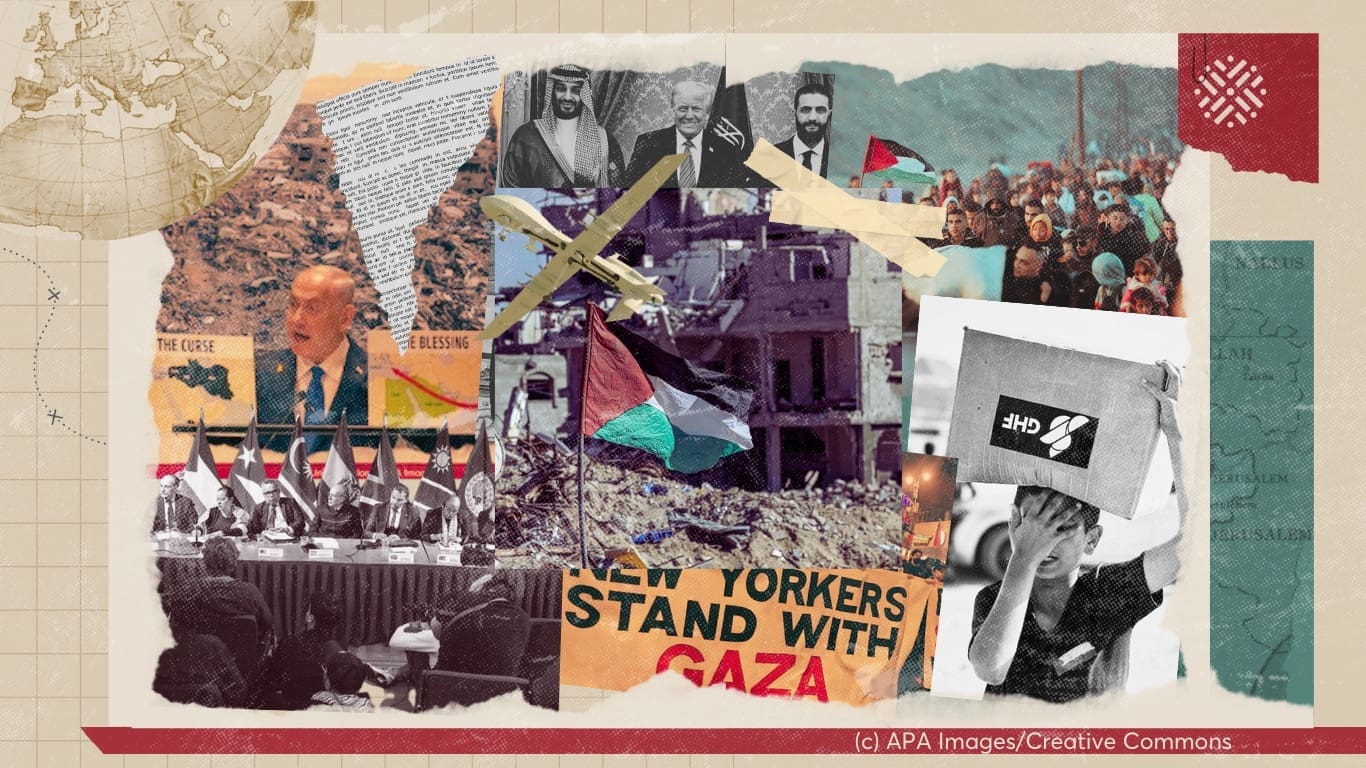
For two years, Israel has inflicted mass starvation, staggering death tolls, and relentless destruction on Gaza and its inhabitants. International efforts to recognize Israeli war crimes and halt the eradication of the Palestinian people continue to lag and fall short. On September 16, 2025, the UN Commission of Inquiry confirmed what Palestinians have identified since the outset: Israel is committing genocide. On September 29, US President Donald Trump unveiled a proposal that promises a ceasefire but subordinates Palestinians in Gaza to external governance, denies them self-determination, and entrenches Israeli control over the land. Framed as a peace initiative, the plan is in fact an attempt by the US to shield the Israeli regime from accountability, exemplifying Western complicity in the colonization of Palestine and the extermination of its people. In this context, Hamas’s agreement to release all Israeli captives signals its commitment to ending the ongoing violence, while simultaneously shifting the onus onto the Israeli regime and the Trump administration to clarify and operationalize their commitments to the ceasefire process.
This Focus On gathers Al-Shabaka’s analyses from the past year, offering urgent context to understand the genocide and its regional impact. It traces the Israeli regime’s expansionist campaign across Gaza, the West Bank, and the wider region, exposing Western complicity not only in enabling its crimes but also in protecting it from justice. At the same time, it highlights initiatives that resist Israeli impunity while advancing accountability and genuine liberation.
Gaza Under Genocide
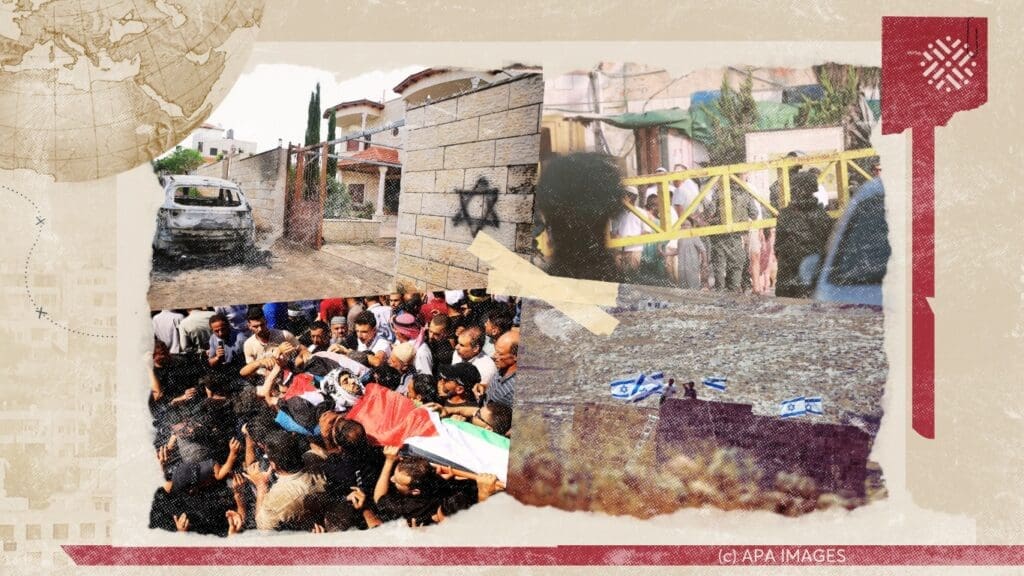
Our publications provide evidence of the genocidal character of Israel’s assault on Gaza since October 7, 2023, exposing the devastation and war crimes inflicted on Palestinians. They show that the destruction of infrastructure, the dismantling of Palestinian social and cultural life, and mass displacement are not incidental byproducts of war but central features of a settler-colonial project that has unfolded over decades. They underscore the futility of short-lived ceasefires that entrench occupation, and reveal how the Israeli regime has weaponized humanitarian aid by turning it into an instrument of death rather than relief. At the same time, our analysts emphasize the urgent need to dismantle narratives that normalize forced displacement and ethnic cleansing.
- Gaza’s Infrastructure: Israel’s Assault and Paths to Rebuild
with Yara Asi and Layth Hanbali. This video is available in English only. - Gaza’s Telecommunications: Occupied and Destroyed
by Ali Abdel-Wahab - Gaza Ceasefire Deal: Respite but No End to Colonial Occupation
by Basil Farraj, Diana Buttu, Shatha Abdulsamad, and Talal Ahmad Abu Rokbeh - Gaza: Restoring Life Beyond the Physical Structures
by Dena Qaddumi and Jehad Abusalim - Outsourcing Occupation: US Private Contractors in Gaza
by Safa Joudeh - The Gaza Humanitarian Foundation: Aid as a Weapon
with Yara Asi and Alex Feagans. This video is available in English only. - Gaza Uninhabitable: Challenging Colonial Frames of Erasure
by Abdalrahman Kittana
Erasure Across and Beyond Palestine
The Israeli regime’s genocidal policies against Palestinians extend beyond Gaza, encompassing all of Palestine and extending across its borders. The following analyses expose how the settler-colonial project rests on a logic of erasure, operating through the replacement of the Palestinian workforce and the dismantling of Indigenous social, economic, and political structures. They also demonstrate how the colonial regime targets Palestinian refugee camps as enduring sites of resistance, seeking to suppress organizing and undermine the right of return across all geographies.
- Israel’s Exploitation of Palestinian Labor: A Strategy of Erasure
by Ihab Maharmeh - Palestinian Clearance Revenues: Israel’s Tool to Collapse the PA
by Ismat Quzmar - Palestinian Camps in Lebanon: Disarmament in a Time of Regional Transformations
with Jaber Suleiman and Wessam Saba’nah. The video is available in Arabic only. - The War on Palestinian Refugee Camps
with Shatha Abdulsamad and Jamal Juma’. This video is available in Arabic only.
Israeli Impunity and Regional Expansion
Our analysts show how Israeli impunity—upheld by the West and normalized by Arab regimes—fuels its project of Palestinian annihilation and regional aggression. In the following contributions, they demonstrate how, under the guise of regional security, the Israeli regime launched assaults in Syria and Iran to deflect attention from its genocidal campaign in Gaza while consolidating dominance across the Middle East. They show how Western powers shield Israel from accountability, fail to take real action to stop its war crimes, and provide media cover that recasts Israeli aggression as self-defense, enabling it to carry out genocide with impunity.
- Normalizing Israeli Impunity and Dominance: The Arab Role
by Tariq Dana - Timed for Impunity: Israel’s War on Iran
by Yara Hawari - The Assault on Iran: Reshaping of the Middle East
with Belal Shobaki and Zaid Shuaibi. This video is available in Arabic only. - Statehood Without Liberation: Europe’s Response to Genocide
by Diana Buttu, Inès Abdel Razek, and Yara Hawari. - Israel’s War on Palestinian Journalists
with Mariam Barghouti and Sharif Abdel Kouddos. This video is available in English only.
Fighting Back and Global Realignments
The following analyses situate Israel’s genocidal campaign within a shifting global order. They highlight how resistance to Israeli crimes has unfolded on multiple fronts, from grassroots mobilization to the pursuit of international legal action by the Hague Group.
- Palestine and an Expanding BRICS: Swaying the Global Order
by Ahmed Alqarout - China and the Gaza Genocide: A Strategic Distance
by Razan Shawamreh - The Hague Group: Mobilizing International Law for Palestine
by Munir Nuseihah - The Palestinian Struggle: From Genocide to Global Realignment
by Tareq Baconi


Al-Shabaka: The Palestinian Policy Network is an independent, non-partisan, and non-profit organization whose mission is to convene a multidisciplinary, global network of Palestinian analysts to produce critical policy analysis and collectively imagine a new policymaking paradigm for Palestine and Palestinians worldwide.