Article - Palestinian Leadership in the Time of Pandemic

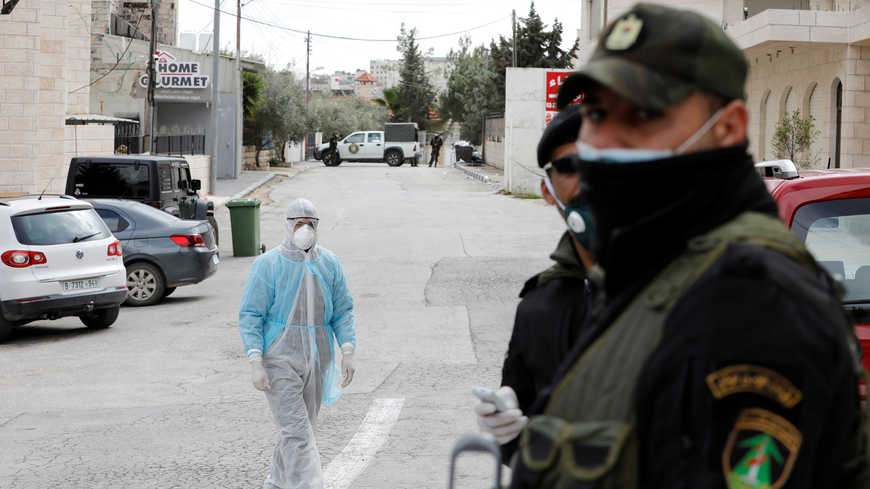
The response to the COVID-19 pandemic in Palestine brings back to focus central questions surrounding the resilience of Palestinian Authority leadership and the efficiency of its governance in times of crisis.

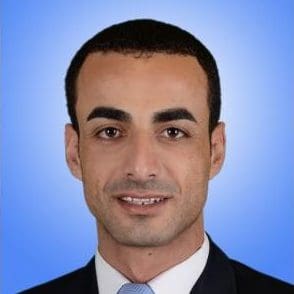
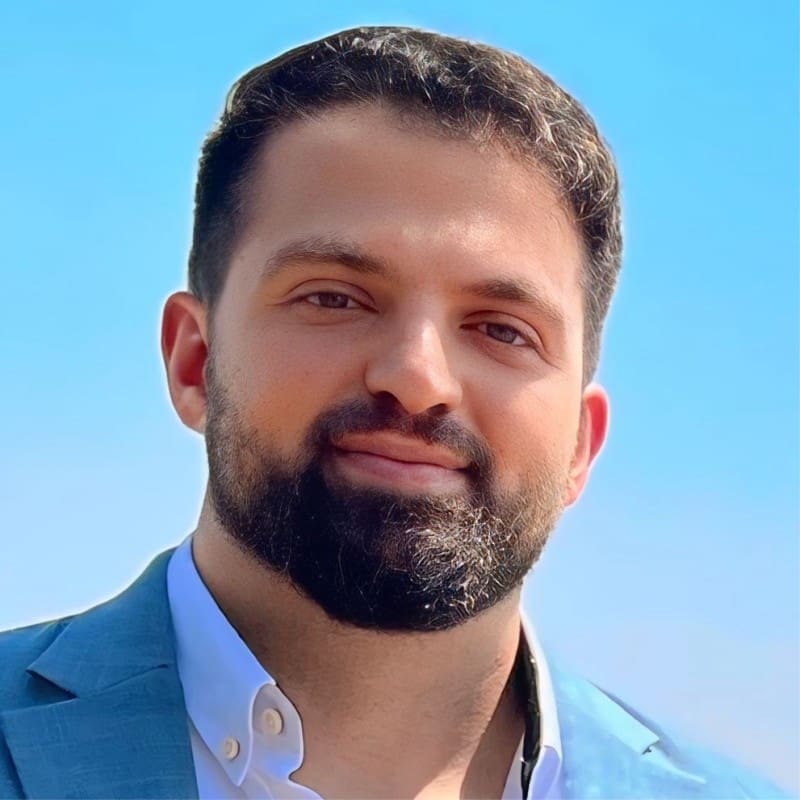
In this policy lab, Al-Shabaka analysts Mohammed Al-Khaldi and Fadi Quran join guest host Marwa Fatafta to weigh in on current emergency measures in the West Bank and their ramifications on the Palestinian people’s trust in leadership. They will also look at connections between the PA’s past public health policies and their impact on its capacity to handle the pandemic.

Marwa is a Palestinian writer, researcher and policy analyst based in Berlin. She leads Access Now’s work on digital rights in the Middle East and North Africa region as the MENA Policy Manager. She is also an advisory board member of the Palestinian digital rights organization 7amleh. Previously, she worked as the MENA Regional Advisor for Transparency International Secretariat. Marwa was a Fulbright scholar to the US, and holds an MA in International Relations from Maxwell School of Citizenship and Public Affairs, Syracuse University. She holds a second MA in Development and Governance from University of Duisburg-Essen.
Mohammed Al-Khaldi is from the Gaza Strip and holds a Master of Health policy and Management from Al-Quds University-Abu Dis in 2012. He has been in Switzerland working on his PhD in Health Policy and Research at the Swiss TPH since September 2014. He previously worked as a lecturer and researcher at colleges and research institutes in Palestine and Switzerland and is also a consultant on different programs in development and relief, and training and research projects for the governmental, NGO and international agencies sectors.

Fadi Quran is Senior Director for the Middle East and North Africa at Avaaz, where he has worked since 2014. He previously served as UN Advocacy Officer with Al-Haq’s legal research and advocacy unit. He is also an entrepreneur in the alternative energy field, having founded companies bringing wind and solar energy to Palestine and the region. Fadi holds degrees in Physics and International Relations from Stanford University.

Latest Analysis

 Politics
When four donkeys were evacuated from Gaza to a German zoo in November 2025, their rescue was celebrated as a humanitarian success. Yet while the animals were transported to safety, given new names, and described as leaving behind "hunger and misery, beatings and hardship," Palestinian children have been unable to evacuate amid a relentless ongoing genocide. In this commentary, Asmaa Abu Mezied examines how humanitarian concern operates through racialized hierarchies of grievability that render animal suffering more visible and rescue-worthy than Palestinian human life. She further argues that animal welfare interventions are materially entangled with the dispossession of Palestinian survival infrastructure, showing how it can become an enabling mechanism of colonial violence rather than its interruption.
Asmaa Abu Mezied· Aug 11, 2026
 Politics
In this policy lab, we are joined by policy expert Lara Friedman and investigative journalist and writer Antony Loewenstein to explore the shift in Israel’s relationship with the US from dependence to deeper symbiosis.
 Civil Society
After Hamas’s recent announcement that it will hand over governing authority in Gaza to the National Committee for the Administration of Gaza (NCAG), urgent questions about who will shape Gaza's future and on whose terms have reemerged. These questions are particularly salient given that the NCAG’s framework reflects the same technocratic and externally imposed logic that has come to characterize the dominant international proposal for Gaza's reconstruction: one that treats it as a technical exercise in disaster management, sidelining Palestinian sovereignty, return, and self-determination. In contrast, this roundtable asks what it means to understand Gaza as an Indigenous region rather than simply a besieged strip or humanitarian space. Nour Joudah and Dena Qaddumi explore how Indigenous frameworks reshape prevailing understandings of urbanism, reconstruction, and governance; why reconstruction must begin with Palestinian agency and reclamation rather than externally designed colonial master plans; and how rebuilding is already taking place through everyday forms of Indigenous endurance, social organization, and spatial resistance under conditions of ongoing genocide.
Nour Joudah,Dena Qaddumi· Jul 23, 2026