






About This Episode
Episode Transcript
The transcript below has been lightly edited for brevity and clarity.
Diana Buttu 0:00
This policy of recognition has, for people like Mahmoud Abbas, served the two purposes of keeping the Palestinian Authority afloat, while at the same time giving these European powers an out so that they don’t have to do anything. And the sum total of it is going to be a big nothing. Mahmoud Abbas thinks that somehow this will change the equation, that when it’s a state that’s considered under occupation, that the world powers are going to act.
But if we haven’t seen that world powers are acting in the face of genocide, which is the worst of all international crimes, what makes him think that they’re somehow going to act? It’s completely nonsensical to me.
Yara Hawari 0:41
In this episode of Rethinking Palestine, Al-Shabaka commissioning editor, Dina Hussein, interviews myself and policy members Diana Buttu and Inès Abdel Razek on the topic of recognition of the state of Palestine in light of the recent announcements by France and the UK. A condensed version of this conversation has been transcribed into a written commentary and can be found on our website, www.al-shabaka.org.
Dina Hussein 1:10
At this moment, as the world is witnessing one of the worst humanitarian crises of Israeli genocide in Gaza and the starvation campaign, what we’re seeing from European countries is basically a policy centering on either the intention or the actual recognition of the state of Palestine. So my first question has to do with trying to understand why this is happening. Why are some European states moving to recognize the state of Palestine, specifically since the beginning of the genocide, and what are the political and strategic interests driving this policy or wave of recognition that began in 2024? Why is this the case?
Diana, would you like to speak first?
Diana Buttu 1:48
I think it’s important to put this in its proper historical context, and then I want to bring it to the current day. Historically, this move to have state recognition actually doesn’t date back to 2024. It dates back to 2011, and the reason that it began in 2011 was that then, if you recall, this was the time when Israel had finished its bombing campaign, the 2008-2009 bombing campaign on Gaza.
At the time, the Palestinian Authority really was left with kind of nothing. They had no political program in place. They had been pushing this idea of two states achieved through negotiations, and it became abundantly clear that there weren’t going to be any negotiations, particularly since Ehud Olmert was now at that point in time out of office.
And so Mahmoud Abbas, having nothing in his pocket other than this idea of negotiations, embarked on this campaign of recognition of statehood, of the world to somehow recognize Palestine as a state. And at its core, the whole point of it was to do two things. One, it was to continue to prop up the Palestinian Authority, even though the Palestinian Authority should have been sunk a long time ago. Its only purpose was to serve as an intermediary during the period of the negotiations, and without those negotiations, it was becoming apparent that it was simply the security subcontractor to Israel. And so on the one hand, he needed to show that he was doing something, but also on the other hand, it’s been the way of the European nations and others to avoid actually confronting Israel.
So rather than actually taking on measures that are going to directly confront this occupation, whether it’s through arms embargo, through boycotts, through divestment, through sanctions, instead, this gives the Europeans an out where all they can do is somehow recognize the state of Palestine and do nothing on the other hand.
So this process or this policy of recognition has, for people like Mahmoud Abbas, served the two purposes of keeping the Palestinian Authority afloat, while at the same time giving these European powers an out so that they don’t have to do anything. The sum total of it is going to be a big nothing.
Mahmoud Abbas thinks that somehow this will change the equation, that when it’s a state that’s considered under occupation, that the world powers are going to act. If we haven’t seen that world powers are acting in the face of genocide, which is the worst of all international crimes, what makes him think that they’re somehow going to act in the face of one member state occupying another?
It’s completely nonsensical to me.
Inès Abdel Razek 4:29
I totally obviously agree with you, Diana. I think the idea or the political measure of recognition is definitely a cop-out, as you said, for Western countries and Israeli allies, because the problem is that they present this as a bold move, right? The entire spin around this is that they present this as a very costly political measure that requires a lot of political courage, when in fact, absolutely not.
It’s a very symbolic move that changes absolutely nothing for the Israelis. And actually, back when Spain and Ireland recognized Palestine, Israeli think-tankers and analysts just said it’s not going to change anything on the ground. Israel will not feel any cost after such a decision.
So it is maintaining the very comfort zone that the diplomatic community, that the international community has been in, and that has led to this very moment, to the very brink of extermination of our people in Gaza and to the genocide. And we have to know that there are more than 140 countries now in the world—I think we’re around 145—that recognize Palestine.
What has that changed? We’re still here at the brink of extermination of our people and an existential threat to our existence on our end. It’s not like we don’t have precedence. It’s not like we haven’t done this. And as Diana said, I think that the very point of the cop-out, which gives Israeli allies a way to pretend that they’re doing something when in fact they’re just reinforcing the culture of impunity of Israel, is, I think, the main point.
Because also I think it’s important to understand how Israel operates. Israel uses, as Diana said, also negotiations, right? The negotiations, whether on ceasefire or the Oslo Agreement, or now even on humanitarian aid—they use this strategy like they have a scorched earth strategy.
They destroy everything. They take everything from us. Our homes, our land, they destroy everything. And then they will ask us to negotiate to basically get a breadcrumb from the entire resources, food that they have stolen from us. And then we’re actually blamed for not accepting these breadcrumbs.
So that’s exactly what’s happening now. They deceived the Europeans into some form of humanitarian scheme so that the Europeans had an excuse to say, “Okay, we’ll not take accountability measures because they’ve agreed on a humanitarian scheme.” So it’s exactly the same pattern as they always do.
They use this to control the agenda, to control time and space, to then annex further, kill our people, and further destroy. And so that tactic has been repeated over and over again. And with recognition, they’ve done the same. They portray outrage, they will expel an ambassador, recall an ambassador, say that this is diplomatic terrorism, and project outrage, when in fact they know it won’t change anything.
So that outrage creates the sense in the international community that they have done something meaningful to basically upset Israel. It is really a sort of ballet in the political scene that is effectively shielding Israel completely from accountability and is making the countries escape their very legal responsibility as well.
Yara Hawari 7:40
I think we also have to be really clear about what we mean when we’re talking about the recognition of the state of Palestine. We’re talking about diplomatic recognition of an entity that doesn’t exist and really the solidification of a narrative of colonial partition. And by that I mean the partition of historic Palestine geographically, socially, and politically.
And as Diana mentioned, this narrative has been around for some time, and in some circles it’s been put forward as the most urgent policy third states should pursue in support of Palestinian self-determination. I think Inès described it as a diplomatic comfort zone, and it’s something that the so-called Palestinian leadership pursues at a state level.
It’s really their dominant sort of narrative, and we’ve seen it in the last year and a half since the beginning of the genocide. European countries, or certain European countries that have been vocally critical of Israel, like Norway, Spain, Ireland, just to name a few—they all recognized the state of Palestine in response to the genocide.
It was celebrated in a lot of circles and a lot of spaces as a win. And I understand that impetus because in the darkest chapter of our history, we need wins, we need to feel like we have allies, especially on a state level. But I think we have to be also very careful and recognize what’s at stake here.
States, especially the European states, have long used recognition as a distraction from accountability and complicity, because when we talk about recognition of the state of Palestine, we are not really talking about a recognition that is followed with any kind of decisive action to make that entity a reality.
None of these states are saying, “We’re going to recognize the state of Palestine and then we’ll send in forces that will enable that state into being and end the occupation of the 1967 lands, or put sanctions on the Israeli regime,” et cetera, et cetera. So what they’re actually saying is that they’re going to recognize it in the international legal realm, this ethereal, magical, mystical place, but in reality, it will remain elusive because there is no political will to actually force the Israeli regime to allow the physical state of Palestine into being.
So it’s really a diplomatic policy move, and it’s one that a lot of Palestinians have called out because it really enforces this narrative or this state-level position of partition, and it shrinks down the population of the Palestinian people to less than half by only recognizing those in the West Bank and Gaza as Palestinian. And so it geographically fragments Palestinians, it shrinks the actual territory of what Palestinians call home.
I think in some cases, recognition of a Palestinian state has been pursued by very well-meaning parties, but we also have to recognize that this discourse of two states and a recognition of the state of Palestine has often been a smokescreen to avoid accountability mechanisms that could be used for Israeli war crimes and for continued violations of international law.
Rather than hold the Israeli regime accountable, countries or politicians can say, “We’re trying to get back on track for a two-state solution and we want to recognize the state of Palestine,” et cetera, et cetera. And the absurdity of it all is quite something. Here we are amidst an ongoing genocide, a forced starvation campaign of over 2 million people that is being funded and aided and abetted by many European states.
And rather than say, “We have to stop this genocide,” they’re saying, “We need to focus on recognition of a state that doesn’t exist.”
Inès Abdel Razek 11:12
I wanted to build on the point you made, Yara, and Diana earlier about what Mahmoud Abbas was seeking and also the PA’s interest in this. Because what’s interesting also is that I think with the latest recognition moves even more, what is it that they’re recognizing? And it’s clear that they’re recognizing more the PA and the sort of role of the PA rather than basing it on a Palestinian right to self-determination and every basis of international law that exists for that.
Before our meeting today, I read the Norwegian statement when they recognized it recently, and they say the goal is to achieve a Palestinian state that is politically cohesive that derives from the Palestinian Authority. That’s kind of reversing the entire point of recognition, which is Palestinians’ self-determination, de facto recognizing the PA as the representative of the Palestinians.
But they don’t have a representative mandate. They were established as an interim body. And so it’s interesting how it has been flipped completely, again, erasing all of the bases of what a Palestinian statehood, if it were to support Palestinian self-determination, would mean. And another point in that is, one criterion in international law for statehood is the ability of the government to exercise effective control of the population and the territory.
It’s called the principle of effectiveness. In this case, the PA will never be able to meet that criteria because it just simply does not control borders, natural resources, the population registry, the taxes—all of these fundamentals of sovereignty are with the Israeli regime. The Israeli entity controls the entire territory between the river and the sea and our lives as Palestinians.
So even that is completely obviously hypocritical in the way that they’re using this move.
Diana Buttu 12:56
Just to build off of what both you, Inès, and Yara have mentioned—one of the things that really strikes me a lot in this moment is that we’ve been watching with extreme pain this genocide, and we’ve been watching this and waiting for some type of leadership that’s going to come out and say something and do something in relation to Gaza. And instead, this leadership goes back to the same old ideas of, “Oh, it’s about statehood.” It’s not even any longer about liberation or about self-determination or liberation being the highest form of self-determination.
It’s now just about creating some sort of entity that’s called a state, and it’s because they’re not even willing to challenge Israel, just as the Europeans aren’t willing to challenge Israel. We also have this authority that’s not willing to challenge Israel. They’re not willing to do anything to push back against Israel during this genocide.
We’re all watching with extreme pain, and instead, in their minds, it’s all about, “Well, if we just create something, then all of this pain is somehow going to be erased.” Rather than them leading the charge to confront Israel, it’s all about, “How is it that we can achieve a little bit of what we want to achieve without actually confronting Israel?”
Again, it’s them giving the Europeans this pass, and the Europeans taking this pass so that neither side is actually doing anything to hold Israel to account. And the terrifying thing in all of this is that there’s been so much effort put into all of these legal and other mechanisms of accountability, whether it’s at the ICJ level or at the ICC level, you name it.
And yet, with all of that, it’s always being squandered by leadership that, instead of picking it up and running with it, is instead concerned about the optics of having something that they can declare a state where they can raise a flag, have a postage stamp, and have a passport that says Palestinian, but without any of the actual things that come with statehood. As you said, Inès, there’s no actual freedom, there’s no actual sovereignty. It’s just the trappings of looking as though it’s a state without actually having that level of freedom. And that part for me is not only incredibly frustrating, but it leads you to question this whole enterprise as an enterprise to begin with, and why it is that the ceiling has become so low for this leadership.
Yara Hawari 15:20
Just to add there, I would go one step further and say that it’s far worse than that. I think the Palestinian Authority is pursuing this policy because it’s yet another way in which they can solidify their control over the entirety of the Palestinian people in the face of deep, deep unpopularity and illegitimacy.
This is a body that has not been elected. It doesn’t have a popular mandate from its people. And so this pursuit of statehood is really for them about solidifying their position as the leadership, as a non-elected leadership of the Palestinian people.
Dina Hussein 16:01
This kind of fixation by the Palestinian Authority and Western powers to kind of frame what’s happening in Palestine in this Oslo language of the two-state solution and the peace process and all of that is part of holding on to this kind of post-Oslo. So how do you think the world has changed or this has changed, or this setting has changed after October 7th and in the midst of this ongoing genocide? Are we witnessing some kind of change in this framing of what’s happening in Palestine?
Inès Abdel Razek 16:37
I can say a word on that, and then Diana has much more experience in this, Diana. Because I think we cannot detach the entire political framing that governments are incapable of exiting now in this urgent moment from the so-called Middle East peace process, from the very sort of political framing of the entire question of Palestine. And we’re seeing this, of course, with the conference that is supposedly happening in New York in just a few days from now.
The whole framing is around the idea that, again, there is this false equivalence, right? There are two parties in dispute. I was just, I think, reading the statement from the UN Secretary-General—he said he’s hoping for a peaceful resolution of disputes. Like this would be a dispute between two parties.
There’s no colonizer and colonized. There’s no aggressor and aggressed. There is no occupier or occupied. Like again, we’re still stuck with countries that are very complicit in maintaining that idea that there are just two parties that would have just a dispute and would need to dialogue and negotiate.
And so this is the very fundamentally serious problem at hand. What needs to happen is a complete shattering of this paradigm. And again, it’s not without having its basis—the ICJ said it clearly that there needs to be an end to the occupation and states have an obligation. Everything is written in black and white.
All of the tools, all of the resolutions, all of the court decisions are out there. It’s a very clear political decision not to come out of that comfort zone, to protect Israel, and to, again, make a false equivalence that the Palestinians and Israelis would be on an equal footing. And so, without getting out of that trap of that very framing, we’re literally going to just be genocided towards the end.
So I think that’s the very, very core of the problem. Everyone knows it, but everyone keeps the same mantras, everyone keeps repeating those very empty and, and really shameful statements that are coming out of all of those states. The parallel to that is the regional dynamics, because obviously, a lot of the states, when very lately they were talking about recognition, it was implicitly to encourage Arab states to recognize Israel. So again, it had nothing to do with Palestinian self-determination or the Palestinian rights, or advancing the question of Palestine to resolve this with justice and our rights.
It was really just, “Let’s have more Arabs that normalize a genocidal regime and a colonial regime.” So, “Let’s recognize Palestine in exchange, recognize Israel,” and that’s, of course, very dangerous and outrageous.
Diana Buttu 19:23
You summed it up so perfectly, Inès, but so I’m not sure if I have anything to add, but I’m going to, maybe I’ll try. One of the problems, if you look at it from the perspective of the Europeans, and I think it’s important for us to look at it from their perspective—they think that this is so radical. And the reason that they think that it’s so radical is that recognizing the state of Palestine is coming not at the end of a political process, but at the beginning.
Or not even at the beginning. It’s just, it’s something that they’re going to do. And so for them, this is so deeply radical. It’s so not, and the reason that it’s so not is because of everything that you mentioned. Like we already have these now, these several ICJ opinions, one that came out in 2004, another one that came out in 2024 that all have added up to say that not only is the occupation illegal because of the way that it’s been conducted, but it’s also illegal because it’s illegal. And so it’s put an obligation on states to not recognize this occupation and not recognize the illegality of it. And it effectively puts into place all the things that the three of us have always been talking about for many, many years now, which is the whole idea of BDS and that states have a responsibility to ensure that they are acting in accordance with BDS.
So, as a means of them evading their international legal responsibilities—they do have international legal responsibilities—they are trying to go around and take this path of recognition, and at the same time, thinking about how radical it is because it is, it’s going away from the traditional bilateral negotiations into them saying what they want the end to look like. And yet embedded in that is this idea that there has to be bilateral negotiations, which is, to its very core, quite sick. It’s this idea that we are the ones who always have to be negotiating our freedom. We have to be negotiating every single aspect of our very existence. And again, this takes away from their responsibility as third-state actors or international actors.
They’re acting as though somehow they can’t do anything when in fact they can and should be doing things. They can impose an arms embargo. They can impose sanctions. They can be supporting the BDS movement, but they’re choosing not to.
And effectively, we’ve paid the price for the European Holocaust of Jews, and rather than them taking on actions to actually hold Israel to account, it’s as though Israel can do no wrong. And by embarking on this process of recognition, they’re being so radical. They’re just, they’re going totally against Israel when in reality, as we’ve already mentioned, they’re not at all being radical.
It changes nothing for people on the ground, changes nothing for Palestinians on the ground. And even so far as if Israel were to go ahead with all of its annexation plans, as they’ve already got some bills that are going right now through the Knesset, their recognition doesn’t change any of this whatsoever.
It has zero impact whatsoever.
Yara Hawari 22:33
I would rather that states recognize the genocide than a Palestinian state because that would trigger all kinds of obligations. Not that I’m under any illusions that they would meet them, but in recognition of the genocide, states have to do everything in their power to stop that genocide.
So focus on state recognition, I think, conveniently lets them off the hook for their other obligations. Overall, I think there’s a disproportionate amount of energy among allies and well-meaning people. For me, I think if people want to pursue struggling in the international law arena, then I would say that the focus has to be on accountability, and this is the only way to stop the ongoing horrors of the genocide and to deter them from being inflicted on the Palestinian people again, because when there is a ceasefire, there will be no guarantees that the Israeli regime will not do this again and again. And I think recognition of the Palestinian state does nothing to deter them. It doesn’t come with the same kind of consequences as recognizing that a genocide is happening in Gaza.
Inès Abdel Razek 23:34
I want to double down and expand on the point you made about the distraction and the energy. I think people have to realize also how much money and diplomatic capital and political capital and time and space, all of these ballets and preparations of conferences and distracting dialogues and discussions on recognition, non-recognition, peace process and negotiations and dialogue, and all of that are taking away from—sorry, but you should be in Rafah every day, all of these diplomats and politicians, until the siege is broken. I’m really trying not to curse, as you can see in this talk, but it’s like, this is insane, like how much of all of the political potential they have, leverage that is leveraged in useless ways that make them complicit.
It’s not just that you’re complacent. You are at this stage complicit because your time, space, energy, budget you have as a politician—it should be just like an arms embargo and getting the humanitarian aid and breaking the siege and all of that, something they can do. So I think that a lot of the time, maybe a lot of people don’t necessarily realize, but there are entire positions that are called Middle East Peace Process envoy that are paid on the taxpayer’s money.
Yara Hawari 25:17
If you’re enjoying this podcast, please visit our website, al-shabaka.org, where you’ll find more Palestinian policy analysis and where you can join our mailing list and donate to support our work.
Dina Hussein 25:30
Thank you, Inès. One of the things that was mentioned also, specifically in the lead-up to the UN conference on the two-state solution that is possibly going to happen at the end of the month, is that it’s also a way of recognition of the state of Palestine by European states is meant to kind of encourage Gulf states, particularly Saudi Arabia, to normalize ties with Israel and advance the normalization between Arab regimes and the Israeli regime. So are we witnessing that all of this effort and money and diplomacy will in fact go into funding and advancing a normalization, and at what cost?
Yara Hawari 26:10
So, with the conference that was going to be hosted by France and Saudi Arabia, sort of getting us back to two states in June, which was subsequently canceled because of the war with Iran, we saw a lot of these conversations floating about that suggested that Saudi normalization with Israel would be leveraged to get more European states to recognize the state of Palestine. In other words, it would be a very transactional understanding, and if more European countries recognize the state of Palestine, Saudi Arabia would then sort of reward those maneuvers with a normalization of relations with the Israeli regime.
So it’s kind of used as this bargaining chip, and it’s a really cheap trade-off as we’ve already discussed. Recognition of the Palestinian state is symbolic at best. It has no guarantees for Palestinians in terms of an end to the genocide, the occupation, or fulfillment of their inalienable rights.
I don’t think Mohammed bin Salman, MBS of Saudi Arabia, I don’t think he cares about that. He wants to normalize relations with Israel and just needs to find a real excuse to allow him to do that. It could be sort of framed as this sort of trade-off. But I think it’s really important to mention here that the stance of anti-normalization, which was historically taken by states in the region, was based on this understanding that Israel is not a normal regime or country.
It’s a colonial entity that exists at the expense of Palestinian rights, self-determination, and literally on top of historic Palestine. It was a stance that was based on popular sentiment from the people of the region. In recent years, we’ve seen a complete 180 in terms of the stance of many Arab regimes that have officially normalized their relations with Israel, usually in return for military or financial aid from the US.
The Abraham Accords were an example of this. It was a series of transactional deals rather than an ideological shift of popular sentiment. And I think it’s really important to stress that we know that popular sentiment in the region remains steadfast in support of the Palestinian struggle.
But the equation now on the sort of state level is that if you normalize with the Israeli regime, you’ll be heavily rewarded. Recognition of Palestinian statehood by European countries sort of offers the Saudi regime the excuse to normalize relations with Israel.
Diana Buttu 28:36
The fascinating thing with this is that Israelis don’t care. Like Israelis don’t give two hoots about normalization any longer, so much so that it’s not even a topic that they discuss. They care about… Even when the 2020 normalization with the UAE, then followed by other countries, happened, it barely made a blip inside Israel in terms of public opinion and otherwise. And yet, as you’ve already said, it’s also the other way around, which is, as much as there have been these attempts to try to normalize between Egypt and Israel—there’s an agreement between Jordan and Israel, which wouldn’t have been possible had it not been for Oslo, by the way. And now with the UAE and with Israel. We as Palestinians, the three of us who live in Palestine, we don’t see people from Egypt.
We don’t see people coming from Jordan. We certainly don’t see people from the UAE visiting either. So on a popular level, like on a person-to-person level, those pushes for normalization have actually failed, and normalization hasn’t yielded anything for any of those countries, that’s for certain, other than security agreements and security contracts, which were probably the crux of it to begin with.
But the fascinating thing is that, and you’re right in saying that MBS wants to normalize, and yet the normalization means absolutely nothing inside Israel, so much so that the more that they keep trying to push it, the more that the MBS and the Europeans, et cetera, try to push this idea of normalization, but normalization has to come with recognition—the more that we see that the Israeli public is opposed to it, because normalization doesn’t mean anything to them. They don’t even know what countries… Are they… They can’t name five countries that are in the Arab Middle East. They certainly don’t speak Arabic, as we all know.
And so for them, their sights are always towards Europe. It’s not at all towards the Arab world. And so it leaves me with this sense of, like, everybody’s desperate on a state level to have this process of recognition and normalization, and yet when it comes to us on the ground, it’s going to mean absolutely nothing.
And when it comes to people like Netanyahu and his supporters, it also means absolutely nothing. It leaves me with the sense that we’ve talked about from the beginning, which is the only reason that they’re doing it is that they have to look as though they’re doing something in the face of this genocide. And as you so, so eloquently put it, they don’t want to recognize the genocide.
So it’s so much easier for them to recognize a state rather than recognizing a genocide.
Inès Abdel Razek 31:08
Yeah, and I think the latest, somehow counterbalance, but this is from the Arab states’ perspective, is that Israel is accelerating so much its colonial project and endeavor beyond Palestine. Right now it’s attacking very clearly and occupying parts of Lebanon, and it’s in Syria.
It has extended its annexation and occupation of the Golan. So it’s like, it’s uncomfortable. It makes it a bit uncomfortable for the Arab states at this stage, but yet, of course, we are very far away from, of course, embargoes, right? Like we have to remember ’73 and Arab regimes that had imposed embargoes.
But I want to go back to the, I think what is even most outrageous about this conference is that it is happening at the end of the month, but it has been downgraded. So not only is the situation the worst that it has ever been, but somehow they are admitting their very own failure. And instead of saying, “Cancel this conference. We understand we need a complete reshuffling of the political approach and Israel needs to be sanctioned and measures need to be taken,” they’re completely putting things under the rug. They’re like escaping the responsibility more, just then downgrading, and there’s not actually much more talk about recognition anymore for the conference.
And it’s at the ministerial level, and the presidents are not showing up. So very much admitting their very own failure on every political level with even the worst political and diplomatic response behind it. So I think that’s what’s most outrageous about it all. The thing that I think Diana reminded is that, again, this tactic of Israel to destroy everything, to really annex as much as possible, to get our people on the brink of just barely surviving, is that every single minimal measure—and the Arab states are following on this, right? Like the Gulf regimes will buy into this, like whether it will be millions on humanitarian aid to Gaza… Before we talk about breaking the siege, ending the blockades, ending the occupation—now, then it was reconstruction of Gaza, an economic peace.
Now it’s just getting a few trucks in and getting humanitarian aid in, so it keeps shrinking whatever they’re presenting as either good gestures or measures towards a solution or peace or whatever. So it is outrageous because we are trapped into this kind of position where we are negotiating on just getting a tiny bit of flour onto the floor.
And so we are at this stage right now, and I think that’s what the regimes that want to normalize with Israel will use as a tactic to show they’re doing something for the Palestinian people, for their own constituencies. And because it, again, it’s uncomfortable for them given Israeli kind of colonial expansion and maximalist approach in this moment.
Dina Hussein 34:19
You talked before about the activism that has been happening among civil society organizations in the lead-up to the conference that was happening, which was supposedly going to take place in June, and now been postponed to the end of July. What’s the role of civil society? What role did it play, or should it play in influencing those in the diplomacy field and in influencing states’ actions to shift away from this recognition discourse and move to more accountability and isolating Israel and sanctioning it?
Inès Abdel Razek 34:56
I don’t really like the actual concept of civil society and how it is understood, probably by most of the audience listening to this talk right now. We are part of a civil society, but what does it mean? I think we won’t have liberation without a liberation movement. But because we don’t have a unified representative liberation movement, what we have left are actors who are not getting a political, representative representation of the movement to take on those issues.
We’re left with what we can do, right? Which is on the civil society level, but we cannot be defined as civil society, as in any states that, again, like any country or nation that has its institution, its constitutions and its parliament, and then civil society will be a counter-power. That just doesn’t work like that in our space.
So what we can do as Palestinians is that every Palestinian, individually, collectively as groups and as collectives, we are organizing together as we can to make sure that we can defend our people’s rights because the people who are supposedly representing us, who have absolutely no legitimacy or electoral legitimacy or whatsoever, are speaking on our behalf.
So I’m not representing the Palestinian people, but we can do in the meantime to push for this end to this international complicity because the biggest obstacle to our self-determination and us kind of also getting to renew our political body and our political leadership is also that we’re under attack constantly.
We are smeared, we’re arrested, whether it’s actually in Palestine or in the US now or in Europe, just for trying to defend our people. And then, look, I don’t think any of us who are active on the international scene have had any expectations or high expectations on this conference or again, diplomatic efforts and whatnot.
I think it’s more like just putting them, like trying to also show that it’s now or never. If they’re not cornered now into doing something—with that gathering, they choose to have a gathering, make something out of it. If you have that gathering, make something out of it and actually take the decisions and your obligations and the measures you should take, whether it’s arms embargo, energy embargo, cutting ties with Israel, or changing your entire relationship with a state and a regime that is inherently destroying the entire idea of a world order, of international law for everyone.
And so I’m afraid that now if the next few weeks completely fail the Palestinian people, this is the final deathbed for the entire multilateral system as it exists, and actually the US is now burying the very system they created in their hegemonic moment after World War II, like the UN and all of these institutions that they dominate. So if they were to make something out of it, they would actually control them, but they’re very much destroying that system. And so something will emerge out of it. But I think we are in this very fluid moment that is very dangerous in some ways because we don’t know what’s coming next.
In terms of how does the international community come together? How do they relate to each other? And are there any rules? If there are no rules, we know that we are the oppressed people. We’re the first one everywhere in the world—we’re the first one, and Gaza is the litmus test. We’re the first ones to test that failure.
Yara Hawari 38:23
A question that Palestinians have to ask themselves and also put to our so-called leadership is, why are we pursuing self-determination within the confines of a partition and colonial framework? Is this what the majority of Palestinians want?
I think part of the answer lies in the fact that the leadership that is pursuing this strategy is not one that is operating on an elected or popular mandate. These people don’t hold any kind of popular legitimacy. And then I think it’s incumbent on us to think about what it means—what sovereignty, what self-determination mean beyond partition and colonial fragmentation. Part of the answer is that it requires us to reject the confines of feasibility that have been enforced upon us. We’ve long been told that Palestinian statehood recognition is the only sort of feasible option that we have ahead of us when the reality is that the former is never going to happen.
The latter is just lip service. And I think these are all really challenging conversations to have amidst genocide. It seems like such a privilege to be having these debates and discussions when people are literally being bombed and starved as we speak in Gaza. But I think it’s really important as Palestinians, especially those who are outside of Gaza, to have these questions and to put those questions to our leadership.
Our sovereignty does not have to be confined to a framework of fragmentation, of colonial partition.
Diana Buttu 39:56
I wanted to add something to this because you are reminding me of some old conversations, and I think these anecdotes might help shape the way that some of these actors are thinking of things.
This topic of why are we limiting our idea of liberation to this concept of a state, a state that’s only on 22% of our historic homeland, in which the vast majority of Palestinians are not going to be able to see liberation or see their right of, exercise their right to return. The response at the time, and I’m sure it’s the same today, is that the settlements are a cancer.
And because they’re a cancer, we have to think of ways to stop that cancer. This was always the mindset that was put forward is that the settlements are a cancer, and we have to think of a way to stop that cancer, and the only way that we can stop that cancer is if we have a process that actually ends it, right? That ends the settlement construction, that ends the colonial process, et cetera. Yet in that way of thinking, it also then goes a little bit further, and in conversations I’ve had with diplomats who have been talking about this idea of recognition, they bring up this same idea that at least recognition is going to stop the cancer.
It’s going to stop the cancer of the settlement expansion, the settlement growth, et cetera, annexation, you name it. Similarly, on the part of the UAE, when they normalized, you’ll remember that one of the things that they said is that, “Now at least we’ll have a say and we’ll be able to have influence when it comes to Israel to do 1, 2, 3, 4, 5.”
Well, in all of those responses, they’re all false. First, the push for statehood has not stopped the cancer. Limiting our vision of liberation to just 22% of historic Palestine hasn’t stopped the cancer. The idea of embarking on just a recognition process hasn’t stopped the cancer. The idea of the UAE and others normalizing relations with Israel hasn’t given them any superior leverage with Israel. In fact, quite the opposite. It’s been because they have normalized that they don’t want to use that leverage because it takes a lot to take back recognition. Once you recognize, you can’t, like, unrecognize. It’s a one-time event.
And so all of this is to say that for somebody who’s looking at it from the outside, I don’t want people to walk away with a sense that it’s all about, “No, no, no, no, no.” But a sense of what it is that could have been done otherwise. At least in my opinion, and what I’m hearing from everybody else here as well, is that there could have been a campaign that actually focuses on holding Israel to account. There could have been a campaign that focuses on accountability and pushes for sanctions and pushing for arms embargoes, and pushing for boycotts. And that’s actually taking Israel on, rather than giving Israel this out, and giving the Europeans this out, and giving the PA, quite frankly, this out.
That’s the part that, for me is so frustrating, is that when we talk about leadership, you’re right that this is an unelected leadership, very unpopular, and at the same time, even though it’s unpopular and unelected, that doesn’t mean that they are incapable. They could have done so many things to be pushing for, to hold Israel to account, and to be pushing for our survival, but instead it feels like they’re pushing for our sidelining.
In some cases, pushing for our capitulation, and that’s the part that, for me is the most alarming in all of this, is that they’re not even choosing the path of least resistance. They’re choosing a path from which there is very little way that you can actually go back to the path of holding Israel to account once you go down this path of simply recognition.
I just don’t see how they’re going to push these states in the face of a genocide to do anything to hold Israel to account when their stance during the genocide has just been, “Oh, please recognize us,” and that’s it.
Yara Hawari 44:00
I think others also might argue that recognition comes with all kinds of privileges and access to certain spaces that will level the diplomatic playing field. That’s certainly something that I’ve heard from proponents of state recognition—that if Palestine’s recognized as a state globally, the Israeli regime and Palestine will be negotiating from a place of equality, which I find quite naive and also absurd.
States are not equal in the international arena. We know that international law is not implemented equally. We know that one country in particular, the US, holds a veto power in the UN which gives it a massive edge. And as the Israeli regime’s biggest ally, this means that inherently, the relationship will always be unequal.
I’ve also heard that if Palestine is recognized globally as a state rather than an occupied people, that will also help them in negotiations. I think that is precisely what we are. We are an occupied people. We are a people. We are a besieged people. We are a colonized people. We are a people currently facing a genocide in Gaza. That’s the reality on the ground, and any kind of so-called negotiations have to start from that position, not from this delusion of a state that doesn’t exist.
Inès Abdel Razek 45:21
I think Diana made an important point about the PA choosing not to confront. In fact, the only pathway we have right now in the face of what we’re all living and what our people are living in Gaza is resisting in as many ways as possible, right? And the PA itself has leverage, starting with the security coordination and things—it will hurt the PA’s power, the little power that some elites have maintained. I think that’s the crux of the problem. But as Diana said, they chose deliberately not to do so.
And on the other point about this rhetoric from a lot of the Europeans—I’ve heard it even from kind of the most progressive or, or deemed progressive states like Ireland. When the government sort of buried a draft bill to just ban trade with settlement, trade with the colonies, like that’s also very low threshold of things they can do—align their trade with international law—they buried it with the rhetoric that they wanted a seat at the table. They didn’t want to be sidelined on the dialogues or with Israel; they wanted to be listened to by Israel.
So I think the root problem underlying all of these approaches is that I think these governments fundamentally still think that Israel is a good-faith actor because in all of their engagements, they still give the benefit of the doubt to Israel. So, whereas we are deemed presumed guilty the moment we do something, the Israelis who lie about their policy, their very tactics and patterns of how they govern and do things, especially on the international scene is lying, is having a very powerful disinformation machine, smearing and basically dehumanizing Palestinians—we’ve seen this in countless examples, whether it’s when they’re destroying… They’re basically fabricating lies. And then these governments will take them at face value, or they will believe that somehow it’s, “Oh, it’s the Israelis,” and I think there is a fundamental, somehow racist, deep underlying mentality here.
That the Israelis would be the ones that give the expertise and, and they send them documents and documents and pages in Hebrew that no one understands in those capitals. Probably something there, right? Whether it’s also accusing human rights groups of being terrorist organizations and designating them—all of these examples are leading to the same problem, which is that ultimately they will consider that in anything that Israel does, whether it’s letting a truck of humanitarian aid into Gaza or doing an investigation into a killing or assassination they did in the West Bank, they have good faith and they have good intentions.
I think without shattering this, without actually the entire world understanding that Israel deceives, and Israel lies, and they will pursue their colonial project no matter what, and they’ve been very steady with it—I think that’s really a fundamental issue that needs to be shattered so that we can move towards a different political approach, actually just recognizing that Palestinians have a right to resist their oppression.
Dina Hussein 48:41
If recognition is the way for European powers, for Western powers to evade confronting Israel, what would it take for them to actually start confronting the Israeli regime?
Diana Buttu 48:53
A decision. It really is as simple as that. It’s as simple as them just deciding that they’re going to confront Israel, and that’s it. I want to share with you, for example, what happened with Norway.
So Norway was one of the countries that did end up recognizing Palestine, and as a result, their representative has effectively been kicked out of Palestine; the same thing happened with Sweden. The same thing has happened with others as well. And so the question that I have for Norway, for Sweden, for all of these countries is, why did you exert all of that political capital, spend all of that political capital on nothing? Like, it’s not that your recognition didn’t change anything on the ground, whereas if they spent that same amount of political capital knowing that they’re going to be kicked out of the country or that they’re not going to be able to operate, et cetera, they could have at the very least spent that political capital on doing something that’s going to stop the genocide, that’s going to change the equation in some way, somehow. But they didn’t.
So we’ve seen that all it’s taken, for example, from South Africa was the decision on the part of South Africa. Now, South Africa could have been like every other country that’s out there. South Africa’s no wealthier than any of these other than any of European countries. In fact, it’s much less wealthy and in a much more vulnerable position. And yet we saw that South Africa embarked on all these proceedings when it came to the ICJ. It had been at risk to itself. And so all that is required is for them to make that decision.
The problem is that they don’t want to do it alone, is that they’re looking for the quote-unquote “coalition of the willing.” They’re looking for other allies that exist within Europe. And when you take that position that there have to be other allies or that the entirety of Europe or the European Union has to take a position, then you’re effectively doing a race to the bottom because we know that countries like Germany, like Hungary and like others, are not going to be stepping up and doing anything against Israel.
And so it really just demands that they put themselves out there. Norway doesn’t need Israel. Believe me, Norway does not need Israel. It’s the other way around. And yet they expended their political capital on a big nothing. And the impact has been a big nothing.
Inès Abdel Razek 51:05
And as you said, Diana, the world has not waited for the West now, like Colombia is an example. They’ve taken leadership, they decided to cut diplomatic ties, but also their coal exports to Israel. And it took, obviously, time and effort, and it had to go through presidential decree and now, through parliamentary acceptance, like all of the government’s consensus.
But they did. And now some countries came together to see what they can do together, like through the Hague group gathering. So there are efforts which I think are obviously too late, 77 years too late. But I think we’re in this moment where, fortunately, there is some leadership, but not from the countries that have, of course, the most power and leverage there. As Diana said, like some of them have a lot to lose.
So, even Spain, like they’ve not gone through towards like an entire full two-way arms embargo, but they have taken some steps that are important, and they’ve really taken concrete measures to stop contracts with Israeli companies and arms companies.
So that’s what we need to see more of at this very moment. There’s literally, as with all of what we said, these statements that say, “We call on Israel” and “We strongly demand”—demanding Israel and calling on Israel to do anything is absolutely useless. And so this is where it is shameful at this stage to be uttering those words without actual measures behind them.
Diana Buttu 52:36
Israel is shaking when they say “we demand,” so shaking…
Yara Hawari 52:41
I think it’s not by chance that the Hague group was established and is being led by the Global South. These are countries, some of whom have historic ties with Palestine, some of whom don’t, but understand all too well what genocide means and what colonization means. The remarkable thing is that these are the countries and states that have the most to lose. They can be punished, and they have been punished for taking this stance, this promise to take action to try and hold Israel accountable.
I think that’s a really important thing to highlight. And I think, just among people, because we’ve seen this massive mobilization globally, I think people need to focus on accountability. It really has to be the key thing here. And I don’t just mean in the international law realm where a lot of Palestinians and allies have lost faith in it as a system to deliver justice.
Beyond that world and that system to think about creative and alternative ways to hold war criminals and genocide perpetrators to account. And we’re seeing that already happening in various countries around the world because of the failure of states to do so.
We’re seeing really brave attempts by ordinary people to take matters into their own hands. And I think even though collectively we have failed to stop the genocide—I mean, that’s really difficult to say, but it’s the reality—and it doesn’t mean that we give up.
Yara Hawari 54:03
Rethinking Palestine is brought to you by Al-Shabaka, the Palestinian Policy Network. Al-Shabaka is the only global, independent Palestinian think tank whose mission is to produce critical policy analysis and collectively imagine a new policymaking paradigm for Palestine and Palestinians worldwide. For more information or to donate to support our work, visit al-shabaka.org. And importantly, don’t forget to subscribe to Rethinking Palestine wherever you listen to podcasts.

Dina Hussein is a trained historian with extensive experience as an editor. Before joining al-Shabaka, she was a senior editor at the Alternative Policy Solutions research project at the American University in Cairo. Dina is completing her PhD dissertation on Alexandria’s urban history in the nineteenth century at the University of Melbourne. She tutored several undergraduate courses on the modern Middle East at the University of Melbourne and Georgetown University, where she earned two master’s degrees in Arab studies and history. She was the co-founding opinion editor of Mada Masr, Egypt’s leading independent digital media platform.
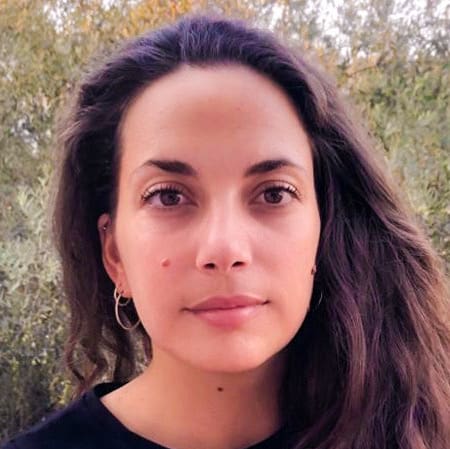
Yara Hawari is Al-Shabaka’s co-director. She previously served as the Palestine policy fellow and senior analyst. Yara completed her PhD in Middle East Politics at the University of Exeter, where she taught various undergraduate courses and continues to be an honorary research fellow. In addition to her academic work, which focused on indigenous studies and oral history, she is a frequent political commentator writing for various media outlets including The Guardian, Foreign Policy, and Al Jazeera English.

Inès Abdel Razek is the Co-Director of the Palestine Institute for Public Diplomacy (PIPD) and its digital platform Rabet, an independent Palestinian organization focusing on international mobilization and digital campaigning for Justice, Freedom and Equality. From 2019 to 2022, Inès was the Advocacy Director of the PIPD, helping to develop the political networks and international advocacy pillar of the organization. Prior to joining the PIPD, Inès held policy advisor positions in the Union for the Mediterranean in Barcelona, the UN Environment Programme in Nairobi and the Palestinian Prime Minister’s Office in Ramallah, where she advised executive leadership on international aid for development policies. Inès is also a board member of the social enterprise BuildPalestine, Advisory board member of Palestine DeepDive, and policy member at Al-Shabaka, the Palestinian Policy Network. She holds a Master’s degree in Public Affairs from Sciences-Po, Paris. Twitter: @InesAbdelrazek

Diana Buttu is a lawyer who previously served as a legal advisor to the Palestinian negotiating team and was part of the team that assisted in the successful litigation of the Wall before the International Court of Justice. She frequently comments on Palestine for international news media outlets such as CNN and BBC; is a political analyst for Al Jazeera International and is a regular contributor to The Middle East magazine. She maintains a law practice in Palestine, focusing on international human rights law.