






About This Episode
Episode Transcript
The transcript below has been lightly edited for brevity and clarity.
Alaa Tartir 0:00
The final outcome, after all these millions of dollars and years spent on establishing those security forces, resulted in what I call professionalization of authoritarianism, where security forces became more professional, but in repressing and in following authoritarian trends. And this is what the international community did and is still doing.
Yara Hawari 0:31
This is Rethinking Palestine, a podcast from Al-Shabaka, the Palestinian Policy Network. We are a virtual think tank that aims to foster public debate on Palestinian human rights and self-determination. We draw upon the vast knowledge and experience of the Palestinian people, whether in Palestine or in exile, to put forward strong and diverse Palestinian policy voices. In this podcast, we will be bringing these voices to you so that you can listen to Palestinians sharing their analysis wherever you are in the world.
At the end of June 2021, activist and outspoken critic of the Palestinian Authority, Nizar Banat, was arrested and beaten to death by the Palestinian Authority security services. Many are dubbing this a political assassination. And since then, Palestinians across the West Bank and beyond have hit the streets in protest.
They’re demanding justice for Nizar and his family, but the chants have also escalated into a larger call for the fall of the regime and for the end of PA President Mahmoud Abbas. The protests in the West Bank, particularly in Ramallah, have been met with extreme violence and repression at the hands of the security forces, including the use of tear gas, stun grenades, beatings, and arrests.
There has also been an increase in gendered violence and the targeting of female protesters and activists. Even though this is an escalation, none of this is particularly new. Rather, it follows a pattern of systematic abuse and violations of rights at the hands of the Palestinian security forces.
To discuss all of this and more, I am joined once again by Dr. Alaa Tartir, program and policy advisor for Al-Shabaka, researcher and academic coordinator at the Graduate Institute of International and Development Studies in Geneva, and a global fellow at the Peace Research Institute Oslo. Thank you so much for joining us.
Alaa Tartir 2:26
Thank you so much for hosting me again.
Yara Hawari 2:29
So Alaa, perhaps we can begin with an explanation of the Palestinian Authority security forces and how they are a key pillar of the regime.
Alaa Tartir 2:37
I think it’s important when we talk about the Palestinian Authority security forces to think about the bigger picture, which is the Oslo Accords framework, because these security forces are also the key pillars of that Oslo Accords framework.
And that is important to keep in mind. The Palestinian Authority is part of that picture, but these security forces that were created with the Oslo Accords were created in the first place to secure and sustain that framework. And this is largely why we see the security forces becoming even stronger. And the Oslo Accords are still dominant, and the main element that they are doing that through is security coordination and security collaboration, which is one of the defining features of the Oslo Accords.
So when we’re talking about Palestinian Authority security forces, it’s really important to keep in mind the original function of the security forces that relates to the Oslo Accords framework. But when we look more at the evolution of the security forces of the Palestinian Authority, we can talk about three different phases. The first phase under Arafat’s time, with the foundation of the Palestinian Authority. The second phase in the aftermath of the Second Intifada. And the third phase that was accompanied with the state-building project of the Palestinian Authority from 2007 until today.
And this categorization matters because the phases were largely based on developments that took place, and it was not part of the original plan, if we may say so. They were led by shifting donor priorities, by different donor conditionalities, by Israeli pressure, by regional changes, and by internal Palestinian political dynamics.
And it’s important to keep in mind that these actors all shaped the Palestinian Authority’s security forces and the security establishment that we have in place today.
So if we look at the first phase, when the Palestinian Authority security forces were established under Yasser Arafat, then we’re talking about a clash that happened between two approaches: one of state-building and one of national liberation. And that confused the identity of these security forces. Are they there to continue the liberation and revolution? Or are they there to build these state-like institutions of security forces and security establishment? So that confusion in identity affected the work.
But at that time, the Palestinian Authority and the donor community and the leadership of the PA didn’t care about the quality of the security establishment that they were building. They cared more about the quantity and how they were instrumentalizing that security establishment in order to gain hearts and minds to adopt the Oslo Accords framework.
So to give you an example, it was supposed to be the case that around 9,000 security personnel would be part of this Oslo Accords in its initial year, and largely to be police forces. Five years after, around the year 1999, we had close to 50,000 security personnel. And that figure tells a lot about the quality of the security establishment that we had at the time.
Moving forward, in the aftermath of the Second Intifada and the involvement of the security forces, lots of the infrastructure of the Palestinian security forces were destroyed by the Israeli occupying forces. And this was the new project for the international community: to rebuild these security forces. And that was the main entry point where we witnessed the consequences of that process.
So that process was featured by a new project for the international community — new funding going to the security establishment to build it, especially because at that time there were many security gaps that were being filled by other non-state actors, if you want to say non-security forces actors. And the international community was not happy — neither was Israel.
And this is when they started the process of reforming the Palestinian security forces through establishing European security and police missions, American military missions, in order to supervise and dictate the reform process of the Palestinian Authority. And that was the second phase.
And the third phase that we’re witnessing from 2007 until the present day is related to the process of state-building, where the state-building project of the PA became mainly about security sector reform and how to create a strong security establishment that is able to sustain the Palestinian Authority and the Oslo framework and the two-state solution.
And this is when the final outcome, after all these millions of dollars and euros spent on establishing those security forces, resulted in what I call professionalization of authoritarianism — where security forces became more professional, but in repressing and in following authoritarian trends. And this is what the international community did and is still doing harm.
To end this with a more tangible example about the magnitude of the security establishment that we’re talking about: we’re talking about nearly 83,000 security personnel and individuals working in the security and governance domain — divided between 65,000 security personnel who receive salaries from the Palestinian Authority and around 18,000 receiving salaries from Hamas in the de facto government in Gaza.
These are big figures when we put them even in a global context. If we want to translate it: what does it mean? It means that almost every 50 Palestinians have one security personnel, which is one of the highest figures in the world — yet their security is not there.
The security sector receives around 30% of international aid, receives around 44% of all civil servants working there, and receives around $1 billion of the Palestinian Authority budget. All these figures tell us that the security forces and the security establishment are so solid and part of the Palestinian Authority, and it’s the key pillar of its regime.
Yara Hawari 9:11
Thank you for that, Alaa. You talked about how much the Palestinian Authority security sector has grown exponentially really over the years. The fact that the security forces get more funding than the health, education, and agricultural sectors combined is quite mind-blowing, especially in the context of an occupied people who face systematic health insecurities, who face unemployment and dwindling agricultural production. You’ve explained a little bit about this extreme securitization, but perhaps you can delve a bit deeper into this mentality.
Alaa Tartir 9:49
It is important to acknowledge and to keep in mind that the security establishment received lots of aid over the years because it was the defining feature of the state-building project of the Palestinian Authority.
If we want to make it simple, but yet accurate in terms of reflecting realities on the ground, the Palestinian Authority state-building project is pretty much equal to a larger security sector reform process. And this is why we saw and are still seeing lots of international aid going to that security establishment.
Because that is what a state looks like for the international community. It is about the ability of the security establishment of the PA to govern and to rule over Palestinians — including with an iron fist. And that is really why we see all this international investment in that security paradigm, because the most important element for them is to secure stability. And stability means having a strong security force — that does not mean it’s providing security for the Palestinian people, but that is irrelevant according to their calculations and priorities.
What is important is to keep stability and to keep the security of Israel and sustain its occupation. And that’s why lots of money from the PA budget and from donor money are targeting and going to the security sector.
And what is really important to keep in mind as well in this case is that we’re talking about the absence of any culture of accountability or institutions that provide checks and balances — and the donors are aware of all of that. And there is the absence of any kind of solid structures that sustain an inclusive, transparent, democratic political system. And therefore the Palestinian Authority security establishment was given this opportunity as well by the international community to run the affairs of Palestinian life with an iron fist.
And that’s what made it really even stronger, especially if we think about the state of emergency that’s been declared almost since 2007. So all of these actors, plus the absence of the Palestinian Legislative Council since 2007, make it very clear that the evolution and the reform of the Palestinian security sector that was sponsored by the international community is happening within a highly securitized space that nourishes authoritarianism.
Yara Hawari 12:25
If you’re enjoying this podcast, please visit our website, al-shabaka.org, where you’ll find more Palestinian policy analysis, and where you can join our mailing list and donate to support our work.
Now Alaa, all of this cannot exist without international funding, and you’ve talked about that — that the PA security forces are funded by international donors, namely the US, the EU, the UK, and Canada. And this is something that activists and human rights workers have been keen to point out, and it’s actually led to calls to defund the PA security forces. Can you explain what exactly it is that is funded and how likely is it that, in the face of massive and systematic violations, this funding would be cut?
Alaa Tartir 13:16
This is a very important question, especially in light of the assassination of Nizar Banat, because there was a lot of pressure on the international community, particularly the EU, in relation to the sponsorship of Palestinian security forces.
And the response was like, “No, we are not doing that. We’re not sponsoring these authoritarian structures and techniques.” But that’s a very clear lie. That’s very clear hypocrisy. Because we’re talking here about a long process, and I think the donor community needs to stop and take a moment to reflect and think about all the harm that they have caused over the past years, especially over the past 15 years.
And in particular, the roadmap was created because the harm that the international community caused over the years is very clear. It’s very evident from day one in the aftermath of the Second Intifada, where the international community sponsored the rebuilding of all the security compounds, the police stations, the prisons. So they invested in building the infrastructure — the physical infrastructure for the Palestinian security forces. And that was the first thing they wanted.
Then they invested in building the equipment — the stock of equipment and clothes and weapons and cars and vehicles and all these tools, all this equipment for these security forces.
And later on, they invested in all the training and all the capacity-building programs, by bringing security experts or sending these groups to different places to get professional education. All of that happened mainly through the work of the US security mission and the EU one, and they invested millions and billions of dollars in doing that.
And there’s of course, during time of crisis, you see more of that investment. So if we think about whether this trend will end soon or not — it really depends on if we have a different Palestinian political will. Because from the international community’s point of view, this status quo is very convenient and it’s very good to keep, because it is ensuring stability to a large extent.
And they have zero incentive to change these dynamics of sponsoring these security forces. They are the guarantors for this element of stability. And only if the Palestinian leadership — obviously the existing Palestinian leadership is not interested in this — but any future Palestinian leadership needs to redefine that process and have a different political will that is able to force the international community to put their funds in sectors that matter to the Palestinian people most, and not to sectors that violate their security and protect the security of the occupier.
Yara Hawari 16:11
That is very sobering analysis, Alaa. But I don’t think it should dissuade activists and analysts and others from making that demand to defund the PA security forces. I think that remains a vital policy ask.
I want to turn a little to the tactics of the PA security forces. Apart from the obvious so-called crowd control weapons, which are more often than not manufactured in Israel, there are also tactics that are less well known — like the use of security forces in civilian clothing, the use of Fatah loyalist thugs, also known in Arabic as the shabbiha, to do the dirty work. Really to do beatings, to carry out very gendered tactics aimed at women.
Could you tell us a little bit more about that?
Alaa Tartir 17:00
Yes. The techniques that the Palestinian security forces use, as you said, vary according to the time and depending on the severity of the crisis that they are facing. But what is important to keep in mind is that policing is indeed the key element in all of that. And policing — or controlling with an iron fist — is the most defining feature, whatever it takes.
So they use different kinds of security forces in uniforms, but importantly, not in uniforms. And that is also not something that’s happening today. This happened years ago when the Palestinian Authority was established. Just a quick reminder — when the Palestinian Authority was established, Edward Said at the time mentioned that Arafat had established several security forces, five of which were intelligence services tasked with spying on each other.
That is relevant to the realities of today. The mushrooming of all these security forces meant that the activists protesting on the ground didn’t know who was controlling them, who was attacking them. And that is not happening by coincidence. That is by design, that is by structure. And this is what authoritarian regimes are good at: to confuse the protesters about who’s attacking them.
We need to keep a clear fact in our mind: that the security establishment of the Palestinian Authority is also a Fatah establishment, and vice versa. So these actors, or the security personnel, are also factional. They are led by factional politics that can easily be instrumentalized.
And these techniques that are used in the streets are important. The visible ones — the repressing of the protesters, the violence, the excessive use of violence — are the ones that we see. They are the visible ones that can be documented in the media. They can be exposed. But what is also more dangerous, maybe arguably, are the invisible ones — the techniques, the tactics that are used mainly in the PA prisons that we don’t see on cameras, that we don’t see visibly.
Over the years, there have been rather scary accounts of all these torturing techniques that the Palestinian Authority security forces used against Palestinian protesters and Palestinian critics of the Palestinian Authority. Many of these techniques are very similar to the ones that Israel uses in Israeli jails. There is a kind of replica, but it comes even harder when it is practiced by Palestinian national security forces.
And there are enough reports out there — of human rights organizations, local and international, from different researchers — that documented all these techniques of torturing. And that is unacceptable. But in reality, unfortunately, it happened.
But linking also these techniques and the reaction of the Palestinian Authority — with this iron fist of security establishment — with what’s happening now, it is obvious that the political and security leadership of the Palestinian Authority will push back against any effort that aims to challenge or shake the fundamental pillars of the status quo.
And this is exactly what is happening now, because that status quo — although it is damaging to the Palestinian people, and this is why they are revolting against it — is convenient and conducive to the Palestinian leadership and its security establishment.
And they push back using these different techniques that you presented and we talked about. They push back by using excessive force and violence against civilians, peaceful protesters, and using all these strategies and techniques of repression that we see from across the world, including from our region.
But also, this pushback can be instrumentalized. The ongoing protests and uprising can become political maneuvers with the ultimate objective of going back to the negotiation table. These are the hints that we are seeing now, where the security establishment has clearly hinted to the political leadership of the PA: let’s try to maneuver, let’s try to instrumentalize these uprisings into political maneuvers by coming back to the negotiation table. That’s really key to keep in mind.
These approaches are being used by the Palestinian Authority over decades by now. So they are not just a derivative of today’s reality. They are built in. There are structural issues that they use that empowered and benefited the Palestinian Authority leadership and security establishment, but failed the Palestinian people.
And this is part of the gap that we obviously see. And all of that happened under the supervision and the sponsorship of key international actors who were so instrumental in creating the necessary tools of a strong, repressive security establishment that is able to rule — and the political paradigm that does not deviate from the holiness of the Oslo Accords framework.
And both tools are fundamental to the sustainability of the status quo, and neither the PA nor the security establishment are interested or willing to compromise on either. This is why we see all these tactics of repressive regimes being used and deployed in the streets of Palestine.
Yara Hawari 22:44
As you said, Alaa, Palestinian and international human rights organizations have documented these techniques of repression, including Al-Haq and Human Rights Watch, just to name a few. If people do want to read more about this, I think many who stand in solidarity with the Palestinian struggle are really unaware of this extra layer of oppression and are quite surprised by the situation unfolding on the ground. So I think this analysis is incredibly important.
So I wanted to ask you a final question about what has been happening over the last few weeks. What do you think is the future of the Palestinian security forces?
Alaa Tartir 23:24
The future of the Palestinian security forces and the security establishment is very much linked with the future of the political leadership, because both political leadership and security establishment are so synchronized at all levels. So whatever happens with the political leadership will definitely impact the security establishment.
But my fear is not what we’re seeing now in terms of repressive practices and paradigms on the protesters in the streets of Palestine. My fear is that what we’re seeing now is a rehearsal of what will come.
What I fear is that the security establishment will fill any kind of gap that will be created sooner or later, because they are the most dominant, the most powerful establishment as of now. And that is problematic, dangerous, and will take the struggle for rights many steps back — because now we would have the security establishment filling these gaps. And the rehearsals that we’re seeing now on the ground are really not boding well for what is coming later on.
So this is what is really important to keep in mind. If we want to change the structures of the security establishment, then we need to have a different security paradigm — different from what we call al-‘aqida al-amniyya [the security doctrine]. And that coming change requires a different kind of leadership.
The reconfiguration of the Palestinian Authority’s duties will be reflected in the security establishment. And that needs to be part of a larger conversation, a national dialogue, that will have to situate: what is the role of the security establishment of the PA as of now and in the future, and the political structure, but also in the future options that the Palestinians will have?
So a new leadership will be tasked to redefine the role of the security establishment and to minimize the role of the international community, that’s been largely damaging when it came to Palestinian rights and security.
So judging by what we’re seeing now, the evidence on the ground is not giving us particularly good news about the role of security forces, where we will witness some similar aspects of what we see in other repressive regimes. But this is also the moment to join forces, to challenge the repressive structures and institutions, to expose them, and to have very short-term, clear corrective operational measures in a way to reinvent this security paradigm of the Palestinian Authority as part of the project of reconfiguring the PA’s duties.
And that is a big task that is ahead of us. And the only way to engage with this is really to have a comprehensive national dialogue that defines and redefines the duties of the Palestinian Authority and where the security establishment fits in this struggle for Palestinian rights.
Yara Hawari 26:36
Alaa, thank you so much for joining me on Rethinking Palestine and for that comprehensive and nuanced analysis as usual.
Alaa Tartir 26:45
Thank you very much, Yara!
Yara Hawari 26:52
Thank you for listening to Rethinking Palestine. Don’t forget to subscribe and leave us a review. For more policy analysis and to donate to support our work, please visit our website, al-shabaka.org. You can also follow us on Facebook and Twitter.

Al-Shabaka: The Palestinian Policy Network is an independent, non-partisan, and non-profit organization whose mission is to convene a multidisciplinary, global network of Palestinian analysts to produce critical policy analysis and collectively imagine a new policymaking paradigm for Palestine and Palestinians worldwide.
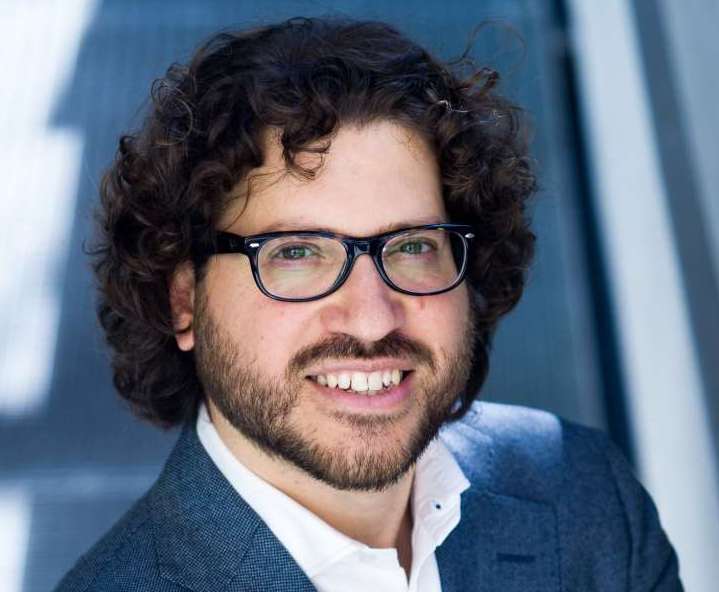
Alaa Tartir is Al-Shabaka’s program and policy advisor. He is a senior researcher and director of the Middle East and North Africa Programme at Stockholm International Peace Research Institute, as well as a research associate and academic coordinator at the Geneva Graduate Institute, global fellow at the Peace Research Institute Oslo, and governing board member of the Arab Reform Initiative. Alaa holds a PhD from the London School of Economics and Political Science and is co-editor of Resisting Domination in Palestine: Mechanisms and Techniques of Control, Coloniality and Settler Colonialism (2023), Political Economy of Palestine: Critical, Interdisciplinary, and Decolonial Perspectives (2021) and Palestine and Rule of Power: Local Dissent vs. International Governance (2019). He can be followed on Twitter (@alaatartir), and his publications can be accessed at www.alaatartir.com.