


About This Episode
Episode Transcript
The transcript below has been lightly edited for brevity and clarity.
Amjad Iraqi 0:00
But since October 7th, Israel has really taken a much more severe approach, where the concept of burning the lawn — of really trying to burn everything at its roots, not just in terms of specific military goals, but destroying the entire civilian infrastructure — the idea of really trying to collapse the social, political, and even environmental structures that maintain these places, trying to burn that to its roots, has now become a very clear goal. We’ve seen this in full force in Gaza. We’ve seen this to some extent in parts of the West Bank. We’re seeing this now unfolding severely in southern Lebanon. And now we can see elements of this also inside Iran.
Yara Hawari 0:43
From Al-Shabaka, the Palestinian Policy Network, I am Yara Hawari, and this is Rethinking Palestine.
With the genocide in Gaza entering a new phase — one that hides under the cover of the sham of the ceasefire — the Israeli regime’s scorched-earth strategy has extended to well beyond its immediate neighbors. In late February 2026, the US and Israel went to war against Iran, fulfilling the decades-old dream of the Israeli Prime Minister Benjamin Netanyahu.
Since then, over 1,500 have been killed in Iran, including hundreds of children in a strike on a girls’ school in Minab in southern Iran. In retaliation strikes, a dozen have been killed in the Gulf and more injured. Numbers from the Israeli regime are difficult to confirm because of the military censor, but reports suggest several dozen Israeli deaths and over 4,000 injured.
The region and indeed the world has been plunged into chaos, something Israeli politicians have been known to use to their advantage.
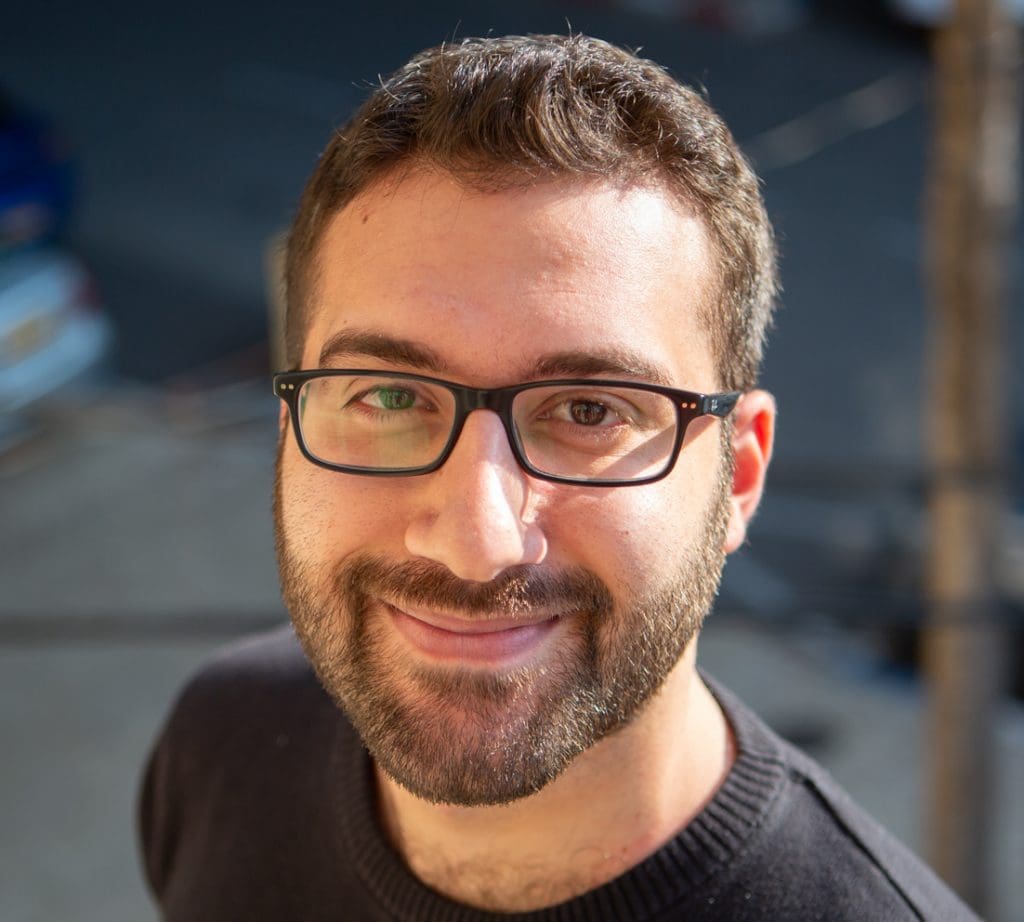
Joining me to discuss this and more is Amjad Iraqi, Al-Shabaka member and Crisis Group senior analyst for Israel and Palestine. Amjad, thank you for joining me on this episode of Rethinking Palestine.
Amjad Iraqi 1:59
Thanks so much for having me, Yara.
Yara Hawari 2:01
So Amjad, it’s difficult to understand US President Trump’s mind. I think that’s an understatement of the century. He says one thing one day and another thing the next day, and some analysts argue that this is a deliberate tactic of diplomatic confusion. But it does increasingly appear that he wants an off-ramp from this war. He went into it with no clear goals, as is evident from his administration’s flip-flopping publicly on what those goals are. One day it’s regime change, the next day it’s to prevent Iran from nuclear weapons — which apparently already was achieved last year.
But I think what’s been lost in all of this, or at least not paid enough attention to, is: what does the Israeli regime want from this war?
Amjad Iraqi 2:44
That’s a really important question, precisely because so much of the coverage has tended to focus on what Trump will and won’t do, what he does and does not want. I mean, on the one hand, we should take into account that there are naturally US interests and agendas at play, independent of Israel. We’ve seen this through many American wars where there are always neocons and war hawks who have grand global designs in which Iran does play a critical role. So these interests are at play even if they are not necessarily clear, and they kind of operate on their own track, even as they obviously are in constant dialogue with Israeli interests and agendas.
And with that said, I agree — the question of what Israel wants, there are two ways to kind of potentially approach it. I think from the get-go, both in the rhetoric and in the way that Israel launched its operation on the 28th of February, it was very clear that they were looking for regime collapse. People started debating, you know, what is regime change, regime destabilization. But one can debate these degrees — the idea of collapsing the Islamic Republic as much as possible, to dissolve or disintegrate its institutions and its mechanisms of leadership, was very clearly a key goal. And we’ve seen this also in other places where Israel has done this, like in Lebanon, certainly in Gaza, and so on.
With that said, there are also other sort of degrees which Israel is also trying to pursue. So I mean, tactically, they’re talking about — there’s a common phrase of “military degradation.” So naturally, striking Iran’s military capacities, ballistic missiles, which was one of the key issues on the Israeli agenda. But even now, the goals are slightly shifting. The fact that the Israeli government is now saying that they want to reopen the Strait of Hormuz, which the Iranians have been tightening since the start of the war — which wouldn’t have happened if the Israelis and Americans did not launch the assault. But that itself is showing there’s a certain fluidity.
But regardless of these different specific military objectives, there is a more underlying kind of doctrinal agenda at play. And many Palestinian analysts have been describing this — that there’s been a very clear, massive shift from what Israel used to describe as “mowing the grass” or “mowing the lawn” to what is now increasingly becoming this kind of “scorching the lawn” or “burning the lawn.”
Now, the metaphor is quite powerful in capturing the idea around what this military method is supposed to achieve — that it’s the idea that you are surrounded by these constant threats and this regrowing grass that you just have to keep cutting down every now and then. Palestinians are very familiar with this in Gaza and the West Bank, and especially against non-state armed groups.
But since October 7th, Israel has, as we’ve witnessed in Gaza, really taken a much more severe approach, where the concept of burning the lawn — of really trying to burn everything at its roots, not just in terms of specific military goals, but destroying the entire civilian infrastructure — the idea of really trying to collapse the social, political, and even environmental structures that maintain these places, trying to burn that to its roots, has now become a very clear goal. We’ve seen this in full force in Gaza. We’ve seen this to some extent in parts of the West Bank. We’re seeing this now unfolding severely in southern Lebanon. And now we can see elements of this also inside Iran.
And so this doctrine, this idea that — not to overstretch the metaphor — now that Israel wants to have this clear line of vision stretching from the Gaza coast all the way to the Iranian border, that itself is kind of underlying all this. Now, whether or not they can succeed — and this is up for debate and dispute, and just because they set the agenda does not mean they’re necessarily achieving it, and there’s much to say on this — but I think that that drive and the impunity with which they’ve been able to pursue that strategy is, I think, what we’re really seeing unfolding here.
Yara Hawari 6:50
But of course, Iran isn’t Gaza and it’s not Lebanon. I think in all of this, Iran has been seriously underestimated. It’s managed to sustain a response with a relatively small amount of cheap missiles and drones, which are very costly to intercept. And by some reports, it would seem that Iran is holding back on some of its more powerful weaponry, which indicates that it’s prepared for a longer war.
Do you think the Israeli regime is capable of maintaining a longer war, and does it want to?
Amjad Iraqi 7:23
It’s tough to say. On the one hand, we have to acknowledge that Israel has defied a lot of predictions and expectations of overreach, of fatigue, of internal implosion, and even the depth of its impunity — which is certainly not new to Israel, but the extent to which it’s been able to enjoy that over the past two and a half years in Gaza, in Lebanon, and even now in Iran. I think it has surprised even a lot of people who thought that some factors would end up curbing or limiting some of that Israeli military campaign. So in this respect, it’s hard to make those kind of predictions. There’s much to unpack there.
On the other hand, there’s also the fact that Israel is not very fond of long wars. They like things that are short, decisive, overwhelming, disproportionate, in the hopes that they can achieve as much as possible, however limited, within the space of a couple of weeks. Israel is good at long occupations, as Palestine knows very well, as of course Lebanon has also known. But it certainly cannot do that in Iran. It’s not a neighbor, for the obvious reasons — it’s not a direct bordering neighboring country. It’s a country that’s massive, massively times the size of Israel. It just cannot achieve that, nor can American forces potentially do that. Iran is also not the same as Iraq, and the dynamics are very different.
Yet whether Israel can keep going with this — I mean, there are a couple of limitations nonetheless. One thing that my colleagues often say is that there’s a game of mathematics. So there is, in the end, hardware involved in this war. What missiles do you have? What are the interceptors that Israel uses, for example, with Iron Dome to actually shoot down many of the Iranian missiles or Hezbollah’s missiles and rockets? That takes time to produce, that takes money to produce. And there’s a concern in Israel, for example, if they actually have enough in stock. So that mathematics of the hardware could potentially be at play — whether it may sort of slow down the war, it may force it to stop, it may cause more casualties. But this is a factor to keep an eye on, even if we don’t necessarily always know the full facts.
And the other dynamic of this is that, even though Israel has been able to defy all expectations, there sometimes is a point of diminishing returns. And I think a war with Iran, which is very different from many of the other enemies that Israel has fought against — that Israeli society, even as they’re in support of the war, as time goes by, they do grow fatigued. The military does rely on society to be on board, to take part as soldiers and as reservists. It requires them to keep enduring the idea of going into bunkers, of having their life entirely disrupted. But Israeli society, in the end, they do want to go back to some semblance of normalcy. And the longer that that is denied, the more you see those frictions coming out.
And then the other is, of course, the economic repercussions of what is happening. One of Iran’s key leverages, as you mentioned, is closing off the Strait of Hormuz and the massive repercussions on the energy markets, on the global supply chains — this is inevitably going to affect Israel as it is affecting everyone else in the region. And there’s much more to say, but these are points which will gradually raise the cost as time goes by.
So even if Israel is able to succeed in degrading Iran’s military capacity in some form, weakening its political leadership in some ways, there are other prices that it also needs to constantly weigh out. And this is, again, at a scale that is not like in Palestine, that’s not the same as Lebanon.
Yara Hawari 10:53
Yeah, and I think whatever the outcome of this war, it’s going to have serious and long-lasting consequences regionally, but also beyond. Iran is forcing Gulf states to think about the cost-benefit calculation for hosting US military bases on their territories. It’s also smashed the UAE’s image of this safe haven in an otherwise volatile region. You mentioned just now the consequences on supply chains and the Strait of Hormuz being closed off. What are some of the other longer-term consequences that you’ve been thinking about in all of this?
Amjad Iraqi 11:30
The Gulf aspect is a very crucial one. So for years, we’ve seen several Gulf countries — which it’s hard to describe them as one block all the time, but among the collective interests that they share — that they have tried to set themselves as this different kind of model for geopolitics, for diplomacy, and for trying to engage with multiple actors. We talk a lot about the Saudi-Iran détente that existed before this current war, for example, and trying to position themselves between both alliances with the United States and also the push towards normalization with Israel, with also trying to create some kind of different terms with the Islamic Republic and other actors — China, Russia, and so on and so forth.
This war has really changed that quite significantly. I mean, since the Gaza war itself, Gulf states — if Iran used to be their primary concern in the region — we’ve seen over the past two and a half years that they now see both Israel and Iran almost equally as severe threats. They do not trust Israel to actually maintain the kind of stability that they had promised or that they espoused during the main drives and pushes for normalization.
And even though today the Gulf states have reserved most of their public denunciations against Iran itself — because Iran is actually firing quite constantly at the Gulf states in order to increase this regional price — the irony is that Iran is in many ways responding in kind to Israel of this kind of burning of the lawn: that if you’re going to attack us, then we will burn everything around us. So there’s a specific kind of theory that is there for the Gulf states. That has not changed the fact that they really are questioning — or many of the Gulf states are questioning more and more — how they see Israel in the region.
One of the kind of outliers on this is the United Arab Emirates, which is much more open about its very close alliance with Israel and with the United States. And countries like Saudi Arabia and Qatar — they have vested interests with the US, but they have a different way of trying to position themselves.
So I think where the Gulf has to rethink their theories of how they ensure their security and their stability — that they cannot really put their trust in either the Iranians, nor in the Israelis, nor in the Americans who are not prioritizing Gulf Arab states as they are with Israel. So where that will lead, I think it’s unclear. And I think there are many colleagues and experts, even in Al-Shabaka, who can be much more attuned on this than I am. But I do think that will play such a critical role in how the Middle East shapes up in the coming years.
As much as many power dynamics have not shifted, a lot of different calculations and threat perceptions certainly have. And time will only tell, depending on how this war unfolds — and not just vis-à-vis Iran, but we’re seeing these different battles also in Syria, certainly in Lebanon. And of course the constant concern about Gaza and the “ceasefire” and how that ends up developing.
Yara Hawari 14:31 [Rethinking Palestine mid-roll]
If you’re enjoying this podcast, please visit our website, al-shabaka.org, where you’ll find more Palestinian policy analysis, and where you can join our mailing list and donate to support our work.
So Amjad, you recently wrote that within the Israeli regime, there are deep, unresolved political, economic, and social tensions that have been bubbling away. What are some of these tensions, and do you think it will reach a boiling point?
Amjad Iraqi 15:01
Whether it will reach a boiling point is a hard question. So the internal fissures in Israeli politics and society and the military have been around for years. As you might recall, in 2023, prior to October 7th, there was this major crisis within the Israeli state when the far-right government was elected, when they were pursuing things like what they call the judicial overhaul or judicial coup. You had these months where there were reservists who were refusing to show up for service. You had this massive increase in settler violence that was raising concerns even among the Israeli public — for very different reasons, and not in terms of the interests or the rights or the security of Palestinians.
But you were starting to see this kind of coalescing of a battle between the sort of national-religious vision of Israel with what Israelis would define as a kind of more secular, liberal vision — but that is very much in the Jewish Israeli bubble, where naturally Zionism and Jewish Israeli dominance and supremacy were still the norm. But this was nonetheless a serious battle happening within the Israeli system.
With October 7th and the Gaza war, a lot of this was sort of pushed to the side. There became this massive unification towards what was essentially a very vengeful war, what was a pursuit of the annihilation of Gaza as much as they could — a complete indifference to Palestinians and their humanity, wanting to see them either killed or expelled and so on. And again, the extension of this to places like Lebanon and other places now.
But what those fissures look like — I mean, within the political spectrum, even though Israeli political parties are very much in this kind of right-wing spectrum, they actually share a lot of ideas and policies. And whether it was the Gaza war, even with this current Iran war, or even the current re-invasion and occupation of Lebanon, you’re seeing this massive synchronization among the Israeli spectrum behind the very militaristic approach.
And yet, Prime Minister Netanyahu is very much at the center of this. So the battles that are happening between the politicians, for example, are less about what the actual policies are being pursued by the government, but the fact that they are trying to claim themselves as the more trustworthy leader to guide these policies.
So this is why you sometimes have this dissonance, even with the Israeli public, whereby 93% of Jewish Israelis, according to polls, fully endorse the Iran war, but that has not actually made a huge shift in terms of Netanyahu’s support numbers. So the policies have quite the consensus, even if the particular individuals don’t. And Netanyahu, just having been prime minister for so long, still remains very much at the center of this.
Yara Hawari 17:45
That’s similar to how the response was to the genocide in Gaza. I mean, overwhelmingly the Israeli public was supportive of the genocide, but it was more about how the genocide was being carried out rather than the genocide itself.
Amjad Iraqi 18:00
Exactly. And to what degree of cost is it coming to us as Israelis — whether they’re reservists or for day-to-day life inside Israel. It is that you can inflict that violence outside if you want, but we don’t want to feel it. We don’t want to sense it. We don’t want to have our soldiers coming back with what they would see as PTSD, that we don’t want to have to deal with these repercussions. So that’s where those fissures are.
Now, relatedly as well, that fissure is also regarding the question about the conscription of ultra-Orthodox Jews into the military, which again is a decades-long question mark, but that has increased, including during this war, whereby a lot of Israelis are feeling like: we have taken on the burden of all these multiple military campaigns, we are growing tired, we want the ultra-Orthodox to pay their dues and to no longer buck that trend.
And this is an interesting fissure even within some of the settler or national-religious community. They’re not necessarily Haredim or ultra-Orthodox, but they are saying that, “We are pioneering the expansion of Greater Israel. You now need to do your part.” And we’re seeing this in the Knesset, we’re seeing this in public. And that itself is a friction that has not yet been resolved. And Netanyahu has been constantly kicking it down the road because he relies on ultra-Orthodox parties in his current coalition — even though they’ve pulled out of the coalition, they’re still tacitly supporting it. It’s a bit of in-house politics, but that is a delicate balance to navigate.
And the third as well is the questions about what are the economic costs coming to Israel that maybe are not so obvious, but that may be playing a role. So if you go around Israeli cities these days, a lot of things still seem quite bizarrely normal. Again, Israel was able to defy a lot of the expectations that there’d be some kind of massive economic collapse, but they’ve actually been able to maintain themselves in surprising ways, to insulate themselves from a lot of those economic costs.
But if you go into the more granular — what this means for poor Israeli families, what it means for reservists, who’s supplying the subsidies for them or the compensations for them, where can they find jobs for people who are supposed to be in universities then pulled into the army — there are these socioeconomic repercussions that are still too early to fully navigate. And there’s different analyses from different experts — it’s still up for debate. But there is potentially a longer-term cost that will end up unfolding.
We haven’t seen a massive change insofar as polling is concerned ahead of the Israeli elections, which are currently scheduled for October. The core camps have not significantly changed. You have different figures like Naftali Bennett, who is not in government at the moment but is expected to be returning — was expected to be a lead contender behind Netanyahu and the Likud Party. But in terms of the orientations of where the Israeli political spectrum is at, they have not really shifted, as most pollsters will tell you.
Now again, this could still change. And Israeli politics is extremely volatile, and the coalition dynamics are always a bit of a question mark. But even if we’re not seeing it right now, there may be something long-term, but that itself has to be seen. War-making and military violence helps to sometimes pause that somewhat, but the repercussions do not go away so quickly.
Yara Hawari 21:21
And this leads me on to my next question, Amjad. As you noted, the polls do show overwhelming support for the war in Iran amongst Israelis. And you described it as this unity in inflicting violence upon others. But at the same time, there is that increasing fatigue. Schools have been closed, people are not going to work. They’re having to go to shelters several times throughout the night. Iran, with its low-cost missiles and drones, has successfully caused disruption to Israeli life. And as you noted, this is an election year for Netanyahu, and inevitably that’s playing into his calculations for this war.
So I know it’s a bit difficult to make predictions, but what do you sort of see playing out at the elections?
Amjad Iraqi 22:17
I remember when we had our podcast a few years ago with one of the Israeli elections as well, where making predictions back then was just as hard as it is today, and the volatility has not changed. And in a way, the answer I’m going to float now is different from what I might’ve said even a couple of months ago.
So even though you generally have a kind of baseline consensus among Israelis when it comes to Gaza or in the West Bank, the Iran and Lebanon factors may be a bit more of a question mark. So, as we’ve been saying, the level of disruption that the Iranians are inflicting on Israelis is quite unprecedented, even for a lot of Israelis. There are a lot of aspects of normal life that are able to continue, and Israelis have this astonishing capacity to normalize the abnormal — things like missiles and the sounds of missiles and sirens. But again, how long they can sustain that for a long stretch is a question mark.
Even now, I think even though Israelis believe that they are right to launch this war, to try to hit the Islamic Republic, there may be questions percolating again of: how long can we sustain this? Can we trust Netanyahu to still guide this? And what is the end game? Because if we were promised regime collapse in the first week, and now we’re in a very different situation, and if the costs are being felt in our pockets by those economic repercussions, if it’s being witnessed in the divergence between Israeli and US interests, and so on — this might begin to have different effects, let’s say, for Netanyahu or for Likud.
But this is something that could potentially change in weeks, and it could also be something that doesn’t change at all.
The other issue is about Lebanon. Because even as there is, again, a general kind of unity around invading Lebanon, occupying it — even there, there’s actually much more underlying division, because Israelis have experience with Lebanon. They’ve had a decades-long occupation, they’ve had multiple invasions of the country. And about a year and a half ago, they were promised that Israel had made a decisive blow against Hezbollah. Lo and behold, Hezbollah has actually been able to not only have the willingness to fight, but is still launching rockets, is ready for guerrilla warfare.
Now, this is not to say Hezbollah has not changed. It has been weakened, has been degraded. And there’s an internal Lebanese dynamic that we shouldn’t ignore here, because there’s also a lot of concern and fear and resentment among Lebanese about how Hezbollah is playing out in those politics.
But for Israelis, Lebanon comes with a lot of shadows and fears — because the Lebanon wars, from the invasion of 1982 to the longer occupation until 2000, to the 2006 war as well, where that also set these new questions about what the Israeli military can and cannot achieve. These questions have not gone away.
And so there is, I think, in some segments of Israeli society, a few more questions than they otherwise would have asked. And we have yet to see how this re-invasion is now playing out. For example, it’s unclear if Hezbollah fighters are actually inflicting more costs on Israeli soldiers on the ground. If the Israelis succeed in actually seizing all of the territory up to the Litani River and maintaining occupation there, then maybe that will actually be a big boost for people like Netanyahu. But again, this is something that even Yair Lapid, the opposition leader, is actually openly calling for — a long-term occupation up to the river.
So again, I think we’re still very much in a moment of flux where a lot of different things could still shift and change.
So that’s the extent to which external factors might influence internal politics. The other key piece, aside from some of the ones we mentioned about the question of the Haredi draft and economic stuff, is actually Palestinian citizens of Israel and where they fit into the electoral map.
Yara Hawari 26:03
I’m glad you mentioned that, because that was going to be my final question. We saw recently announcements about a new Joint Arab List among the Palestinian citizens of Israel. Do you see that emerging in this election round? And if so, what kind of approach are they going to take?
Amjad Iraqi 26:26
So the Palestinian citizens there — they will have an impact if they come out in large numbers to vote, and it will have a large impact if they don’t come out to vote. And this is really a debate happening within the community right now. I mean, even before the Arab parties have nominally agreed to reunite as a Joint List — which there’s a lot to unpack there — a lot of Palestinian citizens, they have no illusions about the Israeli political spectrum or about their right to vote. But there is a segment of the community that believes that there is a substantive difference between having a right-wing government and a far-right government. And the difference was a genocide in Gaza.
And it’s not necessarily that they have massive differences of what they would like to see, let’s say, in the Occupied Territories. But it’s that who has the confidence, who has the will, who has the ideological drive to pursue a lot of those decisions. But that becomes a serious debate, whereby there’s a strategic question mark of: can Palestinian citizens play a role in at least ousting this coalition and actually pulling back the Israeli spectrum from the Smotrich and Ben Gvir types, and actually make it more difficult for someone like Netanyahu to have an alliance with those kind of parties?
I mean, again, I don’t want to minimize the way that there is that consensus in the Israeli spectrum, but there are degrees of violence that we’ve witnessed. So there is a fair argument among some segments — or to at least, if not to necessarily bring it a bit more to the lesser degree of right, but maybe to at least disrupt the Israeli political system and create some instability in the way that you had also when there were something like five elections in the course of three years. That can at least make it a bit harder for Israel to maintain the current overdrive that they’ve been under the past two and a half years. So there’s a camp there.
Yara Hawari 28:10
Do you think that that is still an assumption that people hold, even though we’ve seen throughout the genocide that Israeli politicians across the political spectrum and Israeli parties across the political spectrum have been overwhelmingly supportive of the genocide? Had Netanyahu not been in power on October 7th, do you think there would have been a different response? And similarly, in this moment with the war on Iran, had Netanyahu not been in power, would there be a different approach? Do you think people still have that assumption, or do you think that’s been diminished somewhat?
Amjad Iraqi 28:48
I mean, it’s hard to always debate the counterfactuals. But for those who would make the argument, they would say there’s a difference. There’s a difference between having Netanyahu as prime minister versus even, let’s say, Bennett. So Netanyahu has experience and the confidence to launch a lot of the operations they’ve done, whether it was in Gaza or in Iran. And he usually manages to rally the political and military echelons around him. But there are very few politicians who have that kind of gutsiness to take it. And Netanyahu has had this skill, and it’s one of his big legacies — on every front, from domestic legislation to military operations.
So now with Bennett — he might launch wars. We saw it during his government: he had at least several military operations in the West Bank, certainly in Gaza. But there are different calculations even in Bennett’s head compared to Netanyahu. And there are different limits to the confidence that someone like Bennett would have, or Lapid, or Gantz, compared to Bibi.
I mean, this is one potential argument. So even if Netanyahu is able to kind of shirk off a lot of certain pressures, there may be other politicians who won’t. Again, this is sort of scenario-setting and you never really know. But I do think that there’s a case to be made that, yes, sometimes having different individuals means — did the genocide last two years or did it last a few months? And it’s not to minimize the severity of it, but time does play a role. And those kind of different pressures and calculations in Israeli political minds does play a role.
So even on the question of Israel’s relationship with the Gulf — if someone like Smotrich does not really care about normalization with Arab states, someone like Bennett or Lapid, they do. There are other factors that could, in theory, have played certain limitations. And there are many other realms to think about this. But I think that this is one of the cases that is being made, again without reducing the fact that Israeli state and society will continue a lot of these policies. But the degrees do matter, and they matter in Palestinian lives. They matter in the territory that Israel is able to take. It matters in the kind of limits and pressures you can apply onto it.
But of course, the counterargument could also just as easily be made. I mean, as we see, if Israeli society is so overwhelmingly in support of this, would they have done something different? It’s unclear. Or maybe even unlikely. Will, if there is a coalition that takes over this current Netanyahu one, or the far-right one — will they reverse a lot of the policies? Probably not. I mean, we saw this also in the Bennett-Lapid government, where they actually sustained and even stretched the limits of some of those policies. So that opposing argument can certainly be made.
And this is where Palestinian citizens really play in — that if they do come out in big numbers, the numbers game that exists in the Israeli political spectrum, because it’s proportional representation, means that they potentially have a jamming role. Because also the anti-Netanyahu opposition, the Zionist parties there — most of them, almost if not all, do not want to join with Arab parties. And even someone like Bennett has said this very explicitly, which is quite different from his position when he invited Ra’am, the Islamist party, to come in. This has changed significantly.
On the other hand, if Palestinian citizens are very disillusioned, if they don’t believe they have any impact, if they don’t believe they’ll make a difference and their numbers drop — because of the proportional representation, that means that the other Jewish Israeli parties will actually get stronger numbers. So that includes the more far-right, that includes the Haredi parties — the danger becomes that if the Palestinians do withdraw, that actually you make it easier for some of these parties to form coalitions. This is where the numbers game does make a difference. And this is the difference between can someone like Bibi get 61 seats or 70 seats — is it down to 55 seats?
So it’s another game of mathematics. And it’s unclear — or at least unclear to me so far — where Palestinian citizens lie in that debate. I think a lot of polls seem to suggest that they will come out to vote, especially if the Arab parties do follow through on their commitment to come back as a Joint List.
But they need to make the case to Palestinian citizens who, even as they’re observing all this around them and they are concerned about Palestinians and they are concerned about the region — but actually, for most Palestinian citizens, when you ask them what is their primary concern, and this is sort of a segue to another subject, it is about what’s happening in Arab towns and villages inside Israel, which is the question of organized crime and gun violence and the depths to which that has dominated Palestinian life.
So this is a far subject from the Iran question, but this is where something that seems so small in the community — as small as Palestinian citizens — could have maybe not a decisive factor but certainly a significant role to play in how a constellation may occur that determines the fate of this Israeli election, that determines the fate of how the Israeli state proceeds in the coming years, and that determines the fate of Israeli and Palestinian relations with the wider region at a time of such massive seismic shifts.
Yara Hawari 33:53
And I’m thinking, with all the political repression and the chilling effect that’s had on Palestinians in ’48 — Palestinian citizens of Israel — whether that’s going to have an impact on them actually turning out to vote. Because we know that they have been hard hit over the last years. There have been a lot of arrests for social media posts, for really small things. Even just coming out and saying the word “genocide” has had repercussions for certain individuals.
So in my mind, that will undoubtedly have an effect on how people show up and if they do show up to vote. And of course, it’s important to mention that whether people vote or not is a contentious issue in the community. There are people that decidedly choose not to vote in the Israeli elections, Palestinian citizens of Israel.
So I’m just wondering if you think actually that might have an effect on the numbers.
Amjad Iraqi 34:49
It certainly may. I mean, since the beginning of the Gaza war, there’s been a really terrifying paralysis among Palestinian citizens of Israel. It’s not that they were not witnessing all these things, but there was a real fear that was informed by Jewish Israeli society and by the Israeli state, which basically threatened the Palestinian community to say: you don’t get involved. Don’t come out to the streets. We don’t want to hear from you. We don’t want to see you.
And there were certainly arrests, but also, I mean, it wasn’t even just about state repression — in universities, in your grocery stores, in the public sphere. Everything — there was almost this, I’d call it almost like a totalitarian pact on the part of Jewish Israeli society that became enlisted in the war effort in the civilian sphere.
For Palestinian citizens, who in past wars used to come out to the streets and try to stir some good trouble, as it were, inside the country — the fear is very, very real. They can see Jewish Israeli society at its full capacity and being able to witness what they’re able to do. And the feeling that Palestinian citizens of Israel are next. And the far right is very explicit that the mixed cities and the Arab towns are a target — that they want to see those also cleansed, that they want to get rid of the weeds and burn the lawn, in some respects, even inside the state.
And that has shifted a little bit as Palestinian citizens are able to kind of try to reassert some confidence and ability to step out. But that fear is still there. The threat is still there. That repression is certainly still there. And even now, in the context of the Iran war, people are also running to their basements or running to bomb shelters, or have no bomb shelters to run to. And so that’s another kind of level of paralysis that is also occurring.
So whether this — how this affects the polls — is a big question mark. And now coming back again to this kind of micro issue, whereby even the war has not necessarily stopped the issues of gun violence in Arab towns or the activities of organized crime families or crime organizations. There’s a sense that nothing has really shifted and there’s no clear way out — that not even the Arab political parties in Israel have really been able to set a different kind of agenda or make a clear, different theory of change.
And I’m sad to say also, this isn’t just among Palestinian citizens of Israel, but among the Palestinian national movement at large — whether it’s the Fatah-led Palestinian Authority or Hamas — that have not really been able to put forward something different and to recognize that whatever symbolic victories have been achieved over the past two and a half years, it has come at a very catastrophic cost. At the cost of material power, material ground that Palestinians hold — and the sense that we have not really been able to create a different sort of direction or reunification after two and a half years of genocide, of experiencing one of the worst periods in Palestinian history since the Nakba. But we’re still kind of stuck in certain modalities and ways of thinking.
And it’s not that that thinking is not happening at all. There are a lot of circles — Al-Shabaka is one of them — trying to push against this and interrogate these theories. But we are still trapped in a situation whereby the political leadership and much of the public is still under attack, does not have the space to do this. In Gaza, people are thinking about survival primarily — the basic food and water. And it’s not that they’re not thinking about their political ideas or constant liberation, but your immediate needs are so essential.
And so, having to come to terms with these tensions within how Palestinians — whether inside Israel or in Gaza or in the West Bank or elsewhere — we’re having to come to terms that we need to really get down to the fundamentals. That something has shifted in Israel-Palestine, in the Middle East, and in the wider world order that requires new ways of organizing. It’s hard to come up with clear answers, and some of this is beyond us. But I think it’s just very reflective of a moment whereby, as much seismic change is happening from Israel to Iran and from the US to China — where we fit into this and how we can think about our agency and political power as much as possible. Those are the questions that need to be had going forward.
Yara Hawari 38:53
Amjad, we’ll have to bring you back on the podcast later in the year to talk more about Israeli elections and the consequences of the Israeli regime’s scorched-earth strategy. Thank you so much for joining us on this episode, and I look forward to having you on again soon.
Amjad Iraqi 39:11
Thank you so much. Always pleased to be here.
Yara Hawari 39:16
Rethinking Palestine is brought to you by Al-Shabaka, the Palestinian Policy Network. Al-Shabaka is the only global independent Palestinian think tank whose mission is to produce critical policy analysis and collectively imagine a new policymaking paradigm for Palestine and Palestinians worldwide. For more information or to donate to support our work, visit al-shabaka.org. And importantly, don’t forget to subscribe to Rethinking Palestine wherever you listen to podcasts.