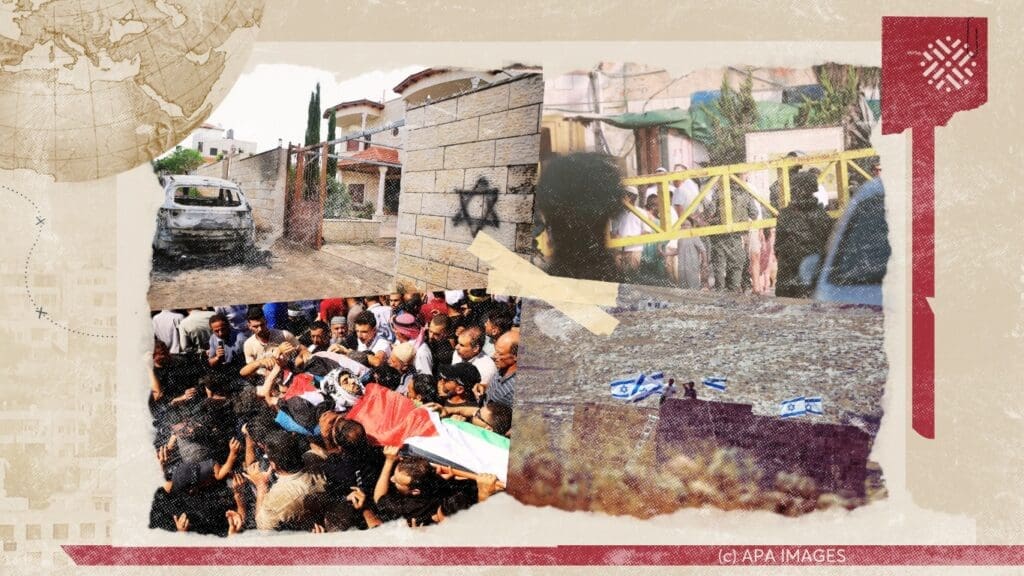







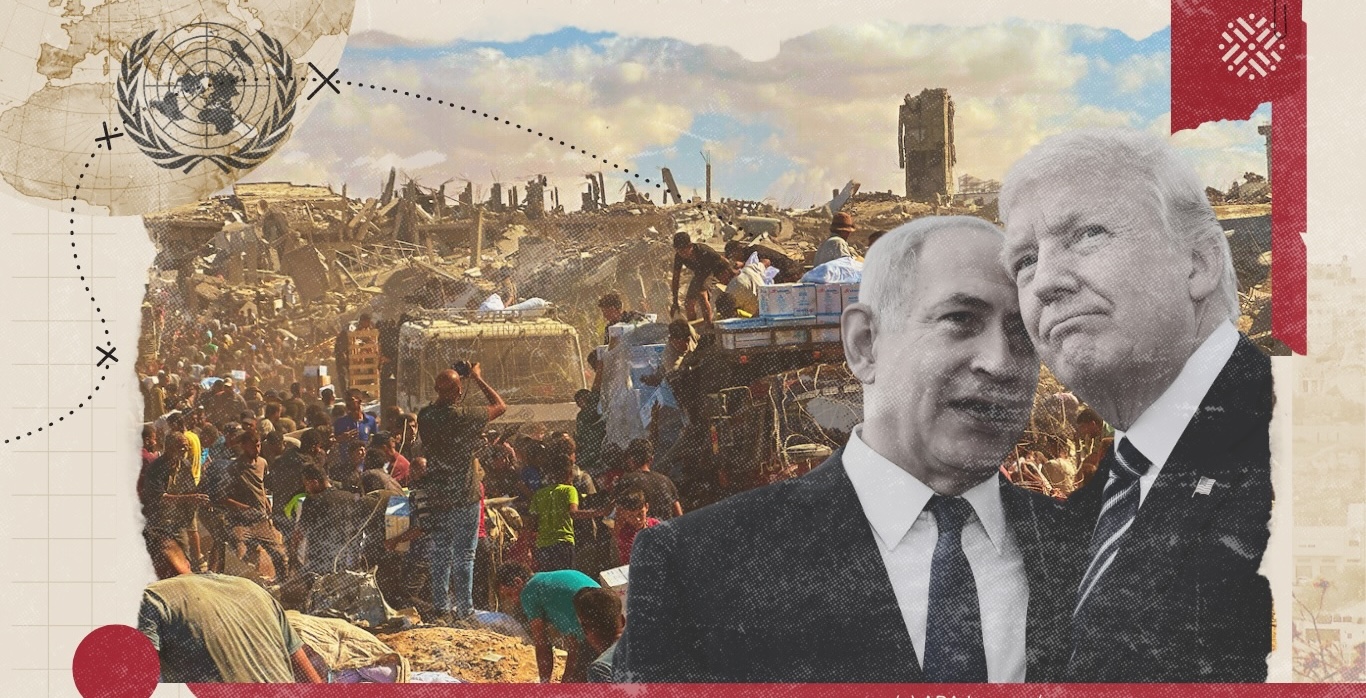
In the wake of the so-called “ceasefire” in Gaza, Israel has continued killing Palestinians, demolishing entire neighborhoods, and entrenching its control over the land. Meanwhile, the UNSC has officially endorsed US President Donald Trump’s 20-point plan for Gaza, effectively granting international legitimacy for perpetual Israeli-US occupation and laying the groundwork for a return to “business as usual” after genocide. But what do these developments actually mean on the ground?
Inès Abdel Razek and Munir Nuseibah joined Al-Shabaka for a conversation on the politics behind the UNSC resolution, the implementability of the US-Israeli plan, and the scenarios now being advanced for Gaza and for Palestine more broadly.
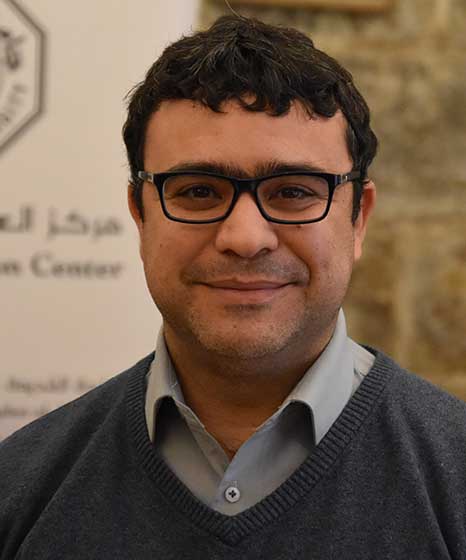
Munir Nuseibah is a human rights lawyer and academic based in Al-Quds University in Jerusalem, Palestine. He is an assistant professor at Al-Quds University’s faculty of law; the director (and co-founder) of Al-Quds Human Rights Clinic, the first accredited clinical legal education program in the Arab World; and the director of the Community Action Center in Jerusalem. He holds an LL.M in International Legal Studies from the Washington College of Law of the American University in Washington DC and a PhD degree from the University of Westminster in London, UK, where his thesis dealt with Forced Displacement in the Palestinian-Israeli Conflict, International Law, and Transitional Justice.
Inès Abdel Razek is the Co-Director of the Palestine Institute for Public Diplomacy (PIPD) and its digital platform Rabet, an independent Palestinian organization focusing on international mobilization and digital campaigning for Justice, Freedom and Equality. From 2019 to 2022, Inès was the Advocacy Director of the PIPD, helping to develop the political networks and international advocacy pillar of the organization. Prior to joining the PIPD, Inès held policy advisor positions in the Union for the Mediterranean in Barcelona, the UN Environment Programme in Nairobi and the Palestinian Prime Minister’s Office in Ramallah, where she advised executive leadership on international aid for development policies. Inès is also a board member of the social enterprise BuildPalestine, Advisory board member of Palestine DeepDive, and policy member at Al-Shabaka, the Palestinian Policy Network. She holds a Master’s degree in Public Affairs from Sciences-Po, Paris. Twitter: @InesAbdelrazek