

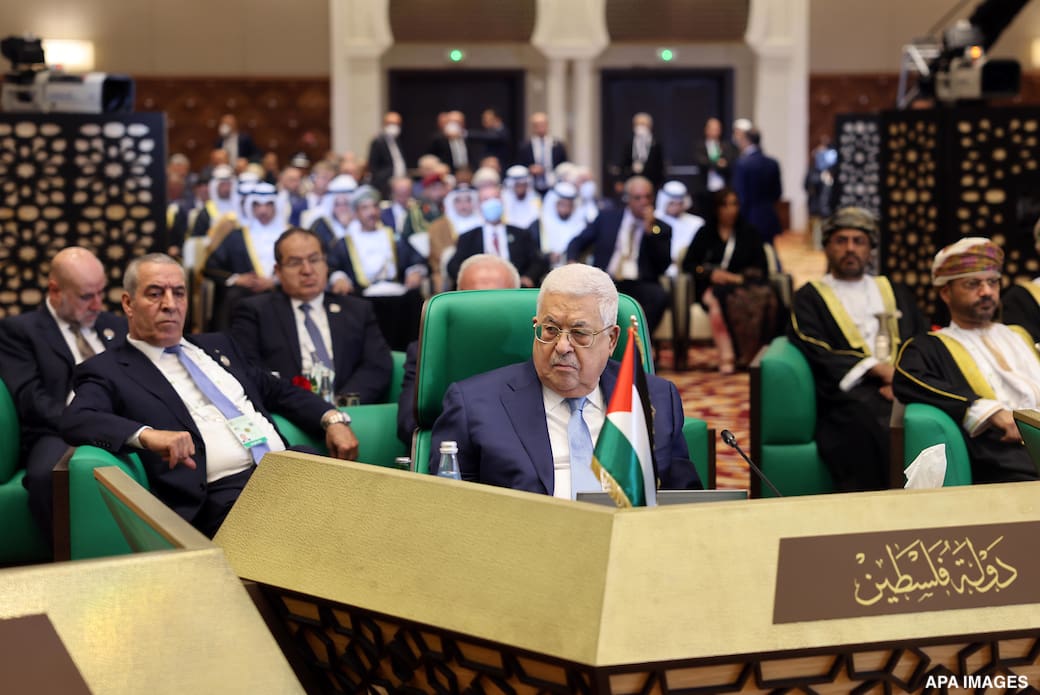
The vacancy of the president’s office or the formation of a new legislative council would not have a significant impact on the status quo. This is because the Zionist settler-colonial project is larger than the spaces where these two institutions are relevant, namely, the West Bank and Gaza. Moreover, the powerful actors who govern the Palestinian Authority (PA) would not be affected by a presidential change. In all cases, the vacancy of the president’s office is expected in the foreseeable future, given the age and health of sitting president Mahmoud Abbas.
If the president’s office is vacated before legislative elections, the resulting constitutional dilemma would perpetuate and intensify internal PA tensions. The Basic Law indicates that until presidential elections can be held, the president of the legislative council assumes the duties of PA president should the president’s office become vacant. The lack of a sitting legislative council would open the door to four possibilities, outlined below.
The first would consist of internal conflicts between the major players within Fatah to monopolize power. This was expected before the passing of former Palestinian President Yasser Arafat but did not take place. However, the situation is different today. Disagreements within the movement have transformed into profound internal divisions, currently led by Abbas, Mohammed Dahlan, Nasser al-Qudwa, and Marwan al-Barghouti. In the event of the vacancy of the president’s office, the most powerful of the political parties would decide how to proceed, especially if it is able to mobilize international and Arab support.
The second would see the government taking full control of the PA until elections are held. This would be possible only if the conflicting wings within the president’s inner circle agree on preserving a unified governing authority and sharing power, rather than fighting with the other splinter groups led by Dahlan, al-Qudwa, and al-Barghouti. The security services would provide cover for the government to run the PA until a decision on holding elections is made at the discretion of the security apparatus.
In the third, Fatah’s subgroups would come to a consensus on an acting president. This would occur for the same reasons discussed in the previous point. However, the government would not be granted the powers of the president. Instead, the subgroups would agree on an acting president or form a transitional council.
The last would see the speaker of the dissolved legislative council assuming the duties of PA president. This option is unlikely, as it would be rejected by Fatah and would not be preferred by Hamas, even if the latter declares otherwise as part of managing its relationship with Fatah. Still, its likelihood depends on the progress made on reconciliation shortly after Abbas’s passing. The aim would be to block Dahlan, al-Qudwa, and al-Barghouti’s groups, with Abbas’s inner circle making concessions to Hamas. In this case, the speaker of the dissolved legislative council would possibly be excluded and an agreed-upon interim acting president would be appointed until general elections are held.
The election of a new Palestinian legislative council remains a possibility, though it has been delayed for many years with different justifications. The shape and composition of the next council would depend on the timing of the elections. If held in the near term, the elections would favor Hamas due to the fact that Fatah has lost supporters and suffered from defections. In other words, the elections would be a repeat of 2006.
Yet, if Fatah solves its internal crises and unites under one umbrella, it could take control with a slight majority through coalition with other factions. In this case, the political settlement option would resurface and Hamas would become more focused on joining the Palestine Liberation Organization (PLO). However, Hamas would continue to use its capabilities in Gaza to promote its political platform, and no government could bridge the political division in governance. Fundamentally, though, elections that fail to lead to radical change in the West Bank and Gaza in terms of human rights and freedoms cannot be seen as democratic, but rather as the reproduction of authoritarianism. If this occurs, this scenario would be a continuation of the first, that is, the status quo.
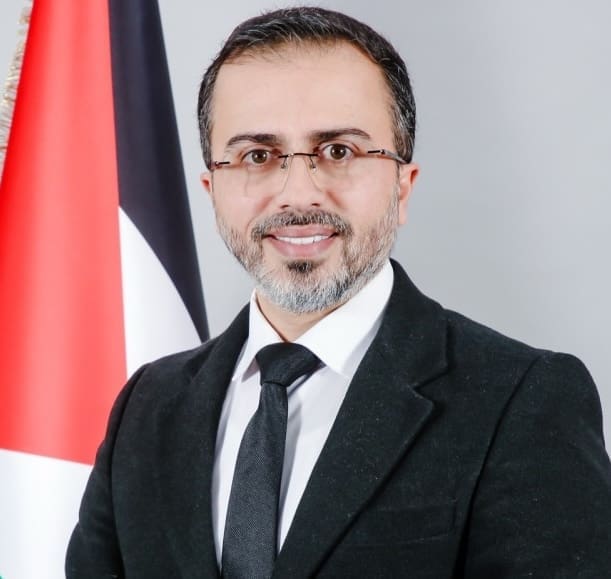
Belal Shobaki is the Head of the Department of Political Science at Hebron University, Palestine. He is a Policy Member at the Palestinian Policy Network. He is the founder and coordinator of the Double Master’s degree program in Public and cultural Diplomacy at Hebron University with University of Siena, Italy. He has published on Political Islam, identity, democratization and Palestinian issue. He is also leading Hebron University team of a 3 years project: Strengthening of National Research Capacity on Policy, Conflict Resolution, and Reconciliation, funded by the Erasmus+ program of the European Union. He has previously taught at An-Najah National University, Palestine and at IIUM, Malaysia.