





Collapse of the PA: Governance & Security

In the event that the Palestine Liberation Organization (PLO) is revived, it is not likely to produce a change of leadership. Meaningful elections to the Palestinian National Council (PNC), the legislative body of the PLO, have proven unattainable due to political rather than practical impediments. 
For instance, the president of the Palestinian Authority (PA) has led both the PA and PLO since the PA’s formation in 1994. As a result, the lines between the two institutions have become blurred. Although sometimes used interchangeably, the two entities are fundamentally different organizations with separate mandates: the PA possesses municipal authority over the affairs of Palestinians in the West Bank and Gaza, while the PLO takes broader decisions regarding Palestinians worldwide, making it a superior organization to the PA. The advent of the PA in the 1990s, however, saw more and more emphasis placed on that body as a source of political direction and leadership. Further, holding PNC elections in which Palestinians around the world would vote is impractical if not impossible. This is particularly so in regional states riddled with internal political and demographic sensitivities.

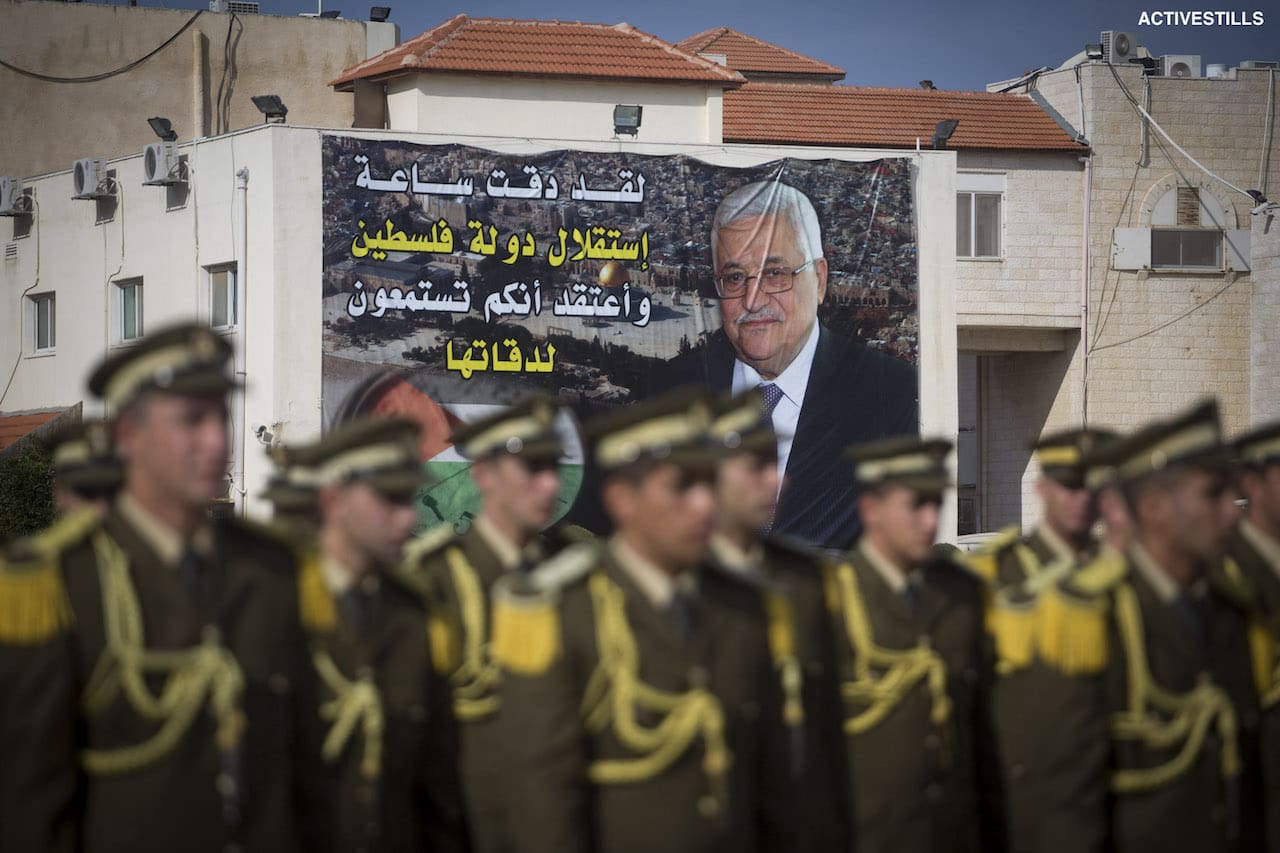
Due to this lack of turnover in leadership, the Palestinian Authority security forces (PASF) would remain partisan, as the present leadership has been built on an intricate network buttressed by the security sector. In addition, the Israeli regime and the international community would not allow for a revival of the Palestine Liberation Army (PLA), the armed wing of the PLO. Any reconfiguration of the PLA is the antithesis of the rationale behind the Oslo structure erected in the last three decades – that is, the creation of a demilitarized Palestinian governing authority. Moreover, any presence of a Palestinian governing body, even in a marginal role, would necessitate continued coordination with Israel, as mandated through past agreements. The PASF, or some derivative of it, would remain at the core of those agreements, ensuring Israel’s “security first.”

Should the PLO be revived, the major differences in judicial practice would likely be superficial, rather than in jurisdiction itself. That is, in the event of broader political and institutional change, the justice sector would need to undergo a revision in both organizational structure and internal hierarchy, which would result in an overhaul of its components, along with jurisdiction and legal codes. This is unlikely to happen given that many of these structures have been in place since the 1970s, even with the subsequent establishment of the PA. Indeed, PA military courts, where the majority of criminal cases are tried, still abide by the 1970s revolutionary codes of the PLO.  

Tahani Mustafa is the Palestine analyst at the International Crisis Group, where she works on issues including security, and socio-political and legal governance in the West bank. She holds a PhD in politics and international studies from the School of Oriental and African Studies (SOAS), University of London. She is based between the UK, Jordan, and Palestine.
If the PLO were revived, a change of leadership would remain unlikely. Consequently, the PA security forces would remain partisan, as the present leadership has been built on an intricate network buttressed by the security sector.

Latest Analysis

 Civil Society
In February 2021, Defense for Children International–Palestine (DCIP) reported that Israeli interrogators had raped a 15-year-old Palestinian boy in detention. Rather than investigate the allegation, Israeli forces raided DCIP’s offices and later designated it—along with five other Palestinian human rights groups—as a “terrorist organization.” While such abuses and crackdowns are not new, this moment marked a decisive escalation: the shift from harassment of Palestinian civil society to its outright criminalization with the full support and participation of the US. In 2025, the Trump administration designated six Palestinian organizations under counterterrorism frameworks before advancing even further, sanctioning leading human rights groups for engaging with the International Criminal Court. These measures move beyond targeting individual actors to undermining the very infrastructure of international accountability. This policy brief argues that the campaign by the US and the Israeli regime against Palestinian civil society and international law carries global consequences, threatening mechanisms designed to hold state violence in check. It concludes with recommendations for how Palestinian organizations and their allies can adapt, defend themselves, and pursue justice in an increasingly hostile environment.
Al-Shabaka Tariq Kenney-Shawa
Tariq Kenney-Shawa· Mar 31, 2026
 Politics
As the US and Israel escalate their assault on Iran, the Israeli regime has been constructing a war economy to sustain prolonged military campaigns while evading accountability. In September 2025, Prime Minister Benjamin Netanyahu urged Israelis to transform the country into a “Super Sparta” of the Middle East—more militarized, economically self-reliant, and capable of sustaining protracted conflict despite mounting external pressure. This policy brief argues that this rhetoric reflects an emerging doctrine: a political-economic project structured around permanent national mobilization, preventative warfare, and accelerated defense-industrial expansion. Yet the Israeli regime’s shift toward self-reliance is not producing full autarky. Instead, the war economy is consolidating into a hybrid model that combines domestic substitution in critical defense sectors with deeper integration into transnational supply networks, thereby dispersing sanctions risk. This configuration blunts the impact of conventional accountability tools, such as fragmented or weakly enforced arms embargoes. As a result, effective international responses must move beyond traditional sanctions frameworks and instead target the material infrastructure and dependency nodes that sustain Israel’s war economy.
Ahmed Alqarout· Mar 11, 2026
 Politics
Noura Erakat and Jake Romm joined us for a policy lab episode on how Gaza helped shatter the old status quo and what that break reveals about the world being built in its wake.