- Topics
-
Topics
See our analysis on civil society and how it shapes culture, politics, and policies
Read our insights on the shifting political landscape and what it means for Palestine
Learn more about the policies and practices shaping the Palestinian economy
Strengthen your understanding of the unique conditions for Palestinian refugees across the Middle East
-
- Analysis
-
Analysis
In-depth analysis on existing or potential policies that impact possibilities for Palestinian liberation.
Insights and perspectives on social, political, and economic questions related to Palestine and Palestinians globally.
Concise analysis into a specific policy, its background and implications.
Commentary that brings together insights from multiple analysts.
Compilations of past Al-Shabaka works surrounding a specific theme.
Longer-form, ad hoc projects that seek to confront research questions outside the scope of our regular analysis.
A policy-driven research initiative by Al-Shabaka: The Palestinian Policy Network.
Our monthly webinar series that brings together Palestinian experts.
Featured
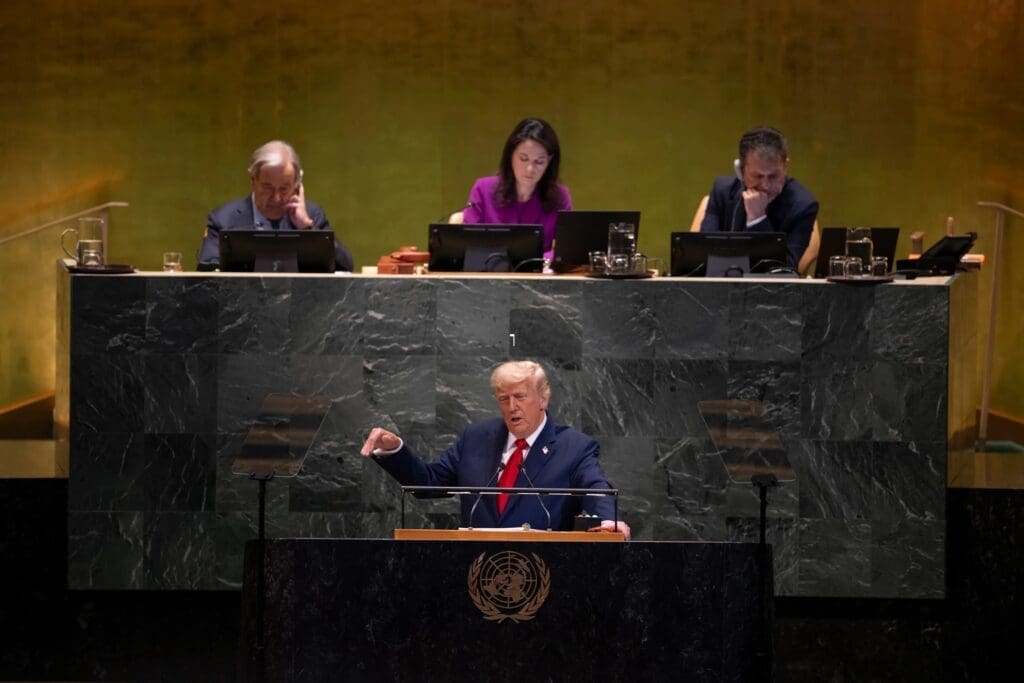
People across the world are living through a moment of profound crisis. The ongoing genocide in Gaza, the US-Israeli war on Iran and Lebanon, the resulting energy and economic shocks, and the erosion of the international legal order are unfolding alongside the fragmentation of the Western-led global system. Together, these converging tremors are exposing the limits of US hegemony, reshaping the strategic positions of Arab Gulf states and China, and intensifying debates over multipolarity, regional realignment, and South-South solidarity. In this roundtable, Yara Hawari and Tareq Baconi reflect on this impasse, highlighting the centrality of Palestine to understanding the historic transformations the world is witnessing today. They discuss the bankruptcy of the liberal international order, the changing dynamics of the US-Israeli imperial power in West Asia, and the ways Palestine has emerged as a converging point through which a different global order may be forced into being.

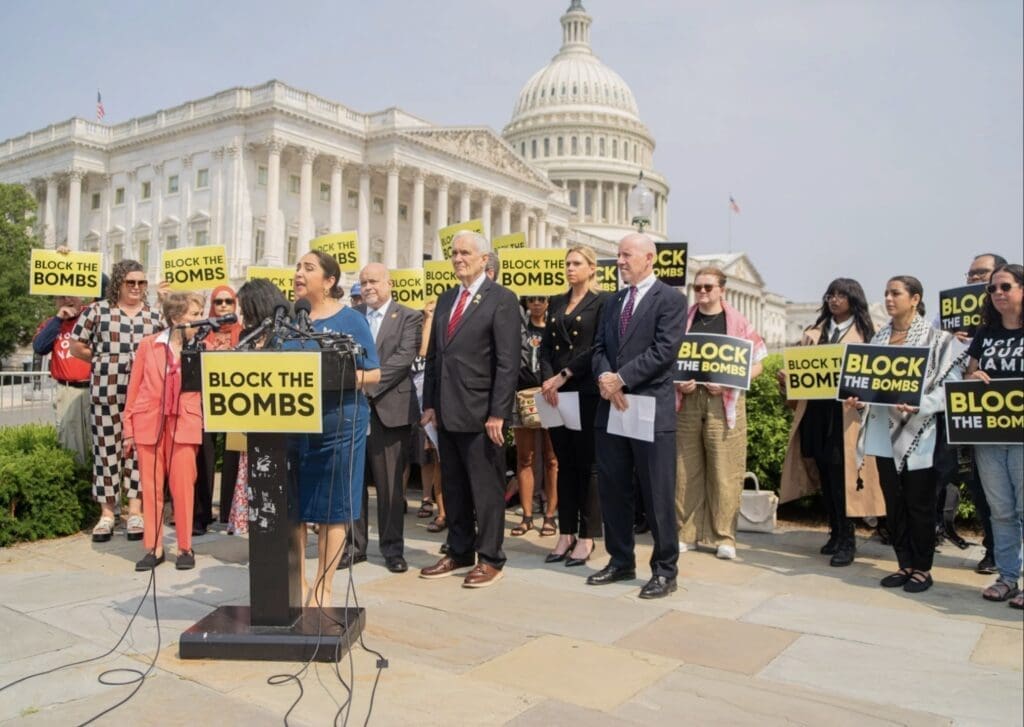
 In this policy lab, Josh Ruebner and Ahmed Moor join host Tariq Kenney-Shawa to examine the fight over the Block the Bombs Act, wider efforts in Congress to restrict US military support for Israel, and what these battles reveal about the future of Palestine advocacy in US politics.
 Tariq Kenney-Shawa· May 21, 2026
 We cannot understand Gaza’s endurance through a binary that casts Palestinians, individually or collectively, as either heroic in their resistance or passive victims. Rather, we must approach it through a decolonial conception of sumud (steadfastness): a historically situated, relational, and materially conditioned practice of collective endurance that emerges, shifts, and persists within ongoing colonial violence.
 Abdalrahman Kittana· May 12, 2026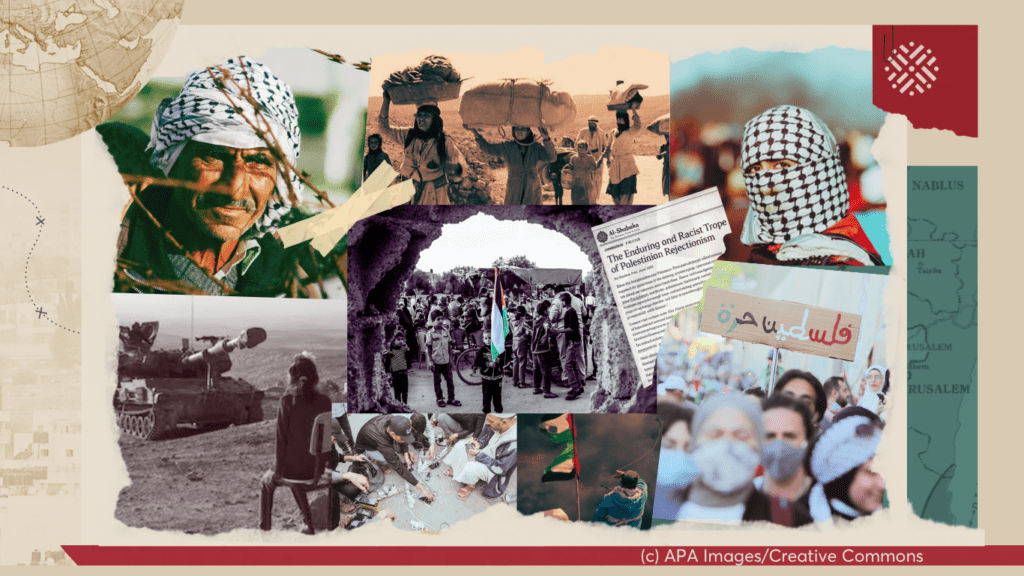
-
- Resources
- Media & Outreach
- The Network
An Illegitimate Leadership Can Sign Away Rights
The latest round of US-driven negotiations has yet to engender a significant, organized response from Palestinians in the Diaspora. Whereas some Palestinian civil society actors and organizations within the Occupied Palestinian Territory have made their views known through various forms of popular activism, Palestinians in the Diaspora seem surprisingly disengaged.
This lack of organized public engagement is particularly troubling when one considers the risks that these talks present for the Palestinian people generally, and for those in the Diaspora in particular. Details have emerged in recent weeks as to the shape that U.S. Secretary of State John Kerry’s “framework agreement” is likely to take, both in reports by Palestinian officials and in columns by U.S. analysts: Not only would there be a truncated Palestinian state with significant Israeli controls remaining in some fashion, but the Palestinian right of return would be eliminated entirely.
Given the gravity of the decisions that could be made on behalf of Palestinians – including an “end of claims” arising out of the conflict – one would expect a more forceful response in responding to these proposals. It is possible that many believe that the limited political legitimacy of the Palestine Liberation Organization/Palestinian Authority (PLO/PA) directly diminishes its capacity to make politically effective decisions on behalf of all Palestinians.
But political legitimacy and political effectivity should not be conflated. In international law, and in international politics more generally, there is no necessary link between legitimacy and effectivity, or more specifically between representation and political agency. One only has to look at the actions of Palestine’s neighbors. The regimes in Saudi Arabia, Egypt, Jordan, and a host of other Arab countries are hardly able to claim to represent the peoples of those respective states any more than the PLO/PA can currently claim to represent the Palestinians. Nonetheless, they are universally recognized as having the authority to make binding decisions on behalf of their citizens.
The simple point is that decision-making power, at least in the external arena of international politics, does not depend in any way upon the representative credentials of the decision maker. If the PLO/PA was to come to a final settlement with Israel tomorrow, and, in doing so, purported to “end all claims” of the Palestinian people including the right of return, states and international bodies – even those like the International Court of Justice – could conceivably accept its decision as having been made on behalf of all Palestinians. That the decision would have been reached through an illegitimate exercise of political authority would not matter. And, without any mechanisms through which to assert otherwise, for all intents and purposes, the decision would be definitive.
It is clear that Palestinians are fast approaching a juncture at which decisions of extreme national importance may be taken. The possible grave implications of these decisions require an immediate and sustained response from all Palestinians, including those in the Diaspora who may stand to lose their historic claim of return to the homeland. While it is beyond the scope of this commentary to propose a concrete strategy for popular action, some initial steps could include:
These are concrete and immediate steps that Palestinians may take to increase public pressure on the PLO/PA during the course of the negotiations. It is clear, however, that these actions cannot serve as a substitute for the far more difficult task of re-establishing a robust, popular, and effective national movement that can provide the Palestinians with a representative and accountable leadership. It is essential, therefore, that any popular mobilization that Palestinians organize contributes to re-establishing a truly national movement that is inclusive and serves to connect Palestinians all over the world.
Zachariah Sammour
Al-Shabaka Policy Member Zachariah Sammour completed his undergraduate studies in law at the London School of Economics in 2012 and received his master’s degree from Oxford University in 2013. He is particularly interested in international law, constitutional law, and constitutional theory.
Latest Analysis
Palestine, Iran, and the Unraveling of Western Hegemony
Blocking the Bombs: How Far Will Democrats Go on Israel?
The Families of Gaza: Sumud as Collective Endurance
We’re building a network for liberation.
As the only global Palestinian think tank, we’re working hard to respond to rapid developments affecting Palestinians, while remaining committed to shedding light on issues that may otherwise be overlooked.