- Topics
-
Topics
See our analysis on civil society and how it shapes culture, politics, and policies
Read our insights on the shifting political landscape and what it means for Palestine
Learn more about the policies and practices shaping the Palestinian economy
Strengthen your understanding of the unique conditions for Palestinian refugees across the Middle East
-
- Analysis
-
Analysis
In-depth analysis on existing or potential policies that impact possibilities for Palestinian liberation.
Insights and perspectives on social, political, and economic questions related to Palestine and Palestinians globally.
Concise analysis into a specific policy, its background and implications.
Commentary that brings together insights from multiple analysts.
Compilations of past Al-Shabaka works surrounding a specific theme.
Longer-form, ad hoc projects that seek to confront research questions outside the scope of our regular analysis.
A policy-driven research initiative by Al-Shabaka: The Palestinian Policy Network.
Our monthly webinar series that brings together Palestinian experts.
Featured
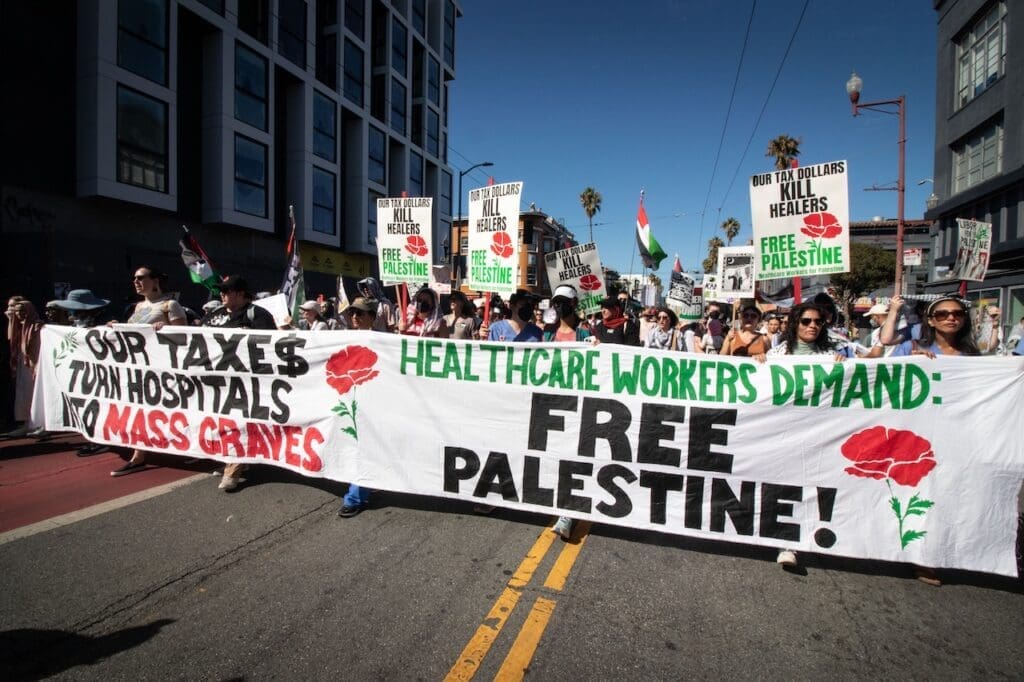
This policy brief argues that the health sciences—from public health to epidemiology, nursing, medicine, pharmacology, and nutrition, among others—have a distinct role to play in preventing and documenting the ongoing Israeli genocide in Gaza and other settings, as well as in generating evidence to inform accountability processes.


 +
+ The Israeli genocide in Gaza has laid bare the extent to which the world remains structured by racial colonial hierarchies and exposed the limits of an international legal order that emerged alongside Western imperial expansion. In this roundtable, Palestinian legal scholar Noura Erakat and Jake Romm, legal advisor and US representative for the Hind Rajab Foundation (HRF), reflect on what becomes of international law after Gaza.

 When four donkeys were evacuated from Gaza to a German zoo in November 2025, their rescue was celebrated as a humanitarian success. Yet while the animals were transported to safety, given new names, and described as leaving behind "hunger and misery, beatings and hardship," Palestinian children have been unable to evacuate amid a relentless ongoing genocide. In this commentary, Asmaa Abu Mezied examines how humanitarian concern operates through racialized hierarchies of grievability that render animal suffering more visible and rescue-worthy than Palestinian human life. She further argues that animal welfare interventions are materially entangled with the dispossession of Palestinian survival infrastructure, showing how it can become an enabling mechanism of colonial violence rather than its interruption.
 Asmaa Abu Mezied· Aug 11, 2026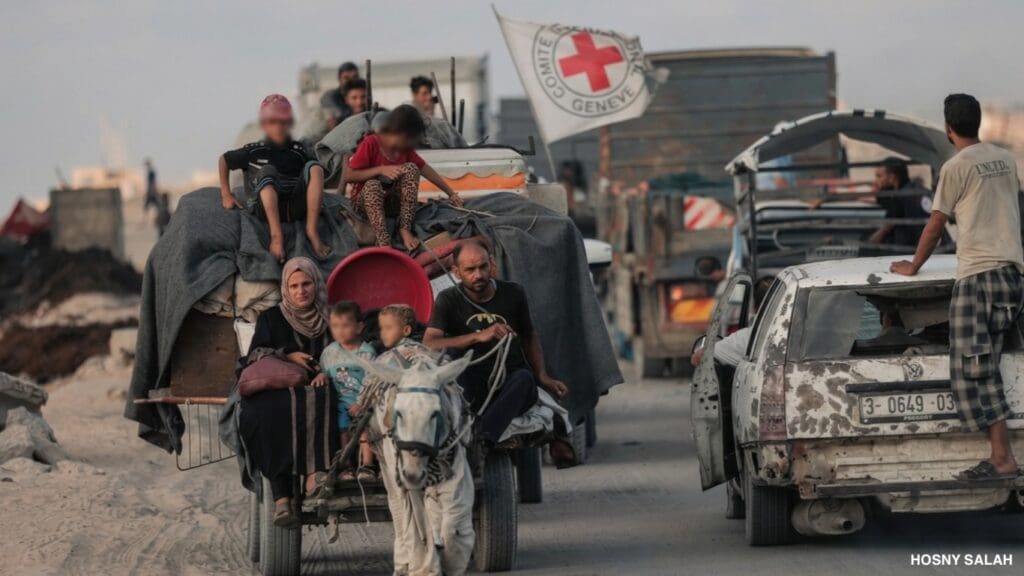
-
- Resources
- Media & Outreach
- The Network
What’s Next for Palestine?
The campaign for Palestine to be recognized as a full member of the United Nations has revealed the popularity of the Palestinian cause on the international stage, displayed the uncompromising nature of Israel’s political leadership, and highlighted the end of the road for the Palestinian Authority, which has made it clear that it has no other path to take. Now that the United States has used heavy pressure and strong diplomatic maneuvering to block the Palestine Liberation Organization (PLO) application for full UN membership in the UN Security Council, the question for Palestinians is where should they go from here and how to frame the next phase of their struggle.
Palestinians watching this political theatre unfold are not surprised by the inability of UN institutions to take a strong stand toward resolving their decades old conflict. During the Palestinians’ 63 years of dispossession, several dozen UN resolutions were directed at Israel over core issues such as refugees, Jerusalem, and borders, as well as its unlawful attacks on its neighbors, and its violations of the human rights of the Palestinians, including deportations, demolitions of homes, settlement expansion, and confiscation of Palestinian land.
All of these resolutions went unimplemented. Instead, the Palestinians – an occupied people – were for 20 years made to negotiate with the occupying power over rights to which they were already entitled under international law.
Predictably, these negotiations yielded little. Instead, the Palestinians saw the continued erosion of their rights and freedoms and the continued loss of their land. Israel colonized more than 50 percent of the West Bank with Jewish settlements, bypass roads networks, and buffer zones. When PLO Chairman Mahmoud Abbas insisted that Israel at a minimum halt its settlement expansion before the Palestinians continued to negotiate, his request was flatly rejected. Now Abbas has played his last card. The UN bid has exposed the weakness of the strategy of the Palestinian Authority, which has done the running in the name of the PLO.
The PA strategy rested entirely on the assumption that its good behavior – including collaboration with Israel over security, courting international economic institutions, and playing the game by the rulebook would be rewarded. It will not. U.S. Mideast negotiator Robert Malley and Hussein Agha, a former adviser to the Palestinian leadership, warned Palestinian leaders earlier this year, “History is not in the habit of rewarding good behavior; it is a struggle, not a beauty contest.”
Chief PLO negotiator Saeb Erekat – who publicly resigned his position after the Palestine Papers were leaked only to re-emerge after the furor died down and assist with the statehood bid – has offered this insight into the PA’s strategy: “if we fail we can try again and again and again.” In other words: We are out of options and this is the only route we have at our disposal.
Foreign Minister Riyad al-Maliki announced a few days ago that the Palestinians will not accept anything less than “a full member state” but the Associated Press later reported that the PA has begun a process of seeking an upgrade status at the UN. The PA is also sending mixed signals about applying for membership of other UN bodies such as the World Health Organization, the UN Development Program, the UN Population Fund, the Environment Program, the World Food Program and others.
While the PA continues to play diplomacy, the Palestinian people have been watching and learning. Unlike the PA/PLO, they recognize that without real leverage, laws and resolutions will never move beyond the paper they are written on. The apparent tsunami of support for the Palestinian statehood bid, and the endless rhetoric from world nations including the US, Canada, the European Union, and Australia, in support of a two state solution, will not bring a Palestinian state into the club of nations any time soon.
Freedom and rights are never offered on a silver platter in the halls of power. They are earned through mass popular movements and organized civil rights struggle. It is for this reason that more Palestinians are embracing civil society’s call for non-violent protests inside the occupied territories and for boycott, divestments and sanctions globally, a model based on the South African struggle to end apartheid. In this they have the support of a fast-growing global civil society movement that is willing to take action where governments are not and to put a moral and economic cost on Israel’s human rights violations.
With Jewish only settlements growing on Palestinian land faster than anyone can say “two states”, it makes no sense for Palestinians to pin their hopes on a state that may never be. That is why the Palestinian struggle has evolved into one that transcends borders and barriers. The language of the new Palestinian non-violent resistance movement is based on human rights and calls for equality, freedom, justice, and democratic representation.
Israeli hardliners who have ensured the death of the two-state solution and the demise of the Palestinian state need to brace themselves. The voices calling for full Palestinian equality and rights in the land of Palestine-Israel are sure to become louder.
Samah Sabawi
Samah Sabawi is an award-winning Palestinian playwright, poet, scholar, and political commentator. She is co-founder and Board Director of Palestine Australia Relief and Action (PARA), supporting Palestinians, especially Gaza genocide survivors in Australia. Dr. Sabawi received a Master of Communications from Griffith University and a PhD from Victoria University. She is the author of Cactus Pear for My Beloved: A Gaza family story (Penguin 2024) and co-editor of Double Exposure: Plays of the Jewish and Palestinian Diasporas (Playwrights Canada Press 2016). Her plays include Cries from the Land, Three Wishes, Tales of a City by the Sea and Them.
Latest Analysis
Health Sciences and Genocide Prevention in Gaza and Beyond
International Law After Gaza: Demise and Political Power
Animal Welfare and Hierarchies of Suffering in Gaza
We’re building a network for liberation.
As the only global Palestinian think tank, we’re working hard to respond to rapid developments affecting Palestinians, while remaining committed to shedding light on issues that may otherwise be overlooked.