


Executive Summary
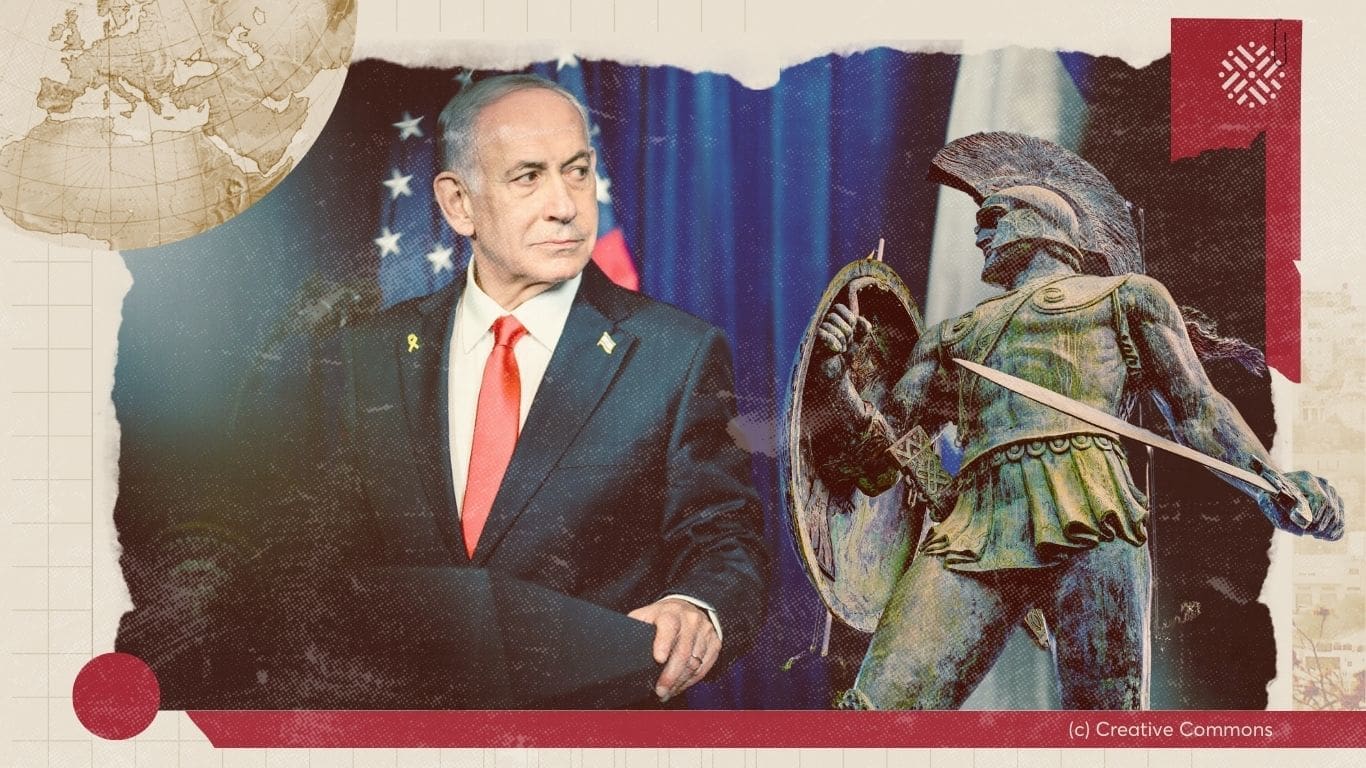
In September 2025, Prime Minister Benjamin Netanyahu urged Israelis to transform the country into a “Super Sparta” of the Middle East—more militarized, economically self-reliant, and capable of sustaining protracted conflict despite mounting external pressure. This policy brief argues that this rhetoric reflects an emerging doctrine: a political-economic project structured around permanent national mobilization, preventative warfare, and accelerated defense-industrial expansion.
Yet the Israeli regime’s shift toward self-reliance is not producing full autarky. Instead, the war economy is consolidating into a hybrid model that combines domestic substitution in critical defense sectors with deeper integration into transnational supply networks, thereby dispersing sanctions risk. This configuration blunts the impact of conventional accountability tools, such as fragmented or weakly enforced arms embargoes. As a result, effective international responses must move beyond traditional sanctions frameworks and instead target the material infrastructure and dependency nodes that sustain Israel’s war economy.
Recommendations
Civil society and grassroots movements should exert pressure by expanding campaigns beyond consumer boycotts to focus on logistical and service infrastructures. Maritime supply chains remain a key leverage point: coordinated dockworker actions and port disruptions can impose direct costs on arms transfers. Targeting insurers, certification bodies, freight intermediaries, and port services can further raise the risks associated with transporting military cargo to Israel. Technology-sector organizing represents a second vector of leverage. Israel’s defense innovation ecosystem remains deeply embedded in global cloud infrastructure, AI services, and data-processing platforms. Campaigns such as No Tech for Apartheid demonstrate how worker organizing, procurement challenges, and shareholder pressure can disrupt these service dependencies. Pressure should also focus on the physical infrastructure enabling digital warfare systems.
National governments and regulatory bodies retain significant leverage because Israel’s defense sector remains dependent on imported inputs and partner-state regulatory permissiveness. Strengthening export controls on dual-use components, enforcing measures against transshipment and relabeling, and expanding due diligence requirements for insurers, financiers, and logistics intermediaries can limit these external enablers. Governments may also restrict procurement partnerships, research collaborations, and technology licensing arrangements involving implicated firms.
Global South coalitions can help close enforcement gaps created by fragmented sanctions regimes. Coordinated embargo enforcement, customs cooperation, logistics denial, and intelligence sharing can disrupt rerouting strategies through permissive jurisdictions. Strategic commodity exports—such as energy and raw materials—can also function as coordinated tools of economic leverage.
Financial and multilateral institutions represent another pressure point, as Israel’s war economy remains embedded in global financing and innovation systems. Conditioning investment, credit guarantees, and financial services on compliance with international humanitarian law, while increasing scrutiny of venture capital and dual-use technology funding, can constrain defense-industrial expansion and limit access to critical financial infrastructure. Emerging BRICS de-dollarization initiatives offer additional pathways for implementing targeted financial restrictions independent of US regulatory constraints.
Introduction
In September 2025, Israeli Prime Minister Benjamin Netanyahu urged Israelis to prepare for deepening international isolation by transforming the country into a “Super Sparta” of the Middle East—one more militarized, economically self-reliant, and capable of sustaining protracted conflict despite mounting external pressure. Indeed, since October 2023, the Israeli leadership has articulated—and selectively begun to pursue—a shift toward greater strategic autonomy, aiming to develop a sanctions-resilient war economy.
This policy brief situates these developments within what it terms an emerging “Super-Sparta” doctrine. As employed here, the term extends beyond political rhetoric to describe an institutional political-economic project structured around permanent national mobilization, a preventative warfare doctrine, and accelerated defense-industrial expansion. This shift is unfolding amid repeated US-Israeli military assaults on Iran, illustrating how the mobilized war economy operates in practice to entrench impunity and diffuse accountability. Yet even as the Zionist state advances a self-reliance agenda, this trajectory does not reflect a consolidated national consensus and is marked by institutional tensions that expose structural vulnerabilities.
As a result, rather than pursuing full autarky (national economic self-sufficiency), Israel’s war economy appears to be consolidating into a hybrid model that combines domestic substitution with strategic global integration. This configuration distributes risk across transnational networks rather than concentrating it within a single sanctionable channel. The first pillar of this strategy focuses on expanding domestic production capacity in critical defense sectors, while the second deepens transnational integration to disperse vulnerabilities across diversified, and often sanctions-resilient, networks. In this context, the author argues that traditional instruments of international accountability—particularly fragmented or inconsistently enforced embargoes—are becoming less effective, underscoring the need for strategies that target the material infrastructure and dependency nodes sustaining Israel’s economy.
The Pursuit of Strategic Autarky
The “Super-Sparta” doctrine has been translated into policy proposals centered on “industrial sovereignty,” though implementation remains uneven and institutionally contested. The most formal articulation of this strategic autonomy appears in the Nagel Commission report, submitted in January 2025, which calls for expanded domestic production of essential weaponry to reduce reliance on foreign suppliers. This industrial pivot is paired with a doctrinal shift toward a posture of “proactive and preventative attack.” To support this transition, the commission recommended a substantial increase in defense spending—ranging from an additional $36 billion to $74 billion over the next decade. Key priorities include large-scale expansion of munitions stockpiles to achieve production independence by 2034.
Israel’s pursuit of strategic autonomy has taken a hybrid form… to mitigate vulnerabilities and complicate the enforcement of embargoes Share on XIn September 2025, the Ministry of Defense (MoD) established a National Armaments Directorate to centralize procurement, accelerate domestic supply chains, and advance the development of precision weapons and drones. Israeli officials reported increased local production capacity for several munitions, including heavy air-dropped bombs, alongside new facilities for energetics and critical raw materials, and expanded ammunition manufacturing. This expansion is supported by subsidy and incentive programs targeting defense and dual-use technologies.
The MoD has emerged as the central institutional driver of this wartime defense innovation strategy. In 2024 alone, it contracted with more than 80 startups—well above prewar levels—injecting nearly $255 million through fast-track procurement channels. These contracts function as implicit subsidies, financing early-stage research and development while guaranteeing demand, reducing commercial risk, and signaling credibility to private investors. Investment has concentrated in strategic sectors such as drones, artificial intelligence, and autonomous systems.
Parallel financing mechanisms have also been mobilized through the Israel Innovation Authority (IIA). Its Early Stage Companies Incentive Program offers grants of up to $2.7 million, covering up to half of approved budgets and repayable through royalties once sales materialize. Because these grants do not require companies to give up equity, they channel funding into long-cycle defense and dual-use technologies.
In addition, the Israeli government has revived the Yozma model through a “Yozma 2.0” initiative, committing public capital to venture funds on a 30% matching basis. Although designed as a broad innovation stimulus, wartime priorities have directed substantial investment toward security-linked deep technologies. The IIA’s expanded Startup Fund—now distributing roughly $135 million annually—further reinforces the innovation pipeline. Collectively, these instruments embed defense priorities within Israel’s national innovation ecosystem.
Beyond industry, Israel’s drive for strategic autarky has extended into societal militarization. As manpower shortages intensified amid the expansionist multi-front war, a June 25, 2024, Israeli Supreme Court ruling ended legal exemptions for ultra-Orthodox yeshiva students in an effort to expand the recruitment pool. Mass draft notices followed, including 54,000 call-ups in July 2025. The move destabilized governing coalitions and exposed tensions between military manpower demands and political stability, while recruitment levels remain below operational targets.
Civilian labor shortages have also deepened, particularly following the large-scale revocation of Palestinian work permits. Efforts to replace this workforce with foreign labor from India, Sri Lanka, and China have struggled to meet demand, raising costs and slowing production. The shift away from Palestinian labor reflects the settler-colonial drive to remove the indigenous population from their land and a security-first employment model that prioritizes controllability over economic efficiency. The colonial policy institutionalizes a segregated labor regime consistent with the broader architecture of Israel’s militarized apartheid regime.
Doctrine Limitations and Constraints
The Super-Sparta doctrine is not a consolidated national consensus but rather a contested political-economic project, marked by internal fractures that are likely to widen. The Nagel framework has already drawn criticism over its strategic coherence, fiscal feasibility, and institutional accountability. While the report outlines an extensive program of industrial expansion, it does not establish a fully integrated political or operational strategy. Financing mechanisms remain unclear, with proposed budget increases lacking a credible revenue model.
These challenges are compounded by broader governance fragmentation. Scholars have identified persistent limitations in Israel’s capacity for sustained strategic policymaking, including weak interministerial coordination and gaps in implementation. As an advisory body, the Nagel Commission lacks formal enforcement authority, leaving its recommendations contingent on political adoption within a fragmented coalition system. At the same time, material constraints—including supply chain dependencies, skilled labor shortages, and access to critical raw materials—complicate implementation. Israel also remains reliant on global supply chains for semiconductors, advanced composites, and propulsion systems, underscoring the structural limits of pursuing full autarky.
The report likewise offers limited engagement with manpower challenges or the unequal distribution of military service obligations, particularly among ultra-Orthodox communities—omissions that weaken long-term workforce sustainability. Taken together, these gaps highlight widening tensions between strategic ambition and the material constraints confronting the Israeli regime’s pursuit of industrial independence. They also clarify the distinction between the “Super-Sparta” discourse and reality, indicating that the emerging model is not full autarky but a limited form of strategic autonomy shaped by persistent global realignment to bolster sanction resilience.
Geopolitical Realignment: A Sanctions Mitigation Strategy
Significantly, these governance, labor, and supply-chain constraints help explain why Israel’s pursuit of strategic autonomy has taken a hybrid form. Because full industrial independence remains unattainable, the Israeli regime has pursued a parallel strategy: deepening integration with transnational defense networks and authoritarian partners to mitigate vulnerabilities and complicate the enforcement of embargoes. This geopolitical realignment constitutes the second, quieter pillar of the Super-Sparta doctrine: insulation through enmeshment rather than isolation.
Geopolitical realignment constitutes the quieter pillar of the Super-Sparta doctrine—insulation through enmeshment rather than isolation Share on XSanctions pressure has increased as global mobilization intensified in response to the Gaza genocide. For example, Spain, Turkey, Germany, and Italy have all introduced varying forms of trade and arms restrictions, signaling rising reputational and regulatory risk for Israel. Yet enforcement remains uneven and fragmented, weakened by loopholes, exemptions, and policy reversals. Exploiting these enforcement gaps, the Israeli regime has pursued sanction insulation rather than isolation, even as it continues to champion self-reliance.
As documented by UN Special Rapporteur Francesca Albanese in her 2025 report, the Israeli state has transitioned from an “economy of occupation” to an “economy of genocide,” sustained by dense networks of global and national corporate actors. The report identifies more than 45 corporations as central to this political economy, including weapons manufacturers, technology firms, construction companies, extractive industries, financial institutions, and universities. This corporate infrastructure embeds the Israeli war economy within transnational circuits of finance, production, and technological development, diffusing vulnerability and risk across global networks rather than concentrating them within a single sanctionable channel.
Israel’s defense sector also remains deeply embedded in global production networks. Major firms such as Elbit Systems and Israel Aerospace Industries rely heavily on exports, joint ventures, and co-development with foreign partners. Expanding joint production ecosystems—spanning missile defense, cyber systems, and artificial intelligence—deepens the integration of Israeli firms within transnational defense markets, complicating the feasibility and enforcement of embargo regimes. Co-production arrangements, such as the RTX–Rafael Tamir interceptor line in Arkansas, illustrate how Israel manages offshore manufacturing dependencies through strategic integration.
More direct mechanisms of sanctions circumvention complement the structural diffusion of Israel’s defense production and technological ecosystem across global networks. This includes how the Israeli defense procurement has relied on third-party brokers and global dealer networks to source restricted components, often at elevated prices. Such practices highlight that insulation operates not only through substitution but also through active efforts to undermine embargo enforcement. In this vein, Israel has pursued a strategy of geopolitical realignment, deepening ties with a bloc of right-wing, ethno-nationalist, and authoritarian regimes less susceptible to human rights-based pressure and compliance with international law.
The India–Middle East–Europe Economic Corridor embeds Israel within long-term infrastructure, logistics, and technology networks designed to deepen economic and geopolitical ties. India has emerged as a cornerstone partner and Israel’s largest arms client, further cemented by a bilateral investment treaty signed in September 2025. Hungary has also become an important European industrial collaborator, while Azerbaijan supplies energy and imports Israeli weapons. Arms exports to Abraham Accords states (UAE, Bahrain, and Morocco) have likewise surged from 3% of Israel’s defense exports in 2023 to 12% in 2024, reinforcing this regional realignment.
The Israeli regime has also externalized logistics infrastructure as part of a maritime hedging strategy designed to mitigate the risks of sanctions escalation, shipping interdiction, and wartime supply disruption. To reduce reliance on domestic ports vulnerable to blockade, labor action, or missile attack, Israel has moved to offshore critical logistics operations. This includes the bid by Israel Shipyards Ltd. to secure a controlling stake in the Greek port of Lavrion, establishing a Mediterranean transshipment and warehousing hub capable of replacing Haifa and Ashdod—both of which faced repeated operational disruptions during the war.
Israel’s December 2025 recognition of Somaliland similarly reflects maritime positioning logic. Located near the Bab al-Mandab chokepoint off the coast of Yemen, Somaliland offers a potential foothold for monitoring, logistics coordination, and the protection of shipping routes amid Houthi-linked disruptions in the Red Sea. These initiatives reflect a hybrid strategy of insulation rather than full autarky or complete autonomy, pairing domestic production in key war industries with the geographic distribution of logistics operations across external jurisdictions. This approach produces layered insulation: reducing direct exposure to sanctions while dispersing vulnerability across multiple jurisdictions and supply corridors.
Israel’s insulation is further reinforced through deep defense-industrial integration with European markets. The EU remains Israel’s largest trading partner, including through research cooperation, technology exchange, and joint weapons development frameworks. Before the current war, Israeli defense companies had established deep and rapidly growing collaborations with European markets. Joint ventures such as the EuroSpike missile program—linking Rafael Advanced Defense Systems with German defense manufacturers—illustrate the extent of co-production entanglement. Similarly, partnerships between France’s Safran Group (via its Sagem Defence subsidiary) and Elbit Systems to produce military drones, as well as Israel Aerospace Industries’ acquisition of Greece’s Intracom Defense, provide Israeli firms with direct access to European Defence Fund resources and procurement channels. These embedded industrial relationships generate institutional resistance to enforcing the embargo, as European manufacturers, investors, and governments remain materially implicated in Israeli defense supply chains.
Complementing these geopolitical hedging strategies, US legislative and regulatory frameworks provide Israel with additional insulation against BDS enforcement. US President Donald Trump’s rescission of National Security Memorandum-20 in February 2025 weakened humanitarian conditionality governing US arms transfers by removing reporting and assurance requirements tied to compliance with international humanitarian law. Meanwhile, US anti-boycott legislation and state-level procurement restrictions continue to penalize corporate participation in boycott or sanctions campaigns, constraining private-sector compliance with international pressure campaigns.
In addition, current discussions surrounding the potential phasing out of US Foreign Military Financing (FMF) should be understood less as a move toward Israeli strategic independence than as a restructuring of assistance mechanisms. Policy debates and think-tank proposals tied to negotiations over the next US–Israel security MOU have explored shifting portions of the existing $3.8 billion annual aid package toward expanded joint development and co-production programs funded through US Department of Defense appropriations rather than traditional FMF grants. This shift would allow Israel to maintain—or potentially expand—its annual inflows of weapons while reducing the oversight mechanisms historically attached to direct US military aid, thereby institutionalizing a less conditional and more deeply embedded defense partnership.
Defying the Insulation
Israel’s Super-Sparta doctrine operates through two complementary strategies: domestic substitution in critical defense production and strategic enmeshment within transnational networks. As demonstrated, fiscal burdens, labor shortages, and supply-chain dependencies limit the first strategy’s reach, while co-production entanglements and geopolitical realignment enable the second. This dual configuration allows Israel’s war economy to absorb sanctions pressure through diversification rather than isolation—by shifting dependencies, rerouting procurement, and leveraging partner-state integration to sustain military operations under diplomatic constraints.
Israel’s Super-Sparta doctrine operates through two complementary strategies: domestic substitution in critical defense production and strategic enmeshment within transnational networks Share on XTo counter this strategy, pressure must concentrate on the dependency nodes that remain most resistant to substitution, while adapting to Israel’s parallel efforts to reroute and diffuse them. Sequencing is critical: a sanctions-resilient war economy cannot be consolidated overnight. In the near term, the priority is to target external dependencies that cannot be rapidly replaced. Over the medium term, attention should shift toward the industrial inputs, technological systems, and financial infrastructure that sustain and operationalize the Israeli regime’s atrocities. Over the long term, the strategic task is to prevent processes of insulation from hardening into normalization by constructing durable enforcement coalitions and institutionalizing legal accountability regimes.
Recommendations
Recalibrating accountability strategies toward material leverage points—rather than symbolic isolation—will be central to contesting the infrastructure sustaining Israel’s war economy. The following recommendations are directed toward distinct but complementary actor groups.
Civil Society and Grassroots Movements
Because Israel’s domestic war production remains reliant on transnational logistics and service infrastructures, civil society pressure is most effective where supply chains depend on external actors and infrastructure.
- Grassroots actors should sustain consumer boycotts while expanding campaigns targeting military logistics and dual-use production networks. Maritime supply chains remain a critical pressure point. Recent disruptions—including Yemeni-led Red Sea interdictions and European dockworker actions, such as the French CGT’s blocking of ammunition components at Marseille-Fos and Italian port workers halting military-grade steel shipments in Genoa—demonstrate that organized labor can impose direct material costs despite claims of strategic autonomy. Expanding dockworker alliances across ports such as Genoa, Piraeus, Marseille, and Ravenna can transform episodic stoppages into sustained transnational disruption.
- Campaigns should also target the logistical and certification infrastructures underpinning maritime trade—including insurers, classification societies, freight forwarders, and port service providers—to increase the commercial risk exposure of Israel-bound military cargo.
- Technology-sector organizing represents a second vector of leverage. Israel’s defense innovation ecosystem remains deeply embedded in global cloud infrastructure, AI services, and data-processing platforms. Campaigns such as No Tech for Apartheid demonstrate how worker organizing, procurement challenges, and shareholder pressure can disrupt these service dependencies. Pressure should also focus on the physical infrastructure enabling digital warfare systems—data centers, server farms, and overseas subsidiaries that anchor Israeli firms within foreign procurement ecosystems.
National Governments and Regulatory Bodies
While Israel has expanded domestic defense production, it remains dependent on imported inputs, service ecosystems, and the permissiveness of partner-state regulations. Government action is therefore most effective when targeting the external enablers of industrial substitution.
- States supportive of accountability frameworks should prioritize export controls on dual-use components—including energetics precursors, rare materials, sensors, propulsion systems, and guidance technologies—while strengthening enforcement against relabeling, transshipment, and broker-mediated procurement.
- Regulatory agencies should expand due diligence and disclosure requirements for insurers, financiers, logistics intermediaries, and certification bodies that service defense-industrial supply chains. Applying international humanitarian law risk standards within export licensing regimes can further restrict shipments where credible misuse risk exists.
- Governments should also restrict public procurement, research partnerships, and technology licensing agreements involving implicated firms, including subsidiaries and joint ventures embedded within domestic jurisdictions. Parliamentary oversight and litigation frameworks can constrain state-enabled participation in transnational defense production networks.
-
-
Global South Coalitions and Intergovernmental Platforms
Israel’s hybrid insulation model relies on rerouting trade, logistics, and procurement through permissive jurisdictions. Coordinated Global South action can therefore close enforcement gaps left open by fragmented Western embargoes.
- Coalitions across the Global South possess significant leverage through coordinated embargo enforcement, logistics denial, and commodity controls. Commitments emerging from the Hague Group and the Bogotá ministerial convened by Colombia and South Africa provide a political nucleus for operational coordination and should be institutionalized into intelligence-sharing platforms, customs coordination mechanisms, and synchronized port denial frameworks.
- Establishing embargo enforcement and circumvention monitoring units capable of mapping relabeling practices, transshipment corridors, and grey procurement networks would allow participating states to pre-emptively disrupt supply flows.
- Energy and commodity exports offer additional leverage. Precedents such as Brazil’s suspension of crude oil exports and Colombia’s suspension of coal exports illustrate how strategic commodities can function as material tools of constraint when coordinated multilaterally.
Financial and Multilateral Institutions
Even as Israel expands domestic production, its war economy remains embedded in transnational financing, insurance, and innovation capital systems. Financial leverage is therefore central to disrupting insulation.
- Development banks, sovereign wealth funds, and regional financial institutions should condition investments, credit guarantees, and financial services on compliance with international humanitarian law. Increased scrutiny of venture capital, innovation grants, and dual-use technology financing pipelines can constrain defense-industrial expansion at the research-and-development level.
- Restricting capital market access and financial services for firms materially implicated in military production would simultaneously amplify pressure across the production and logistics sectors. Emerging BRICS de-dollarization initiatives offer additional pathways for implementing targeted financial restrictions independent of US regulatory constraints.




Ahmed Alqarout is a political economy expert specialising in the Middle East and North Africa region, with a focus on great power competition and the political economy of conflicts.