


Introduction
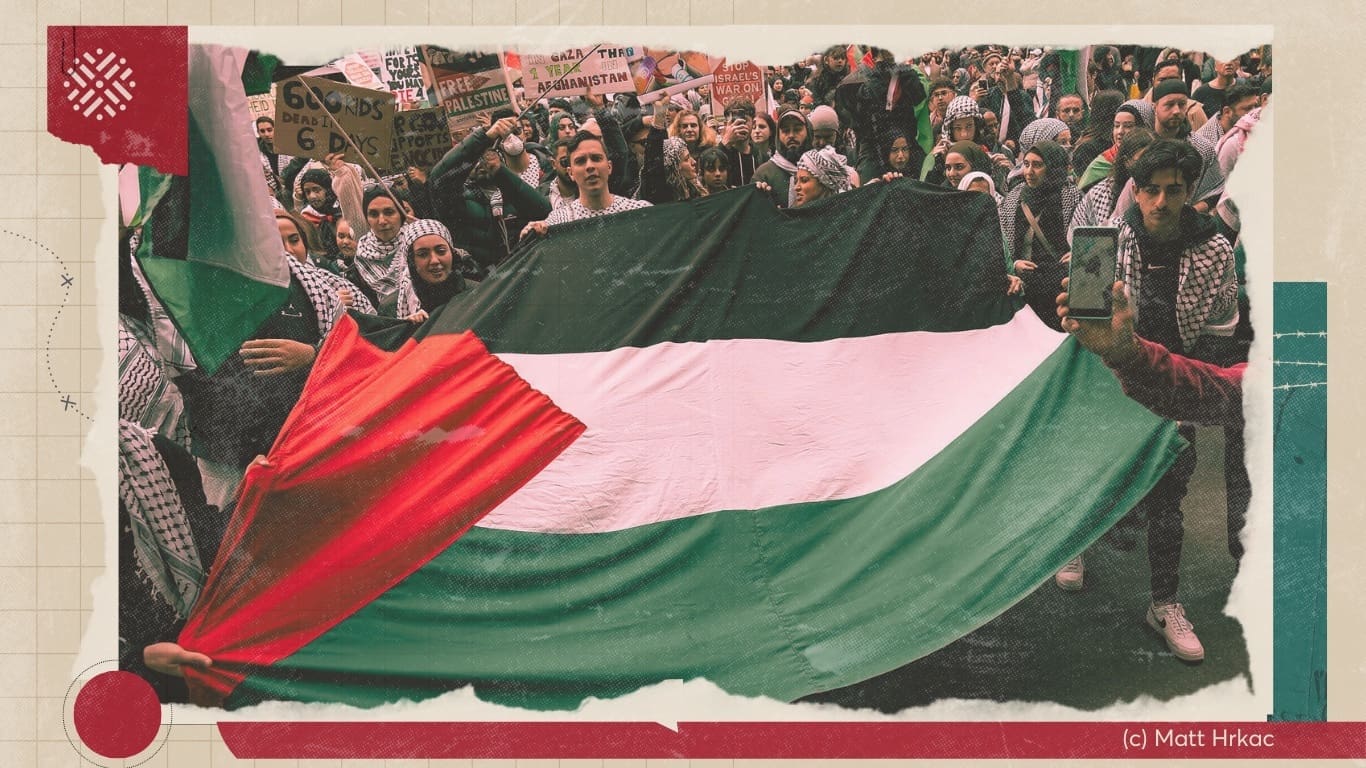
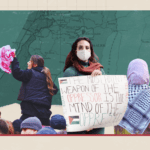
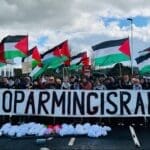
As the US and its allies lead a sweeping assault on the global legal order to shield the Israeli regime from accountability for genocide, international outrage has sparked an extraordinary wave of pro-Palestine solidarity and organizing. Millions have taken to the streets in a broad-based protest movement that marks a profound shift in public consciousness. In addition, a growing surge of grassroots initiatives—from legal challenges by human rights groups to divestment campaigns and organizing by students, academics, and labor unions—has solidified Palestine as a central pillar in the global struggle for justice.
Al-Shabaka’s latest Focus On offers a multifaceted exploration of how solidarity with Palestine is expanding and being reimagined globally. It also highlights the significant challenges facing the movement amid a vicious crackdown on pro-Palestine activism. This collection brings together contributions from analysts working across advocacy, academia, and policy to examine the shifting landscape of global solidarity. From repressive anti-solidarity legislation in the US and Europe to the explosive rise of grassroots mobilization on university campuses and within labor movements, this collection highlights the forces working to suppress Palestine advocacy and the powerful, imaginative strategies that are emerging in resistance. Moreover, it provides vital context and insight into how this movement can be sustained and deepened.
Repression of Solidarity in the West
The rise in global support for Palestinian liberation has been met with increasingly aggressive efforts to suppress it. Across the US, Europe, and beyond, governments, institutions, and lobbying networks have escalated campaigns to criminalize, delegitimize, and silence solidarity with Palestine. These pieces examine the wide-ranging strategies of repression—from targeted surveillance and punitive legislation to smear campaigns and institutional censorship—revealing how both state and non-state actors work to erode the legitimacy of Palestine advocacy.
- Project Esther: Suppressing Palestinian Solidarity in the US
by Tariq Kenney-Shawa - Palestine Solidarity Crackdown: Challenges in the US & Europe
by Layla Katterman and Diala Shamas - Criminalizing Palestine Solidarity Activism in the UK
by Yara Hawari - “The Lobby – USA”: Lessons for the Palestine Solidarity Movement
by Ali Abunimah - Defending Palestine Solidarity Activism in Europe
with Abir Kopty and Nadia Silhi Chahin. This video is available in English only. - Challenging Anti-Boycott Legislation in the US
with Tariq Kenney-Shawa. This podcast episode is available in English only.
Grassroots Power and Movement Building
The analyses below examine how grassroots organizing, particularly that led by students, has reignited the struggle for Palestinian liberation and reshaped the US political landscape. In the face of escalating Israeli violence and deepening repression, student movements have emerged at the forefront, mobilizing mass protests, demanding divestment from institutions complicit in Israeli apartheid, and building powerful coalitions that link Palestine to broader struggles for racial, social, and economic justice.
These discussions and analytical pieces trace the historical continuity and transformation of pro-Palestine activism in the US, connecting today’s organizing to earlier waves of solidarity. They also highlight key strategic shifts and organizing frameworks that channel public outrage into sustained political advocacy and long-term movement building.
- Shifting Growing Palestine Support into US Policy
with Zaha Hassan and Tariq Kenney-Shawa. This video is available in English only. - Student Uprising: From US Campuses to a Global Movement
with Nour Joudeh and Kylie Broderick. This video is available in English only. - Student Organizing & Change-Making on University Campuses
by Samer Alatout - US Palestine Solidarity: Reviving Original Patterns of Political Engagement
by Loubna Qutami
Global South and Decolonial Solidarity
Al-Shabka analysts engage with the changing landscape of transnational solidarity with Palestine, rooted in shared legacies of anti-colonial resistance and struggles against imperialism. These contributions foreground perspectives from the Global South, interrogating how histories of colonization continue to shape the present and inspire cross-border alliances with the Palestinian cause.
The analyses examine how solidarity is being redefined through decolonial frameworks that challenge Western-dominated narratives and center Indigenous, Black, and Global South voices. They delve into urgent questions around representation, power, and legitimacy—who gets to speak for Palestine, on what terms, and to what ends. They also grapple with the complexities of allyship in an international context marked by unequal power dynamics.
- Palestine Solidarity: Tough Questions & Ways Forward
with Loubna Qutami and Randa Wahbe. This video is available in English only. - Palestine and the Global South: Reviving Solidarity
with Saleh Hijazi and Rita Abu Ghosh. This video is available in Arabic only. - Who Can Speak on Palestine?
with Nour Joudah, Dina Matar, and Maha Nassar. This webinar is available in English only. - Allyship & The Fight for Palestinian Liberation
with Saleh Hijazi and Nadya Tannous. This webinar is available in English only. - Ireland’s Solidarity with Palestine
with Brendan Browne. This podcast episode is available in English only.
Solidarity Strategies and Tactics
The following analyses explore the evolving strategies, tools, and frontline tactics deployed by global movements to support Palestinian liberation. Moving beyond symbolic gestures, these contributions focus on grounded, practical efforts that directly challenge the institutions and systems enabling Israeli apartheid, occupation, and genocide.
From anti-normalization campaigns and academic boycotts to labor strikes and corporate accountability initiatives, the analyses map a diverse terrain of resistance, highlighting both the tactical ingenuity and strategic dilemmas organizers worldwide face. The contributions also highlight the role of the Boycott, Divestment, and Sanctions (BDS) movement: its local adaptations, global reach, growing impact, and the internal debates shaping its direction.
- Strategizing Anti-Normalization from the Gulf to Capitol Hill
with Nadya Tannous and Sumaya Almajdoub. This video is available in English only. - Organized Resistance: Labor Strikes in the Palestinian Liberation Struggle
with Jamal Juma’ and Sumaya Awad. This video is available in English only. - Corporate Accountability in Palestine: Grassroots Strategies
with Omar Barghouti and Sandra Tamari. This video is available in English only. - The “S” in BDS: Lessons of the Elbit Systems Campaign
by Jamal Juma’ and Maren Mantovani - Sanctioning Israel: Feasibility and Ethical Considerations
by Nadia Elia and Khaled Elgindy - BDS: Discussing Difficult Issues in a Fast-Growing Movement
by Omar Barghouti - The Case for Academic Boycotts of Israel
with Dina Omar and Sami Hermez. This video is available in English only.


Al-Shabaka: The Palestinian Policy Network is an independent, non-partisan, and non-profit organization whose mission is to convene a multidisciplinary, global network of Palestinian analysts to produce critical policy analysis and collectively imagine a new policymaking paradigm for Palestine and Palestinians worldwide.