- Topics
-
Topics
See our analysis on civil society and how it shapes culture, politics, and policies
Read our insights on the shifting political landscape and what it means for Palestine
Learn more about the policies and practices shaping the Palestinian economy
Strengthen your understanding of the unique conditions for Palestinian refugees across the Middle East
-
- Analysis
-
Analysis
In-depth analysis on existing or potential policies that impact possibilities for Palestinian liberation.
Insights and perspectives on social, political, and economic questions related to Palestine and Palestinians globally.
Concise analysis into a specific policy, its background and implications.
Commentary that brings together insights from multiple analysts.
Compilations of past Al-Shabaka works surrounding a specific theme.
Longer-form, ad hoc projects that seek to confront research questions outside the scope of our regular analysis.
A policy-driven research initiative by Al-Shabaka: The Palestinian Policy Network.
Our monthly webinar series that brings together Palestinian experts.
Featured
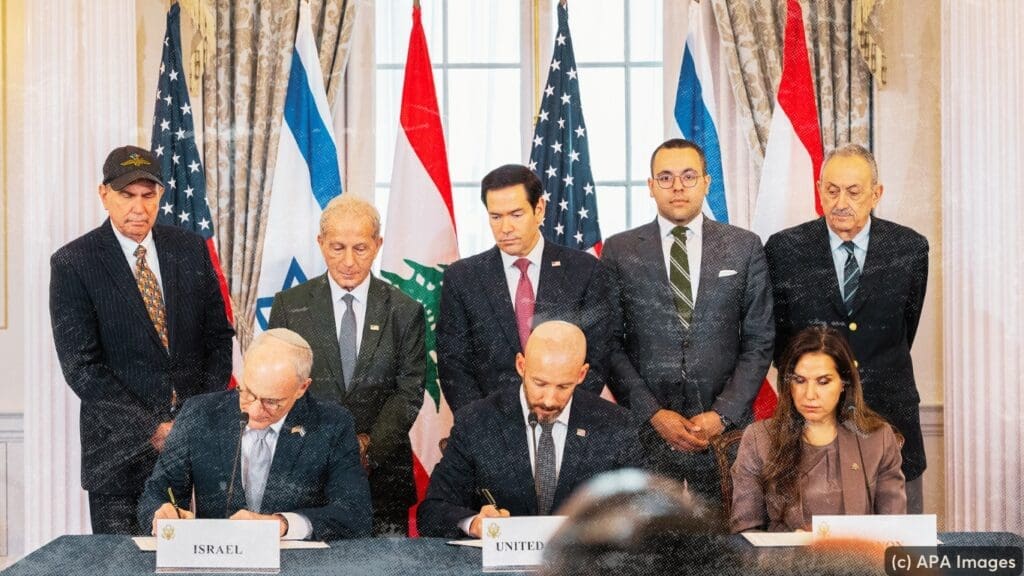
On June 26, 2026, Lebanon, the US, and the Israeli regime signed a Trilateral Framework against the backdrop of fierce military attacks on Lebanon and the invasion of its south. This aggression was part of the broader US-Israeli regional assault that also devastated Iran, Syria, and Palestine, upending the geopolitical order. In this commentary, we speak with Al-Shabaka policy analyst Jaber Suleiman, who examines pivotal questions about this framework agreement and its implications for Palestinian refugees in Lebanon and the liberation struggle more broadly. He emphasizes the grave implications of this agreement, as it makes Israeli withdrawal from Lebanese territory conditional on the disarmament of Hezbollah, thereby holding the resistance factions and the Lebanese state responsible for ending the war and the occupation, while absolving Israel of accountability.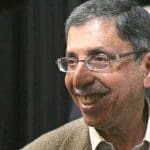 Jaber Suleiman· Oct 14, 2026
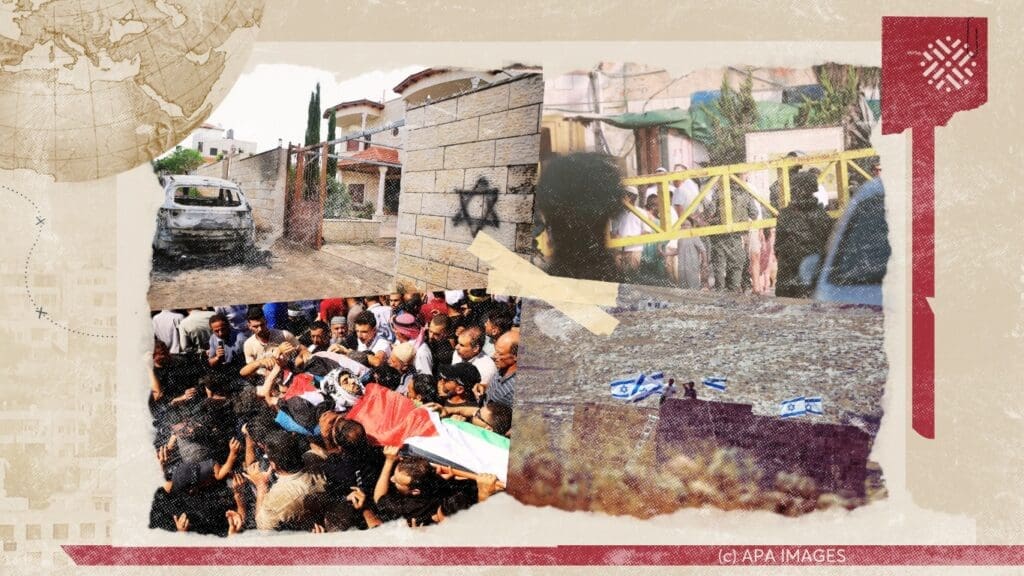
 This Focus On engages with some of the most pressing aspects of this escalation in the West Bank since October 7, 2023. It features analyses by Al-Shabaka members and contributors that show how collective punishment of Palestinians has led to a collapse in access to food, healthcare, work, and education. The compilation also examines the Palestinian people’s resistance to the expansionist Israeli scorched-earth policy, and the political leadership’s complicity and failures.
 Al-Shabaka: The Palestinian Policy Network· Sep 23, 2026
 In this Policy Lab, Al-Shabaka analyst Amjad Iraqi joins host Tariq Kenney-Shawa to examine Israel’s electoral landscape, the limits of its so-called opposition camp, and what the election means for the future of the Palestinian struggle.
 Amjad Iraqi· Sep 22, 2026
-
- Resources
- Media & Outreach
- The Network
Disarming Resistance: The Trilateral Framework Agreement
Introduction
On June 26, 2026, Lebanon, the US, and the Israeli regime signed a Trilateral Framework against the backdrop of fierce military attacks on Lebanon and the invasion of its south. This aggression was part of the broader US-Israeli regional assault that also devastated Iran, Syria, and Palestine, upending the geopolitical order.
In this commentary, we speak with Al-Shabaka policy analyst Jaber Suleiman, who examines pivotal questions about this framework agreement and its implications for Palestinian refugees in Lebanon and the liberation struggle more broadly. He emphasizes the grave implications of this agreement, as it makes Israeli withdrawal from Lebanese territory conditional on the disarmament of Hezbollah, thereby holding the resistance factions and the Lebanese state responsible for ending the war and the occupation, while absolving Israel of accountability.
What led to the framework agreement, and how does it relate to Palestinians in Lebanon?
The framework agreement does not directly address Palestinians; it does so indirectly in relation to the disarmament of Hezbollah and nonstate groups, especially in Palestinian refugee camps. The broader context, however, is the 2023 war that began with the Israeli genocidal campaign in Gaza. This war has greatly impacted the situation of Palestinians in Lebanon, particularly since the start of the ground offensive into Lebanon in October 2024.
To understand this framework agreement, however, it is important to lay out the war’s three phases. The first phase ran from October 8, 2023—one day after the Al-Aqsa Flood operation—until September 16, 2024. This phase set the rules of engagement and featured sustained cross-border attacks. Then came the second phase with the indiscriminate pager attacks on September 17–18, and subsequent Israeli escalations leading to the assassination of party leaders, including Hezbollah Secretary General Hassan Nasrallah. In addition, it saw the intensification of aerial bombardment of southern Lebanon, the southern suburb of Beirut, and the Bekaa Valley. The third phase, however, was marked by Israel’s attempt to create new facts on the ground while simultaneously “agreeing” to negotiate under the pressure and dictates of the US-Iran conflict.
Israel’s withdrawal is no longer treated as an unconditional obligation; rather, Lebanon is required to disarm Hezbollah as a condition for Israel's withdrawal Share on X
Since November 27, 2024, Hezbollah has been more likely to adhere to the ceasefire, whereas Israel has not. In practice, Israel sought to exploit the “truce” to serve its own military interests, carrying out ground incursions and destroying infrastructure in border villages. Indeed, what has unfolded in southern Lebanon is not an iteration of the so-called Dahiyah Doctrine—the disproportionate use of force against civilians and infrastructure. The Israeli regime has gone beyond its usual military doctrine in Lebanon to what might be termed the “Gaza Doctrine.” Today, southern Lebanon is witnessing actual genocide and ecocide—the targeting of all forms of life.
Hezbollah had refrained from retaliating for 15 months until the assassination of Iranian Supreme Leader Ayatollah Ali Khamenei during a US-Israeli airstrike on Tehran on February 28, 2026. A few days later, Hezbollah launched rocket drones at Israel, explicitly stating that this was in retaliation for the supreme leader’s death. It can be seen as a symbolic message about the depth of Hezbollah’s spiritual and ideological connection to Iran’s supreme leader. In reality, Hezbollah had been preparing to retaliate after its patience ran out during its 15-month commitment to non-response, which was intended to give the Lebanese state space to pursue negotiations. In its March 2, 2026, session, the Lebanese cabinet criminalized Hezbollah’s military wing and reaffirmed the state’s monopoly on the use of force.
The Israeli regime was not eager for negotiations because its military occupation of a strip of southern Lebanon was a sought-after goal. Israeli Prime Minister Benjamin Netanyahu had not been enthusiastic about the Lebanese president’s calls for negotiations until April 2026, when the US pressured him to do so. Israel’s desire to exclude Lebanon from the US-Iran agreements and to separate the Lebanese and Iranian fronts also led it to negotiate directly with the Lebanese government, culminating in the framework agreement.
Why is it called a framework, and what makes it so dangerous?
It is classified as a framework, rather than a treaty, to circumvent parliamentary ratification at this stage, as well as other levels of approval stipulated by Article 52 of the Lebanese Constitution. In addition, it might be framed this way to delay tensions arising from Lebanon’s Boycott Law of 1955, which prohibits certain forms of agreements and dealings with Israel. This agreement, in fact, surpasses in its content and language all previous agreements and arrangements governing relations between Lebanon and Israel, including the 1949 General Armistice Agreement; the Lebanese-Israeli Troop Withdrawal Agreement of 1983; UN Security Council Resolution 1701, adopted following the July 2006 War; and the 2024 cessation-of-hostilities arrangement, which stipulated that only Lebanon’s official military and security forces would be deployed in the area south of the Litani River.
The 2026 Trilateral Framework, particularly clauses 2, 3, 11, 12, and 13, sets a dangerous precedent. In effect, Lebanon has accepted the continuation of the Israeli occupation pending the complete disarmament of Hezbollah and other nonstate actors. In other words, the equation has been reversed: Israel’s withdrawal is no longer treated as an unconditional obligation; rather, Lebanon is required to disarm Hezbollah as a condition for Israel’s withdrawal. Thus, disarmament has been linked to withdrawal, even though, under international law, the continued occupation of Lebanese territory is prohibited. This is the first predicament into which the Lebanese negotiator has fallen under the pressure of what could be termed a “rush forward,” only to confront an even greater dilemma: the Lebanese state’s inability to fulfill the requirement to disarm Hezbollah. Consequently, linking Israeli withdrawal to Hezbollah’s disarmament makes withdrawal conditional on something the Lebanese state, in practice, lacks the capacity to implement.
Another dangerous aspect is linking reconstruction to security objectives, including disarming nonstate armed groups. The framework requires Lebanon to prevent nonstate armed groups from benefiting from reconstruction funds. Thus, reconstruction shifts from a humanitarian necessity to address the effects of war and restore life to devastated areas to an instrument conditioned on achieving security and political objectives.
The framework places the burden of the continued occupation on Hezbollah and the resistance, suggesting that their insistence on retaining weapons is the reason for the ongoing Israeli occupation Share on X
Even more dangerous is the way in which this framework characterizes the resistance as the primary cause of the war on Lebanon, rather than the occupation or Israeli ambitions in Lebanon. This is unprecedented in the history of Arab resistance to Zionist colonization. It places the burden of the continued occupation on Hezbollah and the resistance, suggesting that their insistence on retaining weapons is the reason for the ongoing Israeli occupation. This calibration would shift the essence of the confrontation into Lebanon itself, linking it to the country’s internal structure and political divisions. The danger lies in the fragility of Lebanon’s sectarian system, which could give rise to civil conflict when there is fundamental disagreement over issues such as “national sovereignty” and “resistance to occupation”—issues that have largely been matters of consensus across Lebanese governments.
Equally alarming is the attempt to absolve Israel of legal accountability for its crimes, both in this war and in previous Israeli wars, as evidenced in the framework. The agreement calls on both parties to refrain from using “hostile or adverse actions” against one another in legal and political arenas, as if Lebanon and Israel were on equal footing. From this perspective, the agreement could constrain Lebanon’s ability to pursue legal action against Israel through international mechanisms. The agreement also complicates prisoner exchange by linking it to other outstanding matters.
What are the repercussions of the Israeli assault on Palestinian refugee camps?
The repercussions of the war on Palestinian camps and communities, particularly between 2024 and 2026, have been catastrophic. The war caused massive displacement, especially from the southern Palestinian refugee camps, including Rashidiya, Burj al-Shamali, and Al-Buss, as well as other Palestinian communities, particularly amid the escalation of evacuation orders following March 2, 2026. This has been compounded by worsening living conditions and collapsing incomes due to movement restrictions and disrupted work opportunities, along with enormous pressure on camp infrastructure.
The camps witnessed displacement in two simultaneous directions. The first was displacement from the southern camps to those in central and northern Lebanon, while the second was displacement into the camps themselves. Many residents of the south, whether Lebanese, Palestinian, or Syrian, sought refuge in these camps during periods when they were considered relatively safer. In other words, we witnessed displacement both into and out of the camps at the same time.
Striking scenes emerged on social media, including, for example, a video of a Lebanese shepherd leading a flock that may have numbered in the hundreds into the Al-Buss camp during a period when the camp was relatively safe. Palestinian camps in Lebanon have extensive experience in hosting Lebanese refugees, particularly during the July 2006 War.
According to a report issued by the Palestinian Human Rights Organization (Shahed), the number of families displaced to the camps reached 3,062. Assuming an average family size of about 5.6 members, this amounts to more than 17,000 people. By location, the number of displaced families reached 746 in Tyre, 700 in Saida, and 62 in Beirut. The north, specifically the Nahr al-Bared and Beddawi camps, accounted for the largest share, with approximately 1,354 families, plus 200 families in the Bekaa Valley.
This raises the question: Who has fulfilled their responsibility toward these displaced people? The Palestinian factions and the Palestine Liberation Organization have largely limited their role to issuing statements of condemnation and calling on the UN Relief and Works Agency for Palestine Refugees in the Near East (UNRWA) to take action. At the same time, the factions have played no tangible role in helping these displaced people settle and manage their affairs.
On March 4, 2026, UNRWA activated its Lebanon emergency response and later launched a financial appeal to address the consequences of displacement. Its action came after the escalation of evacuation orders in the south, beginning on March 2, when Israeli forces threatened more than 50 towns and villages, mainly south of the Litani River. On March 17, Israeli evacuation orders were issued for Palestinian refugee camps in the Tyre area. UNRWA ultimately operated two emergency shelters: the Siblin Training Center in Saida and Battir School in the Nahr al-Bared Palestinian refugee camp in northern Lebanon.
According to UNRWA statistics, 1,567 displaced people had sought its emergency shelters. If we consider the much larger number of displaced people documented, the question arises: Where did the others go? Some went to other camps, others stayed with relatives or host communities, and those who could afford it rented accommodation. We must also mention those who never left the camps in the first place; based on past displacement experiences, we know that a substantial portion of the population remained in the camps. Finally, UNRWA issued a report indicating that by July 14, all displaced people accommodated in UNRWA’s emergency shelters had departed.
How did the war affect the status of Palestinians in Lebanon?
This war has greatly affected the living and humanitarian conditions of Palestinians in Lebanon. However, the structural factors affecting Palestinian rights in Lebanon have remained unchanged since before the war. There is economic, social, and spatial marginalization, as the camps are considered security enclaves surrounded by Lebanese army checkpoints and viewed by the Lebanese state and some segments of the host community as a threat. This security-focused view of the Palestinian civilian presence in Lebanon has not changed.
Any successful effort to dismantle Hezbollah's military structure and transform it into a solely political party would have significant implications for the Palestinian struggle, both politically and militarily Share on X
The official status of Palestinians has not substantially changed since the Lebanese Parliament’s August 2010 session, which amended the labor and social security laws. In short, the 2010 amendments eased some restrictions on Palestinians as foreign workers; however, under the Lebanese legal system, these laws require implementing decrees that have not yet been issued. Legally, the situation remains largely unchanged. In practice, however, things have worsened.
According to a survey conducted by the American University of Beirut in cooperation with UNRWA in 2015, approximately 65% of Palestinian refugees in Lebanon lived below the poverty line. By early 2023, the poverty rate had risen to 83%, while UNRWA estimated it would have reached 93% without its cash assistance program. This deterioration reflects the impact of successive crises: the 2019 protests, the COVID-19 pandemic, the Beirut port explosion, the consequent financial, monetary, and economic crisis, and finally, the ongoing war since 2023. All these factors and their repercussions have further exacerbated the situation and living conditions of Palestinians in Lebanon.
A recent development in the Lebanese state’s approach to Palestinian refugees’ rights has emerged through the Lebanese-Palestinian Dialogue Committee (LPDC), an official government body attached to the Presidency of the Council of Ministers that has no Palestinian representation. In May 2025, the LPDC put forward a set of recommendations that constitute a legal and rights-based framework governing the lives of Palestinians in Lebanon. It also submitted a recommendation to the Economic and Social Council of Lebanon, a part of the official state structure, requesting an advisory opinion on the matter.
Our colleague Adib Nehme prepared the draft advisory opinion, which demonstrated a precise understanding of the rights issue, particularly regarding the compatibility of granting rights to Palestinians with rejecting resettlement or with Lebanese sovereignty requirements. However, the meeting concluded without the Economic and Social Council approving this framework. In my view, the Palestinian issue is not a priority for the Lebanese state at present, as the state appears preoccupied with many other crises and issues.
What does the disarmament of armed groups mean for Palestinian factions in Lebanon?
As noted, the framework agreement does not directly address or explicitly mention Palestinians, but it does call for the disarmament of armed groups. This raises the question of which groups fall within its scope. Palestinian factions are clearly among the primary targets of this proposal, particularly given the disarmament efforts that I addressed in a recent roundtable discussion within a broader context of regional transformations and pressures aimed at weakening resistance forces.
Among the significant recent developments was Palestinian Authority President Mahmoud Abbas’s visit to Lebanon in May 2025, which included a Lebanese-Palestinian summit and high-level official meetings. The resulting joint statement affirmed the Lebanese state’s monopoly on the use of force. The Lebanese side welcomed Abbas’s position and the ensuing handing over of weapons in the camps.
According to information attributed to the LPDC, approximately 90% of Palestinian weapons covered by the current process have already been surrendered. However, I believe the way the issue of weapons is being presented remains highly problematic. Palestinian factions surrendered substantial quantities of heavy and medium weapons to the Lebanese Army in 1991. Even if the process did not result in complete disarmament, what military value do weapons dating back more than three decades have?
If, however, we are talking about recently acquired weapons, especially heavy or specialized weapons, a fundamental question arises: Where do these weapons come from, and how do they enter the camps? These are questions that cannot be ignored, as the Palestinian camps are under tight Lebanese security and military control. The same question applies to individuals allegedly wanted by security forces: How do they enter the camps, and how do they leave?
In my view, the weapons issue is therefore being used, at least in part, as a means of exerting pressure on Palestinians in Lebanon and is being instrumentalized by different political actors. This also applies to the Palestinian Authority, which could use its participation in the weapons handover process to strengthen its standing with both the Lebanese state and the international community, especially given the challenges it faces in the West Bank and within Palestinian politics more broadly.
It is therefore essential to distinguish between the question of rights and the question of weapons. Addressing the latter involves considerations of sovereignty, security, and Lebanese-Palestinian relations. In contrast, Palestinians’ economic and social rights in Lebanon should not become a bargaining chip or a political reward. Rights should be recognized because they are rights, not granted in exchange for surrendering weapons. The framework agreement today raises a broader question that goes beyond the fate of Palestinian weapons themselves.
What would disarming Hezbollah mean for the broader Palestinian struggle?
In general, the agreement can be seen as part of a US-Israeli effort to reshape the security and political order that has prevailed in Lebanon since the July 2006 War, particularly with respect to Iran and other members of the resistance axis, including Palestinian factions.
In fact, Hezbollah has consistently opposed all calls to disarm the Palestinian refugee camps in Lebanon, from the Taif Agreement (1989) until now, because, from the party’s perspective, these weapons are an asset to the “resistance axis” in Lebanon and the region. Today, however, the strategic environment of the confrontation with Israel has changed significantly, particularly in light of subsequent regional developments culminating in the framework agreement and the “road map” for Gaza.
Any successful effort to dismantle Hezbollah’s military structure and transform it into a solely political party would have significant implications for the Palestinian struggle, both politically and militarily, at least in the foreseeable future. It would also mark the end of an important chapter in the history of armed resistance to Israel in Lebanon. Yet, the suppression of resistance should not be regarded as inevitable; the course of future developments remains uncertain.
Jaber Suleiman
Jaber Suleiman is an independent researcher/consultant in Refugee Studies. Since 2011, he has been working as a consultant and coordinator for the Lebanese Palestinian Dialogue Forum at the Common Space Initiative, UNDP Support Project on Consensus Building, and Civil Peace in Lebanon. Between 2007 and 2010, he worked as a consultant for the Palestinian program of UNICEF in Palestinian refugee camps of Lebanon. He was a Visiting Study Fellow at the Refugee Studies Program, University of Oxford. He is also a co-founder of Aidoun Group & the Centre for Refugee Rights/Aidoun, and has written several studies dealing with Palestinian refugees and the right of return.
Latest Analysis
Under Siege: The West Bank After October 7
Genocide and the Limits of Israeli Elections
Health Sciences and Genocide Prevention in Gaza and Beyond
We’re building a network for liberation.
As the only global Palestinian think tank, we’re working hard to respond to rapid developments affecting Palestinians, while remaining committed to shedding light on issues that may otherwise be overlooked.