- Topics
-
Topics
See our analysis on civil society and how it shapes culture, politics, and policies
Read our insights on the shifting political landscape and what it means for Palestine
Learn more about the policies and practices shaping the Palestinian economy
Strengthen your understanding of the unique conditions for Palestinian refugees across the Middle East
-
- Analysis
-
Analysis
In-depth analysis on existing or potential policies that impact possibilities for Palestinian liberation.
Insights and perspectives on social, political, and economic questions related to Palestine and Palestinians globally.
Concise analysis into a specific policy, its background and implications.
Commentary that brings together insights from multiple analysts.
Compilations of past Al-Shabaka works surrounding a specific theme.
Longer-form, ad hoc projects that seek to confront research questions outside the scope of our regular analysis.
A policy-driven research initiative by Al-Shabaka: The Palestinian Policy Network.
Our monthly webinar series that brings together Palestinian experts.
Featured
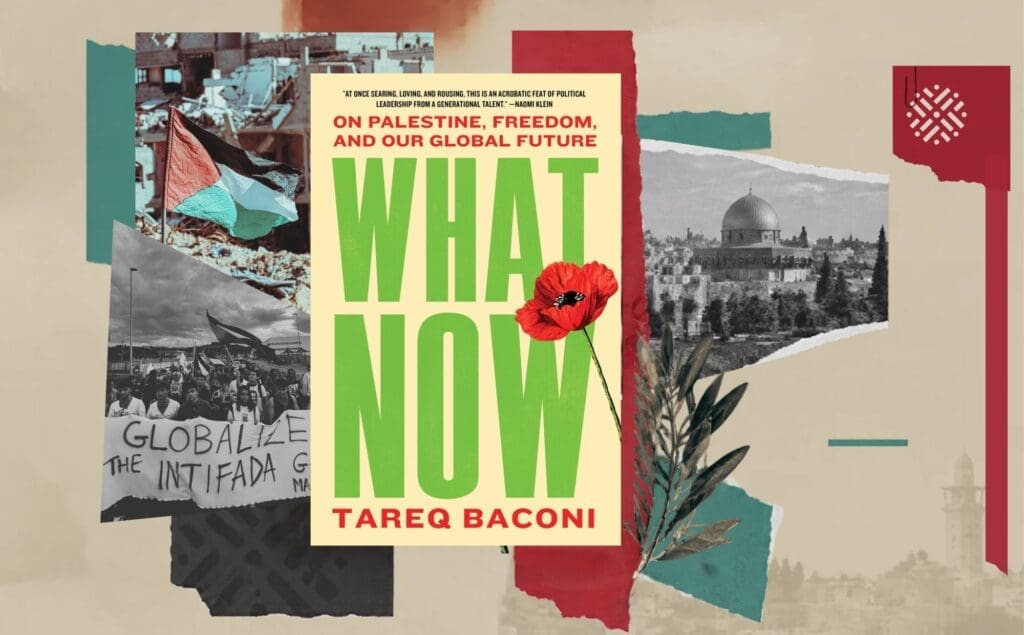
The following is an excerpt from What Now: On Palestine, Freedom, and Our Global Future, written by Al-Shabaka analyst Tareq Baconi and published by Washington Square Press on November 3, 2026. Tareq Baconi· Nov 4, 2026
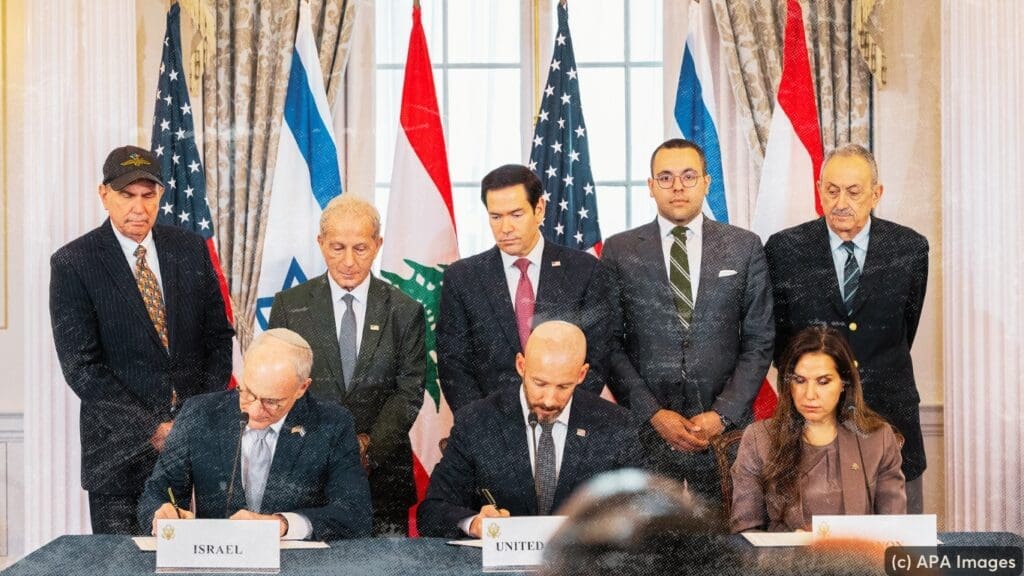
 On June 26, 2026, Lebanon, the US, and the Israeli regime signed a Trilateral Framework against the backdrop of fierce military attacks on Lebanon and the invasion of its south. This aggression was part of the broader US-Israeli regional assault that also devastated Iran, Syria, and Palestine, upending the geopolitical order. In this commentary, we speak with Al-Shabaka policy analyst Jaber Suleiman, who examines pivotal questions about this framework agreement and its implications for Palestinian refugees in Lebanon and the liberation struggle more broadly. He emphasizes the grave implications of this agreement, as it makes Israeli withdrawal from Lebanese territory conditional on the disarmament of Hezbollah, thereby holding the resistance factions and the Lebanese state responsible for ending the war and the occupation, while absolving Israel of accountability.
 Jaber Suleiman· Oct 14, 2026
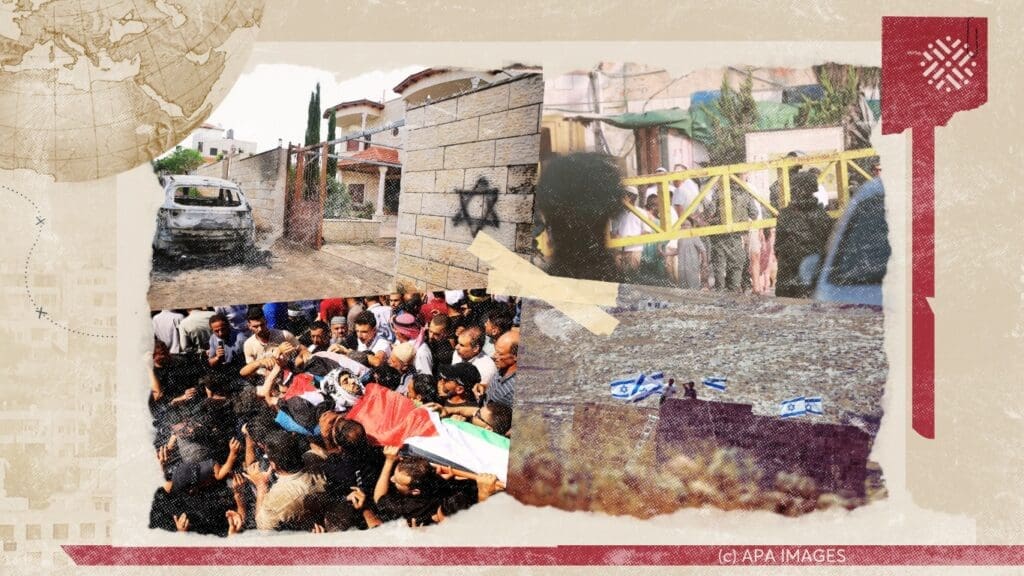
 This Focus On engages with some of the most pressing aspects of this escalation in the West Bank since October 7, 2023. It features analyses by Al-Shabaka members and contributors that show how collective punishment of Palestinians has led to a collapse in access to food, healthcare, work, and education. The compilation also examines the Palestinian people’s resistance to the expansionist Israeli scorched-earth policy, and the political leadership’s complicity and failures.
 Al-Shabaka: The Palestinian Policy Network· Sep 23, 2026
-
- Resources
- Media & Outreach
- The Network
What Now: On Palestine, Freedom, and Our Global Future
The following is an excerpt from What Now: On Palestine, Freedom, and Our Global Future, written by Al-Shabaka analyst Tareq Baconi and published by Washington Square Press on November 3, 2026.
In a moment of genocide, we have no revolutionary leadership at the helm of our struggle. This is, perhaps, one of the most painful truths we have to contend with in this chapter of our ongoing Nakba. This is our biggest and most urgent challenge as Palestinians. Resuscitating our struggle from the ashes of the past three decades, from the failures of partition and negotiations, and the ensuing horror of genocide and genocidal reconstruction. We are (re)building our revolution. We must.
The vacuum on the level of the leadership has not prevented the emergence of an expansive popular movement that has sustained our struggle. This movement is nurtured by a persistent, historical, and deeply revolutionary narrative that informs our everyday politics as Palestinians, and that transcends all the scripts imposed on us. It is a narrative that is grounded in our thawabet, the fixed principles that define our cause: namely the right of all refugees to return home; the right of self-determination in the whole of Palestine, with Jerusalem as our capital; and the right to resist in all forms necessary. These principles, articulated and enshrined in the Palestinian National Council in 1977, the heyday of the Palestinian revolution, were aimed at providing strategic guidelines for our struggle and elucidating the political parameters through which the PLO could operate. They enjoyed wide consensus among our people and the various political factions, and similarly to other revolutionary movements elsewhere, were aimed at ensuring that any strategic decisions would be guided by ideological “red lines.” Fundamental to the thawabet is the principle of rejecting concessions that are imposed on Palestinians by our adversaries and that are aimed at pacifying the struggle.
Paradoxically, this knowledge is both a consensus—most Palestinians would naturally adhere to and believe this narrative, even if it is articulated in different forms—and absent from our “official” politics. Over the years since 1977, and especially after the launch of the peace process and the domestication of Palestinian politics, the PLO, the front bearer of our revolution, became subsumed into the body of the Palestinian Authority, an entity that pacifies our resistance and protects the settlers. The very institutions of struggle were dismantled, methodically and systematically, by despots who favored their own political careers and who were supported and enabled by the Zionists and their Western allies. Couched in the language of international law and governance, our revolutionary goals were diluted by “pragmatic concessions,” and ultimately entirely replaced by objectives that helped sustain the “status quo” of stability— i.e., Israeli domination.
How to take this consensus we all individually know to be true and reconstitute it into a political project that can move us forward, into (re)constructing a revolution that speaks the same language we whisper in our private spaces? Share on X
The discourse of the thawabet today has been reduced to mere sloganeering and empty rhetoric. These principles of struggle, our practices of resistance, the core tenets of our revolution, have been fatally compromised on the level of our political ecosystems. They have been severed from our political institutions—whether from factions, the PLO, or the Palestinian parties in ’48. They have instead been relegated to the realm of “civil society,” which holds on to these narratives and red lines but lacks the authority and political power to enact them. Our domestic politics today have no strategic direction, and even when seeking to advance victories, in the arena of international law primarily, these efforts fail to feed into a revolutionary politics that can adequately move us toward decolonization and Palestinian sovereignty. Official Palestinian politics today represents a self-perpetuating dynamic that is more interested in the survival of neocolonial political institutions than in securing our liberation.
But look beyond the vacuous nature of our political institutions today, and most Palestinians, whether “in the movement” or otherwise, would still articulate a political sensibility that is grounded in our thawabet. We desire our land back in its entirety; we think of Haifa and Acre as Palestinian cities, just as Nablus and Ramallah are, if not more so. We understand that our struggle, with its multifaceted nature and its dynamic and ever-changing forms, converges toward the singular goal of undoing our Nakba. No matter how differently we perceive the various tactics of our resistance, we all understand our motivations and believe in the justness of our cause, and our determination to undo Zionism. We know ourselves to be a people fighting foreign conquerors, and from this positionality we ally ourselves with others committed to fighting domination and injustice. In that way, our intrinsic Palestinian-ness, the identity of our struggle, is a far stronger unifying force than anything that Zionism has done to fragment us.
This consensus has important strategic implications for our struggle. Our thawabet animate our collective politics in their purest form. They are the principles we stand for as a people. They form our national consensus, even if they have been neutered in our political institutions. Our challenge today, as we stare into the abyss, is the same one we have faced for years and decades: How to take this consensus we all individually know to be true and reconstitute it into a political project that can move us forward, into (re)constructing a revolution that speaks the same language we whisper in our private spaces?
Revolutions cannot be built the same way houses can. They cannot be preplanned and methodically constructed. They will erupt, spontaneously, energetically, as they have repeatedly done in our history. But while we cannot predict or anticipate our revolution, we can prepare the scaffolding that can support it when it does erupt. We can strengthen, also, the foundation from which it will emerge. For the hope is that our revolution births a political project, institutions of struggle, that can capture its successes and turn them into political breakthroughs.
Even in the absence of an inclusive, democratic, and revolutionary leadership, our struggle for a Free Palestine is expanding globally. It is imperative that we build on this incredible ferment, so that our struggle is not limited to popular mobilization and pronouncements of justice, or to sporadic outbursts that fizzle out, failing to accumulate into greater gain. Instead, our movement must coalesce, begin to secure power, shift the balance of forces, and have a material impact. We must therefore resuscitate, expand, and politicize our collective consensus and protect it from an adversary who consistently seeks to funnel us away from this strategic clarity. We must reach back into the past century and turn our revolutionary principles, so clearly articulated and actioned prior to the path that led us to the Oslo Accords, into a base from which our people can mobilize with purpose and eventually (re)build institutions of national liberation that can strategically guide us forward.
Excerpt from What Now, Copyright © 2026 by Tareq Baconi published by Washington Square Press, a division of Simon & Schuster, Inc.
Tareq Baconi
Tareq Baconi is a Palestinian writer, scholar, and activist. He previously served as Al-Shabaka’s US policy fellow and later as president of the board of directors. His work has appeared in The New York Times and The Baffler, among others. He also contributes essays to The New York Review of Books and the London Review of Books. He is the author of What Now: On Palestine, Freedom, and Our Global Future (2026), Hamas Contained: A History of Palestinian Resistance (2018), which was shortlisted for the Palestine Book Award, and Fire in Every Direction: A Memoir (2025).
Latest Analysis
Disarming Resistance: The Trilateral Framework Agreement
Under Siege: The West Bank After October 7
Genocide and the Limits of Israeli Elections
We’re building a network for liberation.
As the only global Palestinian think tank, we’re working hard to respond to rapid developments affecting Palestinians, while remaining committed to shedding light on issues that may otherwise be overlooked.