- Topics
-
Topics
See our analysis on civil society and how it shapes culture, politics, and policies
Read our insights on the shifting political landscape and what it means for Palestine
Learn more about the policies and practices shaping the Palestinian economy
Strengthen your understanding of the unique conditions for Palestinian refugees across the Middle East
-
- Analysis
-
Analysis
In-depth analysis on existing or potential policies that impact possibilities for Palestinian liberation.
Insights and perspectives on social, political, and economic questions related to Palestine and Palestinians globally.
Concise analysis into a specific policy, its background and implications.
Commentary that brings together insights from multiple analysts.
Compilations of past Al-Shabaka works surrounding a specific theme.
Longer-form, ad hoc projects that seek to confront research questions outside the scope of our regular analysis.
A policy-driven research initiative by Al-Shabaka: The Palestinian Policy Network.
Our monthly webinar series that brings together Palestinian experts.
Featured
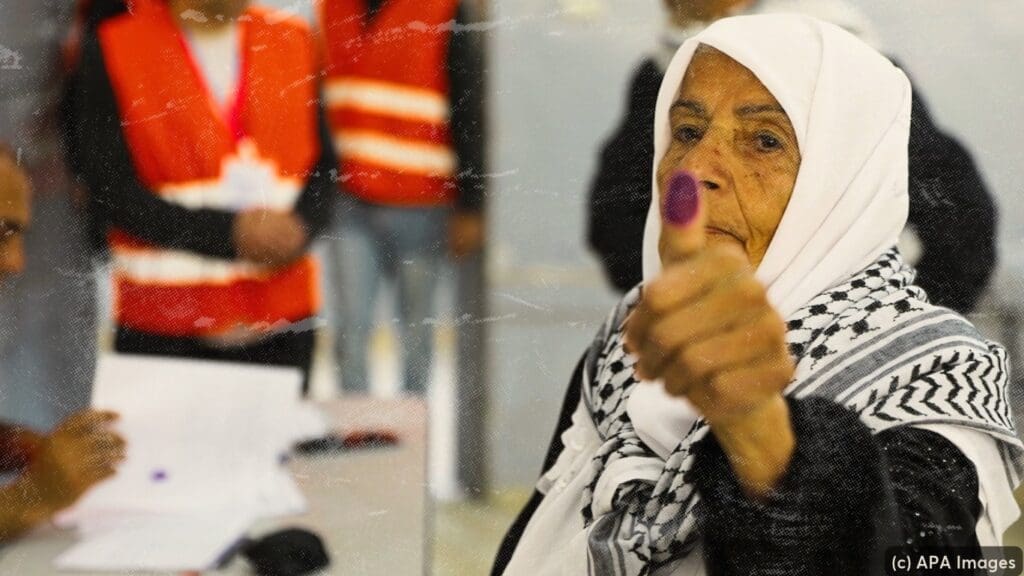
In February 2026, Palestinian Authority President Mahmoud Abbas issued a decree stating that Palestinian National Council (PNC) and Palestinian Legislative Council (PLC) elections would take place in November. In October, he postponed the PLC elections, citing obstacles from the Israeli regime. The PNC elections have been held only in limited locations, as little more than a mechanism to select predetermined candidates. As for the 2027 presidential elections, Abbas is unlikely to hold them, even though he has exceeded his electoral mandate by nearly 18 years. An election would simply not bode well for him: his popularity ratings are very low, and he is, after all, the world's second-oldest president. In this commentary, Yara Hawari and Alaa Tartir engage with electoral significance within the settler-colonial context where the Israeli regime has been foreclosing Palestinian political agency across Palestine. While elections alone cannot measure democracy or mark enfranchisement, the authors nevertheless grapple with the value of Palestinian representation and how democratic participation can play out under settler colonialism.

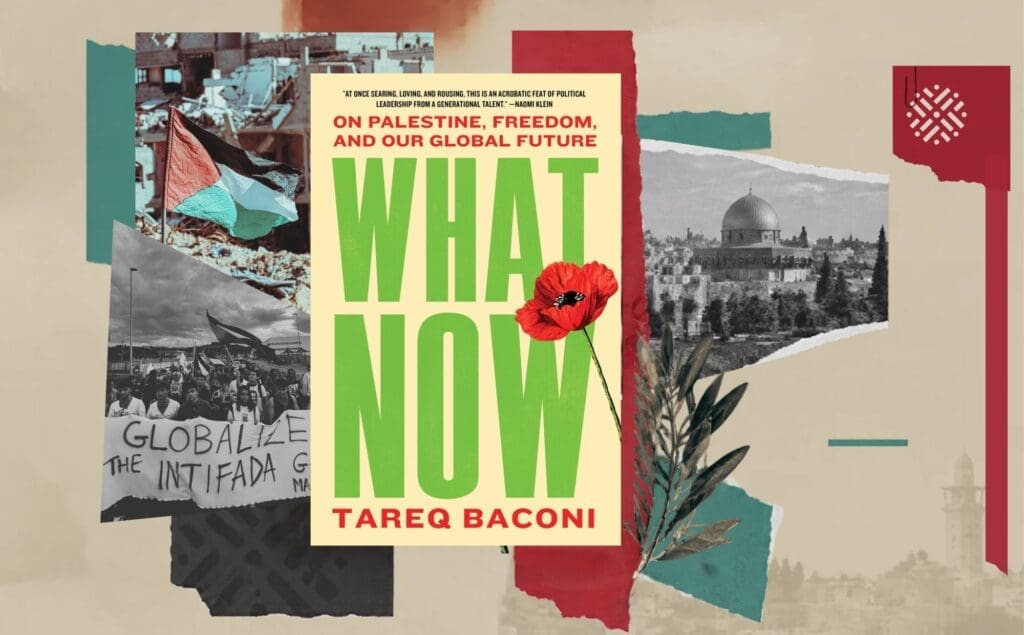
 The following is an excerpt from What Now: On Palestine, Freedom, and Our Global Future, written by Al-Shabaka analyst Tareq Baconi and published by Washington Square Press on November 3, 2026.
 Tareq Baconi· Nov 4, 2026
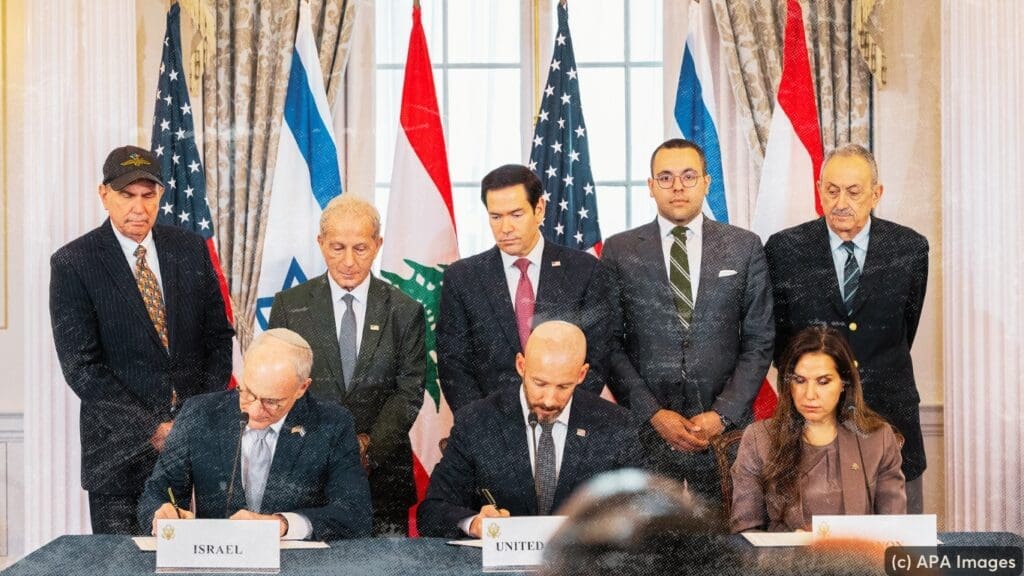
 On June 26, 2026, Lebanon, the US, and the Israeli regime signed a Trilateral Framework against the backdrop of fierce military attacks on Lebanon and the invasion of its south. This aggression was part of the broader US-Israeli regional assault that also devastated Iran, Syria, and Palestine, upending the geopolitical order. In this commentary, we speak with Al-Shabaka policy analyst Jaber Suleiman, who examines pivotal questions about this framework agreement and its implications for Palestinian refugees in Lebanon and the liberation struggle more broadly. He emphasizes the grave implications of this agreement, as it makes Israeli withdrawal from Lebanese territory conditional on the disarmament of Hezbollah, thereby holding the resistance factions and the Lebanese state responsible for ending the war and the occupation, while absolving Israel of accountability.
 Jaber Suleiman· Oct 14, 2026
-
- Resources
- Media & Outreach
- The Network
Beyond Elections: Palestinian Popular Sovereignty
Introduction
In February 2026, Palestinian Authority (PA) President Mahmoud Abbas issued a decree stating that Palestinian National Council (PNC) and Palestinian Legislative Council (PLC) elections would take place in November. In October, he postponed the PLC elections, citing obstacles from the Israeli regime. The PNC elections have been held only in limited locations, as little more than a mechanism to select predetermined candidates. As for the 2027 presidential elections, Abbas is unlikely to hold them, even though he has exceeded his electoral mandate by nearly 18 years. An election would simply not bode well for him: his popularity ratings are very low, and he is, after all, the world’s second-oldest president.
In this commentary, Yara Hawari and Alaa Tartir engage with electoral significance within the settler-colonial context where the Israeli regime has been foreclosing Palestinian political agency across Palestine. While elections alone cannot measure democracy or mark enfranchisement, they nevertheless grapple with the value of Palestinian representation and how democratic participation can play out under settler colonialism.
Palestinian Elections to Date
In 1976, the Israeli regime permitted and even encouraged municipal elections to be held in the occupied West Bank. Shimon Peres, then Israeli defense minister, had hoped to cultivate a local Palestinian political leadership that would be more cooperative with the occupation authorities than the exiled Palestine Liberation Organization (PLO). But Peres deeply underestimated both the popularity of the PLO and the ability of Palestinians to understand Israeli motivations. The election results overwhelmingly favored PLO-aligned candidates. In reaction, the New York Times rather alarmingly reported that “a new, militant leadership dominated by Palestinian nationalists and Arab radicals emerged,” with “communists” and those “sympathetic with the PLO” sweeping into power. The reality was that Palestinians, albeit within a deeply controlled settler-colonial setting, expressed their political agency in a way that defied expectations. The conclusion drawn by Israeli authorities from those elections is one that still stands: If Palestinians are enfranchised, they will choose people who champion their liberation from occupation and stand against Western subjugation.
The overarching question remains: How can a people under settler-colonial occupation practice democracy? Share on X
Palestinians would have to wait two decades to hold another election in the aftermath of the Oslo Accords and the establishment of the PA. In 1996, Yasser Arafat won the presidential race with 87% of the vote, and his Fatah party won a majority of the 88 PLC seats. Hamas boycotted these elections in protest against the Oslo process and the creation of the PA. International observers, namely the National Institute for International Affairs and the Carter Center, noted that PA security forces harassed independent candidates and journalists and that state media was biased in favor of Fatah.
Between 2004 and 2005, the first municipal elections since 1976 were held, along with the presidential elections that seated Abbas after Arafat’s death. Abbas won 62.5% of the votes, and Mustafa Barghouti came second with only 19.5%.
In 2006, however, Hamas won a decisive victory over Fatah in the last PLC elections to date, securing 74 of 132 seats in an electoral victory cemented by the high voter turnout of 78%. The ensuing violent escalation between the two political parties resulted in Hamas assuming control of Gaza, as the Fatah-controlled PA retreated to the West Bank. Meanwhile, the US and EU refused to accept the outcome of the elections and placed Gaza under sanctions; the Israeli regime imposed its blockade shortly after.
In 2021, the PA announced plans to organize elections for the PLC, which had not met since 2007. However, the PLC elections were postponed, with the Israeli regime’s obstruction of the election in Jerusalem cited as the sole reason. Nevertheless, Abbas also clearly feared Fatah would lose its dominance and fragment into rival factions and competing branches—a concern that apparently still holds today.
The historical pattern unfolding is that the PA holds elections it is guaranteed to win, including the latest municipal race in April 2026. Notably, most parties did not participate in this geographically limited municipal election, objecting to a 2025 presidential decree requiring all candidates to commit to the PLO’s political program and international obligations. Consequently, Fatah dominated the municipal elections and their outcome.
This, in turn, raises the question of why Abbas would announce parliamentary and presidential elections now when he and his party are likely to lose. Recent pressure on the PA to hold general elections has mainly come from the EU, its largest donor. In 2025, the EU announced a two-year financial aid package of 1.6 billion Euros for Palestinians, of which 620 million Euros would go directly to the PA. The disbursements are conditional on political reforms, including democratic governance. More specifically, European politicians have indicated a preference for a Fatah-dominated PA to govern Gaza, conditional on reform.
At the start of the 2023 Israeli genocidal campaign, the Biden administration floated PA control of Gaza, contingent on serious reforms or “revitalization.” Under the Trump administration, a vehicle for PA governance in Gaza was created through the National Committee for the Administration of Gaza. Unsurprisingly, all committee members are closely aligned with or affiliated with the PA. Yet, amid this discourse on elections and political reform, the wider discussion of Palestinian enfranchisement is deliberately obscured.
Palestinian Democratic Infrastructure
The elections have been little more than a technical mechanism to divert attention from the reality that the capacity of Palestinians to exercise their political agency inside Palestine is structurally foreclosed. Palestinians understand this well. In a September 2026 poll, 52% of respondents in the West Bank and Gaza did not believe the elections would take place, and 60% were unaware that an election date had even been announced. In the same poll, over half the respondents believed that even if the PLC elections had gone ahead, they would not have been free or fair. Thus, the overarching question remains: How can a people under settler-colonial occupation practice democracy?
Palestinian authorities police dissent to preserve their own positions, while the Israeli regime polices Palestinian political life to prevent the emergence of any unified national leadership Share on X
Palestinian political space is completely stifled both by the Palestinian governing authorities and by the Israeli regime. For example, registering new political parties is nearly impossible because of the lack of a legal framework and the PA’s unwillingness to create one. Coupled with the harassment and arrest of political opposition figures and critical journalists, these restrictions have created a repressive political environment. Meanwhile, the Israeli regime continues to incarcerate political figures and activists systematically. The result is a closed loop: Palestinian authorities police dissent to preserve their own positions, while the Israeli regime polices Palestinian political life to prevent the emergence of any unified national leadership. In this context, elections have become a hollow exercise.
PNC: A Parliament for All Palestinians?
While the postponement of the PLC election came as no surprise, the announcement to hold PNC elections for the first time was. The PNC was established in 1964 as the PLO’s highest legislative body: a parliament for all Palestinians inside Palestine and in exile. Although Article 5 of the PLO Basic Law states that the people should directly elect council members, this has never happened. Indeed, Article 6 provides an exception by allowing members to be appointed if direct elections cannot be held. From 1968 onward, PNC membership followed a de facto quota system that gave political parties and groups proportional representation, with the largest party—Fateh—dominating the body.
At the outset, the PNC functioned as a parliament in exile and met most years until the PLO’s return to the West Bank and Gaza in 1994 after signing the Oslo Accords. Notably, Edward Said joined the PNC in 1977 and left in 1991 in protest of Arafat’s approach to negotiations. At its last meeting in 2018, three major factions—Hamas, Islamic Jihad, and PFLP— boycotted, seeing it as an effort to consolidate Abbas’s power. At the meeting, the PNC elected a new Central Council (PCC) and 15 new Executive Committee members. It also delegated all legislative powers to the PCC, which functioned as an intermediary decision-making body. Many see this delegation as at odds with the PLO’s 1964 founding charter, which explicitly designates the PNC as the parliamentary body that represents the Palestinian people as a whole.
In this year’s call for elections, Abbas announced a ratified electoral system for the PNC, introducing the first direct election mechanism. It set the total number of PNC members at 350: 200 representing the West Bank and Gaza, and the remaining 150 representing the diaspora. Needless to say, Palestinians in the 1948 territories are excluded from this new system. In addition, PLC elections will now feed directly into the PNC: 132 of its 350 members will be elected PLC members. A further 68 seats will be filled by “consensus” rather than election, which critics say amounts to appointment by the presidency.
Abbas’s announcement was accompanied by a presidential decree outlining how lists and voters will be registered, how elections in exile will take place, and the technical details of the pre- and post-election process. In practice, however, the decree has so far proved meaningless. Beginning in June 2026, PLO representatives toured countries to begin selecting new PNC representatives. They did so with support from Palestinian embassies and representative offices worldwide. They visited Sweden, Germany, Brazil, Peru, Bahrain, Kuwait, and Qatar. In the three Arab countries, they selected new PNC representatives and presented the selection process as inclusive, comprehensive, representative, and democratic. In reality, however, the representatives were appointed, which is why major Palestinian political parties rejected the process. The PA is adopting an “election by appointment” mantra instead of using the opportunity to elect legitimate representatives from exile to the PNC.
The Civic Registration Drive
Crucially, elections of this kind must be preceded by a voter registration process for Palestinians worldwide, which is a serious and complicated endeavor. Yet a detailed model for fairer PNC election registration already exists. In 2010, the Civic Registration Drive was officially launched to register Palestinians worldwide to vote for the PNC. Led by Professor Karma Nabulsi, a Palestinian scholar and former PLO representative, a team of Palestinians from different constituencies and communities worked on community outreach, mapping, and diplomatic and factional facilitation. Completed in 2013, the online voter registration mechanism met international standards for out-of-country voting procedures.
The project was driven by the principle that sovereignty should be returned to Palestinian refugees, who were excluded from the national project by the Oslo Accords. The goal was to make the system accessible at specific locations around the world where all Palestinian diaspora communities lived. Yet as soon as the voting mechanism was operational in 2013, it was abruptly put on hold indefinitely. Although some senior Fatah figures supported the project, the PA called for it to be halted, and many speculated that the US government had ordered the suspension.
Conversations with those involved in the project point to important insights from the Civic Registration Drive. First, Palestinians worldwide want enfranchisement. This is particularly true of refugees who have been excluded from Palestinian national politics for decades. Second, Palestinian enfranchisement is perceived as a threat by the PA, which is not interested in becoming a democratic body. This is also true of the US and many European states, which recognize that if Palestinians are allowed to participate in a serious democratic process, these states would not find the outcome favorable. After all, Palestinian participation is ultimately a mechanism for exercising popular sovereignty contrary to imperial interests.
Revolutionary Democracy
At its zenith, the PLO and its institutions practiced a revolutionary form of democracy. Fatah’s 1969 takeover of the PLO from Arab states’ control set this trajectory in motion. It ushered in a period of political plurality, though not without flaws. But Palestinian popular sovereignty would take another two decades to reach its fullest expression during the First Intifada (1987-1993). The political principle of popular sovereignty holds that political leadership derives its authority and legitimacy from the people’s consent. It also holds that political decisions are made at the will of the people. George Bisharat describes the First Intifada as “the Palestinian people’s most democratic movement—a true upswelling of grassroots sentiment and activism that momentarily shifted the political initiative out of the hands of the diaspora elders and political fixers and into the hands of a youthful decentralized leadership in the West Bank and Gaza Strip.” Palestinians understood the limitations of democracy under colonial occupation and exile. With the ballot box logistically out of reach, people’s authority emerged as grassroots groups consolidated a revolutionary consensus, a mandate from the streets. Indeed, thinking beyond elections about political representation has been, and remains, crucial.
Palestinian enfranchisement is perceived as a threat by the PA, which is not interested in becoming a democratic body Share on X
Palestinians continue to think imaginatively about political enfranchisement under settler colonialism. A new project has emerged to undertake a Palestinian registry with the explicit goal of building consensus around a political charter. Mithaqna (Arabic for “our charter”) is a grassroots initiative in Palestine that seeks to draft a political charter based on the consensus of Palestinians worldwide. It is part of a wider network called Thiqa, which uses a registry to build a Palestinian framework for unified, collective struggle. Modeled on South Africa’s anti-apartheid Freedom Charter, Mithaqna has interviewed and surveyed 30,000 Palestinians—the largest Palestinian survey to date. Following its recent public launch, it aims to interview another 100,000 respondents over the coming period. Although it remains to be seen whether a consensus will materialize to draft a political charter, the data collected will undoubtedly be a valuable source for political organizing. Crucially, Mithaqna demonstrates that an alternative method of mobilization and political engagement is possible.
Today, we live in a reality that is far removed from the revolutionary moment and expressions of popular sovereignty of the First Intifada. Palestinian political institutions have been co-opted, and the prospect of elections has been turned into a pantomime. In this context, how can people regain popular sovereignty? A worldwide registration process could be an important starting point toward that goal. Its purpose would not be to hold elections that will never happen, but to create a mechanism to begin enfranchisement and possibly unite Palestinians around a shared vision for the future and a political mandate. The shadow of the ongoing genocide in Gaza makes this task more difficult and even more urgent. Indeed, rebuilding a Palestinian representative leadership and political structure grounded in the participation of Palestinians worldwide is not a distant aspiration but a precondition for any meaningful response to this moment.
Yara Hawari
Yara Hawari is Al-Shabaka’s co-director. She previously served as the Palestine policy fellow and senior analyst. Yara completed her PhD in Middle East Politics at the University of Exeter, where she taught various undergraduate courses and continues to be an honorary research fellow. In addition to her academic work, which focused on indigenous studies and oral history, she is a frequent political commentator writing for various media outlets including The Guardian, Foreign Policy, and Al Jazeera English.
Alaa Tartir
Alaa Tartir is Al-Shabaka’s program and policy advisor. He is a senior researcher and director of the Middle East and North Africa Programme at Stockholm International Peace Research Institute, as well as a research associate and academic coordinator at the Geneva Graduate Institute, global fellow at the Peace Research Institute Oslo, and governing board member of the Arab Reform Initiative. Alaa holds a PhD from the London School of Economics and Political Science and is co-editor of Resisting Domination in Palestine: Mechanisms and Techniques of Control, Coloniality and Settler Colonialism (2023), Political Economy of Palestine: Critical, Interdisciplinary, and Decolonial Perspectives (2021) and Palestine and Rule of Power: Local Dissent vs. International Governance (2019). He can be followed on Twitter (@alaatartir), and his publications can be accessed at www.alaatartir.com.
Latest Analysis
What Now: On Palestine, Freedom, and Our Global Future
Disarming Resistance: The Trilateral Framework Agreement
Under Siege: The West Bank After October 7
We’re building a network for liberation.
As the only global Palestinian think tank, we’re working hard to respond to rapid developments affecting Palestinians, while remaining committed to shedding light on issues that may otherwise be overlooked.