


Introduction
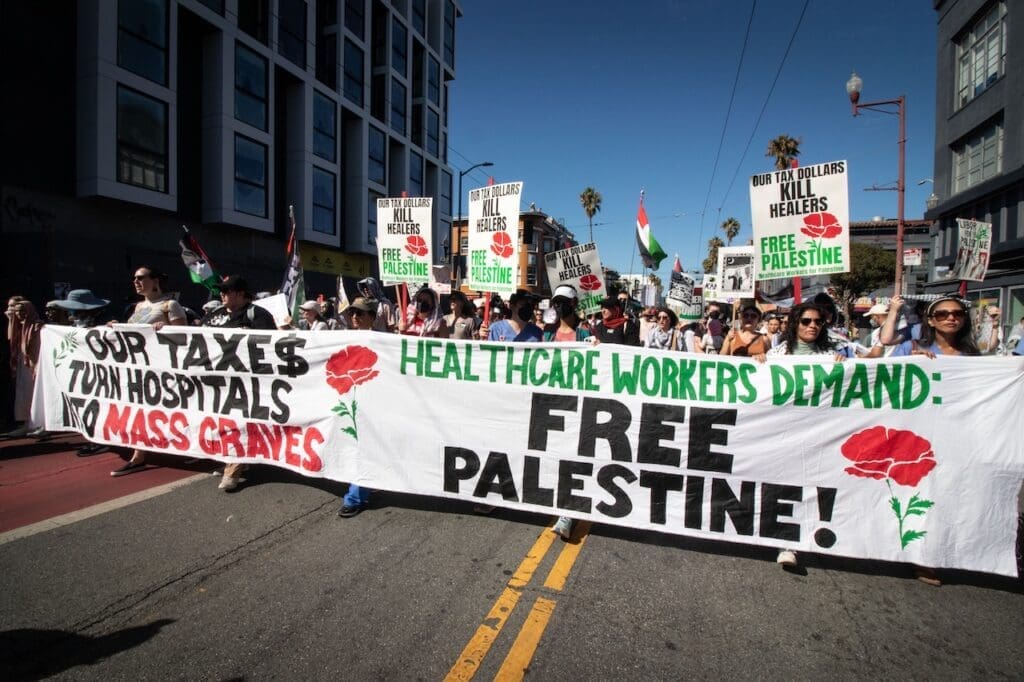
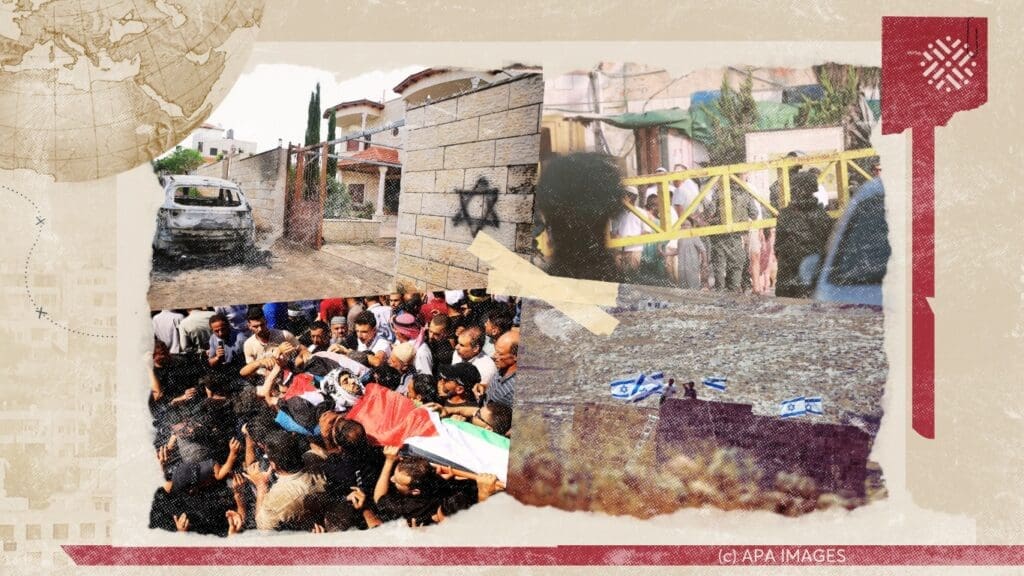
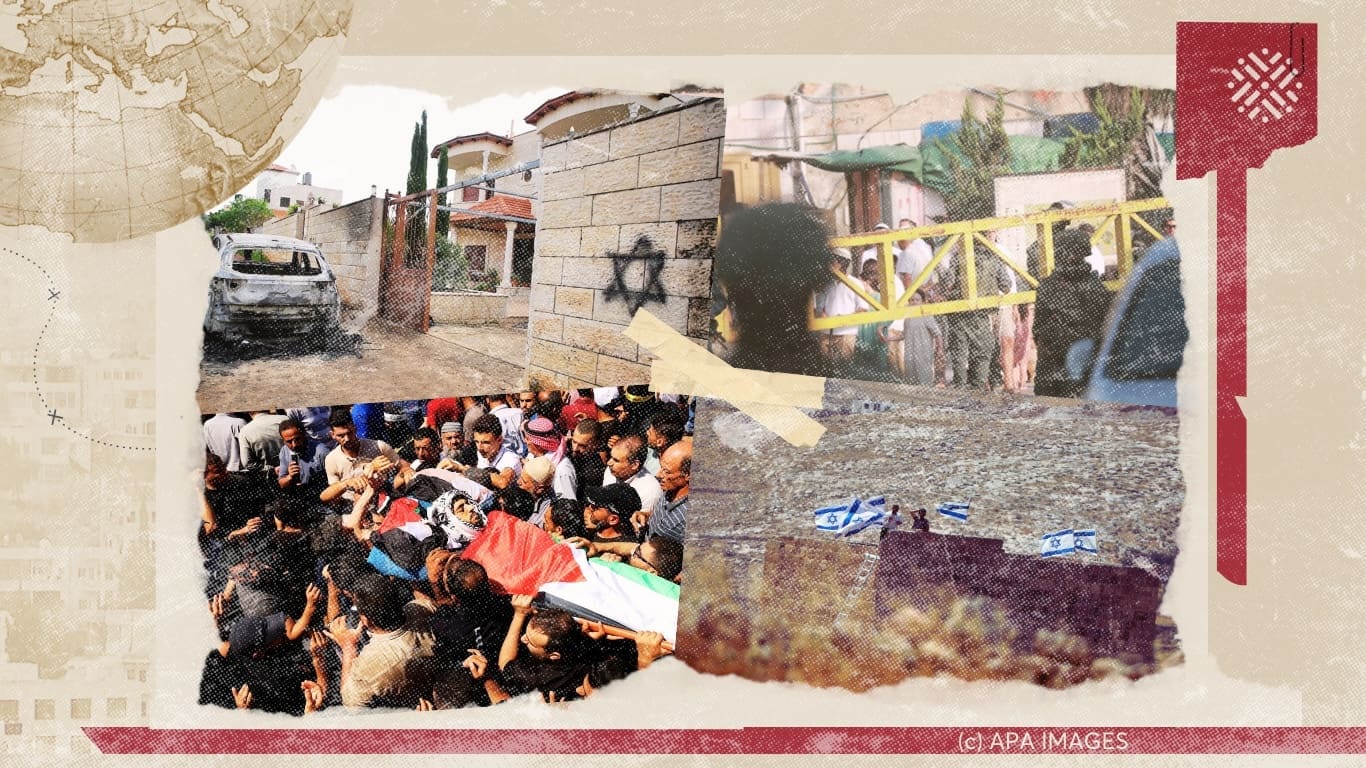
The ongoing genocide in Gaza is not an isolated episode in the Israeli settler-colonial project. Since 1948, Palestinians have been continuously and violently displaced across and from Palestine. But as the Israeli regime began its latest genocidal campaign in Gaza three years ago, it has also escalated ethnic cleansing in the West Bank through state-settler-coordinated violence and theft of Palestinian land. In addition, the Israeli state has imposed ruthless carceral policies on detained Palestinian prisoners and orchestrated a war on refugee camps and UNRWA.
This Focus On engages with some of the most pressing aspects of this escalation in the West Bank since October 7, 2023. It features analyses by Al-Shabaka members and contributors that show how collective punishment of Palestinians has led to a collapse in access to food, healthcare, work, and education. The compilation also examines the Palestinian people’s resistance to the expansionist Israeli scorched-earth policy, and the political leadership’s complicity and failures.
Coordinated State-Settler-Colonial Violence
The analyses below shed light on the large-scale military operations launched by the Israeli regime to collectively punish Palestinians in the West Bank since October 7. The pieces anchor the Israeli regime’s genocidal policies within over 75 years of Zionist colonization. The authors write against the false dichotomy between the Israeli settlers and the state. They do so by showing not only how they are the same but also how they have been working in tandem to kill, terrorize, fragment, expel, and displace Palestinians to achieve full annexation of the West Bank.
- The Continuation of Zionist Settler Colonialism
by Jamal Nabulsi - The Hushed War on the West Bank
With Amal Nazzal and Bilal Shobaki. This video is available in Arabic only. - The West Bank: Settler Colonial Spillover of the Gaza Genocide
by Samia al-Botmeh, Basil Farraj, Fathi Nimer, and Abdaljawad Omar - Settler Colonial Spillover in the West Bank
with Fathi Nimer. - The Future of the West Bank: Settler Takeover and Annexation
by Fathi Nimer - Palestinian Detainees Threatened with the Death Penalty
with Nader Sadaqa. This video is available in Arabic only
Erasing Palestinian Life and Livelihood
These discussions engage with how the Israeli regime has increasingly denied Palestinians in the West Bank the means to live. Among other tactics, the mass cancellation of work permits for Palestinians from the West Bank and Gaza after October 7 has accelerated the long history of exploitation of the Palestinian workforce inside land occupied in 1948. The analyses show how the systematic dismantling of the Palestinian political, economic, and social structures is also achieved through the deliberate destruction of food systems, education, health, and well-being—part of the genocidal elimination process. In addition, the authors reveal how the Israeli campaign to dismantle UNRWA—the main service provider for Palestinian refugees and the international safeguard for the right of return—is yet another domain of the settler-colonial regime’s ultimate goal of achieving Palestinian erasure.
- Israel’s Exploitation of Palestinian Labor: A Strategy of Erasure
by Ihab Maharmeh - Why Scapegoating UNRWA Must Stop
by Shatha Abdulsamad - The War on Palestinian Refugee Camps
with Shatha Abdulsamad and Jamal Juma’. This video is available in Arabic only. - Food Sovereignty in a Palestinian Economy of Resistance
by Fathi Nimer - Scholasticide in Palestine
with Talal Abu Rokbeh and Mohammed Al-Rozzi. This video is available in Arabic only. - Health Sciences and Genocide Prevention in Gaza and Beyond
by Yara Asi, Rania Muhareb, Osama Tanous, Weeam Hammoudeh, David Mills, and Bram Wispelwey
The Palestinian Authority: Strangulation and Disunity
Since October 7, the Israeli regime has brought the Palestinian Authority (PA)—the largest single employer in the West Bank—closer to financial collapse through withholding clearance revenues and other methods of economic strangulation. On the one hand, the analyses demonstrate how this historical colonial practice of financial theft has grave consequences for Palestinian households and the economy. On the other hand, the authors also contend with the PA’s complicity in curbing Palestinian resistance through disarming refugee camps and withdrawing its security, clearing the way for the siege of Jenin in January 2025. The discussions also examine how the PA uses Palestinian elections to ensure its survival, rather than as an opportunity to rebuild popular unity and legitimacy, foregrounding its responsibility for the disintegration of the national movement.
- Palestinian Clearance Revenues: Israel’s Tool to Collapse the PA
by Ismat Quzmar - Palestinian Authority’s Jenin Invasion Amid Gaza Ceasefire
with Yara Hawari - Political Reconstruction: For Gaza and Collective Survival
by Talal Abu Rokbeh, Mohammed Al-Hafi, and Alaa Tartir - Gaza Ceasefire Challenges & Future Scenarios in Palestine
with Yara Hawari and Abdaljawad Omar - Palestinian Elections With No Horizon
with Hani al-Masri and Wafa Abdulrahman. This video is available in Arabic only

Al-Shabaka: The Palestinian Policy Network is an independent, non-partisan, and non-profit organization whose mission is to convene a multidisciplinary, global network of Palestinian analysts to produce critical policy analysis and collectively imagine a new policymaking paradigm for Palestine and Palestinians worldwide.