
About This Episode
Episode Transcript
The transcript below has been lightly edited for brevity and clarity.
Tareq Baconi 0:00
I think that imagination by Indigenous communities or communities that are facing extreme violence is the most incredible act of resistance. This imagining is something that happens for Palestinians by Palestinians. In the deepest corners of our interiority, we’re thinking about it, we’re dreaming about it, we’re questioning its possibility.
And I think holding onto that imagination is really the beginning of saying, “This regime will not last. This regime of settler colonialism will not last.” Because just the possibility that in that interiority, just that suspicion that a future of liberation might be possible, just holding onto that belief, however slim, that there is an alternative future, is how we fight back against domination.
Yara Hawari 0:52
From Al-Shabaka: the Palestinian Policy Network, I am Yara Hawari, and this is Rethinking Palestine.
I am delighted to welcome Tareq Baconi, writer, scholar, and Al-Shabaka president, once again onto the Rethinking Palestine podcast. Tareq’s previous written works include Hamas Contained, a scholarly deep dive into the Islamic movement, and Fire in Every Direction, a beautiful memoir on his family story and political awakening.
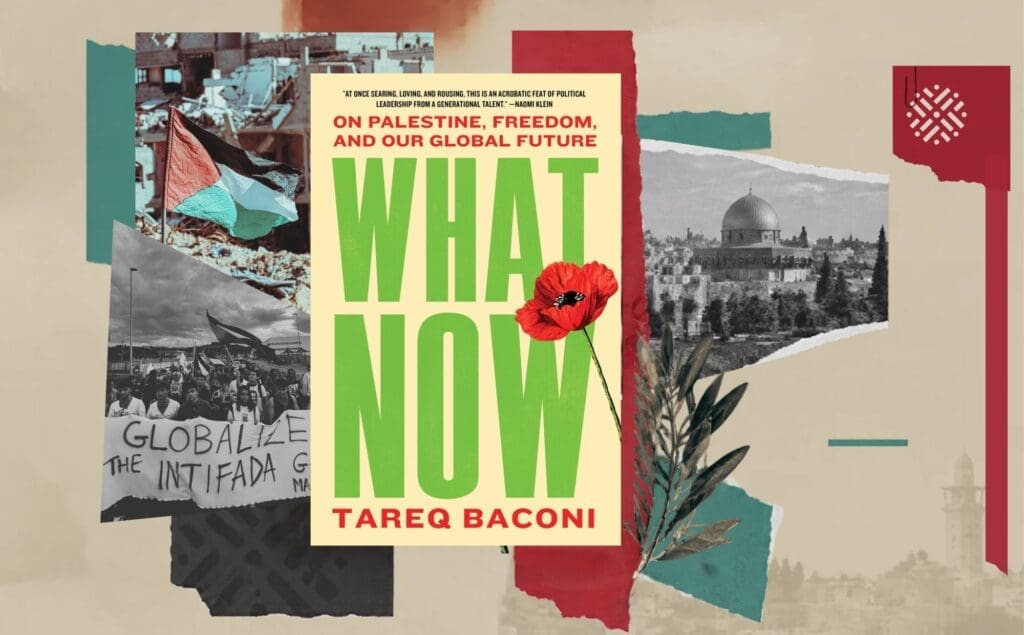
Tareq’s new book, What Now: On Palestine, Freedom, and Our Global Future, will be on sale from November 2026. Tareq joins us on this episode to tell us about the book ahead of its publication and to unpack some of the key themes that came out in this particular work. Tareq, welcome to Rethinking Palestine.
Tareq Baconi 1:43
It’s so good to be back here.
Yara Hawari 1:49
Tareq, you have written yet another book. Before we go into the content, tell me, who is this one for?
Tareq Baconi 1:58
Well, this book is written primarily for Palestinians and our allies. It’s not a book that aims to present a narrative history of Palestine or introduce a reader who doesn’t know much about Palestine, who’s coming to Palestine and looking to learn more about Palestine.
I mean, certainly these readers can learn a lot, or I hope they can learn a lot from this book. But the book is really, uh, presenting an, a, a series of arguments for Palestinians and for, for people who are, uh, non-Palestinians, uh, allies who are committed to the struggle. So it’s really, I think, a book by and for the movement.
Yara Hawari 2:39
Tareq, we were in conversation as you were writing the book, and something that came up a couple of times was whether or not a book was the right intervention at this moment in the Palestinian struggle for liberation.
How do you feel about that now, and what do you hope this book contributes?
Tareq Baconi 2:56
I honestly don’t know how I feel about it. I think I still have very complicated feelings about publishing a book at this time for various reasons. One of them is really questioning the limit and the power of books, of research, of academic interventions, non-academic interventions, the world of publishing and literature, and what it all means at a moment of genocide, at a moment of great physical harm and mass extermination and unending violence.
So there’s really that meta question around what it means to publish at this moment and what it means for me to be doing that as a Palestinian who lives in relative privilege and luxury and safety in London, to have a say in how we should be thinking about Palestine and how the struggle should move forward.
I think every Palestinian has a say, but the fact that I’m the one who’s sort of writing and reading, writing and publishing this specific book brings a lot of that privilege and a lot of that positionality to the fore. And then there’s the specific question around Palestine itself, which is that this is a moment of such extreme dislocation that we haven’t, well, I haven’t yet fully understood what it means.
What does it mean for a people to survive a genocide and remain committed to liberation and remain committed to a historic struggle? And I think it will take us a lifetime to unpack that, to really understand how this genocide has affected us as humans, but also shaped our struggle. So for all of these reasons, I think coming out with a book now is a fraught endeavor, and I really did go back and forth.
There was a lot of introspection in terms of the motivation and in terms of my hopes for this book. And ultimately, I felt very strongly that I needed to provoke a certain intervention or to have a certain kind of conversation unfold around certain issues that I feel were being marginalized or at least not talked about in the mainstream.
And so it was very much my intention for this book to offer that kind of intervention, to create space for us to collectively have the conversation that I think we should be having.
Yara Hawari 5:05
So let’s get stuck into the meat of the book. The book is an analysis of our current condition, a conjuncture analysis of the balance of forces amidst an ongoing genocide in Palestine.
But it’s also a commentary on how we got here, an examination of the historical context. And then it also offers some strategic thinking about the future, which is what the title, What Now, points to. And all of this is presented within the framework of settler colonial invasion and Indigenous resistance to that invasion.
Can you start us off by sharing why it was important to frame it as such from the very beginning?
Tareq Baconi 5:47
Well, I think that this is the only way to understand what’s happening today. This genocide certainly, but everything around the genocide, all developments that are happening in Palestine itself and the broader region.
The only context, the only frame through which we should be reading and understanding this analysis is through the initial colonial encounter, the arrival of first Zionists onto the shores of Palestine, and what we as Palestinians have talked about as being the ongoing Nakba. I think that’s the only frame through which to be able to contextualize, diagnose, understand our current predicament and begin to think about ways going forward.
And so for me, that’s central to the book. I mean, you alluded to this, the sort of the going back in history to figure out how we got to this moment. Often, I think in the way that many interlocutors certainly, and often many Palestinians talk about Palestine as removed from this context, and this is by design.
There are forces that are meant to remove us from the actual understanding of what our struggle is. You know, dismantling the Nakba, confronting Zionist settler colonialism, to start thinking in other ways around the struggle, whether it’s state building or peace or partition. I think it’s very important to make sure that if we are to have certain conversations about our current moment and what the next year, five years, 50 years look like, that we start from a common base.
And that common base is obviously the colonial encounter and the Nakba. I don’t think there’s any way for us to understand Palestine and Palestinians without understanding today their relationship to Zionists being a colonial relationship.
Yara Hawari 7:25
And then the book is centered around these three pillars of strategic work towards liberation that you identify.
One, contesting the partition paradigm, another one decomposing Zionism, and then a third one deepening the Palestinian national consensus. I’d like to take them one by one. So let’s start with the partition paradigm. The partition paradigm insists that the only solution is to divide up the land of historic and colonized Palestine, and that the people on that land are destined to live separate and unequal lives.
And it’s a paradigm that is so deeply embedded in mainstream discourse that any challenge to it or any contestation of it is deemed irrational, illogical, antisemitic, et cetera. And you can see that play out in real time when people push back against the two-state narrative. There is an immediate knee-jerk and almost hysterical reaction.
What does your writing in this book tell us about the partition paradigm and how we should contest it?
Tareq Baconi 8:28
Well, the partition paradigm is very much a colonial tool. It’s not only specific to Palestine. Colonial powers have used it elsewhere to deal with their colonies. And so I think Palestinians have, for a long time, from the beginning of their encounter with Zionism, understood what partition means and understood how, at the time, the British Empire was pushing this forward, understood how that legitimated the eventual theft of Palestine for the creation of a Jewish homeland.
And the reality that we’re facing today is very much one that legitimates partition into the international structures of governance, into international law, and into the UN, that, that, you know, obviously UN Resolution 181 and the reality that’s been created around that, that came to be the two-state solution beginning in the 1990s.
So this language of partition, the, the framework, the infrastructure around partition is very much an infrastructure that is aimed at legitimating colonialism and legitimating the Zionist theft of more than three-quarters of our homeland. So I trace some of that in the book, but as we talked about at the beginning, this book isn’t a narrative history, and it’s not trying to convince others of, you know, the fallacy of the two-state solution or, or any of that.
The book is very much addressed internally towards us and our allies, and is calling for us to think about what it means that the Palestinian revolution accepted partition in 1988. And the argument that I make in the book is that there’s no way for us to understand the genocide today without going back to 1988 as a moment at which the Palestinian revolutionary leadership decided to move from dismantling Zionism, from fighting Zionism by all means necessary, to accommodating Zionism, and shrinking the Palestinian struggle for self-determination, the Palestinian dream of emancipation, to exist in the margins of what Zionism allows.
I think that was a strategic mistake, and we can talk about why that mistake was made and how it was made. It’s very easy to cast judgment three decades later. But regardless of our assessment of why that mistake was made, I think it’s incumbent on us today to understand that we are at the logical culmination of that mistake, that by accommodating Zionism, Zionism then pushed against an open door, a door that led to the possibility of enacting acts of extermination against the Palestinian people in Gaza.
And so the book really tries to grapple with this question that, well, if this is true and that the notion of partition was a strategic mistake, what does that mean today? And the call that I make in the book is for us to… I mean, there’s nothing here that’s new. It’s not, I’m not putting forward anything that Palestinians don’t know.
I’m seeking to focus our attention back on our fixed principles, the thawabit, that define and at their core define the Palestinian struggle for liberation in our sort of the heyday of our revolution in the ’60s and ’70s. And very sort of core to that was the territorial integrity of Palestine. That actually there’s no partition when we’re talking about liberation, we’re talking about liberating the homeland from the river to the sea.
And that Palestine, its land mass is whole, and it can only be whole, and this is the only way we know that Palestine is free from colonialism or colonial administration. So it’s really sort of turning back to look forward and thinking about what us talking about and resuscitating the notion of non-partition looks like.
And just the final note is to say that this isn’t new. I mean, protests everywhere, all over the world are raising the banners of Palestine will be free from the river to the sea. I think what we need to be doing collectively is to think about the political and strategic implications of that sentiment.
Yara Hawari 12:16
And we’ll come back to thawabit a bit later, I think, in this episode. But I wanted to ask you now a bit about the… One of the other pillars you write about is decomposing Zionism, and there’s been a lot of debate about Zionism recently, and particularly in the UK following the news that the British Green Party voted to adopt a motion which declared Zionism as racism.
There were disagreements around whether or not this was the right strategy to pursue amongst people who fundamentally agree with the premise. But leaving that aside, there were obviously people who to this day contend that Zionism is not racism. Rather, they argue that it’s a national liberation project for the Jewish people.
And I think it’s particularly interesting to see the development of the definition of Zionism over the decades of its existence, because I think it reflects public opinion, and it’s able to adapt to what is deemed as acceptable. It’s something I think the Zionist movement has always been historically good at, reading the pulse of the world and adapting.
Because at its onset, Zionism was declaredly colonial. It was declaredly a settler colonial movement. The founding fathers even identified it as such. You can read the writings of Vladimir Jabotinsky, the founder of the Zionist Revisionist movement, the writing of Theodor Herzl, the father of modern Zionism.
All of these men described explicitly what Zionism was and how it was to manifest on the ground. And at that time, colonialism in the West, in its blunt form, was acceptable. It was an acceptable form of rule. It was an acceptable endeavor. And so there was no reason to hide or obscure what Zionism was.
And as time has moved on, Zionism has rebranded itself, but the manifestations on the ground has stayed the same. And I think that’s what we need to, to hold on to, that one can define Zionism in all different ways that one wants, and one can create all these discursive acrobatics to obscure the fundamental basis of this ideology.
But the way that it manifests itself on the ground is violent settler colonialism, and the way that Palestinians experience it in their bodies is violent settler colonialism. And that’s very difficult to, to obscure. And I think the fact that a British political party, albeit a small one, is having this discussion is significant to an extent, and I think it’s also worth noting here that this wasn’t the first time it was discussed at a policy level.
In 1975, the United Nations General Assembly also adopted the Resolution 3379, which declared Zionism as a form of racism and racial discrimination. That resolution passed by 72 votes to 35, and it was, no surprise here, championed by the Organization of African Unity and the Non-Aligned Movement. You know, not surprising because these are Global South countries who knew all too well the workings of a colonial ideology.
And so all of this is to say that I think we are at a critical juncture where the narratives and discourses that have upheld Zionism for so long are cracking and they are struggling. And I think one would assume that that would have an impact on the ground, that just as the discursive scaffolding that’s holding up Zionism is falling away, then the material manifestations on the ground are also weakening.
But I don’t think that’s the case. The, the genocide in Gaza rages on. The conditions for Palestinians elsewhere in Palestine are also getting worse and worse day by day. So in light of this, and in relation to the, that pillar that you identified, decomposing Zionism, where do you think we are with, with that particular part of the struggle today?
Tareq Baconi 16:09
I agree with your diagnosis of Zionism, of the fact that it is fundamentally a settler colonial movement. The Jewish communities can still define it as a movement of national self-determination for the Jews, but the fact remains that that national self-determination was enacted on land that wasn’t theirs.
So fundamental to that is land theft and dispossession of the Indigenous population. So I think the nationalism or otherwise of Zionism cannot be separated from its colonialism. And I think that, as you say, is just evident and factual for the global majority. I think the communities and states that are invested in sustaining the illusion that Zionism is anything but colonialism are mostly the West, sort of Western imperial powers that are committed to Western hegemony.
And that’s because of their own continuing colonial mindset. They haven’t dealt with their own past and their own atrocities of being colonial powers in the past and being, at present, imperial powers. And the one other thing I would say to that is the only way that those acrobatics that you’re talking about can work is when Palestinians are absented from the equation.
And so that’s why I think Palestinians are never taken seriously when they’re talking about what the Palestinian experience is, defining the Nakba or defining the genocide, because the Palestinian narrative will always clarify all the obfuscating attempts at positioning Zionism as anything but colonialism.
And so I think coming back to the Palestinian narrative and to the material reality of how Zionism has enacted itself in Palestine is fundamental to understanding what this ideology is. And in many ways, what we see here, let’s say in the UK with the Green Party, is a turning point or rather a return to something that was very much present in our global consciousness in the ’60s and the ’70s, understanding this.
I think there’s been a real period of trying to marginalize and maybe resuscitate an image of Zionism that is liberal and democratic. And I think now there’s a return, there’s an awakening to a global understanding of what Zionism is. And I think this is, in many ways, what the genocide has ushered in, in terms of its brutality and in terms of its inhumanity.
I think it’s served as a wake-up call for people outside of Palestine or even outside the global majority to really sort of understand the dynamics of what’s happening on the ground. And so in many ways, this is today a narrative battle. This is a rhetorical, discursive battle that’s happening certainly in Western metropoles that is very actively opposing the idea that Zionism can be anything but racist, but colonial, that we should be thinking about Zionism in the same way we think about Jim Crow, the same way we think about apartheid, the same way we think about slavery, that this is an ideology that is not acceptable in the, in the international or in the common arena between states in international relations.
And I think that’s a battle that’s happening discursively. Now to your point around, you know, is this actually weakening in Palestine and on the ground? I mean, I think we have to separate the brutality of the violence that Israel is still able to enact from whether it as a regime is in a healthy position or it remains powerful.
I happen to think that the more these regimes lash out, and I’m not just talking about Israel, think about the US, the more it lashes out, the more violent it is, the more it’s acting with hubris. I think the more that shows a certain level of rot from the inside, a certain weakening within the regime. I think as these regimes collapse, and they will, that kind of violence will only be escalated.
It becomes an act of desperation. It’s not necessarily strategic violence. And so if we look at what Israel is doing in Gaza, I think there’s sadism there. I think there’s brutality and there’s inhumanity, but I don’t think it’s strategic. It’s the same with Iran and what it’s done with Iran. These were battles that Israel chose to do, and the US in the case of Iran, that were strategically a defeat for them, even if militarily they were still able to incur a huge amount of destruction and inflict pain on Palestinians or Iranians.
And so I think we really need to separate these realities on the battlefield, the military gains that these regimes might have from whether or not their ideology, their ideology holds. And it’s incumbent on us, and this is the pillar that you talked about in the book. It’s incumbent on us as Palestinians to figure out how we can systematically dismantle and decompose this ideology.
Yara Hawari 20:51
If you’re enjoying this podcast, please visit our website, al-shabaka.org, where you will find more Palestinian policy analysis and where you can join our mailing list and donate to support our work.
Tareq, the third strategic pillar that you identify in this book is the strengthening of a Palestinian national consensus. And at the start of this chapter, you write the following: “In a moment of genocide, we have no revolutionary leadership at the helm of our struggle. This is perhaps one of the most painful truths we have to contend with in this chapter of our ongoing Nakba.”
It is painful, and, and you also write about this because much of the, you know, Palestinian leadership is a, is a comprador leadership that is subservient to colonial and imperial forces. And I think that is the most painful part, not just that the leadership has not met the moment, but also that the leadership has led us to this moment.
Tareq Baconi 21:57
There’s several things here to unpack. One of them is absolutely the fact that our revolutionary leaders and the institutions of struggle that were built, that in many ways had significant gains last century, have been completely dismantled. By design, our revolutionary leadership has been assassinated or exiled or imprisoned, and we are left with institutions that no longer serve the Palestinian struggle for self-determination and individuals and leaders who are actively complicit with Zionism and the continued oppression of Palestinians.
That political reality is coexisting with another reality in which the Palestinian movement is gathering force and power. If we think about our ability to mobilize masses, our ability to, as we were just talking about, confront Zionism and Zionist deceit outside of Palestine and even in Palestine, the ability of people to remain steadfast and fight back.
So th- this reality is sort of a coexisting, this, this political vacuum is coexisting with a reality in which the Palestinian movement has grown in incredible ways. The popular support of the movement has been dynamic and innovative and has been able to push back, as we were just talking about, in terms of pushing back against the deceit of Zionism.
And on the ground, Palestinians have been able to remain steadfast and to confront the Zionist regime in ways that are incredible and inspiring, despite the level of violence that is being thrown at them. So the question that we are faced with today as Palestinians is in the absence of that revolutionary leadership and in the presence of that kind of popular mobilization, how do we translate that power, that ferment on the ground in Palestine and abroad into political power?
What kind of institutions do we have to rebuild? How will we make space for a revolutionary leadership to reemerge? And one of the points that I make in the book is that obviously revolutions cannot be created. They will burst out in ways that are unexpected and unknown. That’s what’s been happening in our history for the past century.
But the work that we can do now is to further politicize our people, to further politicize our allies, to strengthen the base and give them, give us capabilities that are more strategic. Because the stronger that base is, the more it’s acting with strategic intent, the more it’s coordinating effectively, the more likely it is that from it a revolutionary leadership will emerge that can help guide our struggle.
So I don’t want to romanticize this idea that we cannot do anything until we have this sort of revolutionary leadership, or that there will be a singular, you know, Mandela-like figure who will come out and save us, which is often a discourse that’s placed on us by, by white colonialists who don’t really understand what a, what a Mandela figure is and how they emerge.
But it’s really to focus on the building of the collective and the strengthening of the collective and constructing of an infrastructure of revolution and liberation that will sustain our struggle for the future. And I talk a little bit about what that looks like and how it can be done in the book.
But that, for me, is what must be done at the moment in the absence of a revolutionary leadership.
Yara Hawari 25:16
And you’re talking essentially about cleaning up in-house, getting organized as a people, but also building on something that already exists because we do have a political consensus or thawabit. You know, we do want freedom from occupation.
We do want the right of return for the refugees. We do want to be able to live on our land from river to the sea. So it’s really about translating that into some kind of political pathway or agenda. And what was interesting is that I found your writing on this to be quite optimistic, and naturally, I’m quite a pessimistic person.
Are you optimistic about this particular pillar?
Tareq Baconi 25:56
I am optimistic because I think that this is work that can be done and that is already being done. And as you say, it’s not about, you know, when we think about rebuilding a revolution, it’s an insurmountable task, that it’s something that is incredibly challenging.
And of course, it is challenging. However, the infrastructure, the grounding is already there. As you said, this isn’t creating something from scratch. Our thawabit, which are the right of return, the right to resist colonialism, the right to self-determination in our homeland from the river to the sea, are deeply, deeply rooted among our people.
Now, we’ve had three-plus decades in which the rhetoric of the thawabit have been emptied of political meaning. So leaders will say them, people will talk about them, they will not be believed or they will not be enacted. They are seen as rhetoric because they have been divorced from any kind of revolutionary potential.
If you go to most Palestinians, they would agree on these as being our rights, and if they are able to see how they can be achieved, then I don’t think we will confront opposition from Palestinians that they shouldn’t be achieved. And so really, what I’m calling for is to go back to these thawabit, to go back to these revolutionary principles that are so embedded in our minds and in our bodies and in our hearts, and grappling with how they can be enacted today.
It’s sort of a turning back to look forward. We have to go back to the revolution in its heyday, understand that there was a strategic mistake that was made, but not think that that mistake was a defeat, and to think that this is something that can be overcome. So if we go back to the ’70s, we go back to the ’60s, we go back to the revolution at its strongest and think what would it have looked like if we didn’t make this mistake?
And with this mistake, how can we amend our ways? What does it look like to move forward grounded in these revolutionary principles today? And I’m very clear in the book, and I talk about this openly, that this isn’t a book that gives prescriptive answers. There are no answers to be had. But this is really an invitation to ask the right questions and to think through these questions with comrades, to think through these questions collectively.
So if we bring those thawabit today, given that there’s no revolutionary leadership, given that we’re facing a genocide, given that there are certain gains happening internationally but we’re still facing a very powerful adversary, what does it look like to rebuild this consensus? And a- as you say, the consensus is there, but by rebuilding it, I mean to politicize it, to make it active, to make it politically conscious, to shape the ways we’re living our lives individually and collectively.
What does that look like? So the reason I’m optimistic is because this is something that we can each individually do today, and that helps, I think, begin to link that popular mobilization with a more political or a more strategic direction.
Yara Hawari 28:55
The final chapter in the book describes Palestine as the global epicenter.
Certainly, so many of the world’s power structures converge in the tiny piece of land that is Palestine, but also because Palestine has been at the heart of decolonial struggles, both ideologically and materially. I think there are some that would push back on that, the idea of Palestine as the global epicenter.
Some obviously nefariously in order to divert attention away from Palestine, but also perhaps others who are wary of maybe enforcing a, a hierarchy of struggles. Can you share with us what, what you meant by Palestine as a global epicenter?
Tareq Baconi 29:39
I was very conscious of this idea that it can’t be a hierarchy of struggles, that we can’t talk about Palestine without talking about Sudan or without talking about other genocides or other colonial realities.
And I do think that it’s important to push back against the idea that there’s an exceptional reality for Palestine and Palestinians. So that’s not the argument that I’m making in the chapter. The argument that I’m making is really twofold. One is, you began to touch on the idea that the revolution for Palestine, certainly in the last century, was so central to other anti-colonial revolutionary movements in Asia and in Africa and Latin America.
And in that way, it was central to the Non-Aligned Movement and to the politics of the global majority in terms of pushing back against Western colonialism and imagining a world that’s free from colonialism. Now, obviously, many of those states have since achieved independence. Palestine has not, but the struggle to decolonize the world is still an ongoing struggle.
And because of the centrality of Palestine in the last century, I argue that it will continue to be central going forward in this current iteration of decolonization, in this current phase of that struggle to decolonize the world, what I talk about in the book as a second wave of decolonization, the work that continues after certain nations have gained independence to think about a post-imperial world, a world where our international systems of governance shed their colonial mindset.
So that’s one element of it. But the other element of it is actually a bit more particular to the centrality of Palestine to the international global system, and that rests on the fact that we are colonized by Zionists or by members of the Jewish community who have exceptionalized the Holocaust and who have pushed forward the idea of the Holocaust being an exceptional genocide.
I think much of the international legal order today, the UN, international law, the ICC, the ICJ, rest on the Holocaust as the cornerstone of what it means to imagine a world where genocides no longer happen, where never again is never again. Now, the fact is that as from within the Zionist frame, certainly, the never again is specific to the Jewish people, and I think that their ability to enact a genocide on Palestinians and to argue that this is not a genocide is something that’s shaken the very foundations of the international community.
And we can see that in the way that Gaza has become a rallying call far beyond Palestine. There isn’t a single institution in the world that hasn’t grappled with what it means today to confront Gaza. And I think that is because of the centrality of the Holocaust to Western consciousness specifically, and the way that that’s been instrumentalized in order to enable continued colonialism and continued domination. And so it’s in many ways a continuation of Edward Said’s point that part of the reason that Palestine is so powerful is because we are colonized by Jewish people.
And I think that reality is one that goes to the heart of Western empire and in its inability to deal with its history of colonialism, but also with its history of antisemitism. The way they’ve dealt with that history is to export it onto Palestinians who had nothing to do with the Holocaust. And so when Palestinians resist back, they’re basically saying the only way to deal with antisemitism is to look in the West, actually, not to try to absolve the West of its crimes and export that onto Palestinians.
So because of that specifically Western framing, and because of the continued Western domination of global affairs, Palestine becomes a particularly powerful site on which to push back against the reality that this world continues to be an, an imperial one.
Yara Hawari 33:22
Tareq, how do you think your book is going to be received?
Tareq Baconi 33:26
I don’t know, honestly. As I said, it was a real period of soul-searching for me to decide how to publish this book, when to publish this book, and whether now is the right time for it or not. And there’s a lot in there that is unapologetic and quite provocative, not necessarily for Palestinians, but possibly for some Palestinians.
I can imagine that it will be… create a lot of agreements or disagreements. For me, there’s no way for me to know how it will be received. But regardless, my hope is that it’s seen as being sort of an intervention that’s really happening in good faith, in which I’m inviting people who are allies with the Palestinian cause to think through some of the questions that the book presents and to grapple with what it means for us to be at this moment, you know, a moment of extreme darkness, but a moment in which we are still committed or as committed as ever to the liberation of Palestine, to sort of really delve into some of the thinking here in order to put forward narratives, but also commitments that might help us continue to shape our struggle and our movement.
Yara Hawari 34:32
Tareq, I have a, a final question for you. In the, the epilogue, you share a beautiful vignette of return and liberation, and I won’t spoil it for people who have yet to read the book, but I think that practice in imagining the possible is important, and it’s a muscle that doesn’t get exercised much. One, because it’s so difficult to imagine anything other than the horror of the present.
And two, because it also feels like a luxury to do so in the horror of the present. You know, I ask myself, how can I be dreaming of sitting on the beach in Palestine and then hopping on a train to Cairo when my people in Gaza are quite literally in the world’s largest outdoor prison camp facing extermination?
So my question is, why was it important for you to end the book with that exercise of imagining?
Tareq Baconi 35:28
I think that imagination by Indigenous communities or communities that are facing extreme violence is the most incredible act of resistance. I think imperial powers, ce- certainly settler colonies want us to believe that there is no way out.
They want us to believe that their power is invincible and that there is no future for us but submission. And that they are very actively trying to teach us that lesson, as we can see from the genocide in Gaza. And you are completely right, this is a luxury. Not everyone has the ability in terms of day-to-day survival to be able to sit back and, and dream and imagine.
But I also want to push back against the idea that only people who are, who have that space or that luxury are able to do that. I have no doubt there are Palestinians in Gaza who are imagining what it would be like to go to Jerusalem or to go to Haifa. It sustained their reality and their steadfastness for, for years, as it has for Palestinians elsewhere.
I think this is, this imagining is something that happens for Palestinians by Palestinians in our deepest mental corners, in the, in the deepest corners of our interiority. We’re thinking about it, we’re dreaming about it, we’re questioning its possibility. And I think holding onto that imagination is really the beginning of saying, “This regime will not last. This regime of settler colonialism will not last.” Because just the possibility that, that in that interiority, just that, that suspicion that a future of liberation might be possible, that is the source from which the struggle will move forward. Just holding onto that belief, however slim, that there is an alternative future, is how we fight back against domination.
This is the starting point for imagining a struggle and for pushing forward a struggle. So I really do think that the act of imagination is one that is political and that refuses the current world we’re living in and demands an, an alternative world, and it is a prerequisite for ushering that world in.
Yara Hawari 37:32
Tareq, I think we’ll leave it there. Thank you so much for joining me on Rethinking Palestine.
Tareq Baconi 37:38
Thank you for having me.
Yara Hawari 37:42
Rethinking Palestine is brought to you by Al-Shabaka: the Palestinian Policy Network. Al-Shabaka is the only global independent Palestinian think tank whose mission is to produce critical policy analysis and collectively imagine a new policymaking paradigm for Palestine and Palestinians worldwide.
For more information or to donate to support our work, visit al-shabaka.org. And importantly, don’t forget to subscribe to Rethinking Palestine wherever you listen to podcasts.
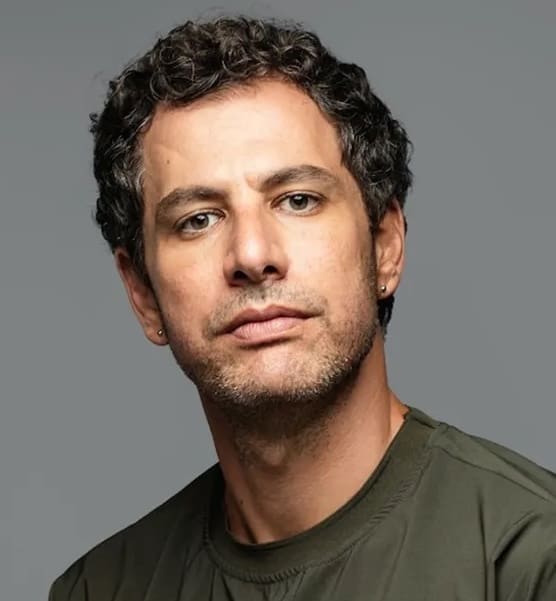
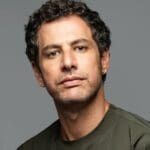
Tareq Baconi is a Palestinian writer, scholar, and activist. He previously served as Al-Shabaka’s US policy fellow and later as president of the board of directors. His work has appeared in The New York Times and The Baffler, among others. He also contributes essays to The New York Review of Books and the London Review of Books. He is the author of What Now: On Palestine, Freedom, and Our Global Future (2026), Hamas Contained: A History of Palestinian Resistance (2018), which was shortlisted for the Palestine Book Award, and Fire in Every Direction: A Memoir (2025).