- Topics
-
Topics
See our analysis on civil society and how it shapes culture, politics, and policies
Read our insights on the shifting political landscape and what it means for Palestine
Learn more about the policies and practices shaping the Palestinian economy
Strengthen your understanding of the unique conditions for Palestinian refugees across the Middle East
-
- Analysis
-
Analysis
In-depth analysis on existing or potential policies that impact possibilities for Palestinian liberation.
Insights and perspectives on social, political, and economic questions related to Palestine and Palestinians globally.
Concise analysis into a specific policy, its background and implications.
Commentary that brings together insights from multiple analysts.
Compilations of past Al-Shabaka works surrounding a specific theme.
Longer-form, ad hoc projects that seek to confront research questions outside the scope of our regular analysis.
A policy-driven research initiative by Al-Shabaka: The Palestinian Policy Network.
Our monthly webinar series that brings together Palestinian experts.
Featured
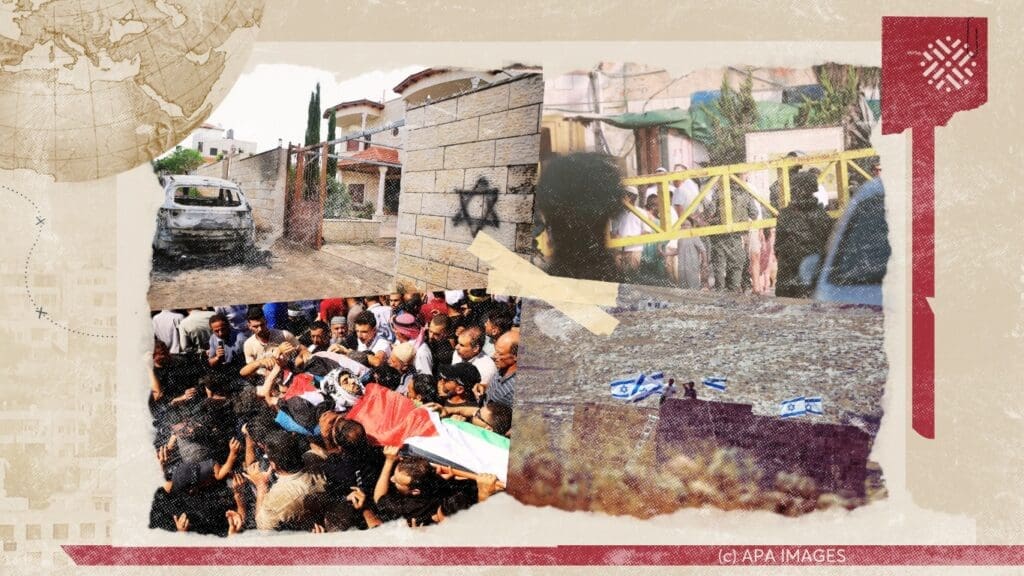
This Focus On engages with some of the most pressing aspects of this escalation in the West Bank since October 7, 2023. It features analyses by Al-Shabaka members and contributors that show how collective punishment of Palestinians has led to a collapse in access to food, healthcare, work, and education. The compilation also examines the Palestinian people’s resistance to the expansionist Israeli scorched-earth policy, and the political leadership’s complicity and failures. Al-Shabaka: The Palestinian Policy Network· Sep 23, 2026
 In this Policy Lab, Al-Shabaka analyst Amjad Iraqi joins host Tariq Kenney-Shawa to examine Israel’s electoral landscape, the limits of its so-called opposition camp, and what the election means for the future of the Palestinian struggle.
 Amjad Iraqi· Sep 22, 2026
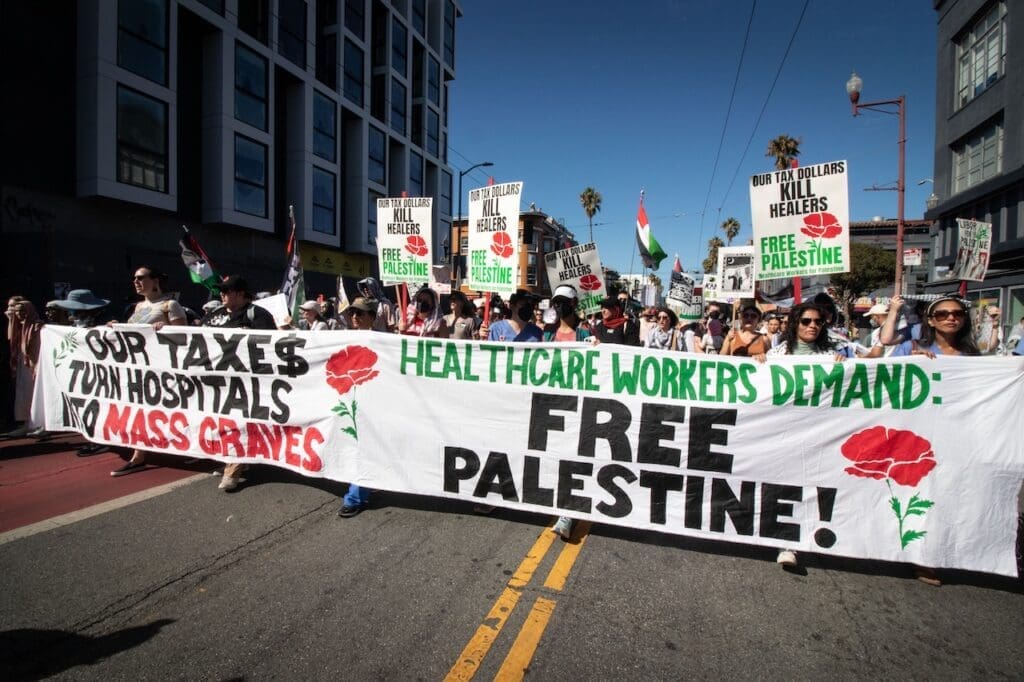
 This policy brief argues that the health sciences—from public health to epidemiology, nursing, medicine, pharmacology, and nutrition, among others—have a distinct role to play in preventing and documenting the ongoing Israeli genocide in Gaza and other settings, as well as in generating evidence to inform accountability processes.


 +
+
-
- Resources
- Media & Outreach
- The Network
What Forces Shape the Palestinians of Gaza?
We have conquered vast areas, massacring all the people […] Where can you flee? What road will you use to escape us? […] Our hearts as hard as the mountains […] We are not moved by tears nor touched by lamentations. Only those who beg our protection will be safe […] Resist and you will suffer the most terrible catastrophes. We will shatter your mosques and reveal the weakness of your God, and then we will kill your children and your old men together. At present you are the only enemy against whom we have to march.
Letter to Sultan Qutuz of Egypt from Hulagu, grandson of Genghis Khan.
Qutuz refused to surrender and reconciled with fellow Mamluk leader Baibars.
Together, they stopped the Mongol advance at the
famous Battle of ‘Ain Jalut near Nazareth, in September 1260.
In popular descriptions among Palestinians and other Arabs, Israel’s military assaults have often been compared to the Mongol wars, or the Tatars, where all destruction is permissible, and nothing is sacred. In Israel’s assault on Gaza during July-August 2014, those comparisons returned with a vengeance: Nothing remained untouched by Israel’s 21st century weapons, including historical sites, such as mosques and Gaza’s harbor.
There are other modern-day parallels to that 13th century Battle of ‘Ain Jalut that highlight both the strengths and the weaknesses that emerged during the 50-day Israeli war against the Palestinians of Gaza.
Parallels with the Past
The first parallel is that the Palestinian resistance groups in Gaza unanimously refused to consider disarming as part of the ceasefire negotiations, despite the horrific death and destruction they and the population were living through. This came on top of Israel’s almost complete siege on Gaza since 2007 and its previous assaults that Gaza’s population have endured this decade whose scars have yet to heal. The Palestinian toll was 2,131 killed, of whom 1,473 were civilians, and another 11,000 estimated injured, many seriously; nearly half a million people were displaced in an area half the size of New York City.
This remarkable stand was made possible by the unification of and cooperation among the Palestinian resistance factions that quickly emerged after the assault began, which pulled together Hamas, Islamic Jihad, Fatah, and the Popular Front for the Liberation of Palestine, among others. The unity among these factions was later translated politically into the joint demands delivered by the Palestinian negotiating team in Cairo to the Egyptian government acting as mediator.
Even more remarkable was that the small, deliberately impoverished, and besieged strip was able to deliver a humiliating blow to the Israeli army, rated as the 6th strongest army in the world. A far greater number of Israeli soldiers were killed in the July-August “Protective Edge” operation than in Israel’s previous operations: 66 soldiers (and six civilians) compared to 10 in the 2008-2009 “Cast Lead” operation and one in the 2012 “Pillar of Defense.” Of course, the scale of Palestinian death and destruction underscores the cynicism of the names Israel gives to its operations: Who in “Protective Edge” needed protection from whom?
The Gaza-based Palestinian resistance factions did not have the weaponry to inflict anything like the same level of destruction on Israel, but the war left its mark on the Israeli economy and will doubtless contribute to an out-migration from Israel that is now being openly promoted in song.
Furthermore, despite its far superior military strength, the Israeli government was unable to achieve a decisive victory against Gaza’s resistance movements, a weakness Israelis recognized in post-ceasefire polls. By contrast, support for Hamas and the other resistance groups has soared throughout the Occupied Palestinian Territory: In the wake of the assault, twice as many Palestinians (61%) said they would vote for Hamas leader Ismail Haniya as for Fatah leader Mahmoud Abbas.
The steadfast stand by the Palestinian resistance groups in Gaza is, however, undermined not only by the overall weakness of the Palestinian national movement within and outside historic Palestine, but also by the very limited response in the Arab world, itself greatly weakened and fragmented by internal conflict and division. The silence of Arab officialdom is all the more stark when compared to the outpouring of support for Gaza in the rest of the world and the outrage at the merciless assault on a people that had nowhere to flee because of the stringent siege maintained by Israel as well as Egypt.
The Recent Past of the Palestinians in Gaza
What forces shaped the people who have yet again stood against Israel’s military might despite the great costs entailed? The Palestinians of Gaza are shaped by the burdens and scars of their recent past. Today, the majority of the 1,701,437 Palestinian people living in Gaza are refugees who survived the brutal ethnic cleansing of Palestine in 1948. This first wave of displacement quadrupled the population of Gaza at the time to 270,000. Those registered as refugees with the United Nations Relief and Works Agency (UNRWA) as of June 2014 totaled 1,328,351. They hail from towns located in central and southern Palestine, such as Beersheba, Jaffa, Lydda, and villages like Al-Faluja, Al-Manshiyyeh, Salama, Hamama, and Al-Batani, among others. Almost half of the refugee population in Gaza prior to the recent Israeli invasion lived in one of the eight refugee camps run by UNRWA. Several generations have lived and died in these camps, while awaiting their right of return.
Between 1948 and 1967, Egypt administered Gaza as a temporary measure and granted the population living there refugee documents. The legal status of Gaza Palestinians holding documents issued by Egypt differs from that of Palestinians in the West Bank who obtained Jordanian citizenship following its annexation by Jordan in the early 1950s. Until 1967, especially after nationalist leader Gamal Abdel Nasser took power in Egypt, it was relatively easy to travel back and forth between Egypt and Gaza. Border crossings became more restrictive in the neoliberal period under Nasser’s successor, Anwar el-Sadat, and have remained tightly restricted to this day, throughout the regime of Hosni Mubarak, the brief presidency of Mohammed Morsi, and the present-day regime of Abdel Fattah el-Sisi.
The Palestinians of Gaza have suffered a history of brutality at Israel’s hands. To cite but one of the earliest attacks, during the 1956 Tripartite military aggression on Egypt by Israel, Britain, and France, Israel occupied Gaza until March 1957 and killed between 275 and 515 Gazans, many of whom were civilians, including dozens who were machine-gunned against a wall in Khan Younis.
The brutality continued after the Israeli occupation of Gaza, the West Bank, and other Arab territories in 1967. The late Israeli premier, Ariel Sharon, earned one of his nicknames, “The Bulldozer,” for the way he put down Palestinian resistance to occupation in Gaza (another nickname for Sharon was the “Butcher of Beirut,” which emerged during the 1982 invasion and its accompanying massacres.)
Since 1967, Israel has prohibited most of the Gaza Palestinians who had been visiting, studying, or working abroad from returning to their homes, families, and/or refugee camps in Gaza. It has also tightly controlled their ability to travel to and from the coastal enclave. Holders of Egyptian refugee documents have encountered discrimination in most countries, including in Arab countries. UNRWA has classified them as “ex-Gazans,” and those who ended up in countries like Jordan after major regional upheavals, such as the Iraqi invasion of Kuwait in 1990, are still denied many rights in the fields of employment, education, and social and health benefits, among others.
As stateless refugees, many Gaza Palestinians are stranded at borders. This happened, for example, in the mid-1990s when Libya expelled nearly half a million Egyptian workers as well as some 30,000 Palestinians to protest Israeli-Palestinian peace agreements. At that time, Egypt did not allow Palestinians from Gaza to cross its borders, and Libya did not allow them to return. And, of course, many remain displaced within Gaza itself in the wake of past Israeli attacks on Gaza.
At present, and since its siege of Gaza tightened following the Hamas victory in legislative elections in 2006, Israel continues to control Gaza’s skies, sea, and land borders, including the Rafah border crossing, which it controls indirectly through collaboration with Egypt. After the most recent ceasefire between Israel and the Palestinians was concluded in August, Israel has continued to attack, as in the past, fishermen at sea and farmers in the buffer border zone it has unilaterally declared within Gaza, which accounts for 17% of Gaza’s land mass.
Gaza 2014
The Palestinian resistance in Gaza in 2014 must be viewed in its larger regional context. It comes at a time when the Arab uprisings, which began with the promise of spring in 2011, have moved into a dreadful winter. Arab states such as Syria, Iraq, and Libya are being destroyed from within as violent, regressive groups overtake popular demands for reform. Western powers, including Israel, continue to fuel the ethnic and sectarian strife that is dismantling nation-states and shredding the modern map of the Middle East that they imposed in the early 20th century.
Whereas regional dynamics influence Palestinian politics, the reverse is also true. A clear and unified Palestinian strategy that encompasses different forms of resistance and strong national unity would have an effect on the Arab world. This would draw the focus of the struggle back to where it should be: against the United States-Israel axis as the real danger to the region and to Palestine as a central locus of struggle. The Palestine Liberation Organization / Palestinian Authority must definitively break with the Oslo Accords and end security collaboration with Israel. Now that almost all Palestinian factions have agreed to sign the Rome Statute and join the International Criminal Court, there is no excuse not to move ahead.
Will Gaza remain, in an echo of ‘Ain Jalut, “the only enemy” against whom Israel has to march, or will the battles of 2014 presage a new chapter of historical and strategic change? The immediate signals of the post-ceasefire period are not promising, with accusations flying between the authorities in Ramallah and Gaza and thus threatening the reconciliation agreement. But there is hope in the growing strength of Palestinian civil society and in the international solidarity movement, which remains focused on securing Palestinian self-determination in a way that fulfills freedom, justice, and equality.
Randa Farah
Randa Farah is Associate Professor in the Anthropology Department at the University of Western Ontario, where she has taught since 2001, and Adjunct Faculty at the Centre for Global Studies at Huron University College. She holds a PhD from the University of Toronto, where her doctoral research focused on memory and identity among Palestinian refugees in camps in Jordan in the context of the Oslo Accords. She has also conducted field research in camps for Western Saharan refugees in Algeria, and her comparative work on the two cases has been published in the Journal of Palestine Studies. She previously held positions as Visiting Fellow and Associate Researcher at the Refugee Studies Centre at the University of Oxford, and worked at CERMOC in Amman on a research project on Palestinian refugees and UNRWA.
Latest Analysis
Under Siege: The West Bank After October 7
Genocide and the Limits of Israeli Elections
Health Sciences and Genocide Prevention in Gaza and Beyond
We’re building a network for liberation.
As the only global Palestinian think tank, we’re working hard to respond to rapid developments affecting Palestinians, while remaining committed to shedding light on issues that may otherwise be overlooked.