




Parkland Institute's 29th Annual Fall Conference: Democracy Under Siege
Muhannad Ayyash: The Persistence of the Palestine Exception in Canadian Policy and Academic Discourse: What Does It Tell Us About Canadian Institutions?
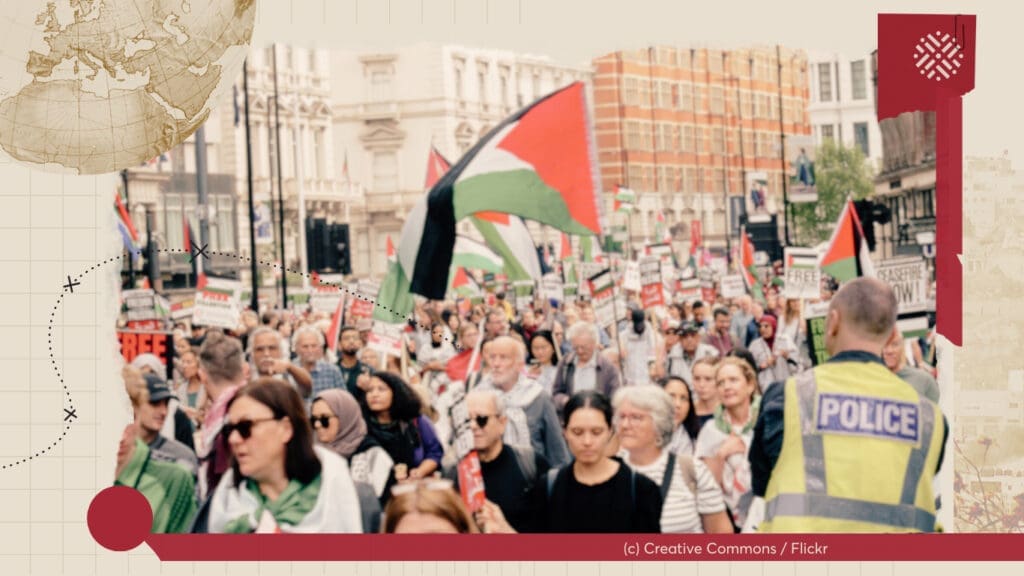
After 19 months of genocide in Gaza, massive demonstrations, student encampments, and a shift in public opinion towards support for Palestinian rights, Canadian institutions continue to render the Palestinian aspiration for decolonial liberation as unintelligible – as something that cannot enter valid and legitimate policy discourse. Ironically, the more Canadian institutions seek to conceal the settler colonization of Palestine, the more the colonial nature of reality is revealed— not just in Palestine, but in Canada as well. In that sense, the “Palestine Exception” reveals that Canadian institutions are not simply refusing to apply to Palestine what they apply to other cases of injustice (prioritizing human rights, anti-racism, decolonization, etc.), but rather that these institutions are structured in a way that is antithetical to the ideals of substantive anti-racism and decolonization.
Dr. Muhannad Ayyash was born and raised in Silwan, Al-Quds, before immigrating to Canada where he is a Professor of Sociology at Mount Royal University. He is also a policy analyst at Al-Shabaka: The Palestinian Policy Network. He is the author of Lordship and Liberation in Palestine-Israel (Columbia University Press, 2025) and A Hermeneutics of Violence (University of Toronto Press, 2019). He has published over twenty journal articles and book chapters on topics such as political violence, Zionism and colonial modernity, settler colonial sovereignty, anti-Palestinian racism, BDS and Palestinian decolonial movements in journals such as the European Journal of Social Theory, Critical Sociology, Journal of Palestine Studies, and Middle East Critique. He has co-edited two books, the most recent with Jeremy Wildeman is titled, Canada as a Settler Colony on the Question of Palestine (University of Alberta Press, 2023). He has written over fifty commentaries, policy analyses, and opinion pieces for Al-Jazeera, The Baffler, Middle East Eye, Mondoweiss, Arab Center, and Al-Shabaka, among others.
Corey Snelgrove: Alienated Labour and the Question of Palestine
The Palestinian solidarity movement has made implication and complicity keywords of our time. While these efforts draw attention to what we might call the bounds of freedom, they also illustrate how “Palestine has the potential to set us free” (Erakat 2024). In this talk, I offer some reflections on the connections between implication and alienated labor and what this might mean for the academic sector. More specifically, I argue that implication requires a move beyond the limitations of non-interference vis-à-vis the discourse of ‘academic freedom’ to a more expansive concept of democratic control. To end our implication in the colonization of Palestine would then necessitate the expansion of democratic control. This is just one instance of what I take Erakat to mean when she states “Palestine has the potential to set us free”.
Corey Snelgrove is an Assistant Professor in the Department of Political Science at the University of Alberta. He teaches and writes on questions of settler colonialism and decolonization in Canada. His writing is published or forthcoming in journals such as Theory & Event, Philosophy & Social Criticism, Legal Form, Polity, and Native American and Indigenous Studies, where he addresses questions such as: How might non-Indigenous political theorists inherit treaty today? What explains the emergence of reconciliation? What political lessons does this history offer for the critique of reconciliation? How do Indigenous treaty visions challenge the premise of capitalist social relations? What might communism mean on stolen land? His book manuscript aspires to change the framing question of Indigenous-state/settler relations in Canada away from the “political form” of co-existence to the “social form” of co-existence.
Featured Speaker
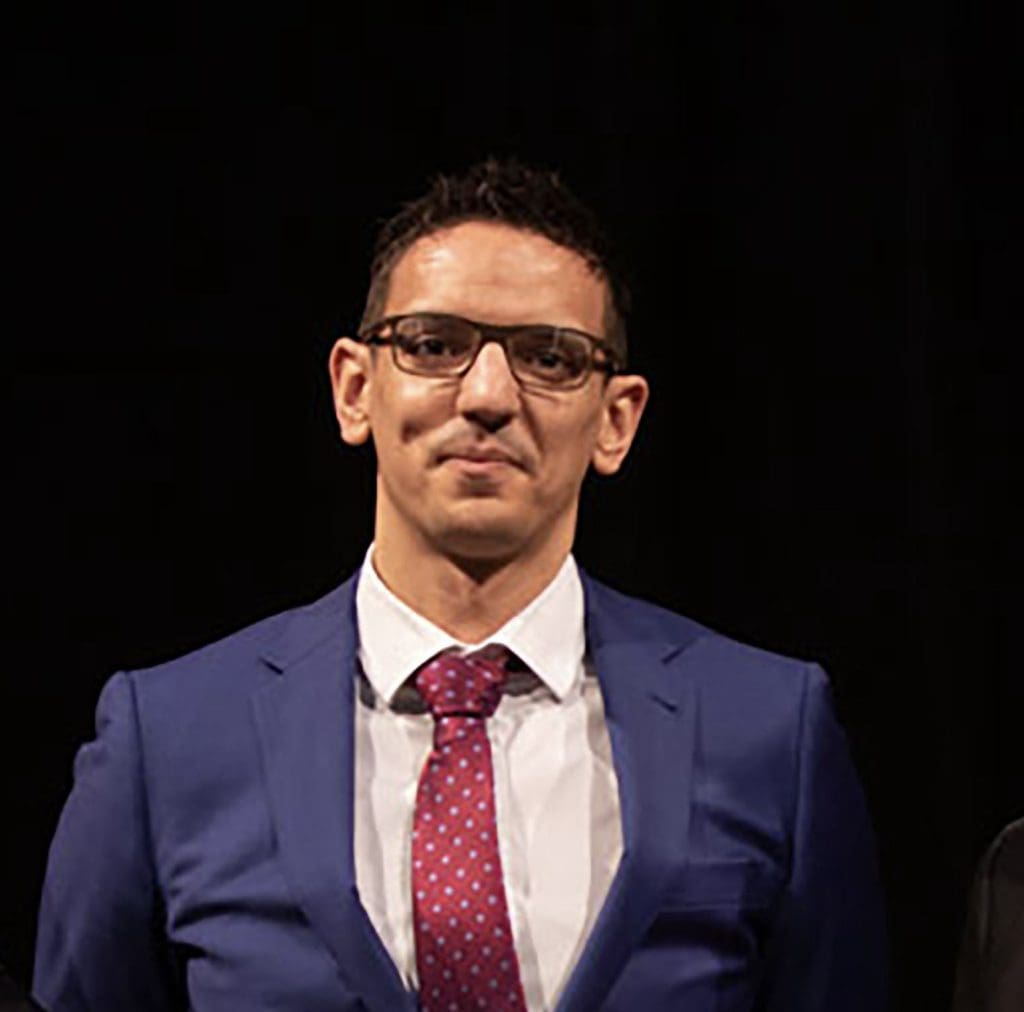
M. Muhannad Ayyash was born and raised in Silwan, Al-Quds, before immigrating to Canada, where he is now Professor of Sociology at Mount Royal University. He is the author of A Hermeneutics of Violence (UTP, 2019). He has published several articles in journals such as Interventions, the European Journal of International Relations, Comparative Studies of South Asia, Africa and the Middle East, and the European Journal of Social Theory. He has written opinion pieces for Al-Jazeera, The Baffler, Middle East Eye, Mondoweiss, The Breach, and Middle East Monitor. He is currently writing a book on settler colonial sovereignty in Palestine/Israel.
when
Friday, Nov 21, 2025
2025-11-21