


policy lab image feb 2026 copy

After more than two years of ongoing genocide in Gaza, many have pronounced the so-called “rules-based world order” dead. Gaza marks the first genocide to be livestreamed for the world to witness, enabled by individuals, corporations, and governments across the globe. Yet, if international law, the United Nations, and international courts alike failed to avert Gaza’s genocide, we must ask whether such an order ever meaningfully existed to begin with. And now, as the US—once the self-proclaimed leader of this liberal paradigm—casts it aside in favor of more overt mechanisms of power projection, another pressing question emerges: What kind of world order is taking shape in its wake?

Noura Erakat and Jake Romm joined us for a policy lab episode on how Gaza helped shatter the old status quo and what that break reveals about the world being built in its wake.
Tariq Kenney-Shawa is Al-Shabaka’s US Policy Fellow and co-host of Al-Shabaka’s Policy Lab series. He holds a Masters degree in International Affairs from Columbia University. Tariq’s research and writing have covered a range of topics, from the role of open-source intelligence in exposing Israel’s war crimes to analysis of Palestinian liberation tactics. His writing has appeared in The Los Angeles Times, Foreign Policy, and The Nation, among others. Follow Tariq on Twitter @tksshawa and visit his website at https://www.tkshawa.com/ for more of his writing and photography.
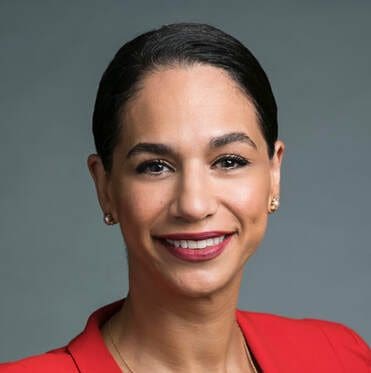
Noura Erakat is an assistant professor at George Mason University where she teaches in the legal studies, international studies, and human rights/social justice studies concentrations. An attorney and human rights advocate, she previously served as Legal Counsel for a Congressional Subcommittee in the House of Representatives and as an advisor on Middle East affairs for Congressman Dennis Kucinich. Noura comments regularly on US foreign policy and international law matters. She has appeared on Al Jazeera International, NBC’s “Politically Incorrect,” and Fox’s “The O’Reilly Factor.” Her writings have appeared in The Huffington Post, Berkeley Law School’s Journal for Middle East and Islamic Law, Counterpunch, Al-Majdal, and the Middle East Research and Information Project (MERIP).

With: Jake Romm
In this article

Latest Analysis

 Civil Society
On November 4, 2025, the UK government tabled an amendment to the Crime and Policing Bill to curtail protest rights under the pretext of “cumulative disruption.” The revised Bill is now in the House of Lords Committee, where it is scrutinized before advancing toward final approval. The amendment signals a profound shift in how the state regulates public protest. While the government presents the Bill as a neutral public order measure, it emerges directly from sustained national demonstrations for Palestinian rights and introduces new legal concepts that threaten long-established democratic freedoms. This roundtable examines the Bill’s political drivers, legal architecture, and wider implications for social movements and civil liberties in the UK. It shows that the amendment is not simply a public order measure; it is a coordinated political and legal project to narrow the space for dissent in the UK. While Palestinian solidarity is the immediate target of the crackdown on freedom of assembly, the roundtable argues that the consequences will reverberate across labor organizing, racial justice, climate activism, and broader democratic participation.
 Politics
“We’re all going to end up in Jordan,” remarked a young man from Al-Jiftlik, a Palestinian village in the Jordan Valley. His comment reflects growing despair in the West Bank countryside, where Israeli settler-colonial expansion has intensified to unprecedented levels. This is particularly true in the Jordan Valley, the agricultural heartland along the West Bank’s eastern frontier with Jordan. Once known among Palestinians as the “bride of the Jordan Valley,” Al-Jiftlik now illustrates the gravity of Israeli state-sponsored settler expansion on Palestinian land, having transformed from a prosperous agricultural community into one under siege and facing sustained displacement pressure. Since the beginning of Israel’s genocidal war on Gaza in October 2023, land seizure in the West Bank has shifted from creeping settler encroachment to a vicious military-backed campaign of territorial theft. This commentary shows how the Israeli regime’s land appropriation policy in the West Bank, once justified through bureaucratic-legal land seizure orders, has now increasingly shifted toward direct settler takeovers. This shift does not indicate a change in objectives but rather an escalation of existing settlement expansion mechanisms, signaling the growing power and influence of the settler movement over Israeli policy.
Al-Shabaka Fathi Nimer
Fathi Nimer· Feb 3, 2026
 Politics
The announcement of the National Committee for the Administration of Gaza (NCAG), a 15-member technocratic body chaired by Ali Shaath, signals a shift toward depoliticized governance in Gaza amid ongoing genocide. Shaath, a Palestinian civil engineer and former deputy minister of planning and international cooperation, will lead an interim governing structure tasked with managing reconstruction and service provision under external oversight. While presented as a neutral technocratic governing structure, the NCAG is more likely to function as a managerial apparatus that stabilizes conditions that enable genocide rather than challenging them. This policy memo argues that technocratic governance in Gaza—particularly under US oversight, given its role as a co-perpetrator in the genocide—should be understood not as a pathway to recovery or sovereignty, but as part of a broader strategy of genocide management.
Al-Shabaka Yara Hawari
Yara Hawari· Jan 26, 2026