



Hashem Abushama
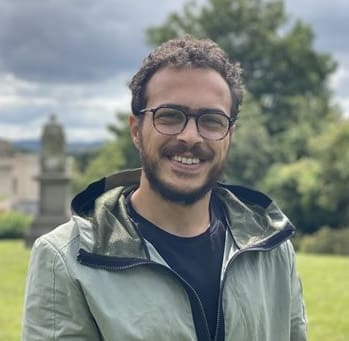
Hashem Abushama graduated from Earlham College with a BA in Peace and Global Studies. In 2015, Abushama became a Youth Representative of Palestine Refugees at the United Nations. He was appointed as a Youth Ambassador to the UNRWA@65 Conference in the United Nations Headquarters in New York. At Earlham, Abushama served as the President of the Earlham Student Body. Recently, he has been selected as one of first two Rhodes Scholars from Palestine. While at the University of Oxford, Abushama hopes to pursue his graduate studies in International Development with a particular focus on Refugee and Forced Migration Studies.
Hazem Jamjoum
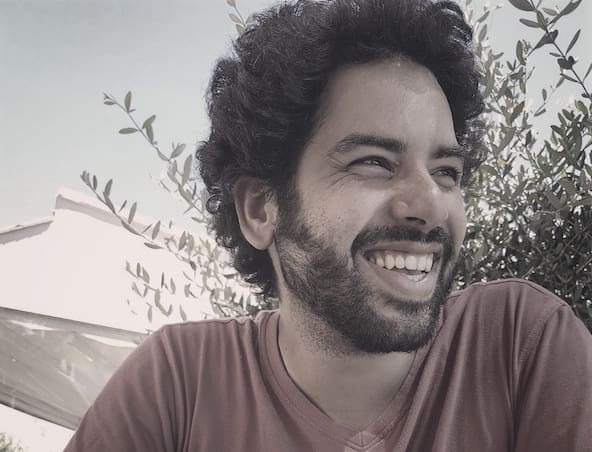
Al-Shabaka Policy Member Hazem Jamjoum is a graduate student in Modern Middle East History at New York University. His writing has focused on political-economy approaches to Israeli colonialism and Palestinian elite formation, and critiques of partition-based conflict management “solutions,” among other areas.
Hala Turjman
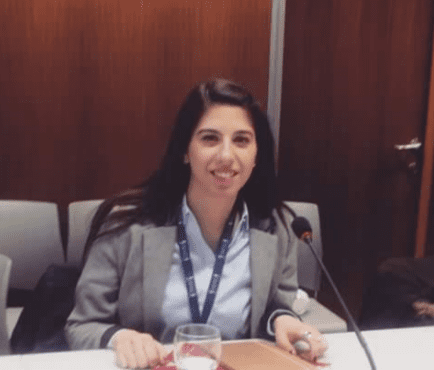
Al-Shabaka Policy Member Hala Turjman holds a BA in Political Science from Birzeit University and Sciences Po Rennes, and an MA degree in EU International Relations and Diplomacy Studies from the College of Europe, specialized in Security and Justice. Her dissertation was a critique of EU development aid policy, gender mainstreaming and the implementation of UNSCR 1325 in Palestine. Hala was a Schuman Fellow at the European Parliament in the Middle East Unit. She is currently a researcher at the European Institute of Peace, focusing on situations of conflict in the MENA region, mainly in Syria and Libya. In past years Hala has also taken part in a number of grassroots campaigns and community initiatives in Palestine.
Dina Matar
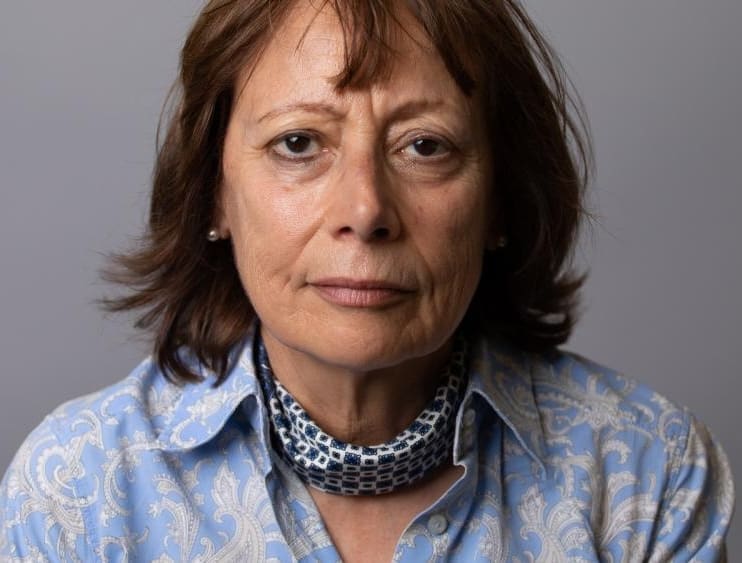
Al-Shabaka Policy Member Dina Matar is senior lecturer in political communication at the Centre for Film and Media Studies at the School of Oriental and African Studies. She works on the relationship between culture, communication and politics, with a special focus on Palestine, Lebanon and Syria. She is the author of “What it Means to be Palestinian: Stories of Palestinian Peoplehood” (Tauris, 2010); co-editor of “Narrating Conflict in the Middle East: Discourse, Image and Communication Practices in Palestine and Lebanon” (Taruis, 2013) and co-author of “The Hizbullah Phenomenon: Politics and Communication” (Hurst, 2014). Matar is also co-founding editor of the “The Middle East Journal of Culture and Communication.”
Dena Qaddumi
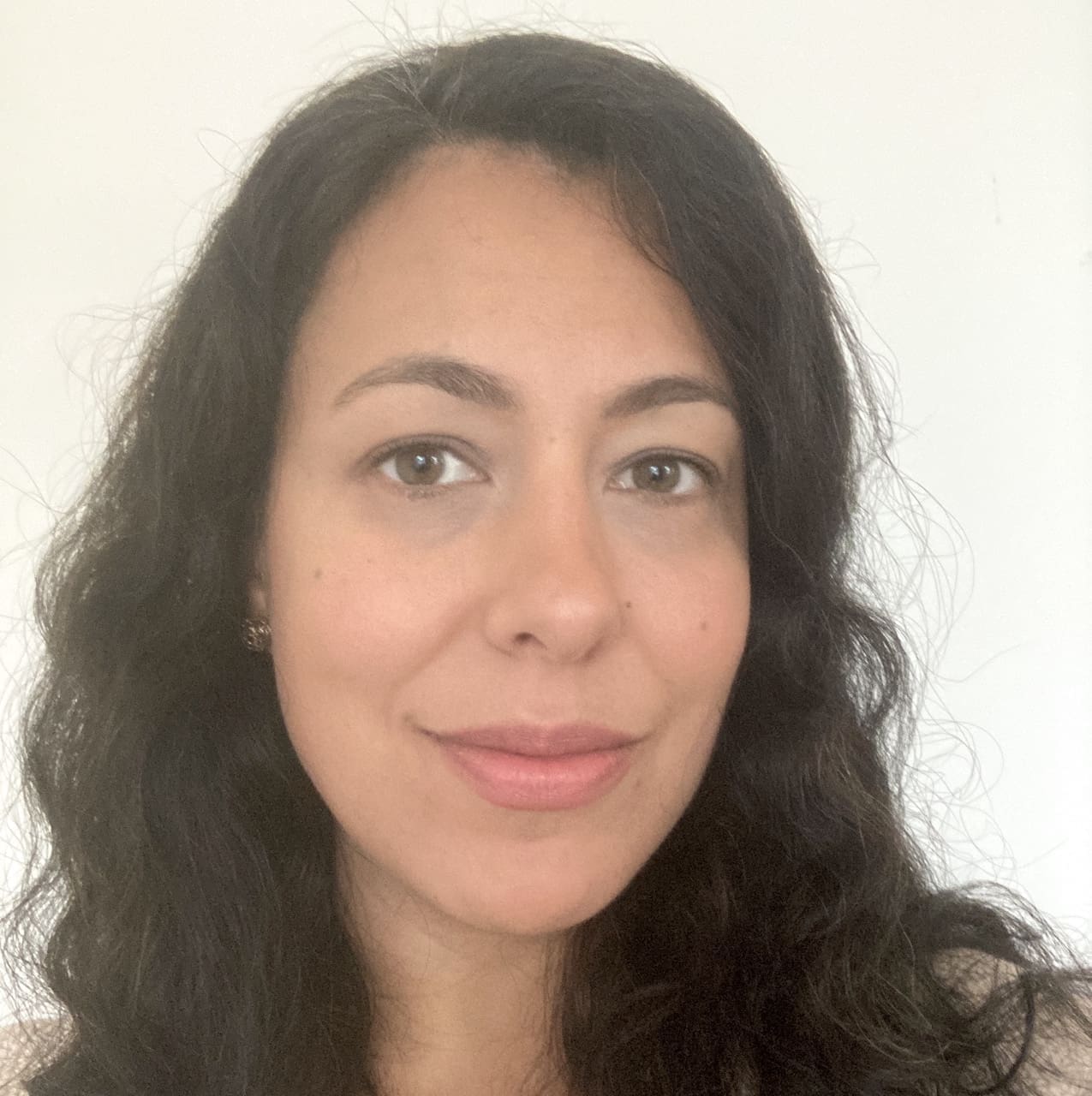
Dena Qaddumi is an architect and urbanist currently based in Doha. Her research interests are primarily concerned with how social movements engage with urban space and how this process creates new avenues for citizenship formation.
Caroline Abu Sa’Da
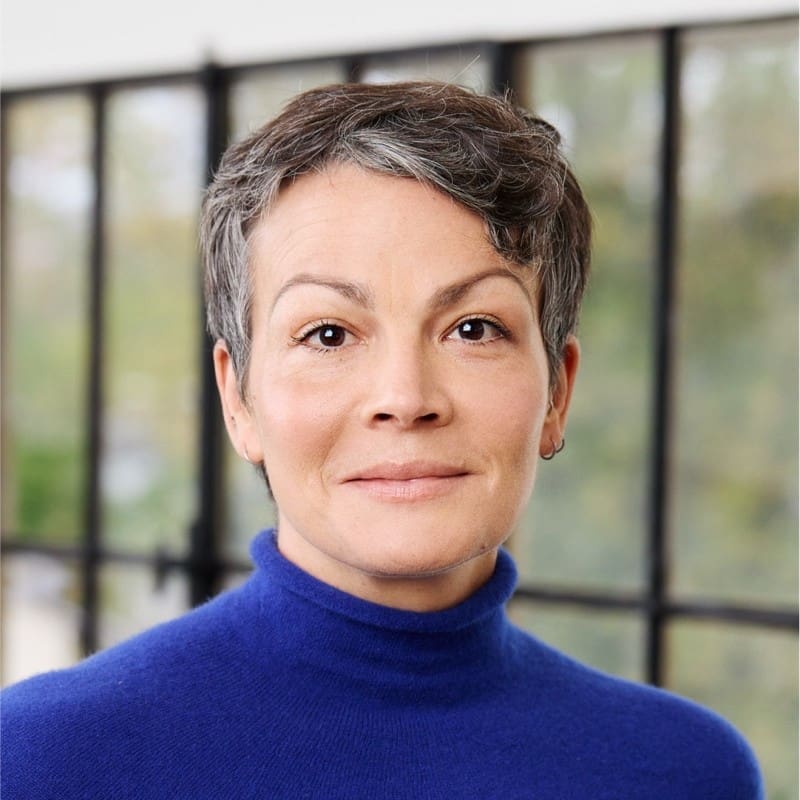
Caroline Abu-Sada is Director of the Research Unit of Medecins Sans Frontieres Switzerland, and an Honorary Lecturer at the Humanitarian and Conflict Response Institute (HCRI), University of Manchester. She has worked on food security, agriculture and health issues, and coordinated programs in the Middle East for Oxfam GB, the United Nations and MSF Switzerland. Dr Abu-Sada works include “ONG palestiniennes et construction étatique, l’expérience de Palestinian Agricultural Relief Committees (PARC) dans les Territoires occupés palestiniens, 1983- 2005”, IFPO, Beirut, 2005; and “Dilemmas, Challenges, and Ethics of Humanitarian Action”, Mc Gill-Queen’s University Press, 2012. She has taught political science at New York University, Paris and at Sciences Po, Lille.
Cecilia Baeza
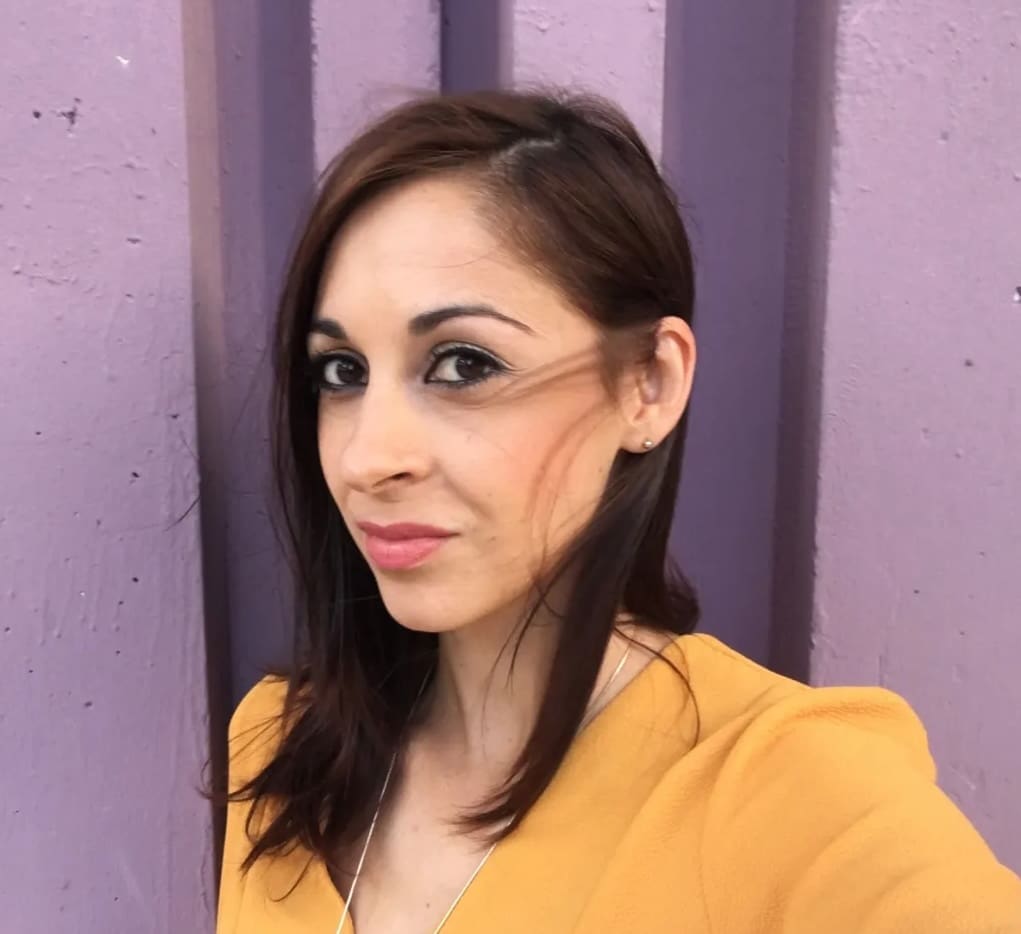
Cecilia Baeza is lecturer at the Getulio Vargas Foundation in São Paulo, Brazil. She is co-founder of RIMAAL, a network of researchers on the links between Latin America and the Middle East. She holds a doctorate in international relations from Sciences Po-Paris.
Alaa Tartir
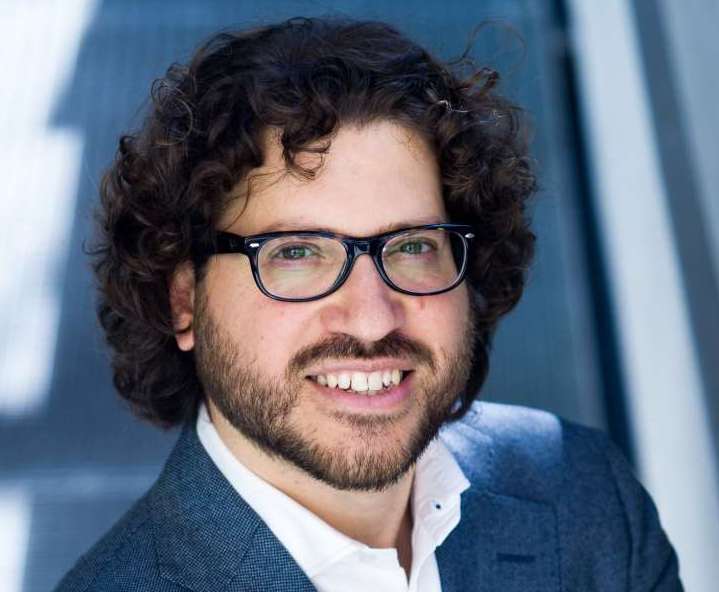
Alaa Tartir is Al-Shabaka’s program and policy advisor. He is a senior researcher and director of the Middle East and North Africa Programme at Stockholm International Peace Research Institute, as well as a research associate and academic coordinator at the Geneva Graduate Institute, global fellow at the Peace Research Institute Oslo, and governing board member of the Arab Reform Initiative. Alaa holds a PhD from the London School of Economics and Political Science and is co-editor of Resisting Domination in Palestine: Mechanisms and Techniques of Control, Coloniality and Settler Colonialism (2023), Political Economy of Palestine: Critical, Interdisciplinary, and Decolonial Perspectives (2021) and Palestine and Rule of Power: Local Dissent vs. International Governance (2019). He can be followed on Twitter (@alaatartir), and his publications can be accessed at www.alaatartir.com.
Ali Abdel-Wahab
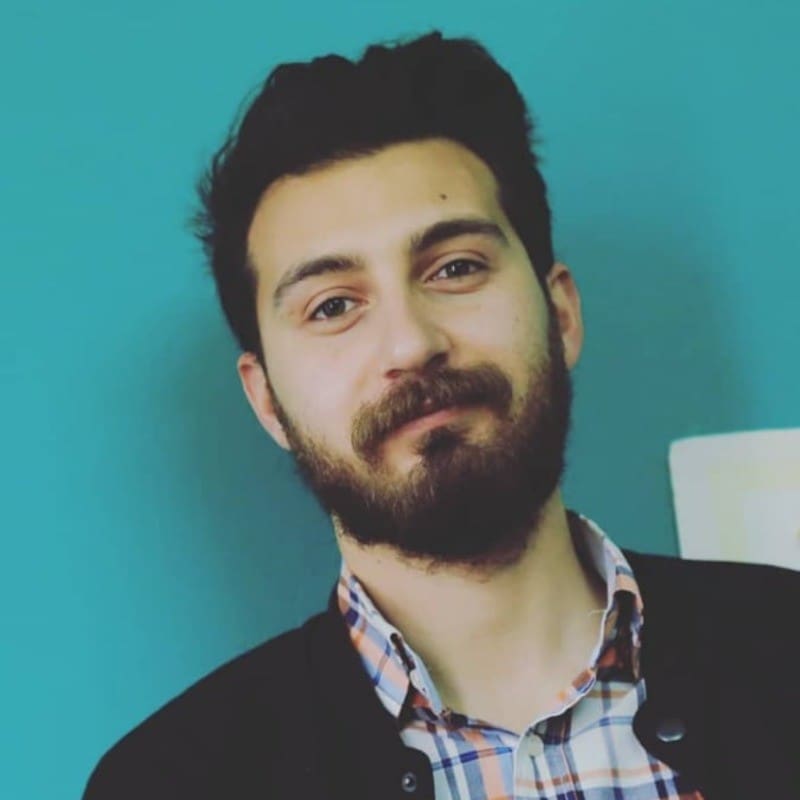
Ali Abdel-Wahab works as a data analyst and evaluation and follow-up assistant at the Tamer Institute for Community Education in Gaza. He holds a Bachelor’s degree in Computer Science, and is interested in the world of data, big data, and computer social sciences. He has worked as a research assistant in several Palestinian and European institutes and has written several articles and scientific papers. He is also a member of the political youth forum in Gaza’s Masarat Center. His research focuses on issues of political economy, digital transformation, and the social network, with particular focus on Palestine.