
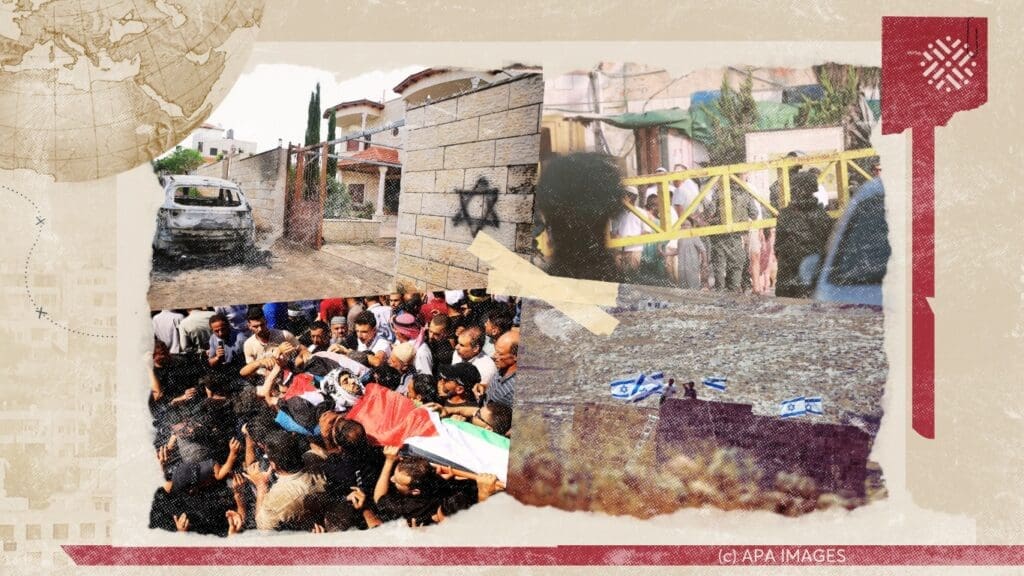



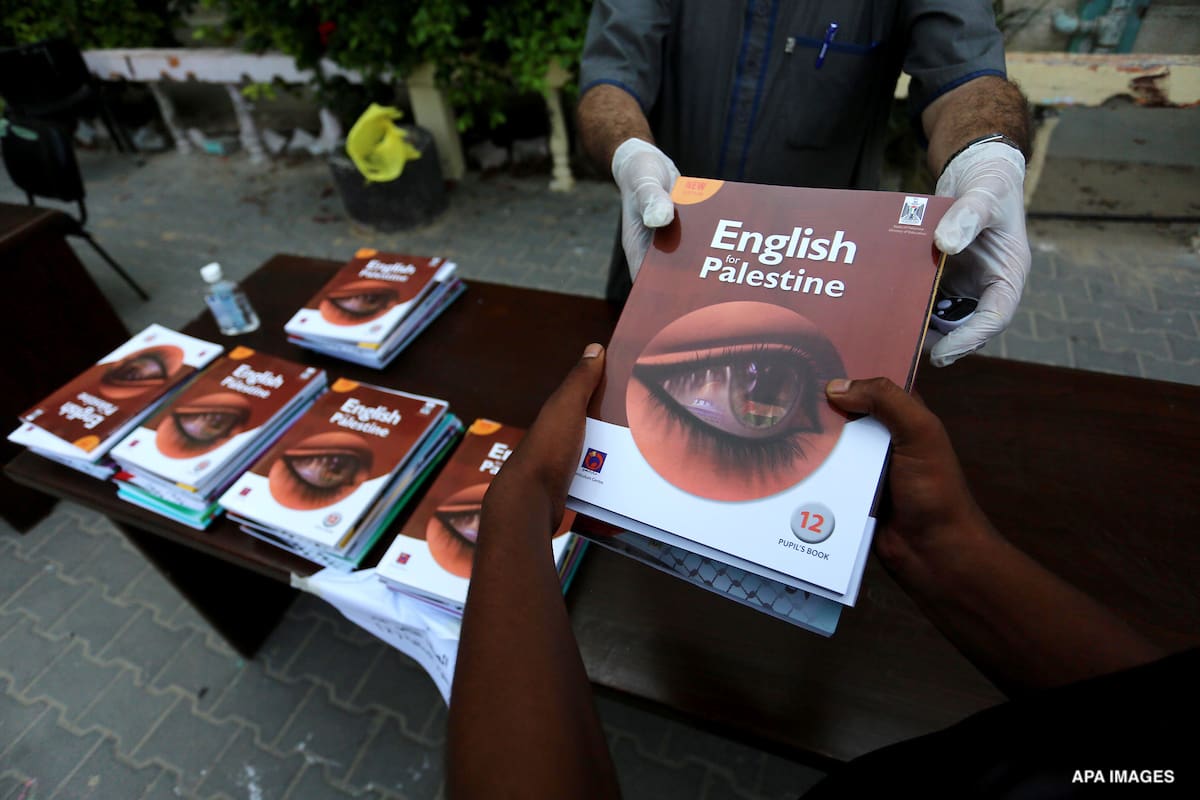
Educational spaces are uniquely qualified to play a role in promoting political organization and resistance, or in thwarting political and social movements. They possess the potential to bridge class and ideological divides between students of different backgrounds, as public education ensures that they receive the same knowledge and equal learning opportunities. This feature is crucial to popular mobilization and activism, in which stark class differences and the unequal distribution of resources weaken the impact of any uprising. It is not surprising that Israel intensifies Palestinian class and ideological differences to thwart popular activism.
This section discusses the implications of a Palestinian popular uprising for the education sector.
Funding
Funding for Palestinian education systems is affected by location and the authority to which their respective institutions report, whether the Palestinian Authortiy (PA), the Israeli Ministry of Education, UNRWA, Islamic awqaf, or the private sector, among others. In the event of a popular uprising, funding for Palestinian education would be severely affected, regardless of location and authority. An uprising would dominate governmental (PA) and non-governmental (UNRWA) funding priorities, with more PA spending on the security sector and increased UNRWA spending on relief and employment, both at the expense of the education sector.
However, if the popular uprising does not bring about significant change to the status quo, funding for education would likely increase in its aftermath. This is because popular uprisings create opportunities for stakeholders to invest in restoring the status quo. For example, the First Intifada was followed by the Oslo Accords and the “peace process” that introduced the discourse of state-building, which necessitated building educational institutions. Funding education has always been a safe option for the donor community, and is an expression of the desire to maintain the state of calm, or the status quo.
Quality
Achieving quality education and linking it to the political, social, and economic future of Palestinians requires a clear political vision that overcomes political and geographic fragmentation. In the event of popular mobilization and uprising, the lack of these elements would mean that quality of education would be sacrificed.
However, quality must be understood differently in the context of revolutionary uprising. Indeed, equipping revolutionaries with the political and strategic skills and tools needed to confront settler-colonial oppressors — skills and tools that align with a larger vision for liberation — is quality education. For instance, during the First Intifada, many Palestinian educators organized popular education initiatives in their homes and community spaces in a decentralized, spontaneous, and voluntary manner following the Israeli regime’s closure of schools and universities. Unsurprisingly, Israeli military authorities criminalized these initiatives and imposed penalties and fines on those organizing lessons and sessions.
Popular education is characterized by its ability to build student knowledge and skills that reflect the national struggle in a non-hierarchical and decentralized fashion. This makes knowledge the property of all teachers and students, transcending bureaucracy, rigidity, and standardization of content and methods. Such knowledge is also based on the personal experiences of students and teachers alike. However, in the absence of resources to support it, it is difficult to predict whether such popular education would succeed in the long term should a new intifada erupt.
Infrastructure
The existing educational infrastructure would likely persist during a popular movement, considering the difficulty of dismantling and rebuilding educational structures, and their need for sizable financial and human resources. Indeed, the Israeli regime maintained the public education structures it inherited from the Jordanian and Egyptian administrations following 1967. And in 1994, the PA built upon the pre-Oslo Accords education system. It is worth noting that the state of popular confrontation is not conducive to undermining existing structures, but rather prepares the ground for new structures and visions.
Despite the relative stability of these structures during times of instability, the opportunity may arise for forming teacher unions to advocate for better conditions and rights. These unions are important because of their broad worker base and, therefore, their ability to influence educational and political decision-making. They can also make demands to bring educational methods in line with public sentiment. The opportunity may also arise for building a national student movement, not only within universities, but among youth more broadly. The longer the state of confrontation persists, the more power this movement would have to influence political discourse.
Content (Curricula)
Amending curricula is relatively easier than changing educational infrastructure. Indeed, educators can use existing educational spaces to introduce new curricula that convey liberationist and revolutionary political visions to students and workers. For example, Arabic language, geography, and history textbooks could be brought to focus on popular and national literature and political history in a way that establishes emancipatory knowledge. However, to do so, the political moment would need to spur the masses to act in a decentralized yet coordinated manner outside the authority of an educational administration. In this context, teachers could assume leadership roles consistent with the political visions of the popular movement.
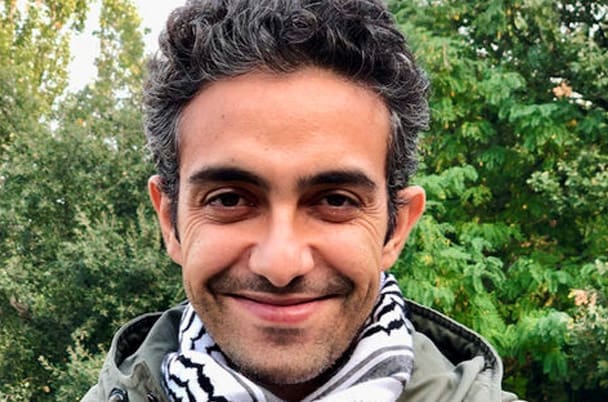
Mohammed Alruzzi is a Lecturer in Childhood Studies at the University of Bristol, the UK. He earned his PhD in Social Anthropology from the University of Fribourg, Switzerland. Before that, he completed his Master’s degree in Childhood Studies at the University of Edinburgh, Scotland, UK. Alruzzi has worked with many international non-governmental organisations and UN agencies, including Mercy Corps, Terre des Hommes, the Norwegian Refugee Council, World Vision and UNICEF. Through his work experience, Mohammed has developed extensive multidisciplinary expertise in children issues. His research interests include child labour, child detention and education policy.