



Collapse of the PA: Society

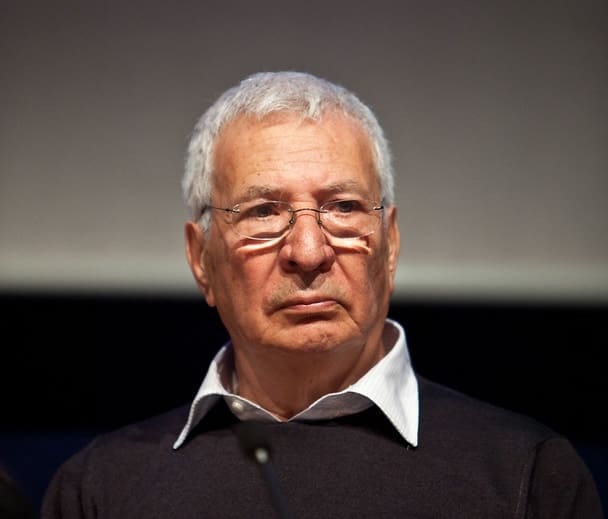
Jamil Hilal is an independent Palestinian sociologist and writer, and has published many books and numerous articles on Palestinian society, the Arab-Israeli Conflict, and Middle East issues.  Hilal has held, and holds, associate senior research fellowship at a number of Palestinian research institutions.  His recent publications include works on poverty, Palestinian political parties, and the political system after Oslo.  He edited Where Now for Palestine: The Demise of the Two-State Solution (Z Books, 2007), and with Ilan Pappe edited Across the Wall (I.B. Tauris, 2010).

Any new uprising must reflect the range of Palestinian experiences and needs in the formulation of resistance strategies, so long as they uphold the values of freedom, equality, social justice, and human rights. It would also need to be open to interacting with the national, regional, and international spheres. Further analysis on this intersection is not available at this time.
Latest Analysis

 Civil Society
In February 2021, Defense for Children International–Palestine (DCIP) reported that Israeli interrogators had raped a 15-year-old Palestinian boy in detention. Rather than investigate the allegation, Israeli forces raided DCIP’s offices and later designated it—along with five other Palestinian human rights groups—as a “terrorist organization.” While such abuses and crackdowns are not new, this moment marked a decisive escalation: the shift from harassment of Palestinian civil society to its outright criminalization with the full support and participation of the US. In 2025, the Trump administration designated six Palestinian organizations under counterterrorism frameworks before advancing even further, sanctioning leading human rights groups for engaging with the International Criminal Court. These measures move beyond targeting individual actors to undermining the very infrastructure of international accountability. This policy brief argues that the campaign by the US and the Israeli regime against Palestinian civil society and international law carries global consequences, threatening mechanisms designed to hold state violence in check. It concludes with recommendations for how Palestinian organizations and their allies can adapt, defend themselves, and pursue justice in an increasingly hostile environment.
Al-Shabaka Tariq Kenney-Shawa
Tariq Kenney-Shawa· Mar 31, 2026
 Politics
As the US and Israel escalate their assault on Iran, the Israeli regime has been constructing a war economy to sustain prolonged military campaigns while evading accountability. In September 2025, Prime Minister Benjamin Netanyahu urged Israelis to transform the country into a “Super Sparta” of the Middle East—more militarized, economically self-reliant, and capable of sustaining protracted conflict despite mounting external pressure. This policy brief argues that this rhetoric reflects an emerging doctrine: a political-economic project structured around permanent national mobilization, preventative warfare, and accelerated defense-industrial expansion. Yet the Israeli regime’s shift toward self-reliance is not producing full autarky. Instead, the war economy is consolidating into a hybrid model that combines domestic substitution in critical defense sectors with deeper integration into transnational supply networks, thereby dispersing sanctions risk. This configuration blunts the impact of conventional accountability tools, such as fragmented or weakly enforced arms embargoes. As a result, effective international responses must move beyond traditional sanctions frameworks and instead target the material infrastructure and dependency nodes that sustain Israel’s war economy.
Ahmed Alqarout· Mar 11, 2026
 Politics
Noura Erakat and Jake Romm joined us for a policy lab episode on how Gaza helped shatter the old status quo and what that break reveals about the world being built in its wake.