


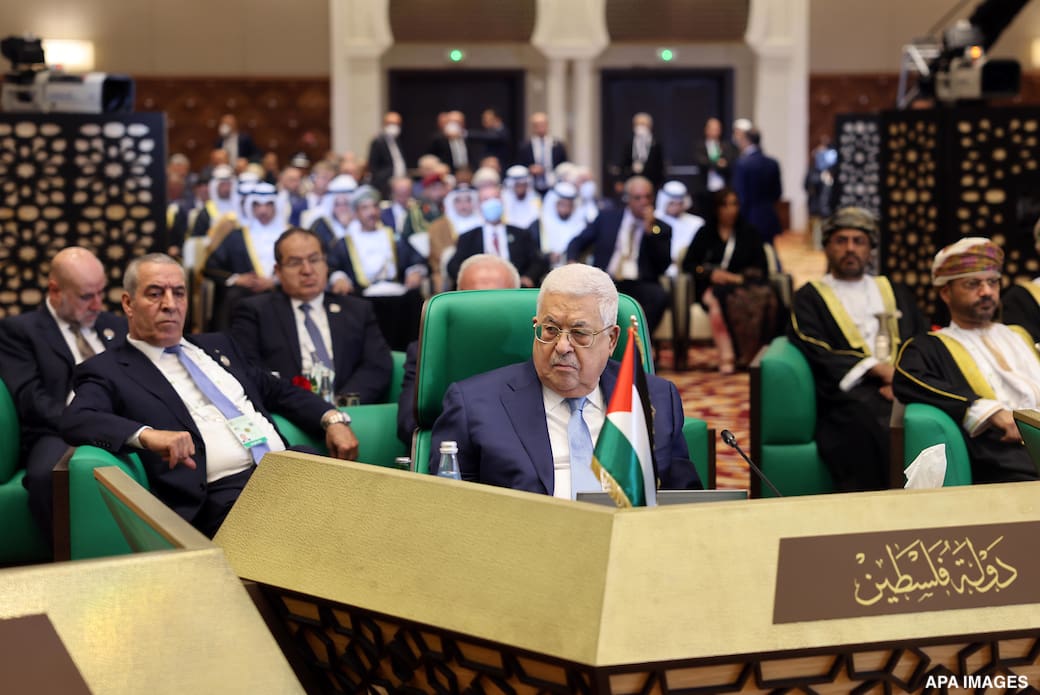
After the establishment of the Palestinian Authority (PA), the Palestine Liberation Organization’s (PLO) political role receded. The PA gradually assumed the PLO’s role in negotiating and communicating with external parties, with the PLO Ministry of International Cooperation transformed into the Ministry of Foreign Affairs, and the PLO political bureau becoming irrelevant. The remaining PLO functions were marginalized as PA and PLO leadership no longer pointed toward liberation, which had been the PLO’s goal since its inception, and began instead to point toward statehood.
This decades-long marginalization of the PLO has not troubled most Palestinian factions. Indeed, Hamas and Islamic Jihad do not view the PLO as representative of all Palestinians, and though they oppose the PA, they do not consider the revival of the PLO as a solution. Meanwhile, the PLO’s marginalization has not been a threat to Fatah since the movement also leads the PA. Left-wing movements have been too weak to have a say, and some have simply chosen to follow Fatah’s lead.
Still, between 2006 and 2022, several developments took place that rekindled the goal of reviving the PLO. The most notable development was the post-2006 change in Hamas’s position toward the PLO — namely, the movement’s acceptance of a reformed PLO as the sole legitimate representative of the Palestinian people. This indicated Hamas’s awareness of the PLO’s significance and international recognition, as well as the organization’s need for reform. Hamas’s 2017 political manifesto stated that it would retract its charter’s insistence on the Islamization of the PLO as a precondition for obtaining its recognition. According to the manifesto, the PLO need only be rebuilt on democratic foundations to be recognized by Hamas.
The change in Hamas’s position, which was mirrored by Islamic Jihad, was accompanied by a growing conviction that the political settlement had failed to reach a two-state solution acceptable to Palestinians. As such, the PA and PLO failed in the quest for statehood, and also had records of corruption and human rights violations that eroded Palestinians’ confidence in them, especially the PA. Indeed, many Palestinians became convinced that building a state under occupation is impossible, and that the national effort should focus on liberation from Zionist settler colonialism. Accordingly, efforts to restore the PLO would receive popular support, provided that Fatah does not insist on following the same political approach of demanding statehood within the 1967 borders, a territory that is continually shrinking due to Israeli annexation, expansion, and de-Palestinization.
In addition, the Palestinian factions that remain outside the PLO are gradually gaining strength – especially Hamas, which has garnered popular support after every confrontation with Israeli occupation forces, particularly since the 2021 Saif al-Quds (Sword of Jerusalem) battle, which showed a qualitative development in Palestinian resistance. This gave Hamas the leverage to demand membership within and reform of the PLO, and to claim that the PLO without itself and Islamic Jihad is only a “political salon.” This discourse would not have surfaced had it not been for Hamas’s recognition of Palestinian public support for resistance, as well as its rejection of PA policies at the levels of politics, security, and, more recently, healthcare during the COVID-19 pandemic.
Theoretically, no Palestinian movement, including Fatah, has ever rejected the demand to reform the PLO. However, the word “reform” is open to factional interpretation, which could obstruct any meaningful change. Fatah views the reform of the PLO merely as the formation of a new national council and the revival of certain PLO institutions, without retracting the agreements signed with the Israeli regime and without exploring new paths for all Palestinians. Hamas, on the other hand, believes that reforming the PLO requires rebuilding its institutions and rewriting its political manifesto. Thus, while political adversaries have agreed upon the need to reform the PLO, the interpretation of reform is a point of contention and, indeed, a serious obstacle.
Another obstacle is the varying conditions of Palestinians across the globe. Palestinians in the lands occupied in 1948 and 1967, and in the diaspora, are subject to different authorities, none of which would allow for free and fair elections of a national council. Even if Palestinians were successful in holding elections in one place, polls would still fail in many other locations. The difficulty in holding elections could prolong the interim leadership framework, which has little control over decision-making when compared to the president.
However, these obstacles do not preclude the development of a more unified vision for reforming the PLO. Al-Shabaka, for instance, published a lengthy study on reclaiming the PLO, with detailed recommendations on how to overcome the inability to hold general elections for the Palestinian National Council by naming representatives of Palestinian communities. To overcome disagreement on the platform, the study suggests beginning by forming the council using all available measures that are in line with democratic values. The new council would then review all agreements signed by the PLO, embark on formulating a new national strategy, and restore PLO institutions.
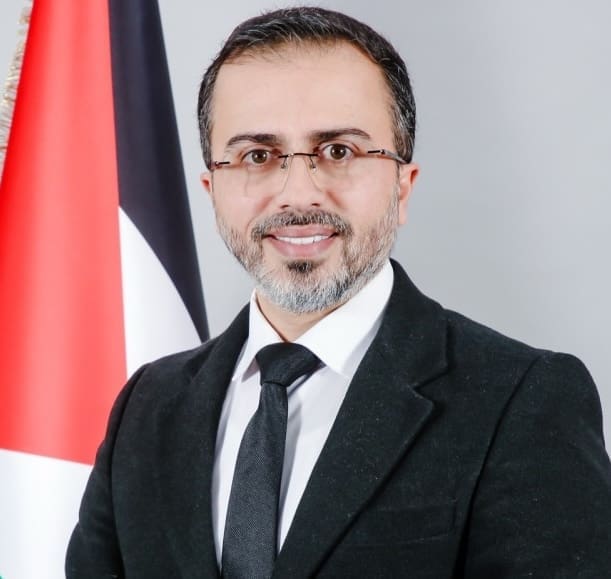
Belal Shobaki is the Head of the Department of Political Science at Hebron University, Palestine. He is a Policy Member at the Palestinian Policy Network. He is the founder and coordinator of the Double Master’s degree program in Public and cultural Diplomacy at Hebron University with University of Siena, Italy. He has published on Political Islam, identity, democratization and Palestinian issue. He is also leading Hebron University team of a 3 years project: Strengthening of National Research Capacity on Policy, Conflict Resolution, and Reconciliation, funded by the Erasmus+ program of the European Union. He has previously taught at An-Najah National University, Palestine and at IIUM, Malaysia.