

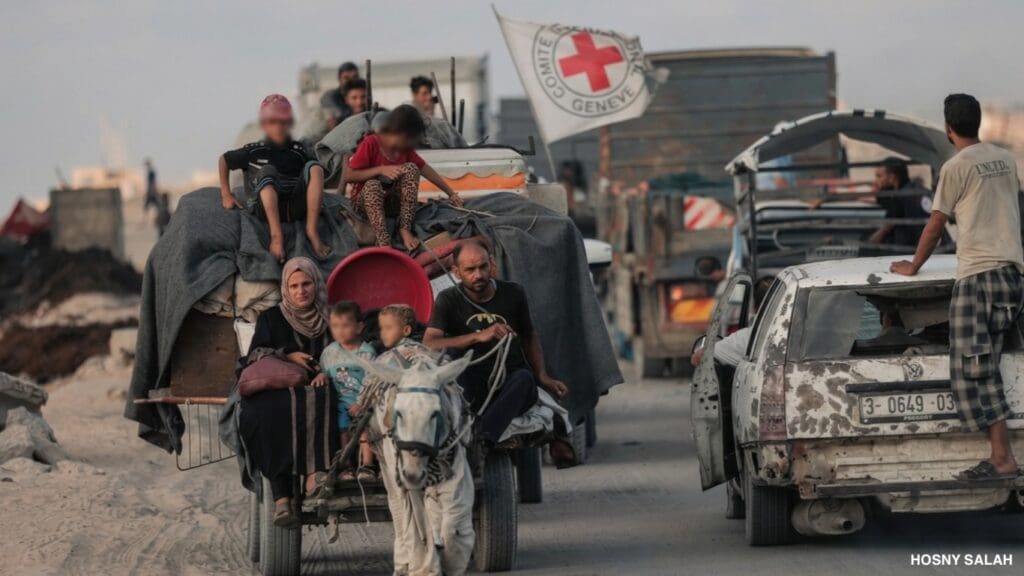




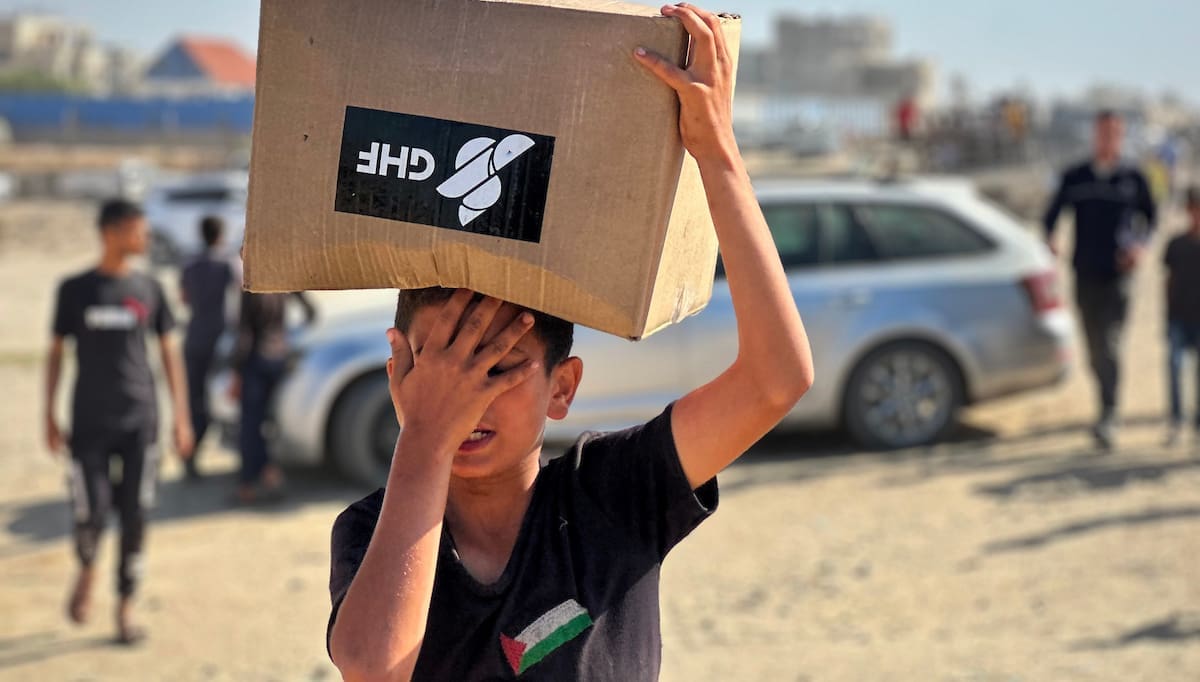
In March, Israel shattered the ceasefire in Gaza by resuming its bombing campaign at full force and enforcing a total blockade on humanitarian aid—ushering in a new phase of the ongoing genocide. In response to mounting international criticism, the Israeli regime introduced a tightly controlled aid scheme designed not to alleviate suffering, but to obscure its use of starvation as a weapon of collective punishment. Through the so-called Gaza Humanitarian Foundation (GHF), Israel has transformed humanitarian aid into a tool of control, coercion, and forced displacement.
Israeli forces have additionally blocked UN and other aid agencies from accessing over 400 distribution points they once operated throughout Gaza. They consequently forced two million Palestinians to rely on just four GHF sites, most near its southern border in what appears to be a deliberate effort to push mass displacement toward Egypt. Investigations have also revealed how US-based private contractors are actively profiting from the GHF’s deadly operations.
In this policy lab, Yara Asi and Alex Hall join host Tariq Kenney-Shawa to discuss how the GHF fits into Israel’s genocidal strategy—and to expose the network of individuals and companies profiting from what has been a death trap masquerading as humanitarian assistance.
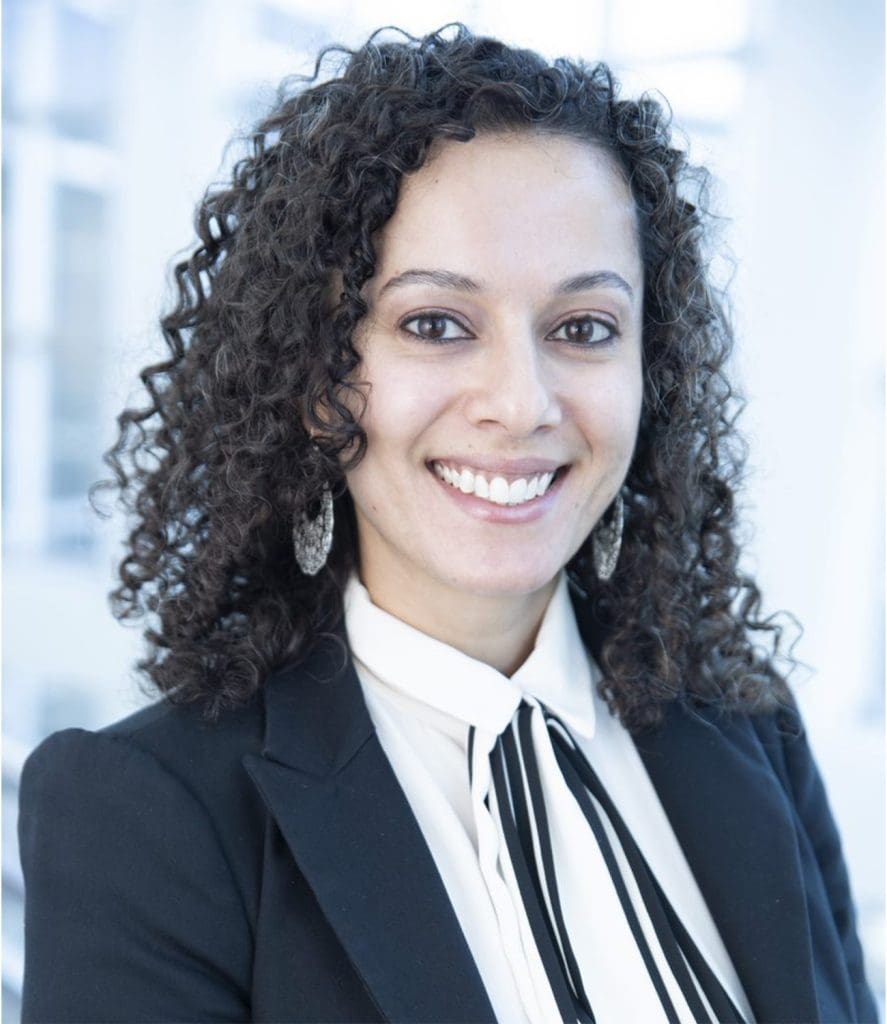
Dr. Yara M. Asi is an Assistant Professor at the University of Central Florida in the School of Global Health Management and Informatics. Her research agenda focuses on global health, human rights, and development in fragile populations. She is a Non-resident Fellow at the Arab Center Washington DC, a 2020-2021 Fulbright US Scholar to the West Bank, the Fall 2021 US Fellow at Al Shabaka Palestinian Policy Network, and the co-chair of the Palestine Health Justice Working Group in the American Public Health Association. Along with working at one of the first accountable care organizations in the United States, she has also worked with Amnesty International USA and the Palestinian American Research Center on policy and outreach issues. She has presented at multiple national and international conferences on topics related to global health, food security, health informatics, and women in healthcare, and has published extensively on health and well-being in fragile and conflict-affected populations in journal articles and book chapters. Her work has also been featured in The Washington Post, The Guardian, The Nation, +972 Magazine, The Conversation, Al Jazeera, The World, and other outlets. Her forthcoming book with Johns Hopkins University Press will examine war as a public health crisis.
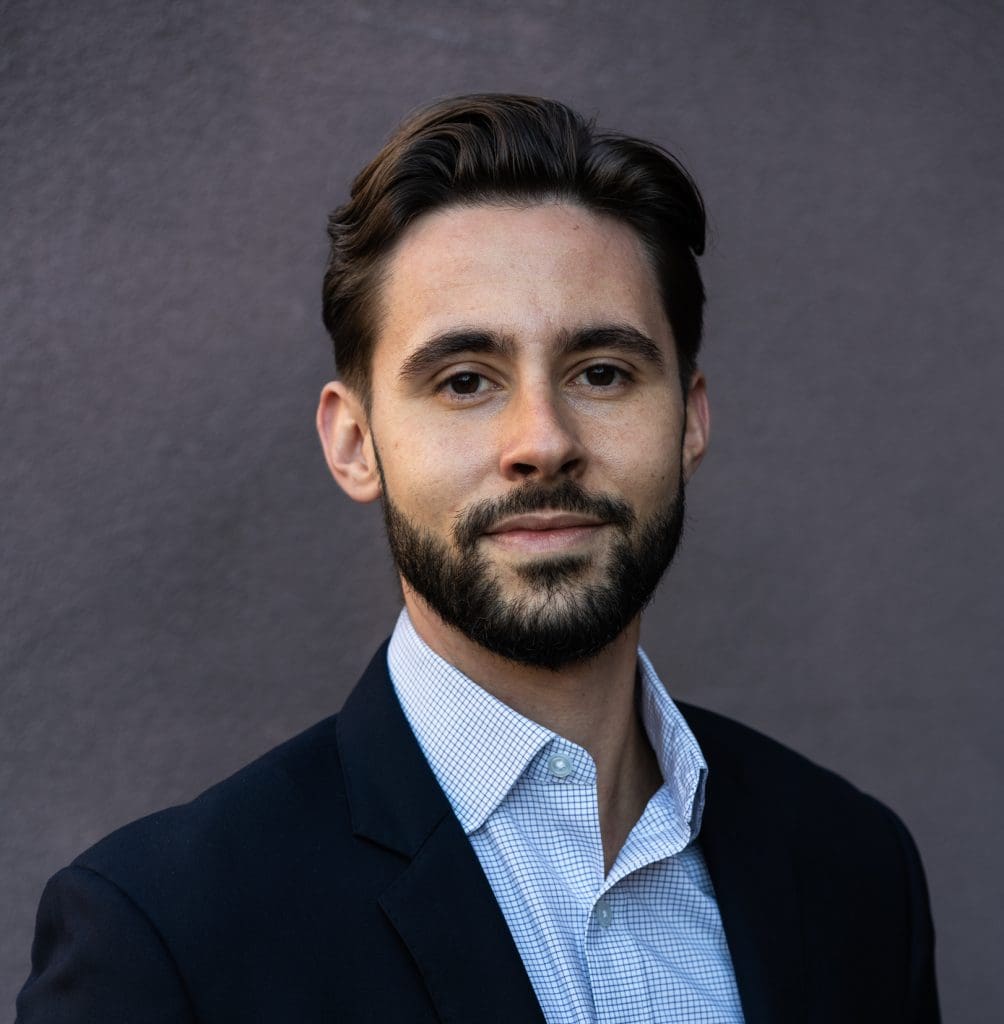
Tariq Kenney-Shawa is Al-Shabaka’s Associate Fellow, based in New York, and co-host of Al-Shabaka’s Policy Lab series. He holds a Master’s degree in International Affairs from Columbia University. Tariq’s research and writing have covered a range of topics, from the role of open-source intelligence in exposing Israel’s war crimes to analysis of Palestinian liberation tactics. His writing has appeared in The Los Angeles Times, Foreign Policy, and The Nation, among others. Tariq also serves as Associate Director of Editorial for the Institute for Middle East Understanding.