- Topics
-
Topics
See our analysis on civil society and how it shapes culture, politics, and policies
Read our insights on the shifting political landscape and what it means for Palestine
Learn more about the policies and practices shaping the Palestinian economy
Strengthen your understanding of the unique conditions for Palestinian refugees across the Middle East
-
- Analysis
-
Analysis
In-depth analysis on existing or potential policies that impact possibilities for Palestinian liberation.
Insights and perspectives on social, political, and economic questions related to Palestine and Palestinians globally.
Concise analysis into a specific policy, its background and implications.
Commentary that brings together insights from multiple analysts.
Compilations of past Al-Shabaka works surrounding a specific theme.
Longer-form, ad hoc projects that seek to confront research questions outside the scope of our regular analysis.
A policy-driven research initiative by Al-Shabaka: The Palestinian Policy Network.
Our monthly webinar series that brings together Palestinian experts.
Featured
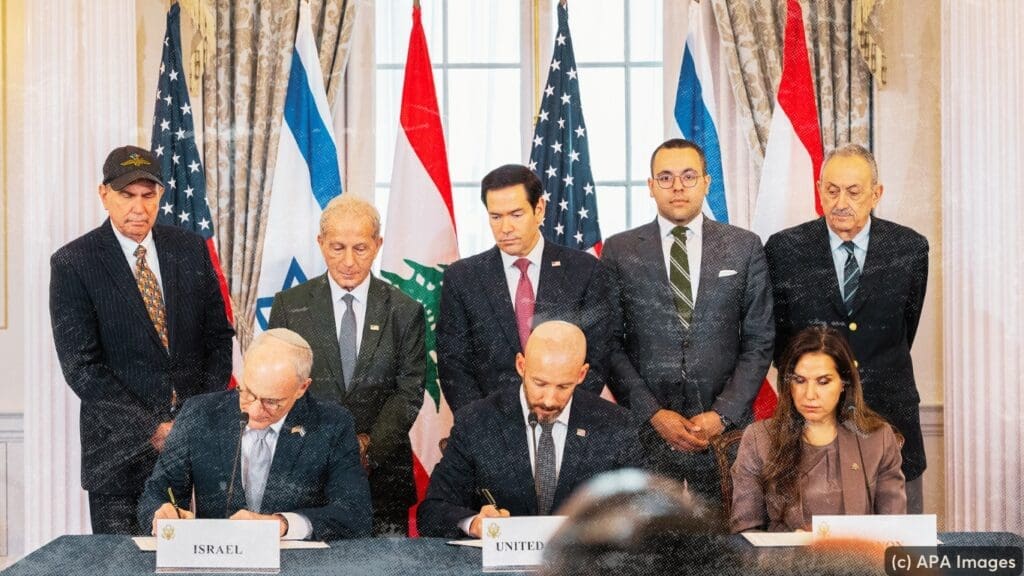
On June 26, 2026, Lebanon, the US, and the Israeli regime signed a Trilateral Framework against the backdrop of fierce military attacks on Lebanon and the invasion of its south. This aggression was part of the broader US-Israeli regional assault that also devastated Iran, Syria, and Palestine, upending the geopolitical order. In this commentary, we speak with Al-Shabaka policy analyst Jaber Suleiman, who examines pivotal questions about this framework agreement and its implications for Palestinian refugees in Lebanon and the liberation struggle more broadly. He emphasizes the grave implications of this agreement, as it makes Israeli withdrawal from Lebanese territory conditional on the disarmament of Hezbollah, thereby holding the resistance factions and the Lebanese state responsible for ending the war and the occupation, while absolving Israel of accountability. Jaber Suleiman· Oct 14, 2026
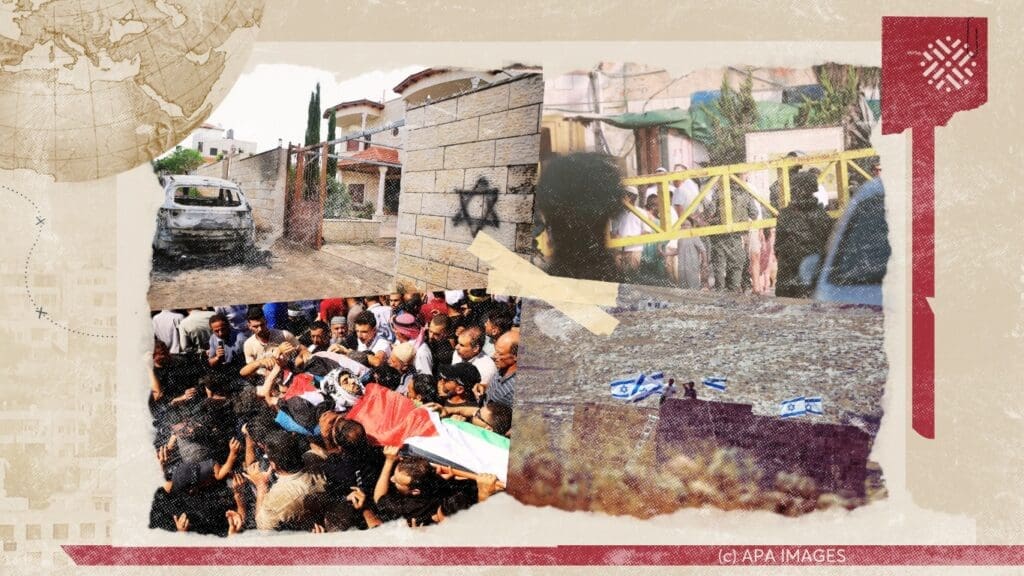
 This Focus On engages with some of the most pressing aspects of this escalation in the West Bank since October 7, 2023. It features analyses by Al-Shabaka members and contributors that show how collective punishment of Palestinians has led to a collapse in access to food, healthcare, work, and education. The compilation also examines the Palestinian people’s resistance to the expansionist Israeli scorched-earth policy, and the political leadership’s complicity and failures.
 Al-Shabaka: The Palestinian Policy Network· Sep 23, 2026
 In this Policy Lab, Al-Shabaka analyst Amjad Iraqi joins host Tariq Kenney-Shawa to examine Israel’s electoral landscape, the limits of its so-called opposition camp, and what the election means for the future of the Palestinian struggle.
 Amjad Iraqi· Sep 22, 2026
-
- Resources
- Media & Outreach
- The Network
The Families of Gaza: Sumud as Collective Endurance
Introduction
Since October 2023, Israel’s genocide has fueled two persistent and deeply polarizing narratives about Gaza, organized around a stark binary and circulated across Palestinian communities and globally. On one side, Gaza is positioned as unconquered: a place that did not surrender, whose population endured unprecedented violence without capitulation, and where the Israeli regime’s declared war objectives were not formally achieved. On the other, Gaza is described as a space of near-total destruction: vast areas depopulated and designated as red zones, entire cities reduced to rubble, tens of thousands killed or disabled, and social life pushed to the brink of annihilation.1
This binary circulates relentlessly in everyday conversation, on social media, in political commentary, and within families themselves. It is neither false nor superficial; both narratives capture real and simultaneous dimensions of Gaza’s reality. Yet neither, on its own, can fully account for how Palestinians have endured, remained, and experienced the fragmentation and reassembly of their lives under conditions of genocidal violence.
Within this unresolved tension, dominant interpretations of Gaza’s survival collapse into a false dichotomy. Survival is framed either as heroic resistance with limitless endurance or as mere necessity, thereby stripping people of political agency and reducing them to passive victims with no alternatives. This commentary argues that such framing constitutes both an analytical and a political error. We cannot understand Gaza’s endurance through a binary that casts Palestinians, individually or collectively, as either heroic in their resistance or passive victims. Rather, we must approach it through a decolonial conception of sumud (steadfastness): a historically situated, relational, and materially conditioned practice of collective endurance that emerges, shifts, and persists within ongoing colonial violence.
Reclaiming Sumud: A Decolonial Framework
In the summer of 2003, on the wall of a dark cell in the notorious al-Moscobiyya interrogation center in Jerusalem, a prisoner wrote, “Beating does not kill, and confession is betrayal.” Beneath it, another prisoner later added, “Beating does not kill, but it hurts.” Palestinians held in al-Moscobiyya when these graffiti inscriptions appeared were overwhelmingly engaged in armed resistance, already committed to forms of struggle premised on sacrifice and endurance.
Yet, while the two inscriptions frame the prisoner’s experience differently, they are not in opposition. The first articulates a moral absolute in which endurance is presumed and confession rendered as betrayal. The second unsettles this absolutism, bending its meaning by reintroducing the body and its pain into what was framed as an abstract ethical position. In doing so, it does not abandon the logic of resistance, but reworks it from within by insisting on the reality of pain.
Consequently, when read through this lens, sumud cannot be understood as a singular, heroic stance, nor dismissed as a mere absence of choice. Rather, it emerges as an uneven and situated practice, shaped by changing conditions over time and across relationships. This understanding of sumud holds together commitment and exhaustion, defiance and pain, within the very structures that constrain it.
Indeed, a binary reading of the Palestinian experience of sumud reproduces what Edward Said identified as the reductive logic of Orientalist representation, which simplifies, dehistoricizes, and fixes colonized populations into static categories. Such binaries enact epistemic violence by erasing diversity and denying the complexity of lived experience. They also resonate with dominant representational frameworks that cast Palestinians either as passive victims, trapped by external forces, or as violent “terrorists,” thereby foreclosing more complex understandings of social and political life.
Crucially, both framings are exclusionary: heroic narratives of steadfastness marginalize those who experience exhaustion, breakdowns, or ambivalence, while victim-centered accounts obscure the agency of tens of thousands engaged in resistance and others who choose to remain in Palestine despite existential risk. By contrast, a decolonial approach rejects these reductions by foregrounding the interplay between colonial structures and situated forms of agency. From this perspective, sumud is neither fully voluntary nor fully coerced, but a relational practice encompassing multiple, differentiated capacities to endure.
Accordingly, several scholars understand sumud as a situated practice of remaining and inhabiting under conditions of dispossession, while also criticizing the concept’s instrumentalization by political elites and its reduction to a static or celebratory ideal. Building on this grounding, critical scholarship approaches sumud as a relational practice enacted through collective action and refusal, while cautioning against forms of romanticization and aestheticization that obscure exhaustion and fragmentation.
Within this literature, sumud is increasingly understood as embedded in collective infrastructures of urban, social, and familial life that sustain existence beyond individual resilience or symbolic survival. After all, confronting settler-colonial elimination is a shared Palestinian aspiration, rooted in the understanding that the Zionist project targets Palestinian presence, identity, and futurity. Attending only to individual stories, therefore, risks distorting how endurance operates collectively and how people come to practice—or withdraw from—sumud under conditions of extreme violence.
Sumud is neither fully voluntary nor fully coerced, but a relational practice encompassing multiple, differentiated capacities to endure. Share on XAs anti-colonial theorist Frantz Fanon observed, colonial violence produces not only resistance but also exhaustion that accumulates over time, threatening the very capacities required for sustained struggle. Sumud is therefore practiced unevenly, relationally, and under constraint; even the same individual may exhibit different capacities to endure depending on the conditions they confront. From this grounded perspective, sumud appears less as a declaration than as an ongoing negotiation with material and immaterial conditions—one that may be strengthened, depleted, or collapse over time.
This understanding directly challenges two dominant narratives. The first frames Gaza as an uninhabitable site of total and irreversible loss, underpinning state-driven proposals for forced displacement, including initiatives such as the GREAT Trust plan. The second portrays Palestinians in Gaza as naturally resilient, capable of indefinitely withstanding siege, destruction, and mass violence without rupture. Both representational gazes risk obscuring responsibility toward Palestinians in Gaza. In different ways, both framings discourage the solidarity, accountability, and material engagement necessary to sustain life under conditions of protracted violence. Moving beyond these narratives requires examining how sumud actually operates in practice through the actors, relationships, and conditions that produce and sustain it.
The Landscape of Gaza’s Sumud
The Israeli genocidal war has destroyed Gaza’s civic, economic, and planning systems and dismantled the infrastructures and services that sustain life. In response, everyday life continues through reconfigured arrangements grounded in reciprocity, solidarity, and mutual aid. Families and neighbors pool scarce resources; community kitchens offer shared meals; temporary shelters and encampments are collectively organized; and informal care networks have emerged to support children, the injured, and the elderly in the absence of functioning institutions. Yet, these practices have not replaced existing structures wholesale but supplemented and, in many domains, substituted for them. Uneven and internally strained, they have nonetheless enabled survival and maintained a minimal threshold of livability.
Crucially, these alternative arrangements have been supported by Palestinians living outside Gaza. Family members in the diaspora play an active role in Gaza’s steadfastness by mobilizing funds, coordinating access to aid, transmitting information, and sustaining emotional and political support across borders. Everyday survival inside Gaza is thus shaped through relational infrastructures that extend beyond the territory itself, binding those who remain with those who had been forcibly displaced or live abroad. As Rebecca Solnit suggests, moments of disaster can give rise to a more collaborative kind of society. In Gaza, this has manifested in a mode of collective care, which has become central to sustaining life under ongoing genocide.
This new system operates through identifiable actors who have mobilized and mediated access to what can be understood as the factors or resources of sumud. Yet the uneven availability of these actors and their varying capacity to secure specific material and immaterial support over time render sumud a relational, fluctuating practice rather than a static condition. These actors can be broadly grouped into two categories. The first comprises formal and institutional actors, including municipalities, ministries, international organizations, and local NGOs. The second consists of social actors, such as extended families and kinship groups, neighbors, friends, and informal support networks.
The factors shaping sumud can be differentiated into material and immaterial resources. Material resources are tangible and infrastructural, including access to water, food, shelter, land, housing, financial support, healthcare, and income-generating economic activities. Immaterial resources are affective, social, and symbolic, encompassing care, belonging, and social attachment, as well as religious faith and national commitment. These immaterial dimensions are expressed in everyday practices of mutual responsibility, collective decision-making, and the refusal to abandon kin or place despite extreme risk. Religious faith and national commitment frequently provide moral frameworks through which loss is endured and meaning sustained. Together, these material and immaterial factors do not simply coexist but reinforce one another.
Ultimately, these actors and resources constitute the landscape of sumud in Gaza. While they do not operate with equal power or significance, their interactions shape people’s capacity to remain, move, rebuild, and endure under conditions of prolonged violence.
Centering the Family
Among the actors shaping sumud in Gaza, the extended family or clan (hamulah) emerges as particularly decisive because of its distinctive capacity to mobilize multiple forms of support simultaneously. Institutional actors, such as municipalities, often address single, discrete needs. By contrast, families pool material resources, organize shelters, provide care and protection, and sustain affective and social bonds through kinship-based arrangements.
Other actors also play important roles: informal security groups have, at times, substituted for formal policing; humanitarian organizations and the Shelter Cluster coordinate accommodation; and NGOs manage food distribution and aid. Yet it has been the extended family’s ability to aggregate and mediate material and immaterial resources across different spheres of everyday life that positions it as the central infrastructure through which endurance, mobility, and survival are continuously negotiated amid extreme disruption.
Building on this capacity, extended families across Gaza have functioned as key providers of essential resources throughout the genocide. Families pool access to water, land for encampments, shelter, food, income, and protection, while distributing responsibilities among members—from camp construction and material gathering to caring for children and elderly relatives.
This capacity has been further reinforced by the embeddedness of family members within a wide range of formal and informal networks. Individuals have maintained ties to municipalities, NGOs, humanitarian organizations, diasporic labor circuits, and neighborhood networks, enabling families to access services and resources through these channels and redistribute them internally. Families thus operate not as enclosed units but as relational nodes that mediate wider social infrastructures and translate them into everyday support, reinforcing their role as active cells of sumud.
Gaza’s families have been reclaiming and reorganizing their living conditions, often in tension with external planning visions advanced by the Israeli and US regimes. Share on XIn addition to mobilizing material resources, the family plays a central role in reinforcing shared political and national commitments amid extreme uncertainty. These commitments are articulated both internally through family networks and publicly, including on social media, where many families refuse to collaborate with Israeli authorities or comply with displacement demands. The convergence of material support and political stance helps explain why the Israeli occupation forces have frequently targeted families, not only as units of care but as collective actors capable of sustaining steadfastness and refusal.
This mode of family-centered solidarity and social organization has been central to shaping the geographies of displacement. In most cases, decisions to remain in place or to move are taken collectively, whether within the extended family or among clusters of closely related households. When the decision has been to stay, families have organized systems of protection and ensured the provision of necessities, often remaining within deliberately chosen geographical boundaries. When families have decided to move, they frequently have done so together—establishing encampments collectively and organizing shared arrangements for cooking, storage, sanitation, and service provision.
In addition, ownership of land, homes, or family businesses has often anchored families in place and supported decisions to remain. When movement becomes unavoidable, extended families whose members own land across multiple locations have greater spatial flexibility, enabling them to relocate and establish encampments under rapidly shifting conditions. Whether remaining or moving, families have actively shaped the geographies of displacement and survival, often in confrontation with Israeli evacuation plans and often at considerable cost.
At the same time, family cohesion is not absolute. Periods of ground invasion, intensive bombing, and acute fear have frequently disrupted collective decision-making. Families that are able to endure prolonged aerial attacks have often found land incursions harder to withstand, prompting the fragmentation of extended family units as nuclear families separated in search of immediate survival. In such moments, sumud appears as a situational capacity shaped by the intensity and modality of violence rather than a fixed or limitless condition.
Ultimately, this does not mean that families are uniformly effective at sustaining sumud, nor that they operate without internal tensions or conflict. As documented, some families have been a threat to the collective sumud, contributing to dynamics that complicated survival and, in certain instances, rendered it untenable. Yet even amid these contradictions, families often serve as powerful catalysts for mobilization, coordination, and resource redistribution, shaping both the possibilities and the limits of sumud within Gaza’s fractured social landscape.
Gaza’s “Day After” is Already Here
Gaza’s families have been reclaiming and reorganizing their living conditions, often in tension with external planning visions advanced by the Israeli and US regimes. Rather than waiting for reconstruction schemes or large-scale infrastructural projects, they have acted out of immediate necessity to meet basic needs and resume everyday life with whatever resources remain. Yet these actions are not limited to survival; they also express hope and orientations toward the future. On the ground, families have moved forward by building, reorganizing, and planning, insisting on life even amid profound uncertainty and constraint.
What is happening in Gaza is familial urban planning amid an ongoing genocide that does not follow technocratic, linear timelines of war, ceasefire, and recovery. Share on XSome families are now planning and designing camps in areas where US-Israeli-backed plans envision new settlements. One family in Rafah, for example, has publicly shared their plan for a family camp, including tents, streets, collective services, and basic amenities. They have recruited an architect, coordinated with family members abroad, and begun preparing for implementation once border crossings reopen. In doing so, families enact forms of epistemic disobedience, refusing the authority of colonial and humanitarian planning regimes to determine when, how, and by whom life may resume.
What is happening in Gaza is familial urban planning amid an ongoing genocide that does not follow technocratic, linear timelines of war, ceasefire, and recovery. Instead, families collapse colonial time by acting, building, inhabiting, and planning. They refuse to suspend life until sovereignty is granted or reconstruction funding arrives. In this sense, the “day after” is not prescribed by states, donors, or geopolitical actors. Gaza’s families have been envisioning and enacting it by shaping the conditions through which life continues, despite ambiguity and constraint.
The Limits and Possibilities of Sumud
Examining the family as a central actor makes one thing unmistakably clear: sumud is not something people simply carry within themselves. Rather, it is produced through relations, resources, beliefs, meanings, and support systems—and it has limits. Families can enable sumud by pooling land, water, money, care, and decision-making, but they can also reach breaking points when violence intensifies or resources disappear. The same family that sustains life in one moment may fracture in another. Observing families reveals sumud as a capacity that rises and falls depending on who is present, what is available, what is expected, what one believes, and how much pressure is being applied.
Understanding sumud in this way shifts the question from whether people are steadfast to what enables endurance. It also reveals the limits of endurance: moments of fragmentation, withdrawal, and collapse are not exceptions but part of the same landscape of survival. Families, like individuals, do not endure endlessly. They negotiate, improvise, break, and rebuild.
Seen through this lens, support for Gaza cannot remain abstract, moral, or symbolic. Strengthening people’s capacity to stay, refuse displacement, or simply survive another day depends on concrete forms of material, social, and political support. Sumud is neither automatic nor guaranteed, but made and unmade through relations of solidarity. Recognizing this is not a gesture of sympathy; it is a call to responsibility.
Abdalrahman Kittana
Dr. Abdalrahman Kittana is a Palestinian architect and researcher, currently a Postdoctoral Fellow at Tampere University, Finland, and an Assistant Professor of Architecture at Birzeit University. He holds a PhD in Architecture from KU Leuven, an MSc in Architectural regeneration from Oxford Brookes University and a BSc in Architectural Engineering from Birzeit University. Dr. Kittana is the co-founder of the Yalla Project, a “research-by-doing” initiative in Nablus that revitalized historic buildings as catalysts for urban renewal. His research focuses on architecture and survival in war, homemaking under conflict, urban regeneration and postwar reconstruction, the history of architecture, and urban development.
Latest Analysis
Disarming Resistance: The Trilateral Framework Agreement
Under Siege: The West Bank After October 7
Genocide and the Limits of Israeli Elections
We’re building a network for liberation.
As the only global Palestinian think tank, we’re working hard to respond to rapid developments affecting Palestinians, while remaining committed to shedding light on issues that may otherwise be overlooked.