
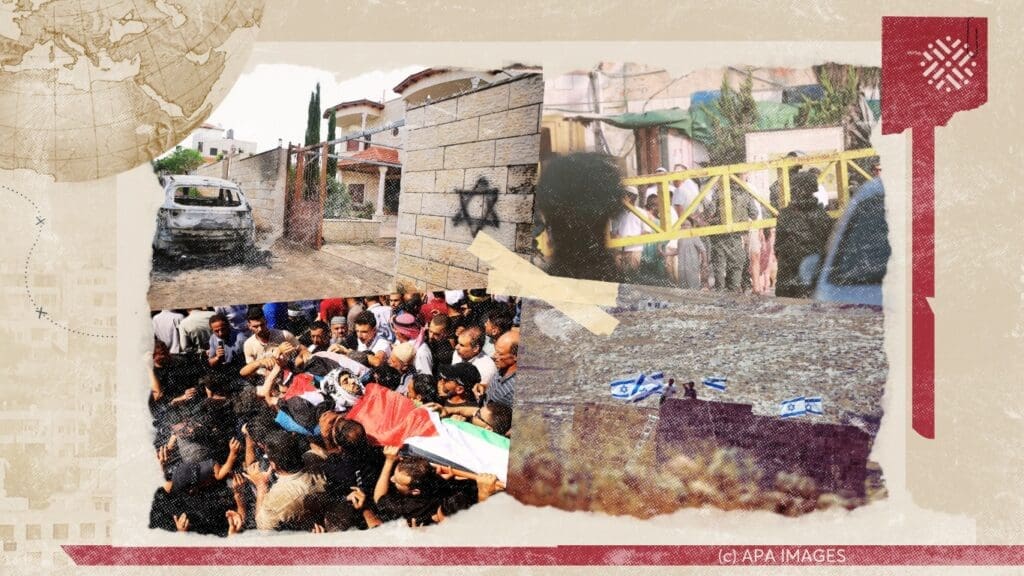





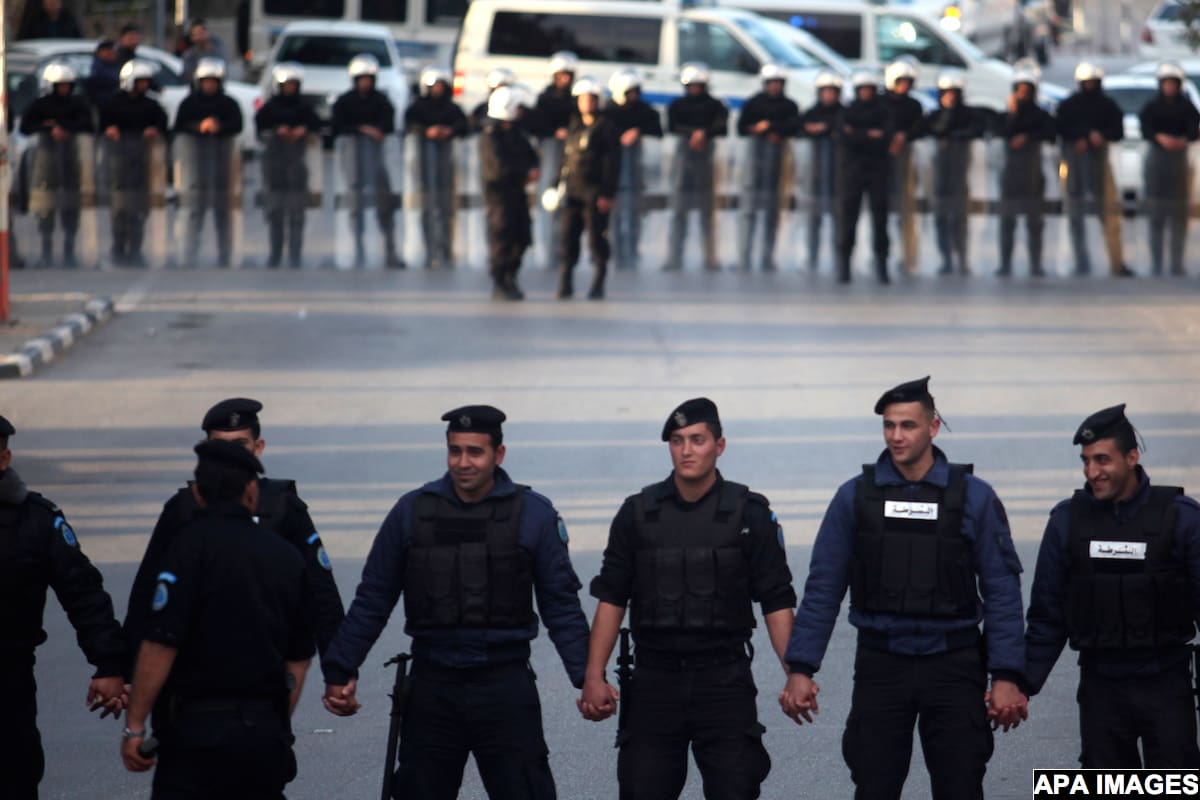
The Palestine Liberation Organization’s top leadership body, the Central Council, called for a halt to Palestinian security coordination with Israel in 2015. Yet PLO Chair Mahmoud Abbas has described it as sacred despite the breakdown of the peace process to end Israel’s 50-year military occupation and colonization of Palestinian territory. The killing by Israeli forces of activist and youth leader Basil Al-Araj, whom the Palestinian Authority had previously imprisoned – raising accusations that his jailing was part of its so-called revolving door policy – has refocused public attention on the issue. In the selection of pieces below, Al-Shabaka policy analysts discuss the origins and pillars of Israeli-PA security coordination as well as its consequences for the Palestinian people, who experience it as an additional layer of oppression to the multiple violations of their rights under occupation, within Israel, and in exile.
The Context and Evolution of Security Coordination
The Evolution and Reform of Palestinian Security Forces 1993-2013
By Alaa Tartir
Writing in Stability: International Journal of Security & Development, Al-Shabaka’s program director Alaa Tartir provides a contextual analysis of the evolution and reform processes of Palestinian security forces over the last two decades. Read more…
After Gaza, What Price Palestine’s Security Sector?
By Sabrien Amrov and Alaa Tartir
In this Al-Shabaka policy brief, Tartir and Al-Shabaka Policy Analyst Sabrien Amrov urge reform of a donor-driven sector that only serves Israel’s colonial ambitions. They examine the sector’s origins and its current machinations, and how the PA’s fast-growing authoritarianism is turning “Palestine” into a security state. Read more…
The Beginning of the End of Palestinian Security Coordination with Israel?
By Tariq Dana
In a piece for Jadaliyya, Al-Shabaka Policy Analyst Tariq Dana argues that the Palestinian security sector in its current form is far from being part of a national project that would serve the Palestinian cause. Instead, he writes, it serves the PA elite in that it ensures their safety, protects their wealth, and suppresses political opposition. Read more…
Palestinian Sovereignty: Between International Recognition and Security Coordination
By Sabrien Amrov
Amrov’s op-ed for Middle East Monitor argues that “reproducing a security paradigm which filters out the concerns of Palestinians and their right to security is effectively attempting to write-off Palestinians from their own sovereignty.” Read more…
How US Security Aid to PA Sustains Israel’s Occupation
By Alaa Tartir
Tartir’s analysis for Al-Jazeera is based on little-known statistics that quantify the aid-reliant PA security sector, including the fact that half of Palestinian public sector civil servants are employed in security. Annually, the sector receives $1bn from the PA’s budget and around 30 percent of total international aid. Read more…
Repression, Authoritarianism, and Criminalizing Resistance
Subcontracting Repression in the West Bank and Gaza
By Sabrien Amrov and Alaa Tartir
In a New York Times op-ed, Amrov and Tartir ask: “To what end do the international donors continue to subsidize an agency that helps to perpetuate the Israeli occupation, fails to meet the needs of Palestinian civilians, and violates the very human rights norms they claim to uphold?” Read more…
Israeli-Palestinian Security Collaboration Called into Question
By Tariq Dana
Dana’s op-ed for The Hill argues that the priorities of the Palestinian security forces, originally set up under the 1993 peace process, took a sharp turn with the death of Yasser Arafat, the election of Abbas, and the subsequent split between Hamas and Fatah. Read more…
Securitized Development and Palestinian Authoritarianism under Fayyadism
By Alaa Tartir
Tartir analyzes perceptions of the PA’s post-2007 state-building project in the journal Conflict, Security & Development, drawing on the findings of ethnographic fieldwork conducted at Balata and Jenin refugee camps. Many of those he spoke to described the detrimental effect of Fayyadism on their resistance against Israel’s occupation as well as their own protection and security. Read more…
Criminalizing Resistance: The Cases of Balata and Jenin Refugee Camps
By Alaa Tartir
Tartir’s forthcoming article in the Journal of Palestine Studies argues that conducting security reform to ensure stability within the context of colonial occupation and without addressing the imbalances of power can only have two outcomes: “better” collaboration with the occupying power, and a violation of Palestinians’ security and national rights by their own security forces.
Keeping Yourself Occupied: The Palestinian Authority Guide
Produced by Visualizing Palestine
This infographic by Al-Shabaka partner Visualizing Palestine highlights the PA’s complicity in sustaining Israel’s military occupation. Read more…
Al-Shabaka’s Tariq Dana, Sabrien Amrov, and Alaa Tartir are available for media interviews. Please email contact@al-shabaka for more details.
Tariq Dana is Assistant Professor of Conflict and Humanitarian Studies at the Doha Institute for Graduate Studies, and an adjunct lecturer at Northwestern University in Qatar. He served as the director of the Center for Development Studies at Birzeit University and as a senior research fellow at the Ibrahim Abu-Lughod Institute of International Studies, the Graduate Institute of International and Development Studies in Geneva, and the School of Oriental and African Studies.

Sabrien Amrov is a human geographer and policy practitioner whose work examines urban change, migration, and borders, with a focus on the Middle East. She holds an MA in International Relations from the University of Ottawa and is a PhD candidate in Human Geography at the University of Toronto. Her research explores Arab refugee place-making, cognitive mapping, and social formations in transnational contexts. Her writing has appeared in the New York Times, Middle East Monitor, and TRT World, among other outlets.

Alaa Tartir is Al-Shabaka’s program and policy advisor. He is a senior researcher and director of the Middle East and North Africa Programme at Stockholm International Peace Research Institute, as well as a research associate and academic coordinator at the Geneva Graduate Institute, global fellow at the Peace Research Institute Oslo, and governing board member of the Arab Reform Initiative. Alaa holds a PhD from the London School of Economics and Political Science and is co-editor of Resisting Domination in Palestine: Mechanisms and Techniques of Control, Coloniality and Settler Colonialism (2023), Political Economy of Palestine: Critical, Interdisciplinary, and Decolonial Perspectives (2021) and Palestine and Rule of Power: Local Dissent vs. International Governance (2019). He can be followed on Twitter (@alaatartir), and his publications can be accessed at www.alaatartir.com.