



About This Episode
Episode Transcript
The transcript below has been lightly edited for brevity and clarity.
Layth Malhis 0:00
With de-healthification, we can recenter at least what is happening to the individual, and that is the body and the individual. And that the human is being de-healthified, that their health is what is being targeted and their access to their health, and that there is a regression in their health. And I often think that as Palestinian scholars and researchers, we have a massive responsibility of ensuring that we not only document our history, but make it legible for other peoples.
Yara Hawari 0:29
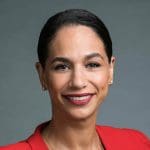
From Al-Shabaka, the Palestinian Policy Network. I am Yara Hawari, and this is Rethinking Palestine.
In the first podcast episode of this year, we are looking at the Israeli regime’s systematic destruction of Palestinian healthcare infrastructure. The ongoing genocide in Gaza has seen the complete obliteration of the healthcare sector. All of Gaza’s hospitals have been bombed. Some including Gaza’s main hospital, Al-Shifa, have been subjected to intensive sieges. Health personnel have been systematically targeted, killed and kidnapped. But this isn’t something that started two years ago. This is a structure that is part and parcel of the attempted erasure of the Palestinian people.
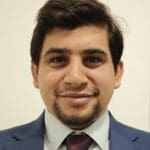
We are joined by Layth Malhis, graduate student at Georgetown University’s Center for Contemporary Arab Studies and researcher at the Institute for Palestine Studies. He’s the author of a new policy brief for Al-Shabaka, De-healthification: Israel’s Engineered Collapse of Palestinian Life. In this powerful analysis, Layth reframes the collapse of Gaza’s healthcare system, not as an unintended humanitarian consequence, but as a result of decades-long policies that have systematically degraded Palestinian health infrastructure and denied the right to heal. We’ll explore what de-healthification means, how it operates as a mechanism of control, and what it reveals about structural violence, accountability, and the struggle for health sovereignty under colonial occupation and genocide.
Layth, thank you for joining me on this episode of Rethinking Palestine.
Layth Malhis 2:03
Thanks for having me.
Yara Hawari 2:04
Layth, how did you come to develop the concept of de-healthification? What does this framework reveal about Palestinian healthcare that existing terminology doesn’t quite capture?
Layth Malhis 2:17
So I come from the world of archives and I’ve spent a few months at the Institute for Palestine Studies archive here in DC. And I found like a plethora of pamphlets that were put out during the Intifada from the medical committees and found in them a retelling of Palestinian health in a way that argued that the occupation is the main perpetuator of Palestinian illness. And this made me think about how, you know, all this discussion about the targeting of healthcare and the severing of Palestinians from access to adequate care is not new. And you know, we’ve often said during the genocide that October 7th wasn’t the start date. This is a 75 year, if not 110 years struggle against Zionism and British colonialism.
And I found that a lot of the rhetoric around the destruction of healthcare is falling into this trap that this is a new phenomenon. Certainly the tactics that are employed during the genocide towards the healthcare system are the culmination of tactics from the past. It’s not, this is a new thing. What’s going on. It’s not that. What I was trying to argue is that the tactics are not new themselves. And so I had this reason to like think about a framework.
The other reason was, you know, I’ve become very critical of the humanitarian sector. And this criticism comes from the fact that there’s a frustration that we are being spoken for as Palestinians. And we are, there is a sort of transaction between the humanitarian sector and the humanitarians who come from outside and the Palestinians in the occupied territories where because of their goodwill gestures and their volunteer time and their solidarity, our voices are being silenced or being chosen as secondary to their voices. And within that, this frustration also came this analysis that all the rhetoric was about a health crisis, emergency, or like a system collapse. Again, these isolate the healthcare destruction within a singular moment that this is isolated from the past, that this is a crisis now.
And so I wanted to talk about a long durée, knowing that in 2018 there was a deliberate targeting of limbs. When the siege began in Gaza in 2007, that there was elimination of access, a supply chain access from life-saving medicine to the Gaza Strip. That during the Oslo period that there was this obsession with making sure that the Palestinian Ministry of Health was to be at the behest of the Israeli military and Israeli occupation. During the second Intifada, this again, this escalation of deliberate targeting of health infrastructures and ambulances and creating this, you know, heightening this permit regime. During the first Intifada, that there was this, at least in the occupied territories, there was this now weaponization of healthcare, the throwing of tear gas canisters into health facilities, the kidnapping of doctors and holding them hostage for a few days or a few weeks.
All the way into ’67, you know, this new system that emerged when the Israeli occupation began in the West Bank and Gaza Strip. That really was built on neglect, neglecting the proper healthcare infrastructure. You know, with Moshe Dayan’s like quiet occupation philosophy, that really this quiet occupation that he called for was very much translated to like neglecting the Palestinian healthcare.
And so there was that aspect of me wanting to talk about this long durée. The other aspect is that Francesca Albanese and especially Tlaleng Mofokeng, Right to Health rapporteur, they’re working on this new report on medicide. And I’d known about this talk about medicide. You know, it’s being done by scholars and researchers. And I personally had an issue with the framing for, again, that it traps us in this single cycle of violence, that this is an isolated incident. And this is part of the issue that I have with the international human rights legal world, is that there’s a focus on the immediate. And it’s because of the reactionary tendencies of IHL.
And the other thing, we need frameworks that are built exactly on the experience of Palestinians. Because what Israel is conducting during the genocide, it will be the sort of, you know, the blueprint for other conflicts. You know, Dr. Ghassan Abu-Sittah has talked about, you know, the war, if there was a ceasefire today, what happened in Gaza will be just transported to another region, to another peoples. And so I thought with medicide there was this obsession of trying to say that this comes through the culmination of a genocide. But rather I found that no, the tactics that are employed in the genocide were found before when the official date of the genocide began. And also medicide as a term is assisted suicide in the medical world. And so you had this sort of tension there.
And I thought that with de-healthification, we can recenter at least what is happening to the individual. And that is the body and the individual. And that the human is being de-healthified, that their health is what is being targeted, their access to their health, and that there is a regression in their health. And so those are the reasons for why I developed it.
And I often think that as Palestinian scholars and researchers, we have a massive responsibility of ensuring that we not only document our history, but make it legible for other peoples. Because what happens to us, as we’ve seen just in the US in the last two weeks, you know, what happens in Palestine gets transported and people look to us like, you know, we and we often say unabashedly, like we told you, it doesn’t stop with us. We told you that it will come to you. And so I felt that we needed something born within Palestine studies, within Palestinian community, at least for the targeting of healthcare.
Yara Hawari 7:47
This process of de-healthification, as you have pointed out, has been around for decades and has consistently undermined Palestinian health sovereignty. So what have been the main structural mechanisms that have been utilized by the Israeli regime?
Layth Malhis 8:04
Again, with every framework you have to think about dimension. And so I’ve systemized them based on seven. And these are evident across time and they’re never, there is, you know, throughout the periods that I’ve defined in the piece, there one stands out over the other, of course. But there is a mutation and they learn from one another.
So the seven are administrative strangulation, which is the bureaucratic control of movement, supplies and medical permits. And in this, there’s a logic to turning care into a privilege and a privilege that can be disciplined where the Palestinian themselves, knowing that they are weak, that their health is weak, they discipline themselves in that they apply to the Israeli through the Israeli permit regime. And they behave in a certain manner to ensure that the Israelis grant them the permit. And that is based on like the survival instinct. So there is also a behavioral component to each dimension.
There’s also the infrastructure attrition where there is the chronic underfunding, the targeted attacks that dismantle physical capacity and logistics. And this in fact is what allows for de-sovereignty where Palestinians are being de-sovereignized because they are, because of this infrastructure attrition that happens to them. And the slow violence that’s enacted against their infrastructure, that the humanitarians come in and they invest and they build. And within this exchange, there is this sidelining of Palestinian autonomy in what is being rebuilt. And because the humanitarian sector very much has to negotiate with the Israeli regime because that’s the system that they are behest to. The Israelis allowed, historically allowed, humanitarians operating in the occupied territories, but it has to come through the approval of the Israelis. And within that we’ve seen the sort of massive sidelining of Palestinian autonomy.
The other is the clinical criminalization where we see health work historically, not just in this phase of the genocide, that have been targeted, where hospitals and staff, they themselves become security risks and security threats, I should say. And it, this sort of just this sort of security threat, justifies for why they’re imprisoned, for why they’re killed. Another part of this clinical criminalization is there’s also this component of like ensuring that Palestinian medical institutions that want to train, and this comes to the epistemic erasure, that want to train the next generation, are also massively restricted from expanding and from operating with other networks outside the occupied territories.
And then there’s the dependency engineering, which ties again to the infrastructure attrition with the humanitarian sector, where there is a systemic design that ties the survival of the Palestinian and their body to the occupier’s administrative and economic control, and as well, the foreign humanitarian organizations that operate in Palestinian Territories.
Another is the epistemic erasure where there is like this suppression, distortion and in fact, the dismissal of health data. We saw this during the genocide where malicious bodies were saying that the Palestinian mortality and numbers of killed by the are, is a Hamas-run agency, that the Palestinian Ministry of Health is Hamas-run as a sort of like epistemic erasure. We all knew that the number that was being used by the Ministry of Health was massively incorrect. And it, it wasn’t because it was incorrect. It was just because they couldn’t count everybody that was actually dying in real time. And so there was this dependency engineering that we often were citing the UN bodies, or at times the number that the Israelis had sort of collected was being used as well because it was higher. And it was the number that we would, you know, because the Israeli military is a body that the world thinks has more legitimacy. And so that number was being used as well.
Another is the ecological sabotage, which we are yet to actually fully understand. There is a weaponization of air, soil, energy systems that are going to biologically throttle life. And Dr. Ghassan Abu-Sittah talks about this in his Biosphere of Genocide, that the genocide doesn’t just happen with the destruction of buildings, but it happens where the entire environment itself is weaponized against the body. Where there is rotting bodies that are just polluting the air themselves, that the Palestinians that are surviving and are alive are consuming. And that itself affects their body and their longevity. I spoke with Dr. Yiping Ji, family doctor in Canada who thought, who genuinely believes and still does, that the next pandemic will come out of Gaza because of how the environment was sabotaged.
And the other one is the programmed disablement, which is something that we’ve, now I’m trying to track more recently, is the deliberate targeting of limbs. And we have this now, Gaza having the largest amputee crisis in the world. And so this is another one that is very much a pattern that you see since ’67.
Yara Hawari 12:40
If you’re enjoying this podcast, please visit our website, al-shabaka.org, where you’ll find more Palestinian policy analysis and where you can join our mailing list and donate to support our work.
I think what we’ve seen in Gaza over the last two years are these structural mechanisms on steroids. And it’s important to say that even now with the ceasefire, the genocide continues and with it the de-healthification process. And it continues in ways that are nefarious and that are possibly invisible to social media feeds and mainstream media. As you mentioned, the pollution of the soil and the water table. All of these things will have devastating effects on the population in Gaza for not just years to come, but generations to come.
Layth Malhis 13:26
Yeah, I mean the dimensions that I can think of right now that are like out in the open are like the administrative strangulation in the sort of so-called ceasefire phase and the dependency engineering. Palestinians are trying to rebuild their hospitals. I’ll speak about the Kamal Adwan Hospital. The folks in northern Gaza are trying and have been trying to appeal to collect funds and to rebuild the Kamal Adwan Hospital. But there is this, number one, the complete administrative strangulation that when they’re trying to work with humanitarian organizations that have operated in Gaza during the genocide, there is this like, because of the Israeli, the recent Israeli banning of 37 humanitarian organizations, the Palestinians that are now trying to rebuild are having to do it on their own in a way that they, it’s very much based on mutual aid. And as well, there’s this dependency of having to collect money from outside and try to negotiate with organizations that are able to work with the Israelis to bring in the equipment that’s needed.
And so yeah, these dimensions won’t end. And I often say that these dimensions won’t end unless the Israeli occupation ceases to exist, that there can never be the healthification of Palestinians without the elimination of the Israeli occupation and control over every mechanism of Palestinian life.
Yara Hawari 14:38
In your piece, you write that the genocide today marks the final stage of de-healthification. Israeli forces have turned Gaza’s hospitals from sanctuaries into execution sites. One of the images that will stay etched in my memory forever from the genocide in Gaza is that of medical staff at Al-Shifa Hospital digging mass graves for their colleagues and for their patients in the hospital grounds. And I’m just wondering, can you elaborate a bit more on what you mean by that final stage of de-healthification? For me that’s the image that really captures it.
Layth Malhis 15:16
The final stage for me, I thought of it as like there’s nothing more that comes after beyond the mass killing of people. That this is the pinnacle of how Israel can operate without fully just killing. Because there’s a psychological element to de-healthification, and that is removing the Palestinians. That there is an intention to create this sort of this performance that if you do not abide by what we want, your hospitals are not safe. Therefore you won’t have access to these hospitals. And so nothing comes more beyond this. And I think for me it’s because there’s just this massive culmination and there’s this anarchy that’s happening on the ground inflicted by the Israelis towards the Palestinians that what comes more is just simply mass killing.
And what, what can you, what more can you do than siege a hospital, eliminate its supply chains, target its senior staff, its hospital administrators, its directors, and its most specialized individuals, then enact an evacuation order where those that are literally tethered to IV lines are having to leave themselves in a straight line. What more comes after this? I struggle. And you know, if the Israelis do show that there is another stage, I think it’s just mass killing. You know, you don’t target the infrastructure that keeps individuals alive just so you can keep them alive. Like there is a complete intention to kill them.
And you know, the images of the press conference with the most notorious one of Dr. Ghassan Abu-Sittah outside, I think it was Al-Shifa. That demonstration of having bodies lined up in front of cameras is in itself, that’s it. There’s nothing more that comes after this other than the elimination of those that are still holding the front line. That is the doctors and the nurses and the ambulance drivers and the volunteers inside the hospital.
If there is a final stage, I personally believe it’s just the complete eradication of any existence of Palestinian life. Both infrastructure and institutions and the body. Like think about it, hospital yards have been turned into graveyards. Like there is this complete 180 shift of what the hospital has become under this, in this final stage. It’s a place of shelter, it’s a place of education as well. It’s a place of gathering humanitarian aid. It’s a place of healing, it’s a place of community gatherings. It’s also now become a morgue, and it’s also a place where you get the news and electricity and adequate access to water. Like this is the final stage.
Yara Hawari 17:46
You mentioned the importance of naming this process as de-healthification because it more accurately represents the reality on the ground and that current language used doesn’t accurately describe it. But I’m also wondering if that naming has implications for legal and political accountability.
Layth Malhis 18:08
I think when you term something, you provide the lingua franca that’s able to be exchanged and be produced and be put out, and you push people to think about it within a systemized manner and within a formatted manner. What are the illegal implications right now by IHL beyond the guaranteeing Geneva Conventions, which is protecting civilians from access to care? And nothing talks about the way that the long durée of destruction of healthcare, a dismantlement of access to care in international legal law. I found that there’s a massive gap and there’s a massive hole that Israel has been able to abuse from international law. You know, where if they can say to the world, oh, this hospital is being used by Hamas, therefore we have the right to go in there and target them. International law provides a gray area in that space because the investigations have to be done and it takes time. And you know, at that point, Israel had achieved what it wanted.
By the time you’ve mobilized the international community to conduct the bureaucratic process that it needs to go into to investigate the claims that Israel is being making against a hospital or a clinic, that it takes so much time that at that point that they’ve done what they wanted. They’ve besieged the hospital, they sent a message to the Palestinians that you are not safe here. You need to move to the south. And at that point, it’s achieved its outcome of severing Palestinians to care. However, there is this now awakening by international legal scholars to try to say that all hospital infrastructure, all medical infrastructure has to be protected, even if it’s being used by quote unquote enemy combatants. I mean, there is that. Now this shift. But the genocide could not have happened without Israel’s full exploitation of the international of international law.
Why naming is urgent and is needed is because we provide other regions and other peoples in the future a framework that they can build on. That if their hospitals are being targeted and their clinics are being targeted and their doctors are being targeted, that there is a systemized structure that they can argue to the entire world that this is happening to us. We don’t have to convince you of the framework of what is happening. So we are able to make Palestine the sort of blueprint for people that are struggling against various forms of oppression.
The other thing is de-healthification has a long durée process. It’s a history, so it accounts for the slow violence that is often neglected by the international legal world. That slow violence is seen as like the Palestinians have been under a system of slow violence since the inception of Israel, and that hasn’t been criminalized. You know, the fact that in 2024 the occupation was finally considered an illegal occupation that needed to be removed by the international courts should tell you that there, this process of allowing 56, 57 years of occupation to continue is because there is a negation of the fact that slow violence is a crime, is a crime that is just as big as quick violence or immediate violence.
And Robert Nixon talks about this. He talks about slow violence in his book on the ecological sabotage. He conceives violence as in two ways, slow and quick. We look at violence, we remember the violence of like a mushroom cloud or a destruction of a building by a cluster bomb. We don’t think immediately about the structural components over years that have made individuals feel that they’re oppressed, that they’re targeted. And one way to look at this very easy is the Palestinian health sector.
Yara Hawari 21:49
And that slow violence has name in Palestine, of course. It’s Zionist settler colonialism. And that’s why for me at least, I see de-healthification as a really useful term because it looks at this as a process, not just as an event. It covers this long durée, as you called it. And it also covers what the future will look like for Palestinians if this violent structure remains in place, if siege and colonial occupation remain. Palestinians will never have health sovereignty and will continuously be subjected to de-healthification if that structure remains in place.
Layth Malhis 22:27
Yeah, and this is a frustration that many of us have felt with the fact that the system that’s enacted on us, settler colonialism, is not, you cannot argue it in the highest legal court. And so one way for us to infiltrate this is by these frameworks that talk about the mechanisms that allow the settler colony to continue to exist. There’s also this, but since the inception of Zionism, they have been open about what they intend to do with all of Palestine, all of historic Palestine. And so the destruction of the medical infrastructure is for Zionism to achieve its ultimate goals, and that is full autonomy from the river to the sea, if not also the greater Israel.
And so when we were able to stop them is to ensure that the violence that they enact that allows the settler colony to exist, i.e. slow violence and the long durée of the settler colony in the health infrastructure, health sector, is halted. It’s considered illegal. Another conversation will be had about whether the international arena will ever do something if, let’s say, de-healthification becomes an actual framework, will they ever do anything to stop the Israelis? That’s another conversation.
Yara Hawari 23:34
Layth, how has this research that intersects you know with health policy, with settler colonial theory, with the lived reality, how has that affected your own perspective on the Palestinian struggle and on the global health discourse?
Layth Malhis 23:49
For me, I feel that, you know, the wretched of the earth, those that are neglected, that are silenced, that are under a system of erasure. When I started to study this, I realized that, you know, if we don’t act, if we don’t resist, we will be erased. And it actually reminded me that the frustration that many of us have had throughout our throughout, you know, our lives about our, the generations of our foreparents for not stopping this or that, it’s actually that it’s a miracle that they survived. It’s a miracle that the generations before us have been able to survive this system of erasure, this logic of erasure.
And it also made me wonder like, why is the Israel’s genocide now being acted in 2023 rather than the past? And it’s also because of this reclamation of Palestinian identity and this refusal by Palestinians in a diaspora, in the Arab world and in Palestine, from allowing Zionism to continue. And so I think of this on a political front.
It also made me realize that the policy of health world is very Eurocentric and very much warped in language that is built on the European system and European ontologies. It’s not built for us. If it was built for us, we wouldn’t be having to talk about de-healthification in 2025. We would have talked about it. If anything, the most prescient moment is during the siege on Gaza, if not 2018 March of Return. You know, the fact that you had the numbers of being deliberately targeted and their amputations at that point, it becomes too easy not to argue it at that point.
But, you know, we are under a system of erasure and if we don’t act, we will be erased. If we are, if we allow the pacification of Palestinian resistance to be successful, the project of pacifying us, we will be erased. I know many of us are tired now. I know this because my family’s tired. I’m tired. My friends are tired. When we’re seeing the daily violence that are still acted in this so-called ceasefire, many of us are not sharing, many of us are not talking about it as much. There is this sort of, it’s not acceptance, it’s fatigue, I would say. And I feel that if we allow this fatigue to overtake us, they’ll win. They’ll win.
Yara Hawari 26:01
Layth, finally, you also call for building knowledge infrastructure for liberation medicine. Can you elaborate a bit on that?
Layth Malhis 26:10
Yeah, I felt that what comes in our future thinking, in our organizing, in our scheming, we need to also reimagine how we deliver health and medicine. And we need to politicize medical institutions. And we need to put the doctor, the nurse, the ambulance worker, the first aid provider in sphere of politics where they’re not just treating the body and the wound, they’re actually treating the conditions that made this wound possible, that justified this wound, that prohibited the first aid and healthcare administrator from having the right tools to support that individual.
And I wrote this thing about like us needing to think about a holistic medicine. And this very much is in line with indigenous peoples in Turtle Island and what’s now North America and the Australias, where there is this idea of a holistic framework to understanding spirituality, environment, medicine. And that medicine is not just chemicals and things that are kind of conjured by scientific development, but also medicine can be found in nature. And there’s this emphasis that because medicine is also found in nature, there’s a need to protect nature, a need to protect the body’s environment.
There’s also been, this holistic medicine also came from my frustration of the medical establishments in the US and Canada and Europe of the complete sort of silence to a destruction of an entire sector. And why I thought about like the build knowledge infrastructure for liberation medicine was for this to talk about, to bring in the politics where it takes away the choice for doctors and medical practitioners from ignoring the politics that makes this wound possible.
Another thing is that back to the question about the Eurocentrism of public health and the policy of health, the health policy world, is that we need to untether ourselves from this hierarchy. Because the longer that we continue to operate in these infrastructures, we’re going to be stuck in a hierarchy where the European white doctor, white male doctor is on top, and the Palestinian and Congolese and Sudanese doctor that’s operating in their homelands are at the bottom and can be dismissed and can be ignored and can be killed.
Another part is because it’s to my fear of what’s to come. I do fear that this will not end. It will only get worse and it will be transported to other areas. And so we need to also educate the doctors that are going to have to, going to choose to serve on their lands despite the carnage that’s being inflicted on their people.
And so Palestinian doctors in Gaza, this morning, I just woke up to a colleague of mine who I’ve been working with, who was a volunteer in Al-Shifa, who had published an article, a scientific-based article to a medical journal about findings that they were able to come up with during the genocide. And it made me realize that like these people that are still serving in Gaza, that have served in Gaza, you know, they should be the champions of, and also leading this sort of building of knowledge infrastructure, because they know how to treat specific diseases, specific illnesses, specific conditions with no resources and under conditions that are unimaginable. And their knowledge should be preserved and transplanted to the people that are going to have to unfortunately use these techniques.
Yara Hawari 29:56
Layth, I think we’ll end it here. Thank you so much for joining me on this episode of Rethinking Palestine.
Layth Malhis 30:03
My pleasure. Thanks for having me.
Yara Hawari 30:08
Rethinking Palestine is brought to you by Al-Shabaka, the Palestinian Policy Network. Al-Shabaka is the only global independent Palestinian think tank whose mission is to produce critical policy analysis and collectively imagine a new policymaking paradigm for Palestine and Palestinians worldwide. For more information or to donate to support our work, visit al-shabaka.org. And importantly, don’t forget to subscribe to Rethinking Palestine wherever you listen to podcasts.
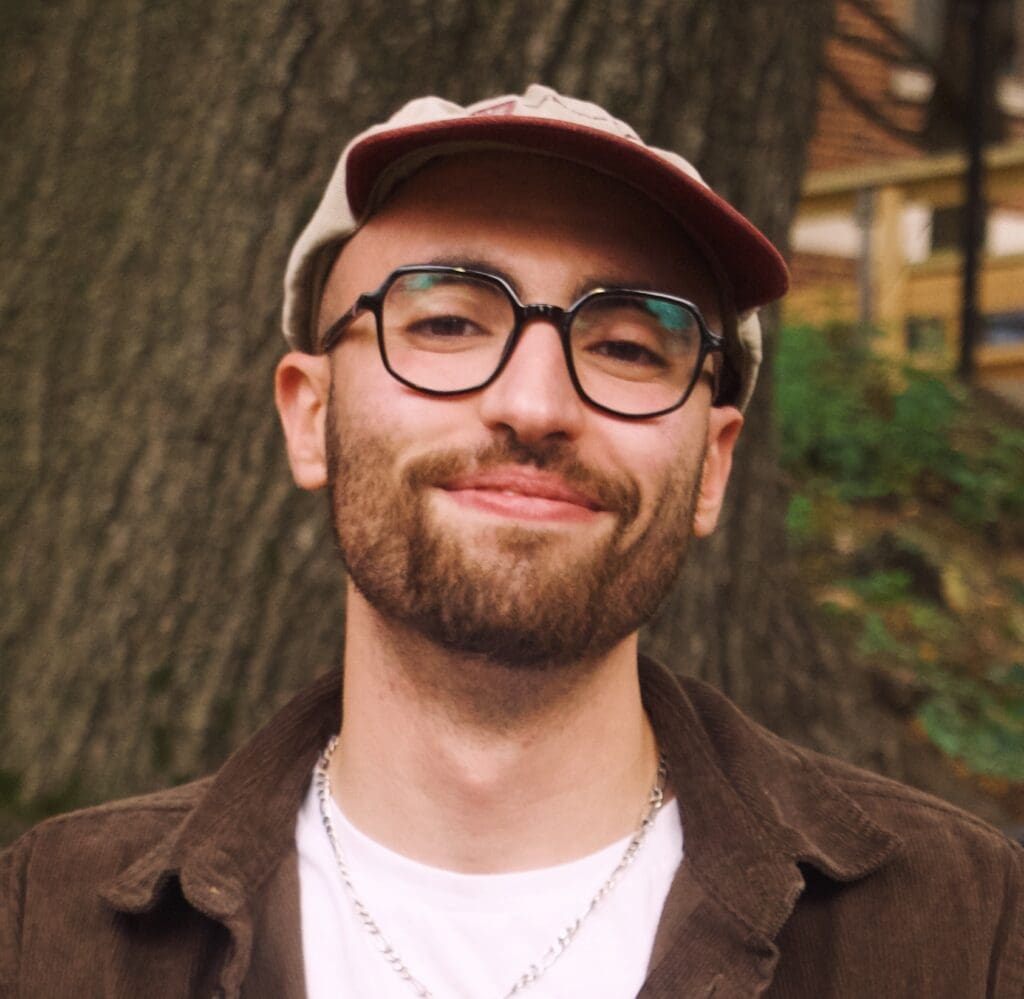
Layth Malhis is a graduate student at Georgetown University’s Center for Contemporary Arab Studies, where his work focuses on settler colonialism and Palestinian health. His research advances the concept of “de-healthification” as an analytical framework for understanding the systematic dismantling and weaponization of healthcare in Palestine under successive regimes of colonial control. He is also a researcher at the Institute for Palestine Studies, where he contributes to the Healthcare Destruction Database and scholarship on medical violence and colonial governance. Previously, he managed North American operations for the House of Jerusalem (Bayt al-Maqdis), a Palestinian food import initiative, examining how Palestinian businesses navigate occupation, global supply chains, and the political economy of dispossession.