
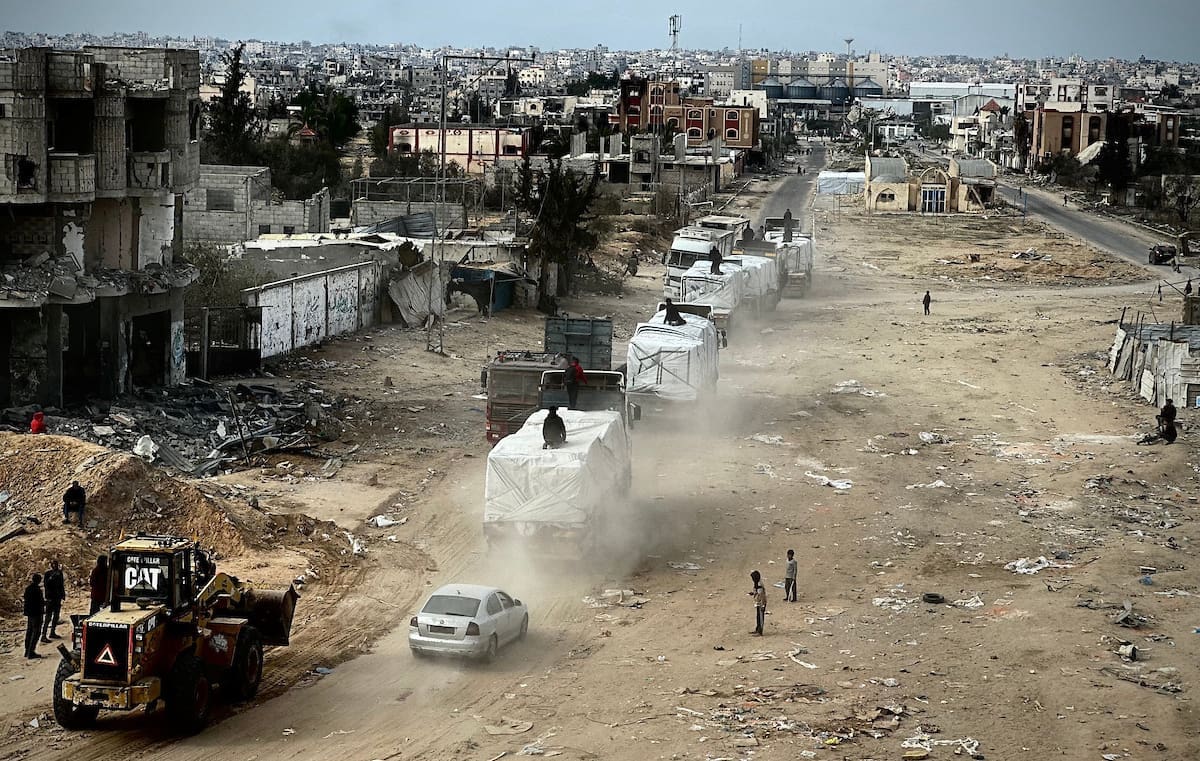
Trucks, carrying humanitarian aid, continues to enter through Kerem Abu Salim Border Gate to Rafah

The ceasefire in Gaza remains fragile as Israeli calls to resume the genocidal assault persist. Even if it holds, Gaza faces a new phase of uncertainty. In addition to killing tens of thousands of Palestinians over the last year and a half, Israel has destroyed much of Gaza in a deliberate attempt to render the land uninhabitable and “thin out” the population. Meanwhile, President Donald Trump continues to breathe life into Israel’s ethnic cleansing fantasies with repeated threats of a US takeover and transformation of Gaza into a luxury beachfront metropolis. Despite the threats, Palestinians in Gaza remain steadfast in their commitment to stay and rebuild their land.

What will it take to reconstruct Gaza, both physically and politically? What role will external actors play in facilitating or obstructing this effort? Can meaningful reconstruction happen under continued siege and occupation? In this policy lab, Dena Qaddumi and Jehad Abusalim join host Tariq Kenney-Shawa to discuss what the ceasefire in Gaza means for Palestinians and the state of the physical and political landscape that determines what comes next.
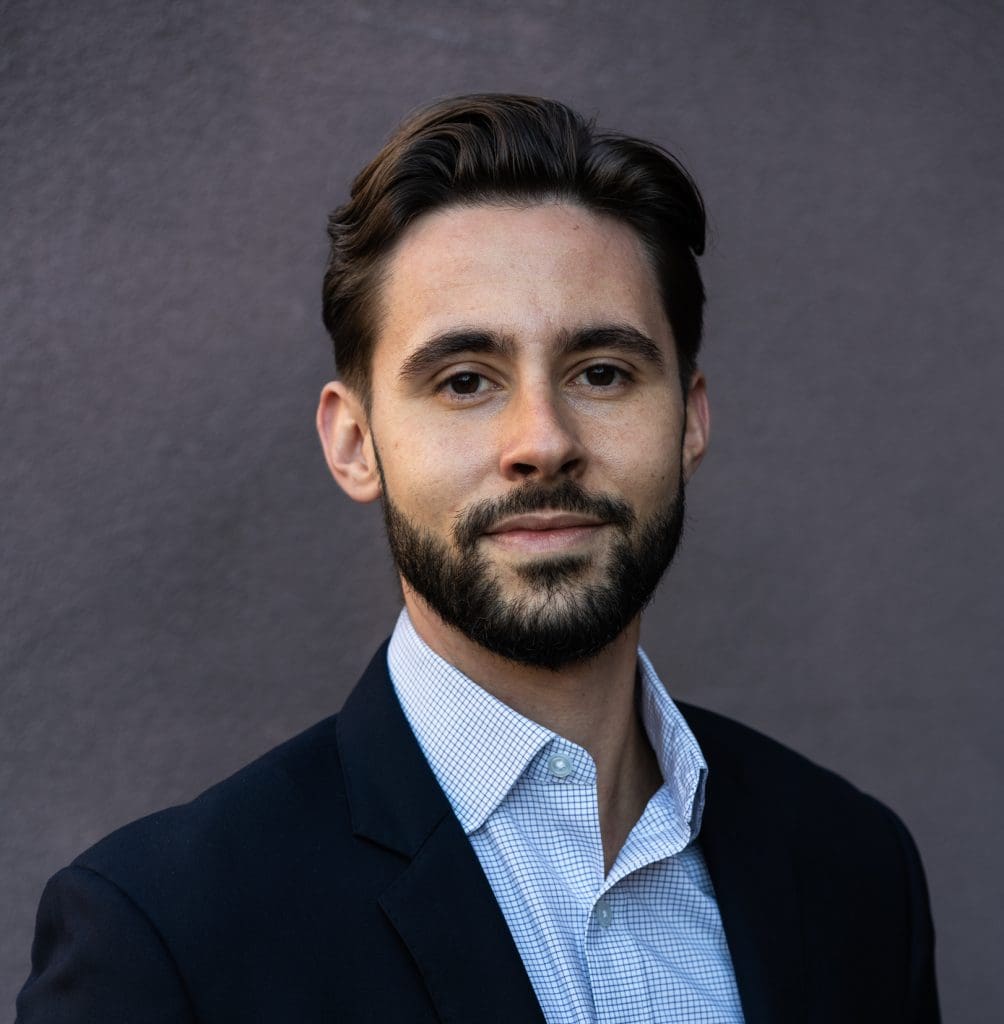
Tariq Kenney-Shawa is Al-Shabaka’s US Policy Fellow and co-host of Al-Shabaka’s Policy Lab series. He holds a Masters degree in International Affairs from Columbia University. Tariq’s research and writing have covered a range of topics, from the role of open-source intelligence in exposing Israel’s war crimes to analysis of Palestinian liberation tactics. His writing has appeared in The Los Angeles Times, Foreign Policy, and The Nation, among others. Follow Tariq on Twitter @tksshawa and visit his website at https://www.tkshawa.com/ for more of his writing and photography.

Jehad Abusalim is Executive Director of the Institute for Palestine Studies-USA in Washington, DC, and a PhD candidate in the Hebrew and Judaic Studies and History joint program at New York University. His research focuses on Palestinian and Arab writings and perceptions of the Zionist project before 1948, as well as the political and social history of the Gaza Strip and the impacts of the Nakba. He co-edited the anthology Light in Gaza: Writings Born of Fire (Haymarket Books, 2022).

Dena Qaddumi is a scholar of urban politics and the built environment. She coordinated the Palestine: Spaces and Politics curriculum.

In this article

Latest Analysis

 Politics
The US-Israeli war on Iran and Lebanon, as well as the ongoing genocide in Palestine, are reshaping the political landscape of the region. Alliances are being recalibrated, and old assumptions about US power are being tested. The war has also underscored how deeply the global economy remains tied to fossil fuels and to the strategic importance of the Gulf within international energy and trade networks. In this roundtable, Palestinian analysts Diana Buttu and Adam Hanieh examine what this moment reveals about the changing architecture of US imperial power, the regional order now taking shape, and the implications for the struggle for Palestinian liberation.
Diana Buttu,Adam Hanieh· Jun 10, 2026
 Politics
People across the world are living through a moment of profound crisis. The ongoing genocide in Gaza, the US-Israeli war on Iran and Lebanon, the resulting energy and economic shocks, and the erosion of the international legal order are unfolding alongside the fragmentation of the Western-led global system. Together, these converging tremors are exposing the limits of US hegemony, reshaping the strategic positions of Arab Gulf states and China, and intensifying debates over multipolarity, regional realignment, and South-South solidarity. In this roundtable, Yara Hawari and Tareq Baconi reflect on this impasse, highlighting the centrality of Palestine to understanding the historic transformations the world is witnessing today. They discuss the bankruptcy of the liberal international order, the changing dynamics of the US-Israeli imperial power in West Asia, and the ways Palestine has emerged as a converging point through which a different global order may be forced into being.
Al-Shabaka Yara Hawari
Yara Hawari,Tareq Baconi· May 26, 2026
 Politics
In this policy lab, Josh Ruebner and Ahmed Moor join host Tariq Kenney-Shawa to examine the fight over the Block the Bombs Act, wider efforts in Congress to restrict US military support for Israel, and what these battles reveal about the future of Palestine advocacy in US politics.
Al-Shabaka Tariq Kenney-Shawa
Tariq Kenney-Shawa· May 21, 2026