Article - Tourism and Israel's Settler Colonial Project: Seeking Ethical Alternatives

The role of tourism in advancing Israel’s settler colonial project dates back to the arrival of Zionists in Palestine.

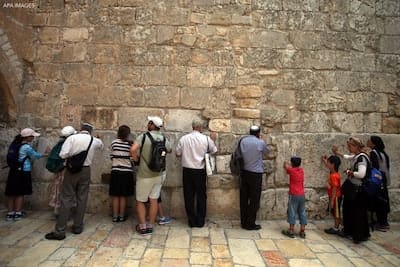
Today, it is most clearly articulated through religious tours that legitimize the Israeli regime’s continued theft of Palestinian land and oppression of the Palestinian people.

How does religious tourism in Palestine serve the Israeli regime’s colonial aspirations? How does it obstruct Palestinian economic self-determination and liberation? Which alternatives exist for those who wish to visit Palestine ethically? In our final policy lab of 2020, analysts Halah Ahmad and Marya Farah address these questions and explore possibilities for ethical tourism in Palestine.

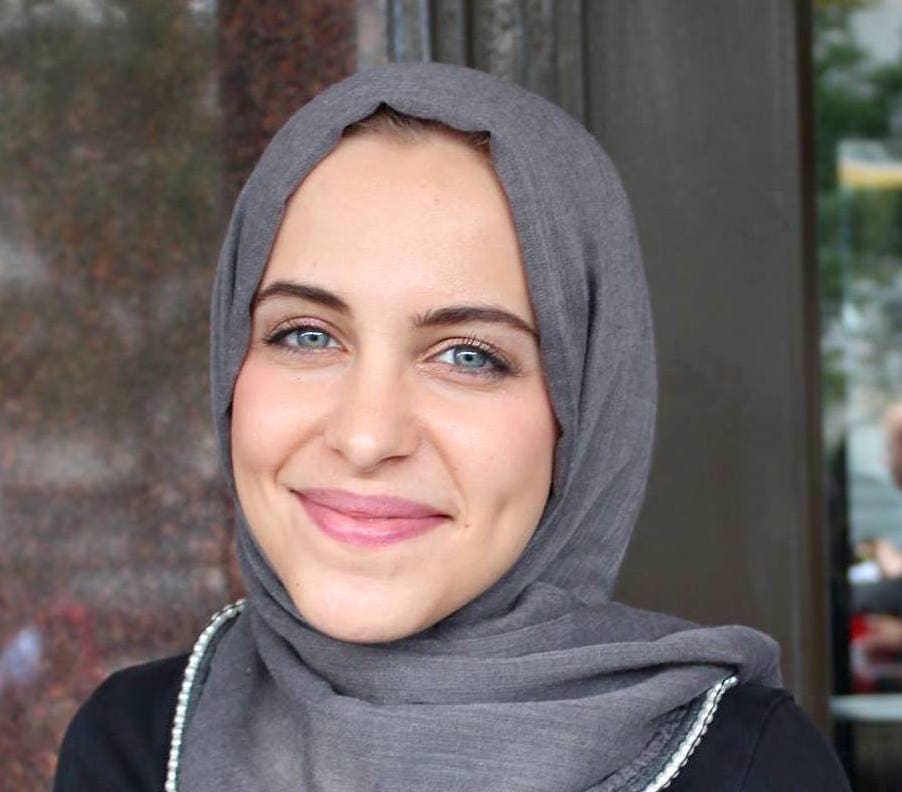
Halah Ahmad is a policy researcher, writer, and policy communications expert. Most recently, she led legislative affairs as VP for Policy at the Jain Family Institute, an applied social science research institute based in New York City. Halah also served as the US Policy Fellow for Al-Shabaka, and has conducted strategic policy research for government agencies and NGOs in Greece, Albania, Germany, Palestine, and the US. Halah received her Masters in Public Policy from Cambridge University as a Harvard-Cambridge scholar. Her work has been featured in The New York Times, Vox, The LA Times, The Hill, USA Today and other outlets. 
With: Marya Farah

Latest Analysis

 Politics
People across the world are living through a moment of profound crisis. The ongoing genocide in Gaza, the US-Israeli war on Iran and Lebanon, the resulting energy and economic shocks, and the erosion of the international legal order are unfolding alongside the fragmentation of the Western-led global system. Together, these converging tremors are exposing the limits of US hegemony, reshaping the strategic positions of Arab Gulf states and China, and intensifying debates over multipolarity, regional realignment, and South-South solidarity. In this roundtable, Yara Hawari and Tareq Baconi reflect on this impasse, highlighting the centrality of Palestine to understanding the historic transformations the world is witnessing today. They discuss the bankruptcy of the liberal international order, the changing dynamics of the US-Israeli imperial power in West Asia, and the ways Palestine has emerged as a converging point through which a different global order may be forced into being.
Al-Shabaka Yara Hawari
Yara Hawari,Tareq Baconi· May 26, 2026
 Politics
In this policy lab, Josh Ruebner and Ahmed Moor join host Tariq Kenney-Shawa to examine the fight over the Block the Bombs Act, wider efforts in Congress to restrict US military support for Israel, and what these battles reveal about the future of Palestine advocacy in US politics.
Al-Shabaka Tariq Kenney-Shawa
Tariq Kenney-Shawa· May 21, 2026
 Civil Society
We cannot understand Gaza’s endurance through a binary that casts Palestinians, individually or collectively, as either heroic in their resistance or passive victims. Rather, we must approach it through a decolonial conception of sumud (steadfastness): a historically situated, relational, and materially conditioned practice of collective endurance that emerges, shifts, and persists within ongoing colonial violence.
Abdalrahman Kittana· May 12, 2026