



A comparison between the two major popular confrontations between Palestinians and Israeli military forces over the last two decades indicates that the Palestinian Authority’s security forces (PASF) will likely continue to suppress Palestinian resistance to Israeli hegemony in the event of a new uprising. The first was the Second intifada (2000-2005) and the second was the Unity Intifada, which began in May 2021.
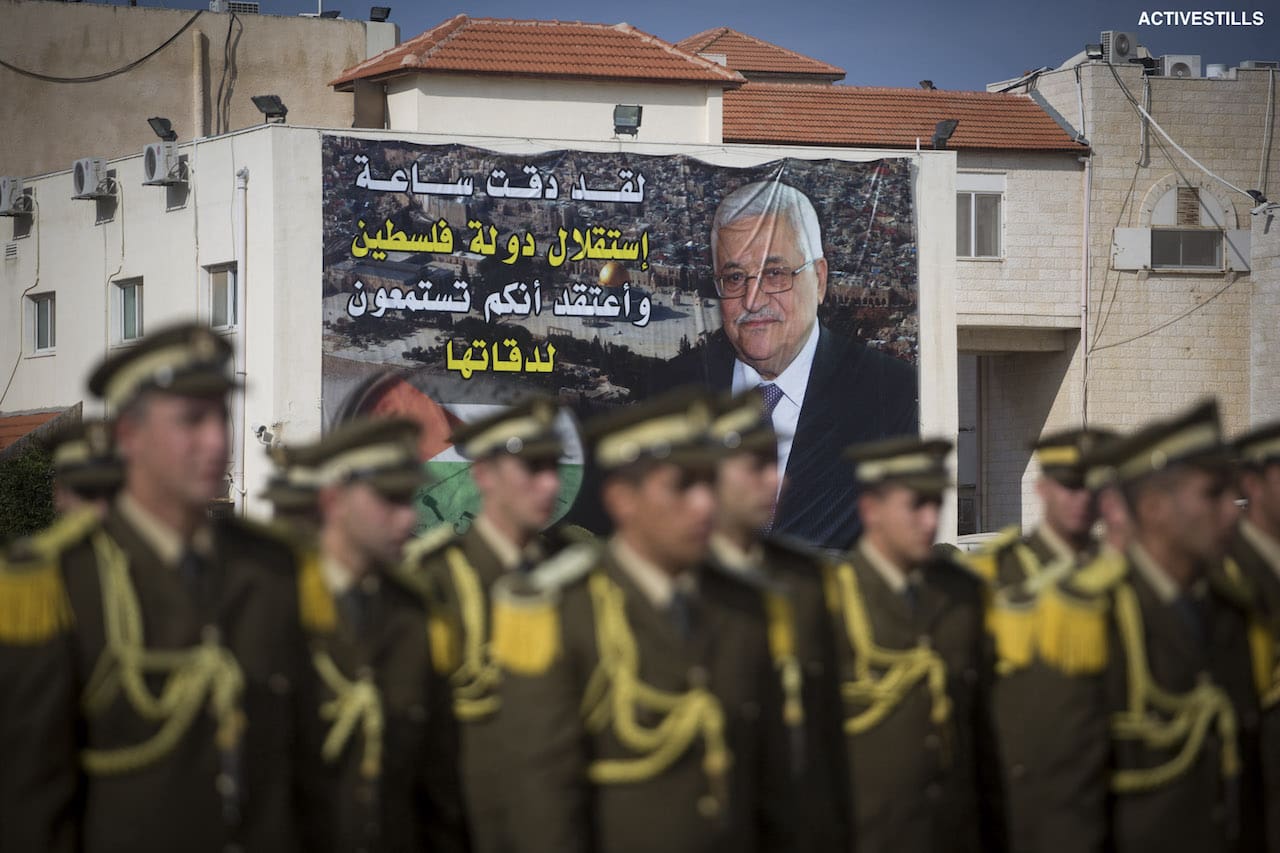
During the Second Intifada, many among the PASF’s members and across its ranks took active part in the armed resistance. The PASF saw its involvement as self-defense against Israeli aggression, prioritizing the safety of the Palestinian people. In retaliation, Israel destroyed the PASF’s infrastructure and undertook a mass arrest campaign of its personnel, many of whom remain in Israeli prisons to this day.
In the absence of a functioning security service and a centralized authority that could monopolize the means of force, Palestinian society descended into a state of chaos and insecurity that lasted until 2007. It was only after Hamas’s electoral victory in 2006 that the international community and Israel saw the imperative of revamping the PASF to clamp down on Hamas and other factions, and provided it with more financial and logistical support.
Meanwhile, the justice sector was also left defunct during and following the Second Intifada. Criminal, civil, and personal status issues were dealt with outside the purview of the PA, and Palestinians resorted to using tribal, local, and sharia courts. The justice sector, like the rest of the PA establishment, was later rebuilt, and the most urgent legal needs were prioritized, starting with criminal jurisdiction. International financial and logistical support was provided to revamp the PA’s legal apparatus. However, international aid has done little to keep the legal systems in the West Bank and Gaza from becoming partisan institutions in which judicial appointment and promotion is at the discretion of the ruling political elite. The structural organization and functioning of the rule of law has effectively become subject to political interest.
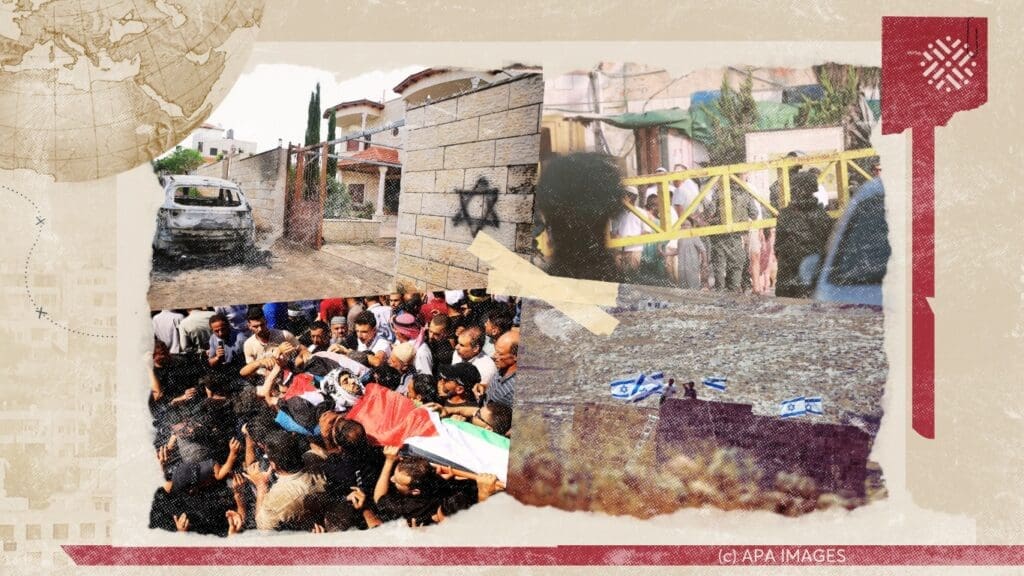
During the 2021 Unity Intifada, the PASF’s relationship to Palestinian civilians was largely antagonistic. On May 14, 2021, Palestinians in the West Bank staged more than 80 demonstrations in PA-controlled towns and refugee camps, as well as near Israeli military checkpoints. The following day marked the anniversary of the Nakba, and demonstrations broke out in cities such as Hebron, Ramallah, Nablus, and Qalqilya, countered by renewed Israeli repression.
In Ramallah and al-Bireh, protesters marched from the city center to Beit El, an Israeli settlement just outside al-Bireh, meeting no resistance from Palestinian forces who, under the terms of the PA’s security coordination agreement with the Israeli regime, would normally have blocked their advance. In this instance, the PASF adopted a low profile, unlike during the Second Intifada. It did, however, take note of those in attendance at some demonstrations but, with one or two minor exceptions, went no further. Yet once the “ceasefire” was announced between Israel and Hamas in May 2021, the PASF launched a mass arrest campaign against those who participated in West Bank protests, including activists who had registered as candidates for the legislative elections. They included Hamas members and members of Mohammed Dahlan’s Democratic Reform Bloc.
The international community is invested in guaranteeing that the PASF remains committed to the status quo. Since its establishment, the PASF has been continuously reformulated, trained, and equipped around international political objectives. Namely, security governance in Palestine has consistently centered on counterterrorism, a term that encompasses any objectors to the established order. With increased investment and international oversight following the Second Intifada, these mechanisms have proven successful.
As the Unity Intifada showed, it is unlikely that the PASF will be a transformative force in the Palestinian struggle for liberation. Instead, it will likely disrupt and oppress any mass mobilization geared toward upending the status quo.

Tahani Mustafa is a lecturer in International Relations in the Department of War Studies at King’s College London, and a visiting fellow at the European Council on Foreign Relations (ECFR). She holds a PhD from the School of Oriental and African Studies (SOAS), University of London, and previously served as senior Palestine analyst at the International Crisis Group. Her research explores international mechanisms of security sector reform and governance in the occupied Palestinian territories.