



The revival of the Palestine Liberation Organization (PLO) and its role as the representative body of the Palestinian people in colonized Palestine and in exile would necessitate a redefinition of the concept of the Palestinian economy. The historical role of the PLO, and not the Palestinian Authority (PA), is to develop the economic and social conditions of Palestinians in exile, notably in refugee camps. With the PLO’s revival, the Palestinian economy would no longer be restricted to the West Bank and Gaza, but would also include Palestinian economic activity in 1948 territories and the diaspora.
Historically, the PLO had legitimacy wherever it was based. This was natural in an environment dominated by Arab regimes threatened by the rise of an armed Palestinian revolution and the wave of popular mobilization it inspired. The PLO settled in Lebanon in the early 1970s following the events of Black September in Jordan, which resulted in its suppression by the Jordanian regime. In Lebanon, the PLO formed a de facto state within the Lebanese state.
Alongside the PLO’s political and military power, a system of social services, community mobilization, trade unions, and industrial production formed in the refugee camps. Palestinian and Gulf capitalists, in addition to the Samed Society, financed this system in support of the PLO. Samed was an industrial society of 21 factories established to employ the children of Palestinian martyrs in Lebanon and to ensure essential commodities for Palestinian consumption. However, Samed was dissolved after the Israeli invasion of Lebanon in 1982 and the subsequent dispersal of the PLO across different Arab countries. After 1982, the PLO became more dependent on financial support from the capitalists, which resulted in their domination over its political decisions.
Current conditions differ from those of the 1970s. First, a number of Arab countries have engaged in normalization agreements with Israel. Second, Palestinians in exile are more dispersed and have few networks connecting them. The PLO’s trade unions in exile have no real existence in Palestine. Third, Fatah is much weaker than it was in the 1970s and 1980s. Thus, any reliance on Arab and Palestinian capitalists to reestablish the PLO is an illusion. As such, the strength of a reconstructed PLO would not begin in exile, as was the case when it was established in 1964. Rather, its reestablishment needs to start inside colonized Palestine and then connect with Palestinians in exile.
PLO economic power can result from the reunification of economic activity across colonized Palestine — that is, between Palestinians in the West Bank and Gaza from one side and Palestinians in 1948 territories from the other. This cooperation can expand the productive base of Palestinian economic activity, since Palestinians from 1948 territories have more freedom of movement.
However, these efforts would need to confront the neoliberal paradigm of the PA, which resulted in the rise of a capitalist class in Palestine. As this class has dominated the decisions of the PA, it would likely dominate the PLO in turn, with the union of Palestinian capitalists inside and outside Palestine putting real pressure on any new Palestinian leadership. Given normalization between Arab countries and the Israeli regime, Palestinian investors in exile could network with Palestinians in the West Bank to facilitate and legitimize the normalization of economic relations.
Reconnecting Palestinians in Palestine with those in exile can deepen the steadfastness of the Palestinian people worldwide and help prevent such conditions. However, to make sure this development supports the resilience of Palestinians on the ground, and to prevent any legitimization of normalization with Israel, an alternative paradigm to neoliberalism is needed. The paradigm discussed in the following scenario of an uprising, based on solidarity and resistance, could help to obstruct normalization. The institutions within this paradigm could also direct support to the Palestinian people to achieve more resilience.
The relationship between the PLO and the PA depends on the result of the second and third scenarios. If the collapse of the PA occurs due to Israeli regime and international restrictions, the PLO would need to absorb the PA’s debt. If the PA were localized and restructured, it would not transfer its debt to the PLO; rather, the PLO would be the central authority supervising the PA’s institutions.
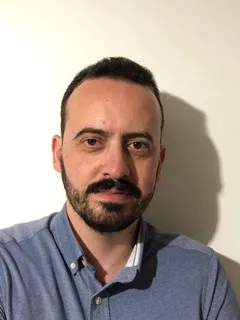
Tareq Sadeq is Assistant Professor of Economics and Dean of the Faculty of Business and Economics at Birzeit University. He holds a Ph.D in economics from the University of Evry Val d’Essonne in France, where he was engaged in the Palestine solidarity movement and served as head of the General Union of Palestinian Students (GUPS). Tareq has published on monetary policy, macroeconomics, econometrics, labor economics, income inequalities, and entrepreneurship. He is also a researcher in Palestine’s Global Entrepreneurship Monitor (GEM).