topicCivil Society
In February 2021, Defense for Children International–Palestine (DCIP) reported that Israeli interrogators had raped a 15-year-old Palestinian boy in detention. Rather than investigate the allegation, Israeli forces raided DCIP’s offices and later designated it—along with five other Palestinian human rights groups—as a “terrorist organization.” While such abuses and crackdowns are not new, this moment marked a decisive escalation: the shift from harassment of Palestinian civil society to its outright criminalization with the full support and participation of the US.
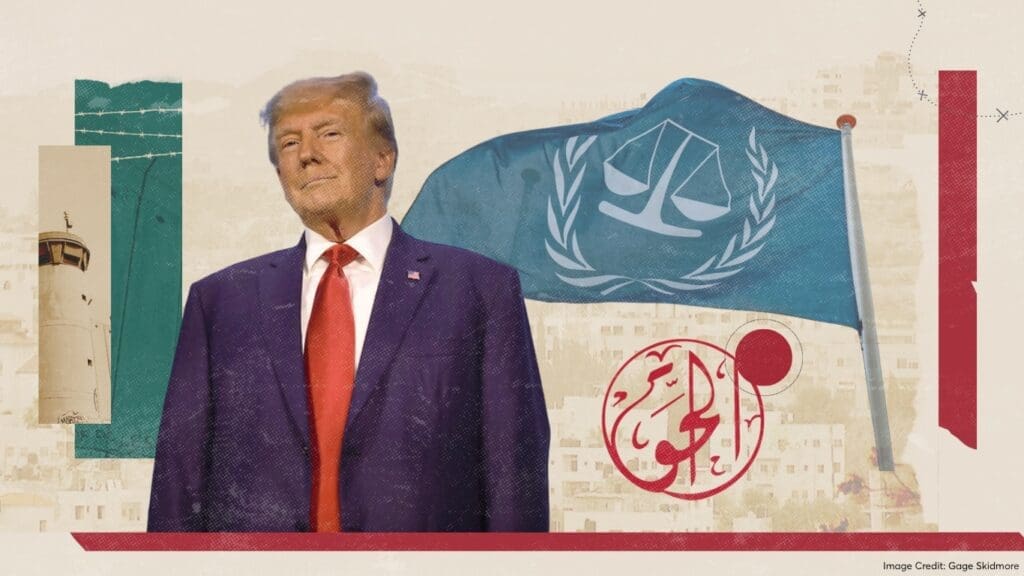
In 2025, the Trump administration designated six Palestinian organizations under counterterrorism frameworks before advancing even further, sanctioning leading human rights groups for engaging with the International Criminal Court. These measures move beyond targeting individual actors to undermining the very infrastructure of international accountability.
This policy brief argues that the campaign by the US and the Israeli regime against Palestinian civil society and international law carries global consequences, threatening mechanisms designed to hold state violence in check. It concludes with recommendations for how Palestinian organizations and their allies can adapt, defend themselves, and pursue justice in an increasingly hostile environment.

Tariq Kenney-Shawa· Mar 31, 2026
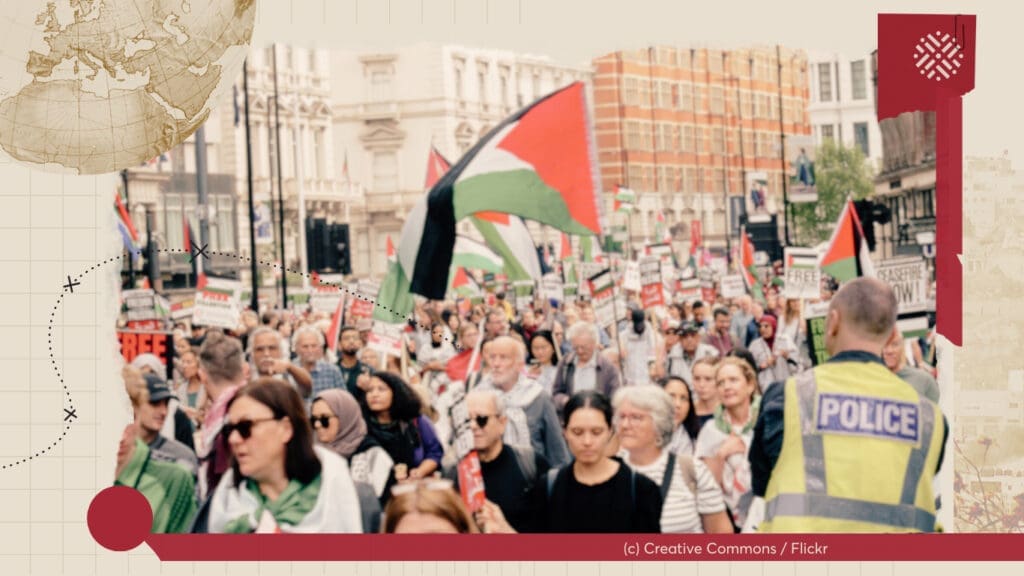
On November 4, 2025, the UK government tabled an amendment to the Crime and Policing Bill to curtail protest rights under the pretext of “cumulative disruption.” The revised Bill is now in the House of Lords Committee, where it is scrutinized before advancing toward final approval. The amendment signals a profound shift in how the state regulates public protest. While the government presents the Bill as a neutral public order measure, it emerges directly from sustained national demonstrations for Palestinian rights and introduces new legal concepts that threaten long-established democratic freedoms.
This roundtable examines the Bill’s political drivers, legal architecture, and wider implications for social movements and civil liberties in the UK. It shows that the amendment is not simply a public order measure; it is a coordinated political and legal project to narrow the space for dissent in the UK. While Palestinian solidarity is the immediate target of the crackdown on freedom of assembly, the roundtable argues that the consequences will reverberate across labor organizing, racial justice, climate activism, and broader democratic participation.


Layth Malhis discusses the concept of "de-healthification" as the governing logic of health under settler colonialism: the systematic degradation, obstruction, and weaponization of the very conditions that make health of the Indigenous population possible.

Layth Malhis· Jan 29, 2026
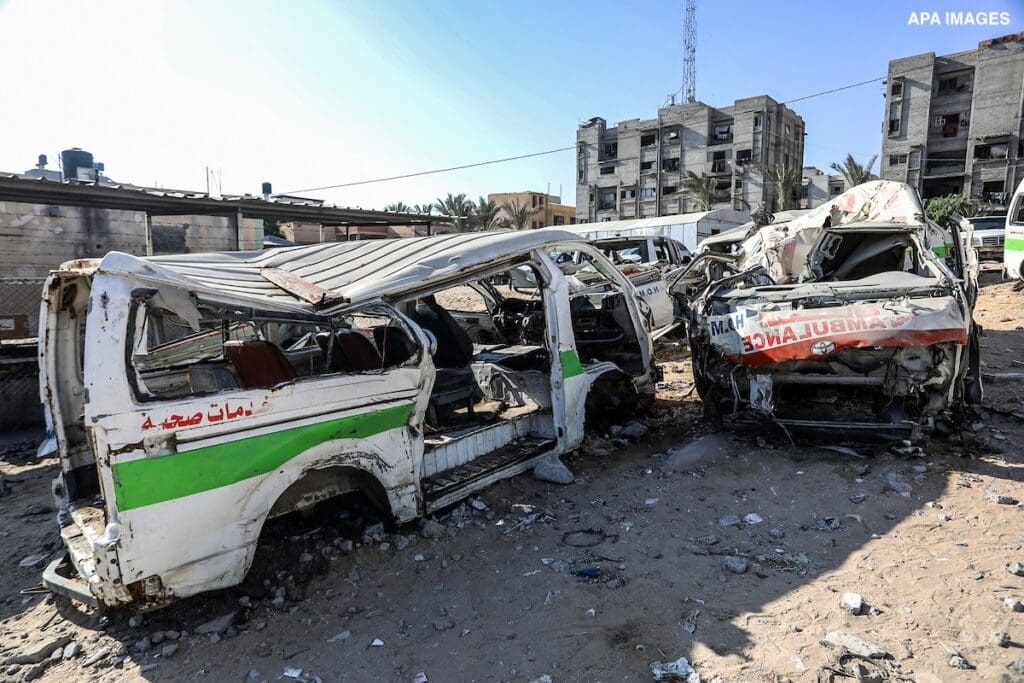
This policy brief introduces de-healthification as a framework for understanding Israel’s systematic destruction of Palestinian healthcare infrastructure, particularly in Gaza. Rather than viewing the collapse of Gaza’s health system as a secondary outcome of the genocide, the brief argues that it is the product of long-standing policies of blockade, occupation, and structural neglect intended to render Palestinian life unhealable and perishable.
By tracing the historical evolution of de-healthification, this brief argues that naming the process is essential for accountability. Because intent is revealed through patterns of destruction rather than explicit declarations, the framework of de-healthification equips policymakers, legal bodies, and advocates to identify healthcare destruction and denial as a core mechanism of settler-colonial control.

Layth Malhis· Jan 11, 2026
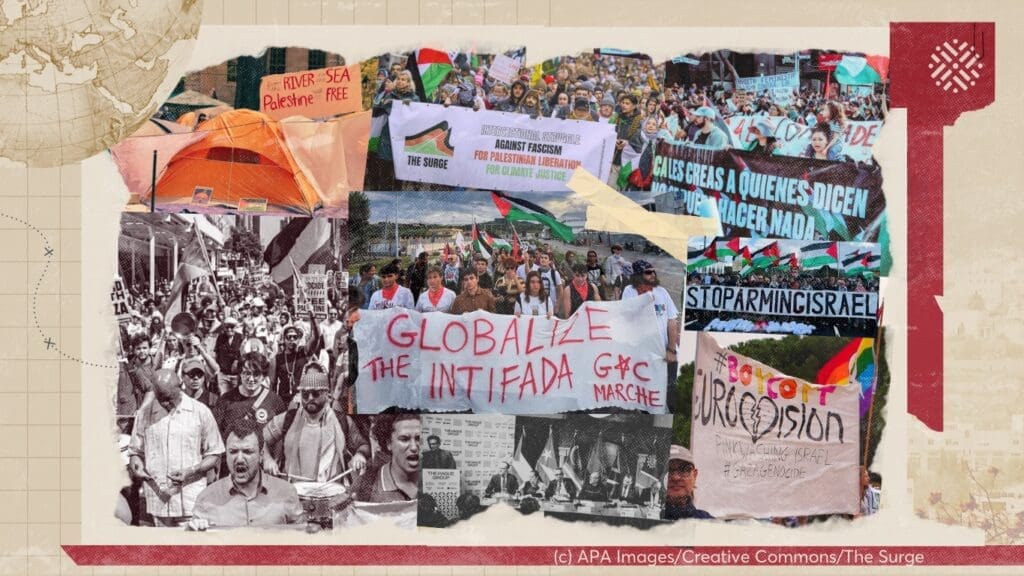
The global reckoning that followed October 7, 2023, marked a profound rupture in how Palestine is understood worldwide. The Gaza genocide exposed how Israeli mass violence is not exceptional or reactive, but foundational to the Zionist project. What was once framed as a “conflict” to be managed is now widely recognized as a system of domination to be dismantled. It ushered in a shift away from the technocratic language of peace processes and toward an honest confrontation with the structural realities Palestinians have long named: settler colonialism, apartheid, and the ongoing Nakba.
The commentary argues that the Israeli genocidal campaign in Gaza has radicalized the world. When crowds march through global capitals demanding a free Palestine, they simultaneously articulate demands for the abolition of racial capitalism, extractive regimes, climate injustice, and all forms of contemporary fascism. In this moment of radical clarity, Palestine becomes a lens through which the underlying architecture of global domination is laid bare—and through which new horizons of collective freedom emerge.

Tareq Baconi· Dec 21, 2025
Egyptian researcher and activist Engy Sarhan joins this month’s podcast to unpack the recent Global March to Gaza—offering critiques and urgent lessons for the international solidarity movement with Palestine.

Al-Shabaka: The Palestinian Policy Network· Jul 29, 2025
In this policy lab, Mariam Barghouti and Sharif Abdel Kouddous join host Tariq Kenney-Shawa to discuss Israel’s targeted assassination campaign against Palestinian journalists, the complicity of Western media in normalizing these crimes, and how this silence allows Israel to get away with genocide.

Mariam Barghouti· May 28, 2025
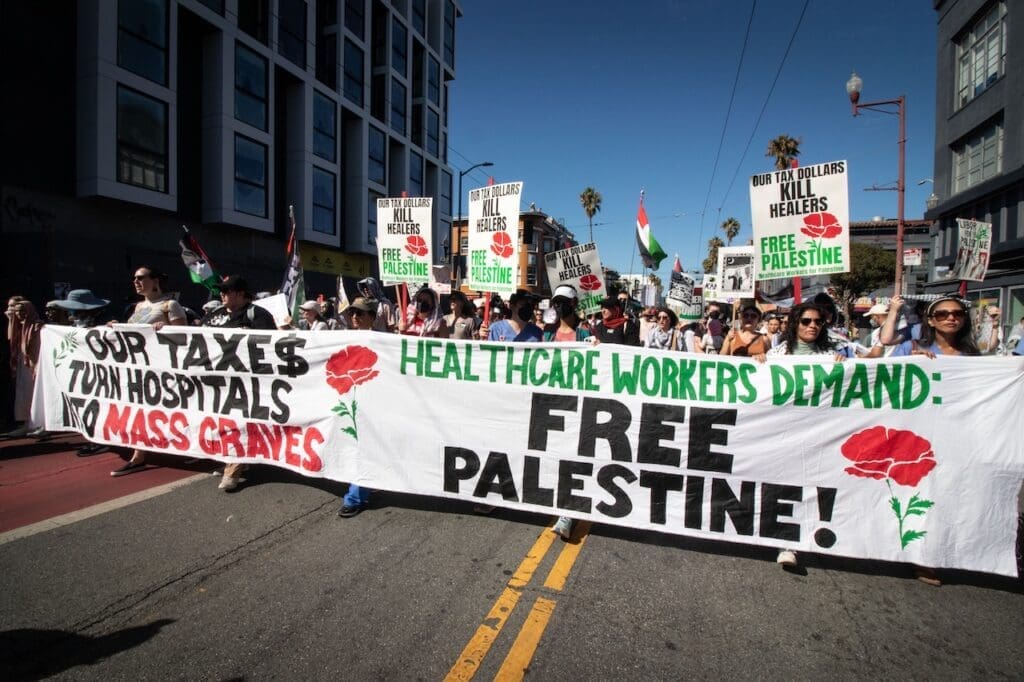
As the US and its allies lead a sweeping assault on the global legal order to shield the Israeli regime from accountability for genocide, international outrage has sparked an extraordinary wave of pro-Palestine solidarity and organizing. Millions have taken to the streets in a broad-based protest movement that marks a profound shift in public consciousness. In addition, a growing surge of grassroots initiatives has solidified Palestine as a central pillar in the global struggle for justice.
Al-Shabaka’s latest Focus On explores how this solidarity is expanding and being reimagined globally. It highlights both the significant challenges facing the movement amid a vicious crackdown on pro-Palestine activism and the powerful, imaginative strategies that are emerging in resistance. Featuring insights from analysts across advocacy, academia, and policy, this collection examines how such solidarity can be sustained and transformed into a lasting political force.

Al-Shabaka: The Palestinian Policy Network· May 27, 2025
Agnese Valenti of the European Legal Support Center joins Yara Hawari to examine how Israeli regime-backed NGOs are driving coordinated attacks on Palestinian civil society and pro-Palestine solidarity movements across Europe.

Al-Shabaka: The Palestinian Policy Network· Apr 29, 2025
One year after Hamas’s Al-Aqsa Flood operation, the Heritage Foundation launched Project Esther—an initiative to suppress Palestinian solidarity under the guise of combating antisemitism. The project relies on censorship, lawfare, and intimidation to dismantle advocacy for Palestinian rights as part of a broader bipartisan crackdown that has onlyintensified under Donald Trump’s administration.
This policy brief situates Project Esther within the escalating assault on free speech and dissent, revealing how the repression of Palestine advocacy serves as a litmus test for US democracy. It also outlines strategies to resist this authoritarian turn and ensure that the fight for Palestinian liberation remains central to the broader struggle for justice and equality.

Tariq Kenney-Shawa· Apr 15, 2025
In this policy lab, Yara Asi and Layth Hanbali join host Tariq Kenney-Shawa to discuss Israel’s systematic assault on civilian infrastructure across Gaza and efforts to survive and rebuild against all odds.


Media & Outreach
The lawlessness and brutality of the US-Israeli genocide in Gaza have now spread to other parts of the world.

Yara Hawari· Mar 29, 2026
Yara Hawari, the co-director of the Palestinian policy network Al-Shabaka, speaks to Afikra's This Is Not a Watermelon podcast about Palestinian storytelling from oral histories that transmit our stories across generations, to policy analysis that explains what is happening to us today in our own voices.

Yara Hawari· Mar 19, 2026
The 501(c)(3) Israel Justice Organization aims to influence U.S. officials to advance Israeli interests and address antisemitism. Its leaders include former members of the IHF.

Tariq Kenney-Shawa· Mar 11, 2026
We’re building a network for liberation.

As the only global Palestinian think tank, we’re working hard to respond to rapid developments affecting Palestinians, while remaining committed to shedding light on issues that may otherwise be overlooked.