Ongoing Nakba: Sheikh Jarrah, Gaza, and Historic Palestine

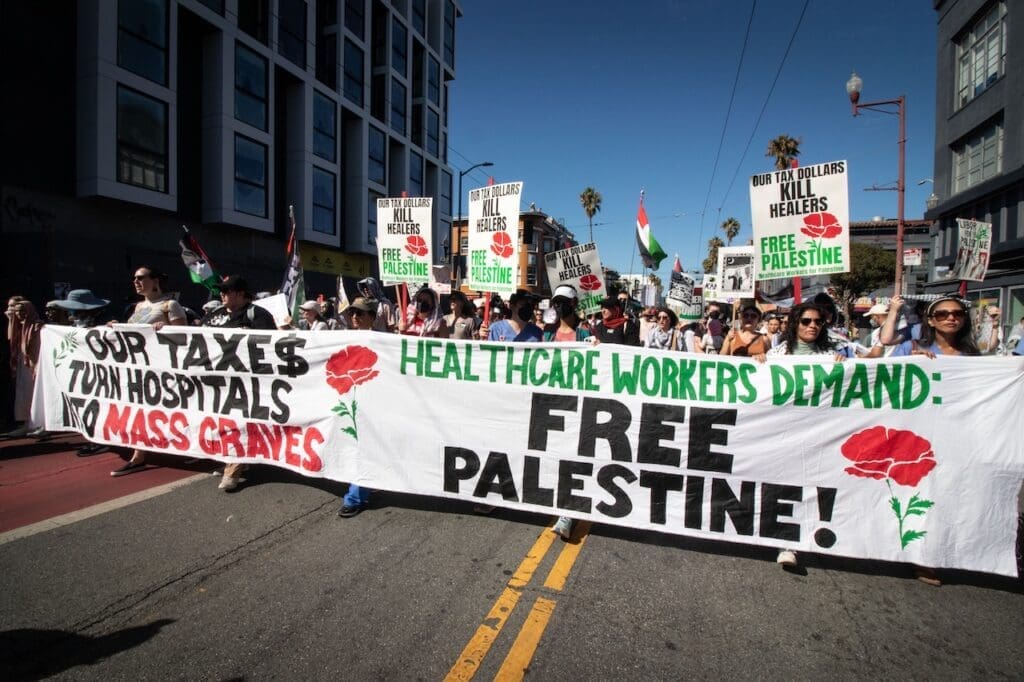
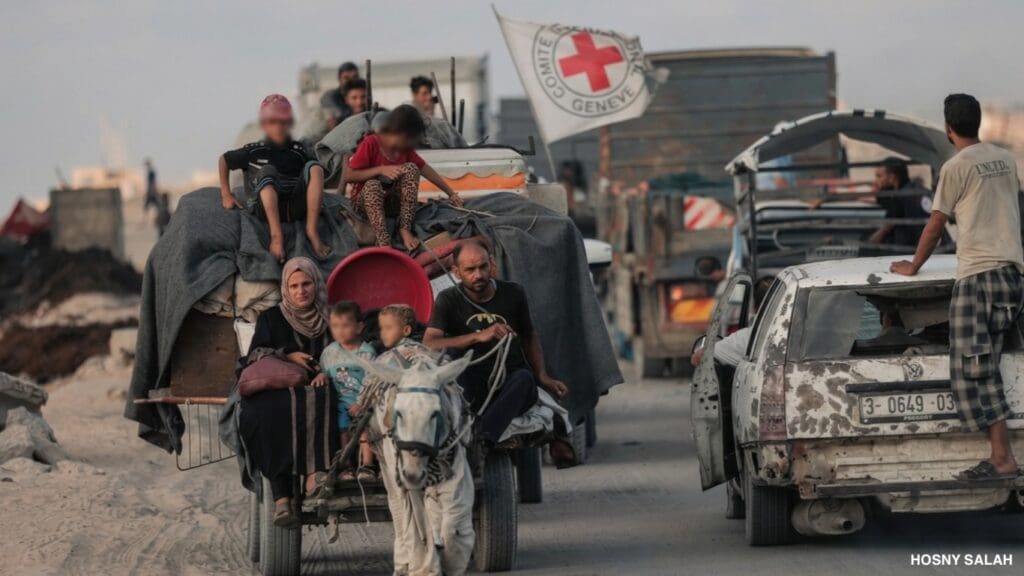
The dramatic events that have taken place the last few weeks in Gaza, Jerusalem, and across historic Palestine have been unfolding as Palestinians commemorate the 74th year of the Nakba on May 15.

How do the recent assaults on Palestinians in Jerusalem, Gaza, and across historic Palestine reflect the structural realities of Israel’s military occupation and settler-colonial foundations? Do the reactions of Palestinians across historic Palestine represent a change in the narrative of Palestinian resistance? How can the frameworks of settler colonialism and apartheid be employed to dismantle the practices that drive Israel’s violence?

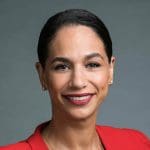
Join guests Aseel Albajeh and Saleh Higazi alongside host Nadim Bawalsa as they navigate these questions and more in our forthcoming policy lab.

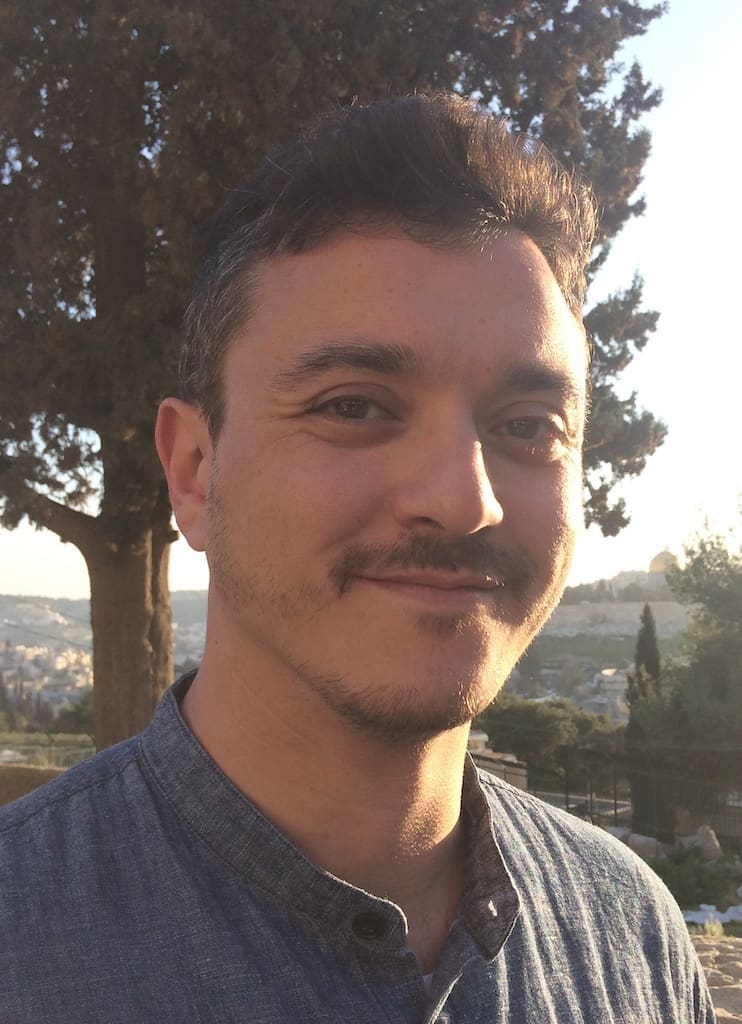
Saleh Hijazi is the Apartheid-Free Policy Coordinator at the Palestinian Boycott, Divestment and Sanctions National Committee (BNC), the leadership of the global nonviolent movement working to end complicity with and towards dismantling Israel’s settler-colonialism, military occupation, and apartheid. Before joining the BNC movement Saleh spent 11 years at Amnesty International, most recently as MENA Deputy Regional Director, and was co-author of the organization’s report “Israel’s Apartheid Against Palestinians: Cruel System of Domination and Crime Against Humanity”. He had previously worked with Al-Quds University Human Rights Clinic in Palestine. Saleh is a Palestinian, born and raised in Jerusalem and holds a BA in liberal arts from Lawrence University and MA in human rights from the University of Essex.

Nadim Bawalsa is Associate Editor with the Journal of Palestine Studies. From 2020-2023, Nadim served as Al-Shabaka’s commissioning editor. He is a historian of modern Palestine, and author of Transnational Palestine: Migration and the Right of Return before 1948 (Stanford University Press, 2022). His other work has appeared in the Jerusalem Quarterly, the Journal of Palestine Studies, NACLA Report on the Americas, and as well as in edited volumes. He earned a joint doctorate in History and Middle Eastern & Islamic Studies from New York University in 2017, and a Master’s in Arab Studies from Georgetown University’s Center for Contemporary Arab Studies in 2010. In 2019-2020, he was awarded a PARC-NEH fellowship in Palestine.  
Latest Analysis

 Politics
People across the world are living through a moment of profound crisis. The ongoing genocide in Gaza, the US-Israeli war on Iran and Lebanon, the resulting energy and economic shocks, and the erosion of the international legal order are unfolding alongside the fragmentation of the Western-led global system. Together, these converging tremors are exposing the limits of US hegemony, reshaping the strategic positions of Arab Gulf states and China, and intensifying debates over multipolarity, regional realignment, and South-South solidarity. In this roundtable, Yara Hawari and Tareq Baconi reflect on this impasse, highlighting the centrality of Palestine to understanding the historic transformations the world is witnessing today. They discuss the bankruptcy of the liberal international order, the changing dynamics of the US-Israeli imperial power in West Asia, and the ways Palestine has emerged as a converging point through which a different global order may be forced into being.
Al-Shabaka Yara Hawari
Yara Hawari,Tareq Baconi· May 26, 2026
 Politics
In this policy lab, Josh Ruebner and Ahmed Moor join host Tariq Kenney-Shawa to examine the fight over the Block the Bombs Act, wider efforts in Congress to restrict US military support for Israel, and what these battles reveal about the future of Palestine advocacy in US politics.
Al-Shabaka Tariq Kenney-Shawa
Tariq Kenney-Shawa· May 21, 2026
 Civil Society
We cannot understand Gaza’s endurance through a binary that casts Palestinians, individually or collectively, as either heroic in their resistance or passive victims. Rather, we must approach it through a decolonial conception of sumud (steadfastness): a historically situated, relational, and materially conditioned practice of collective endurance that emerges, shifts, and persists within ongoing colonial violence.
Abdalrahman Kittana· May 12, 2026