


About This Episode
Episode Transcript
The transcript below has been lightly edited for brevity and clarity.
Yara Hawari 0:00
From Al-Shabaka, the Palestinian Policy Network, I am Yara Hawari, and this is Rethinking Palestine.
The Foundations of Zionism was originally published in Arabic over two volumes in 1977 and 1986, written by renowned Palestinian scholar and former director of the Palestine Research Center in Beirut, Sabri Jiryis. This work is an intimate analysis of the ideology of Zionism, its foundations and beginnings, and the institutions and prevailing narratives that supported its eventual manifestation in the establishment of the state of Israel.
Drawing on primary sources as well as Sabri’s own expertise as a scholar and lawyer who lived through the Nakba, graduated from the Hebrew University in Jerusalem, and then later served in the PLO, this work was and continues to be a vital contribution to literature on Zionism.
Decades later, on October 7, 2025, The Foundations of Zionism was published in English for the first time by Liberated Texts in a collaborative series with Ebb Books, who notably have also published translations of Ghassan Kanafani’s writings.
The translation of The Foundations of Zionism was done by none other than Sabri’s daughter, Fida Jiryis, who is also the author of a memoir titled Stranger in My Own Land.
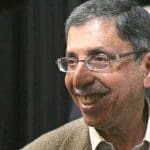
To discuss the significance of this work and its translation and publication in English on Rethinking Palestine is none other than Sabri Jiryis himself.
Before we talk about the book, Sabri, I would like to ask you about the Palestine Research Center and its significance to the political struggle. The center was set up by the PLO in 1965 to serve as a hub for Palestinian intellectual production and to conserve and archive source materials on Palestine and its people. Why was it important to have a research center that was explicitly tied to the political struggle?
Sabri Jiryis 2:12
I would reverse the question. Why is it not important? Of course it is important. I still remember the day the Palestine Research Center was established, the decision was taken to establish it. I got my lawyer’s license in Israel on the 20th of February 1965, exactly the same day the decision was taken by the Executive Committee of the PLO to establish the Research Center. And at the same day, I was in Jerusalem, and I got my advocate’s license.
As far as I know — and I think I know well — it was very clear, and it was very natural that they established the center, because at that time the Palestinians were displaced everywhere. The Palestine question was almost fading away, going away. All of Palestine was just taken away. I mean, you could take note. You had part of it in Israel, part of it was the West Bank, which was [under Jordanian rule]. And the other part was another strip which was under Egyptian military rule. And the word “Palestine” had vanished from the UN in the early 1950s, before the mid-1950s, when Trygve Lie, the then Secretary-General of the UN, had changed the item on the list of the United Nations General Assembly from “the Palestine question” to “the situation in the Middle East.”
So the PLO wanted — under the leadership of Shuqairi, the founder of the PLO — to have an institute to start researching the Palestine question and documenting it. That’s all. It was so simple. And that’s exactly what the Palestine Research Center was doing and is doing until this day.
Yara Hawari 4:00
I wanted to ask: how can research and scholarly work better serve the liberation movement?
Sabri Jiryis 4:07
This has nothing to do exactly with the liberation movement. The people, they are fighting there and working and so on. They simply needed information. They have to know what’s going on, what to do, how to do. So you have not only to care for history, but you have also to care for the present situation — collect the news, comment on it, analyze it, and give it to them. I mean, without it, in fact, it’s very hard to work.
And you could see it — before knowledge was spreading, the Palestinians, and I think the Arabs also, were playing or were walking in the dark. They didn’t know whom they are fighting and what they are fighting for. So this was very important.
But I would add, in the meantime, due to the effort of the Institute for Palestine Studies and then the Research Center — and say a big wave that took all of the strategists almost — like, spreading knowledge about Israel and trying to educate people, even trying to teach them Hebrew so that they can follow up — let’s say a branch of knowledge has expanded very much.
And today, for example, almost in all Arab important newspapers, and even most Arab institutes who deal with the Palestinian question, you see too much material — translated or not — from the very heart of the Israeli press, which is quite a very good thing, to let people understand what is going on.
And I mean, even dealing now, asking just simple Palestinian people, you would sometimes think that they are almost half-experts on Israeli affairs, which is really very good. I like it very much. Meaning in this attitude, in this branch, in this activity, we really succeeded.
Yara Hawari 6:06
In 1983, the Israeli regime bombed the Palestine Research Center in Beirut. This was but one moment in a long history of the Israeli regime destroying or disrupting Palestinian knowledge production and preservation. Can you tell us about that specific attack?
Sabri Jiryis 6:22
The attack was on the whole existence of the PLO, and we were attacked as other parts of the PLO institutions. They didn’t come to attack us only. I mean, not only the Research Center. They attacked the PLO and all of its institutes, all of its organizations, and they simply wanted the PLO out of Lebanon, thinking that by driving the PLO out of Lebanon, they will just terminate the Palestinian question.
They didn’t do very much damage to us, but they simply robbed all of our material. They took our library away. They took even the furniture that was there, they took it. Later, they had to return it, and after something like 40 years, this material is now in the renewed PLO Research Center in Ramallah. We put it back. I mean, the other people, my colleagues there, are already arranging it and trying to return everything to its normal state as it was before.
I mean, we were only part, a small part of the damage that they wanted to do to the Palestinians.
Yara Hawari 7:30
Right. And this is also part of a longue durée of attacks on Palestinian intellectual production. Today, every university in Gaza has been bombed. Palestinian universities in the West Bank are continuously raided. And Palestinian knowledge production institutions abroad face lawfare and coordinated attacks to shut them down.
And that’s why, in the face of this systematic attempt to destroy Palestinian knowledge production and preservation, it is so important that Palestinian intellectual scholarship remains steadfast.
Sabri Jiryis 8:01
They want to extinguish the Palestinian people, to kill them, to say that there are — there were no Palestinians, they had no civilization, they had no heritage, they had nothing.
And it is up to this day — it is more deeper than you think. Because, for example, take now what is called the public opinion in Israel. Do you know what? Now perhaps you find eight or nine people who would support the establishment of a Palestinian state. Everybody of the Israelis know that the Palestinians are persecuted, they are killed, and they just say nothing. They don’t care.
Even now, the Saudis say Israel should establish a Palestinian state so that we can go on for normalization with them, and Netanyahu tells them, “Make a Palestinian state in your country, not here.”
So it is not only against Palestinian knowledge and history and so on — it is against the Palestinian people themselves, per se.
Yara Hawari 9:05
Sabri, turning to the book — why was it important to you to have your work on Zionism published in English at this moment, now so many years after it first came out in Arabic?
Sabri Jiryis 9:17
I think I should have done that years ago. It’s very important because there is a big fallacy going around with all Zionists and about Zionism. They portray Zionism as if it is part of Judaism and as if it has been existing since the Jews came into existence, which is really a very big lie. It is not this way.
My first aim was to let the Arabs, and the Palestinians especially, know more and more in depth about the Zionists, about the Zionist movement and its activities. And number two, to refute all of those assumptions that the Zionists and their allies were spreading around.
So having this book in English is very important, you know, to refute their arguments.
Yara Hawari 10:10
And why is it important for us — and in particular for us as Palestinians — to understand Zionism? Why is it important for Palestinians to write and publish about Israel and Zionism?
Sabri Jiryis 10:21
It’s getting worse. It’s really getting worse and worse. They continue killing Palestinians. They attacked Lebanon, Syria, Iraq, Qatar, Iran, and Yemen, and they committed a genocide in Gaza. They are really criminals, and they do the same thing — but on a smaller scale — as the Nazis did to the Jews in Europe.
What does that mean? How can you describe the destruction which they have done in Gaza? Bombing universities, mosques, schools, hospitals, you know, everything. It is really a genocide. Really, I’m not kidding. Just exactly, that is genocide. And they are doing now the same thing to Lebanon. They give the people orders from a big, big area to leave it, otherwise they will kill them. So it is really a criminal state, a criminal regime, and they know nothing except crime — as long as they feel that they are losing.
For example, today, you know, something like a funeral in Israel. They are very sad and very angry. I was following them from the early morning to see what their comments are on this agreement between Iran and the US. And I can tell you, you never know how much they hate it, how much they don’t want it, and how much they feel miserable. They don’t want this agreement. Neither do they want peace. They want the war to go on, and they want to destroy Iran, and they want to conquer Iran, and going to teach the Gulf some lessons, etc., etc.
Yara Hawari 12:02
So in this translation, there is a new concluding chapter that has been added on Gaza and understanding Zionism post-October 7th. Has something changed for you in your understanding of Zionism today, as opposed to when you first wrote about it nearly 50 years ago?
Sabri Jiryis 12:19
What I think — they are a new crusade. Some 900 years ago, Europe decided to rescue the tomb of Jerusalem, and they came with the crusade, or waves of attacks. Stayed here for about 200 years. And they were making treaties and pacts with some neighbors here and some neighbors there against the other neighbors, just exactly as they are doing now. And I think, if they don’t change their attitude, the region here will just absorb them, eat them, and their end will be similar to that of the Crusades.
Yara Hawari 13:03
And as a concluding question: where does the Zionist project go from here?
Sabri Jiryis 13:10
I mean, we are part of the Middle East — of the area of the Arab East. I call it the Arab East, not the Middle East. We are part of it, and we are affected by the policies of the neighboring states.
As things are going now — it is more the dispute between Iran and the US and Iran and Israel. I hope that this would be settled one way or another, because as far as I see the primary actions of the Americans, it seems they are heading for business. They knew that they cannot get more, and then they find a solution to what’s going on. And I hope that would go on. And then there will be only one single problem in the area, which is the Palestinian question. And I really think they will start working, let’s say, seriously on a solution.
The solution was to have a two-state solution, which I was one of the main propagators of. But in the meantime, I really slowly changed my thoughts and my ideas and my thinking, and I think we should strive towards one single state in Palestine with equal rights for Jews and Arabs. And Zionism should gradually vanish. If not, the area — and Palestinians cannot do anything except fighting them. There is no other way.
So in the meantime, I think there’s nothing to do, nothing tangible, nothing real concrete to do, because the whole Arab East is busy with other things, other conflicts. We hope they will finish soon, and then we return back to this.
Yara Hawari 15:00
Rethinking Palestine is brought to you by Al-Shabaka, the Palestinian Policy Network. Al-Shabaka is the only global independent Palestinian think tank whose mission is to produce critical policy analysis and collectively imagine a new policymaking paradigm for Palestine and Palestinians worldwide. For more information or to donate to support our work, visit al-shabaka.org. And importantly, don’t forget to subscribe to Rethinking Palestine wherever you listen to podcasts.

Al-Shabaka: The Palestinian Policy Network is an independent, non-partisan, and non-profit organization whose mission is to convene a multidisciplinary, global network of Palestinian analysts to produce critical policy analysis and collectively imagine a new policymaking paradigm for Palestine and Palestinians worldwide.